

- New
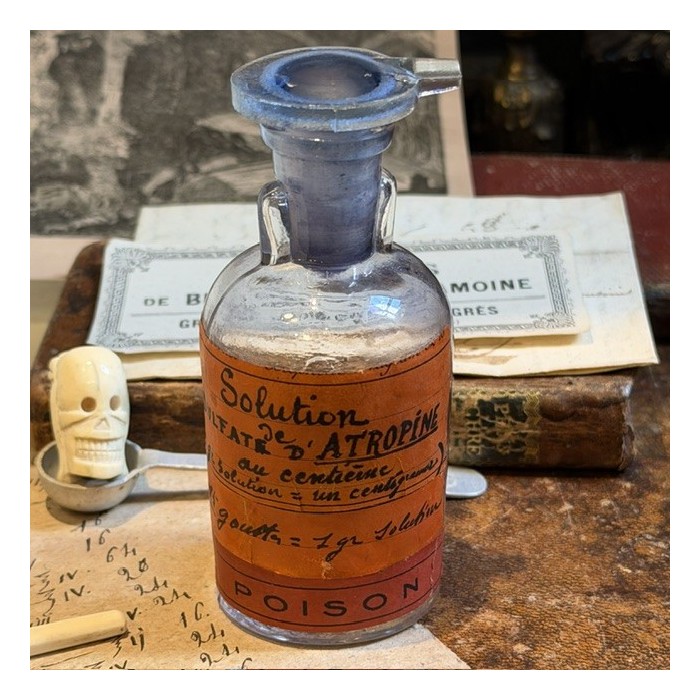
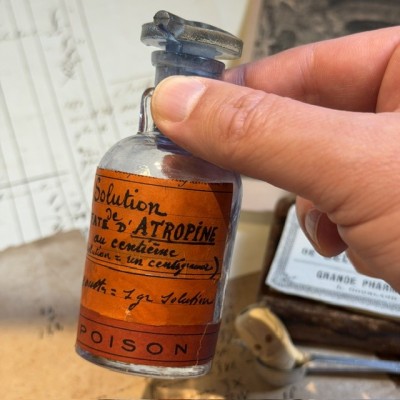
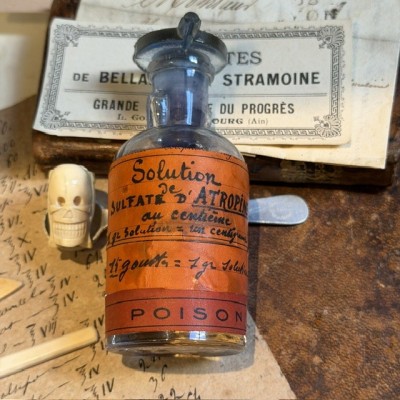
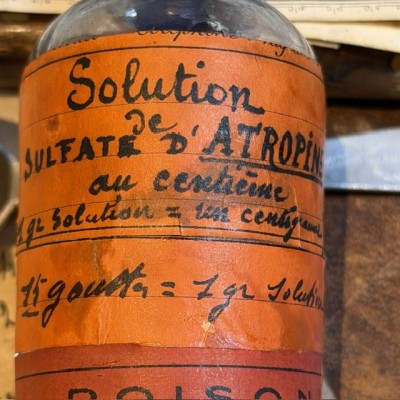
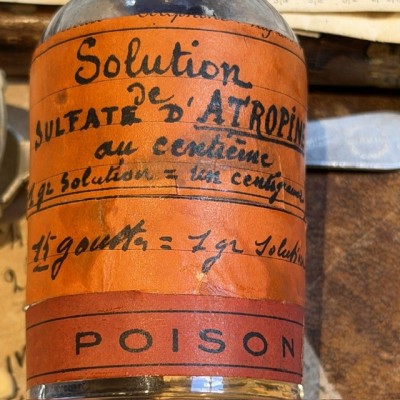
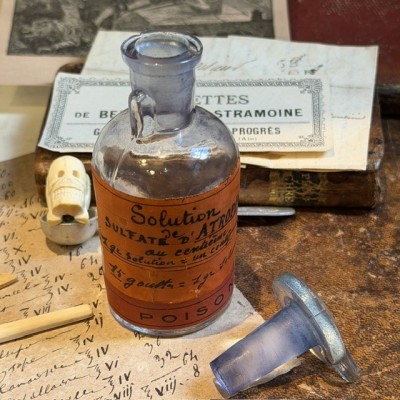
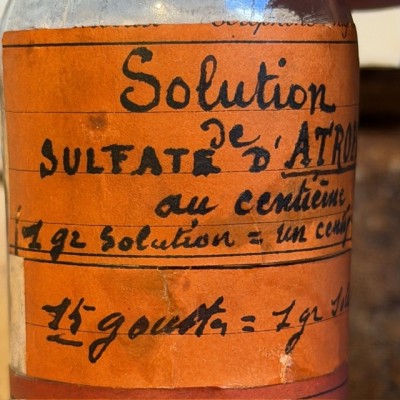
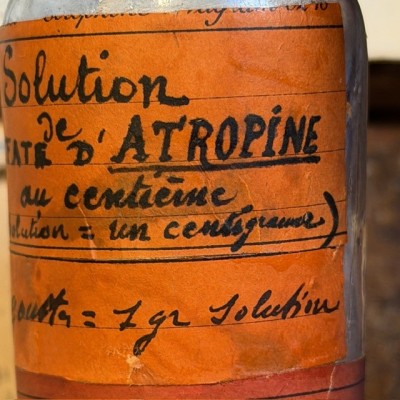
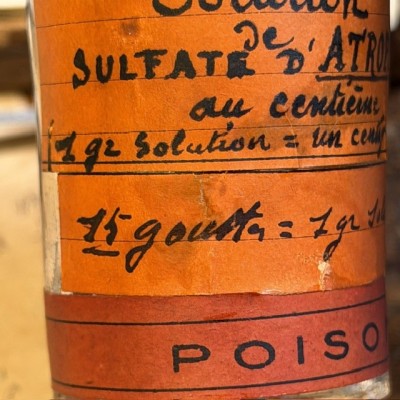
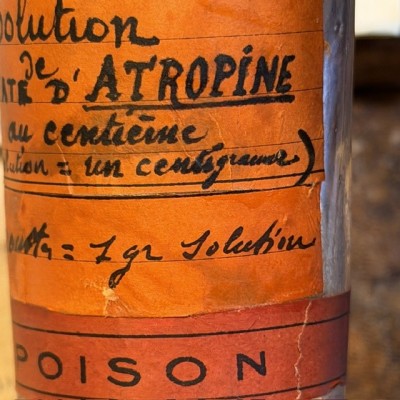
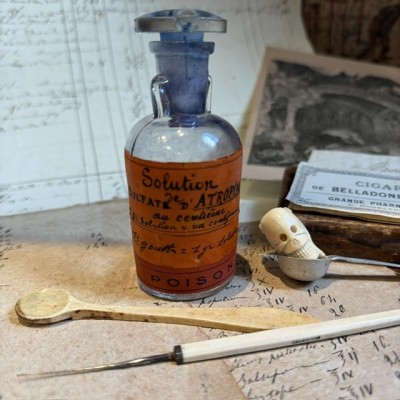
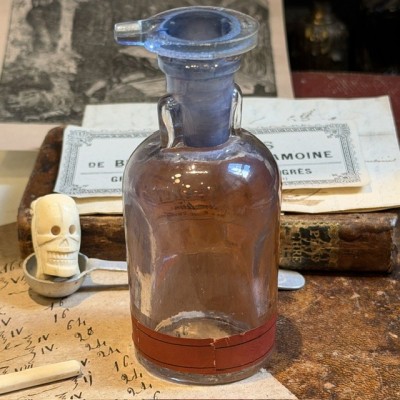
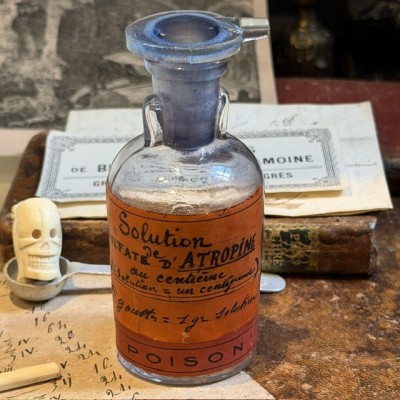
Atropine sulphate
Atropine is extracted from belladonna, the notorious poisonous plant.
Antique dropper bottle.
Red ‘POISON’ label
Indicating to the pharmacist that it must be stored separately from other substances in the cabinet for toxic substances, the famous ‘poison cabinet’.
It comes from the former cellar-laboratory of a Parisian pharmacy. The bottles had not been moved from the shelves since the late 1950s. The cellar had served as a medical analysis laboratory and a laboratory for the pharmacy’s compounded preparations from 1900 until around 1950.
Date: Late 19th century or very early 20th century (circa 1890–1910)
EMPTY
Atropine Sulphate
Atropine is extracted from belladonna, the notorious poisonous plant.
Antique dropper bottle.
Red ‘POISON’ label
The labels are entirely handwritten in black ink on bright orange paper, the colour mandated by French regulations in the 19th century to immediately identify poisonous substances.
This indicated to the pharmacist that it must be stored separately from other substances in the cabinet for toxic substances, the famous ‘poison cabinet’.
At that time, Atropine Sulphate in one-hundredth strength was mainly used in ophthalmology to dilate the pupil during fundus examinations or to treat iritis, known today as uveitis.
It was also used in very low doses internally as an antispasmodic or to reduce secretions, particularly to combat sweating in patients with phthisis/tuberculosis.
However, atropine is extremely toxic even in low doses; it causes tachycardia, severe dry mouth, hallucinations, and eventually respiratory arrest...
Date: Late 19th century or very early 20th century (circa 1890–1910)
Height of the bottle: 10cm with stopper
EMPTY
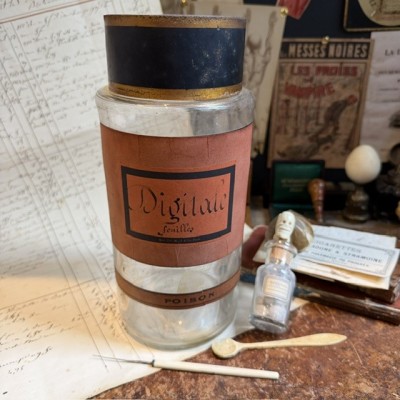
Foxglove leaves - POISON
Antique pharmacy bottle - Wide-mouth apothecary jar.
19th-century mouth-blown glass
A fascinating artifact from the history of pharmacology

Antipyrina Knorr
Named after its German discoverer: Ludwig Knorr
Pharmacy jar - Herbalism - Apothecary bottle
Late 19th century
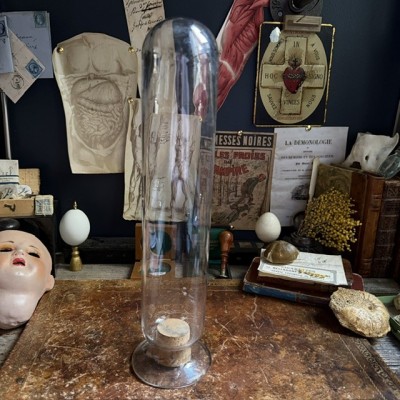
Specimen jar in blown glass – Inverted apothecary jar
Size L
A vintage laboratory or conservatory container designed for the display and preservation of biological or botanical specimens
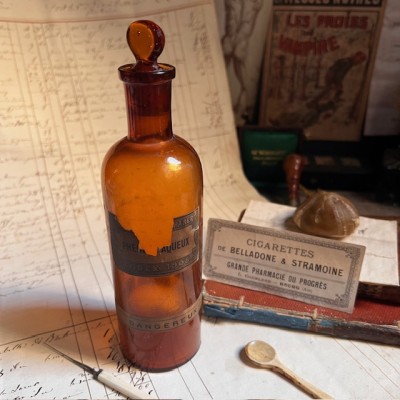
Phénol Aqueux
Antique pharmacy bottle
Green label: SUBSTANCE TO BE SEPARATED - CODEX 1908
This means that this bottle had to be kept separate from the others because it was dangerous - POISON
EMPTY
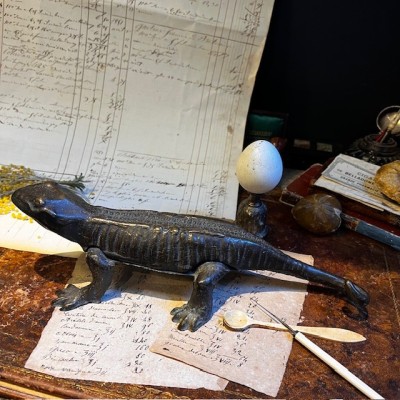
Salamander - Pharmacy corkscrew in bronze
XIXth century
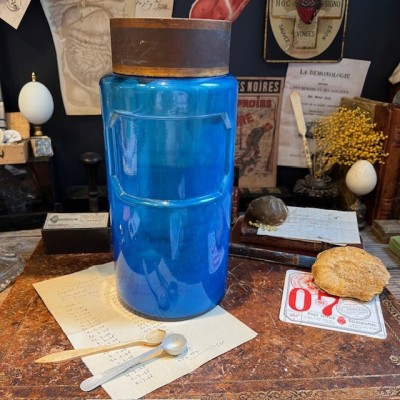
Cobalt blue glass pharmacy jar - Apothecary - Wide neck - H26cm - 19th
Apothecary jar with wide opening. Antique pharmacy bottle
Mouth-blown glass - Cobalt blue color tinted throughout
This large-capacity jar was a storage jar intended for stockpiling
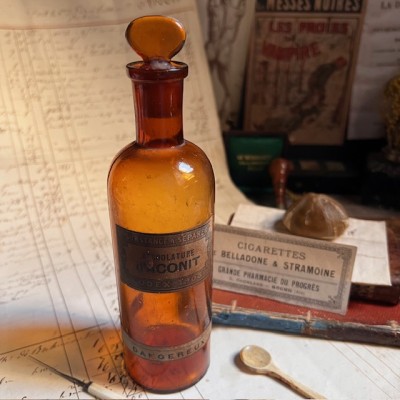
Aconite tincture
Antique pharmacy bottle
Green label: SUBSTANCE A SEPARER - CODEX 1908
This means that this bottle had to be kept separate from the others because it was dangerous in high doses- POISON
EMPTY
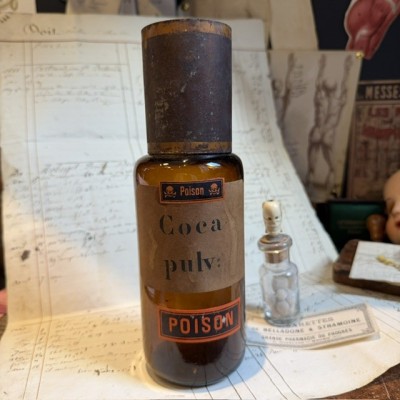
Antique apothecary bottle – Coca powder – Late 19th century/Early 20th century
POISON
Coca powder is the source of cocaine, which was the first effective local anaesthetic used in surgery and dentistry.
SOLD EMPTY
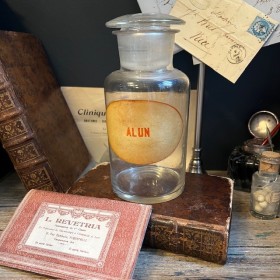
Alum
Antique pharmacy bottle
Apothecary vial
Color pigments have been added to the inside of the jar
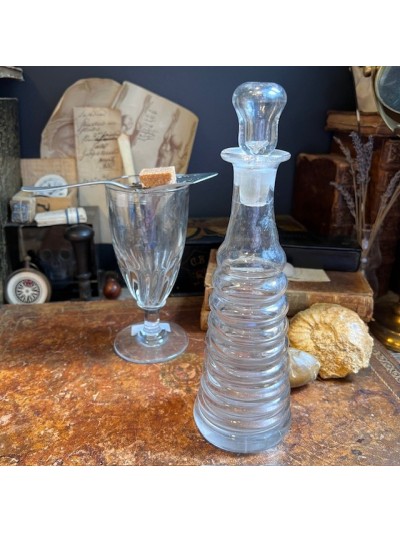
An antique absinthe topette (decanter)
10 Beaded Topette
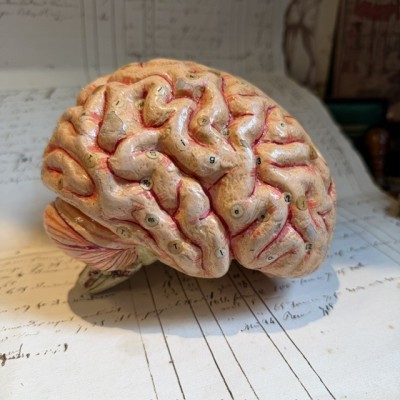
Painted papier-mâché anatomical model of the brain
Produced by Établissements Auzoux
Model No. 12 from the 1874 catalogue
Dismantlable, numbered model, used for medical teaching.
A rare item in excellent working condition
This is a 1:1 scale model of the brain, sold separately at the time as a demonstration model; it is not a brain that was found inside anatomical manikins.
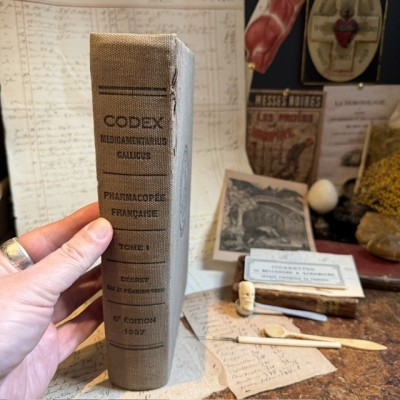
1937 Codex – French Pharmacopoeia
6th Edition – Decree of 21 February 1937
Volume I only
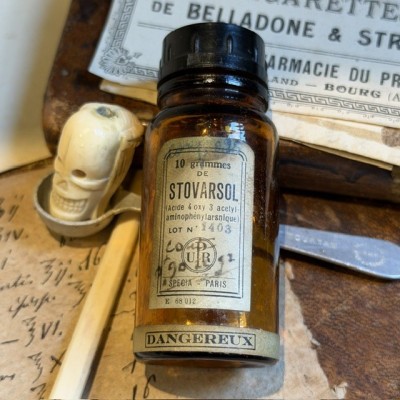
Stovarsol – Arsenic Treatment for Syphilis
From SPECIA Laboratories – 1930–1950
Antique glass bottle
Label: DANGEROUS
Warning the pharmacist that it must be stored separately from other substances in the toxic substances cabinet, the infamous ‘poison cabinet’.
It comes from the former cellar-laboratory of a Parisian pharmacy. The bottles had not been moved from the shelves since the late 1950s. The cellar had served as a medical analysis laboratory and a laboratory for the pharmacy’s compounded preparations from 1900 until around 1950.
EMPTY
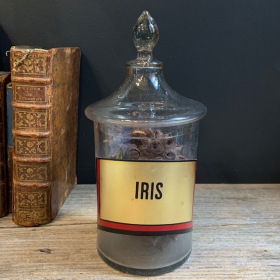
19th century Herbalist's or Pharmacy crystal jar
Iris
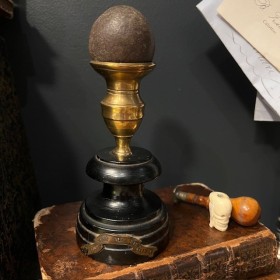
Antique bezoar - Antipoison - Antidote
Once sold by the apothecary, bezoar, also known as gallstone, was reputed to have the same anti-poison properties as the legendary unicorn's horn, hence its excessively high price, also due to its great rarity.
An important piece in a cabinet of curiosities
Sold alone - Without stand, sold separately
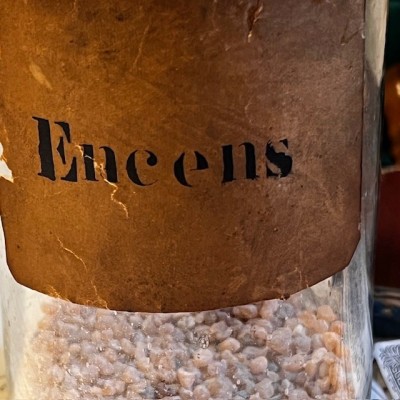
Incense
Antique pharmacy bottle - Wide-mouth apothecary jar.
19th-century mouth-blown glass
There are still some product inside.
A fascinating artifact from the history of pharmacology
Atropine sulphate
Atropine is extracted from belladonna, the notorious poisonous plant.
Antique dropper bottle.
Red ‘POISON’ label
Indicating to the pharmacist that it must be stored separately from other substances in the cabinet for toxic substances, the famous ‘poison cabinet’.
It comes from the former cellar-laboratory of a Parisian pharmacy. The bottles had not been moved from the shelves since the late 1950s. The cellar had served as a medical analysis laboratory and a laboratory for the pharmacy’s compounded preparations from 1900 until around 1950.
Date: Late 19th century or very early 20th century (circa 1890–1910)
EMPTY