

Hypophosphite de Calcium - Vintage pharmacy bottle -...
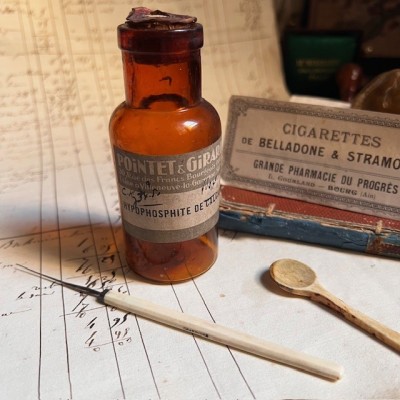
Hypophosphite de Calcium
Antique pharmacy bottle
EMPTY
Price
€20.00
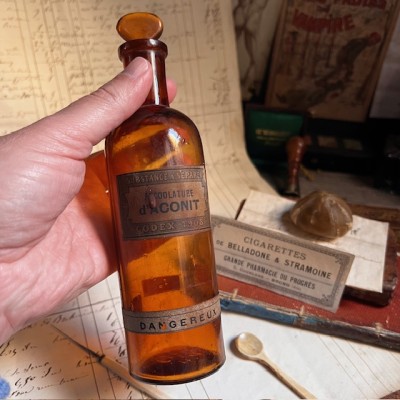
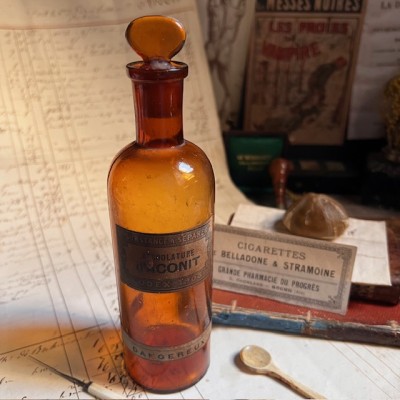
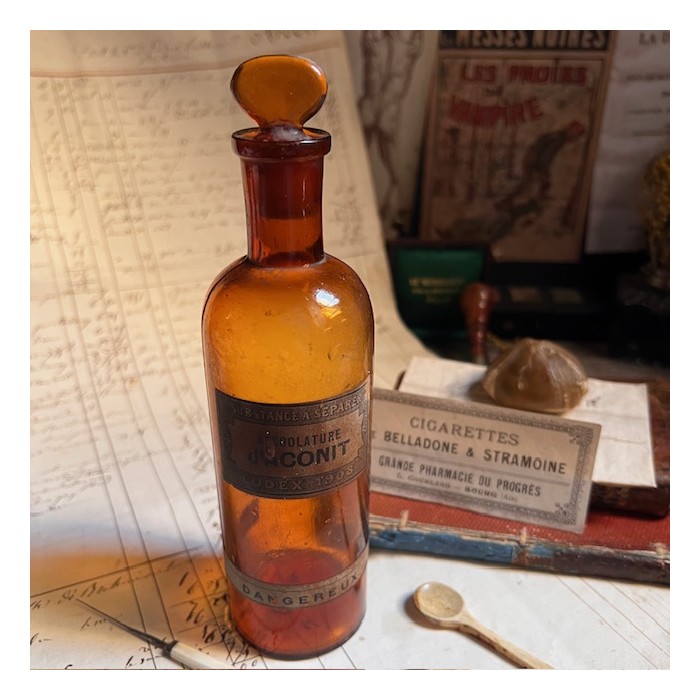
Aconite tincture
Antique pharmacy bottle
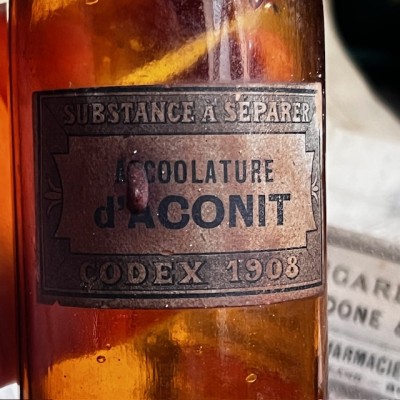
Green label: SUBSTANCE A SEPARER - CODEX 1908
This means that this bottle had to be kept separate from the others because it was dangerous in high doses- POISON
EMPTY
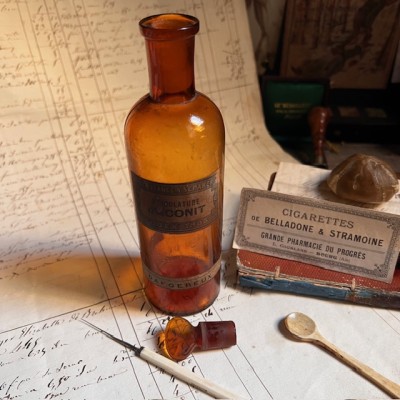
Aconite tincture
Antique pharmacy bottle
Green label: SUBSTANCE TO BE SEPARATED - CODEX 1908
This means that this bottle had to be kept separate from the others because it was dangerous in high doses - POISON
This means that this bottle had to be kept separate from the others because it was extremely dangerous and deadly – POISON
The Queen of Poisons: Aconite! Also known as wolfsbane
Extremely toxic; it is estimated that 2 to 4 milligrammes – the size of a grain of sand – is enough to kill an adult within a few hours by causing progressive paralysis of the respiratory and cardiac centres.
However, it was used in very small doses as a painkiller, a cough suppressant or to reduce fevers.
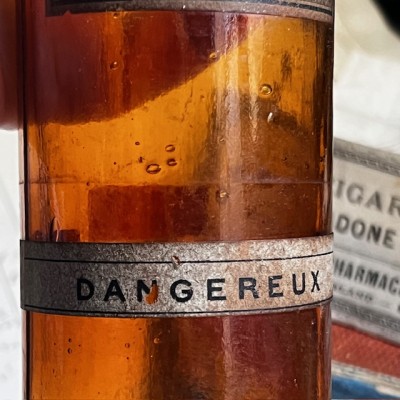
Here, the bottle is also accompanied by a ‘danger’ label: this substance had to be stored separately in the Poison Cabinet, the key to which was held solely by the apothecary.
It comes from the former cellar-laboratory of a Parisian pharmacy. The bottles had not been moved from the shelves since the late 1950s. The cellar had served as a medical analysis laboratory and a laboratory for the pharmacy’s compounded preparations from 1900 until around 1950.
Bottle height: 19.5 cm including cap
EMPTY
Hypophosphite de Calcium
Antique pharmacy bottle
EMPTY
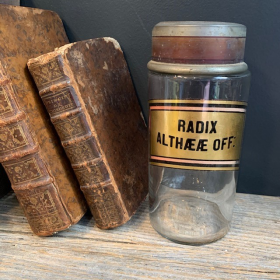
Antique 19th century pharmacy bottle
Radix althaeae Off - Marshmallow
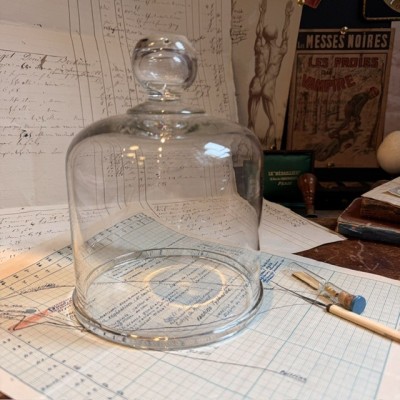
Protective laboratory bell jar - Low form with knob in blown glass
Period: 1900 - Pharmacy - Apothecary
Used by the pharmacist to cover precision instruments or isolate preparations undergoing analysis

Bibliothèque Choisie de Médecine - Volume 8
Selected Library of Medicine
By François PLANQUE - 1750
Complete original edition with 10 fold-out plates
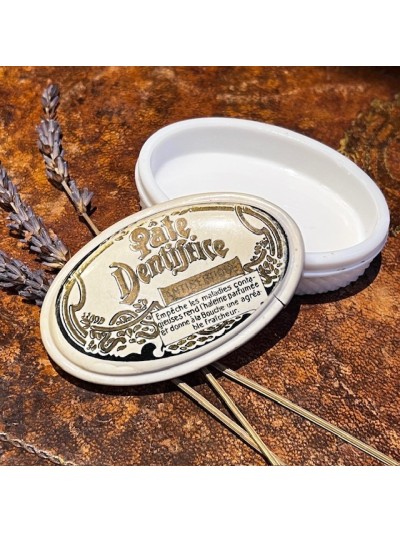
Toothpaste - Antique apothecary
Porcelain pot with illustrated plastic lid
Antiseptic
Early 20th century - Caution the lid is cracked
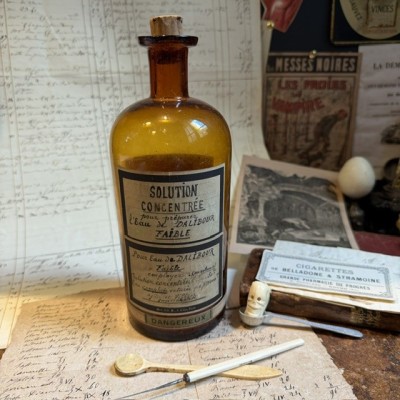
Eau de Dalibour
Antique pharmacy bottle
Beautiful handwritten labels from the period
EMPTY
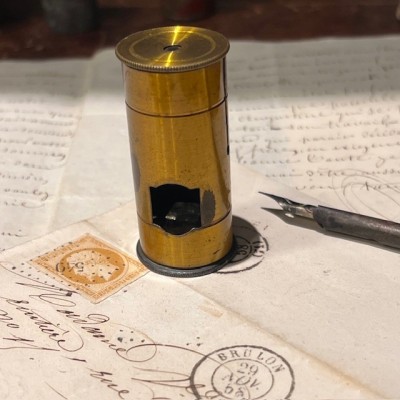
Floroscope
Botanist's microscope
Pocket microscope Late 19th - early 20th century
Warning: Here composed of 2 Stanhope lenses
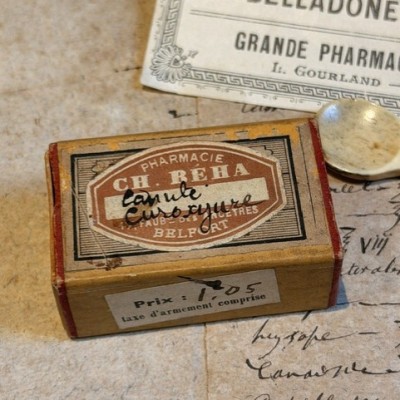
Polished bone cannula - New vintage stock - In its reusable box
Vintage medical device designed to remove pinworms
Marketed between May 1939 and sometime in 1940
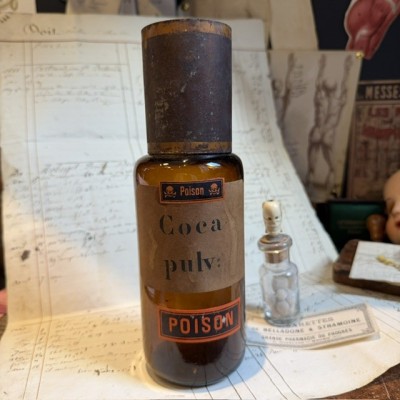
Antique apothecary bottle – Coca powder – Late 19th century/Early 20th century
POISON
Coca powder is the source of cocaine, which was the first effective local anaesthetic used in surgery and dentistry.
SOLD EMPTY
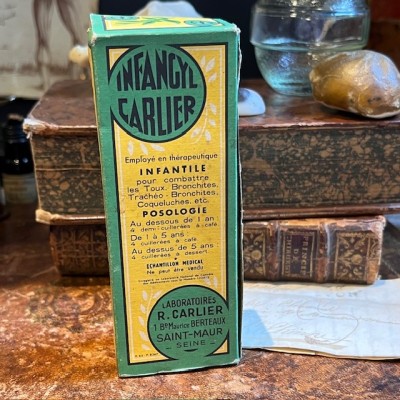
Infangyl Carlier
Antique pharmacy bottle - Apothecary
The box still contains its full, sealed bottle and instructions
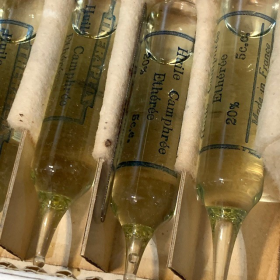
Bulb for hypodermic injection - Camphor (circa 1920)
THERAPLIX
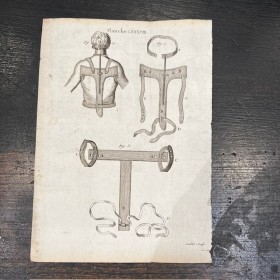
Antique surgical board
From Benjamin Bell's Complete Course in Surgery, published in 1796
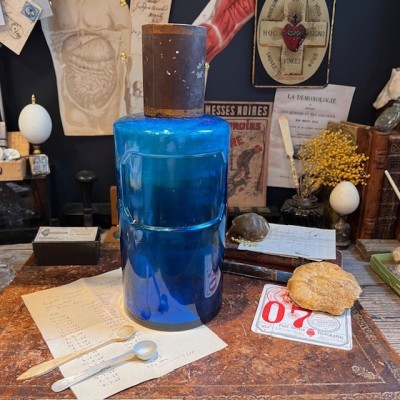
Large cobalt blue glass pharmacy bottle - Apothecary - Shouldered - H27.5cm - 19th century
Shouldered apothecary bottle - Antique pharmacy bottle
Mouth-blown glass - Cobalt blue color tinted throughout
This large-capacity jar was a storage jar intended for stockpiling
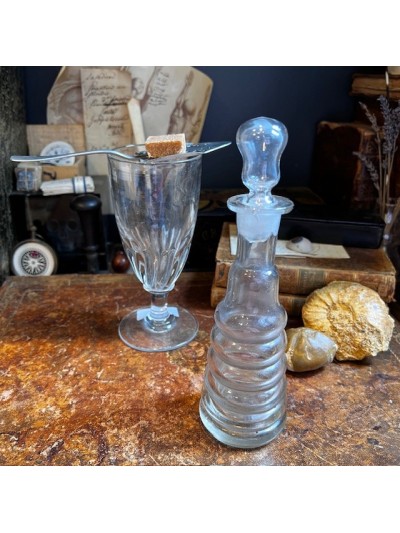
An antique absinthe topette (decanter)
6 Beaded Topette
Residue in the bottom of the carafe
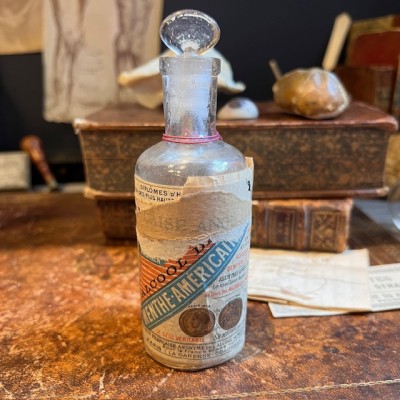
American mint alcohol
Antique pharmacy bottle
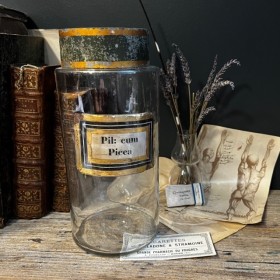
Cumin Epicea Pill - Pil: Cum Picea
Antique blown glass pharmacy jar
Apothecary
Aconite tincture
Antique pharmacy bottle
Green label: SUBSTANCE A SEPARER - CODEX 1908
This means that this bottle had to be kept separate from the others because it was dangerous in high doses- POISON
EMPTY