
De l'Homme et de la Femme - By M. de Lignac - Volume 3 -...
De l'Homme et de la Femme (Of Man and Woman)
By M. de Lignac - Volume 3
Anatomy of procreation - 1779
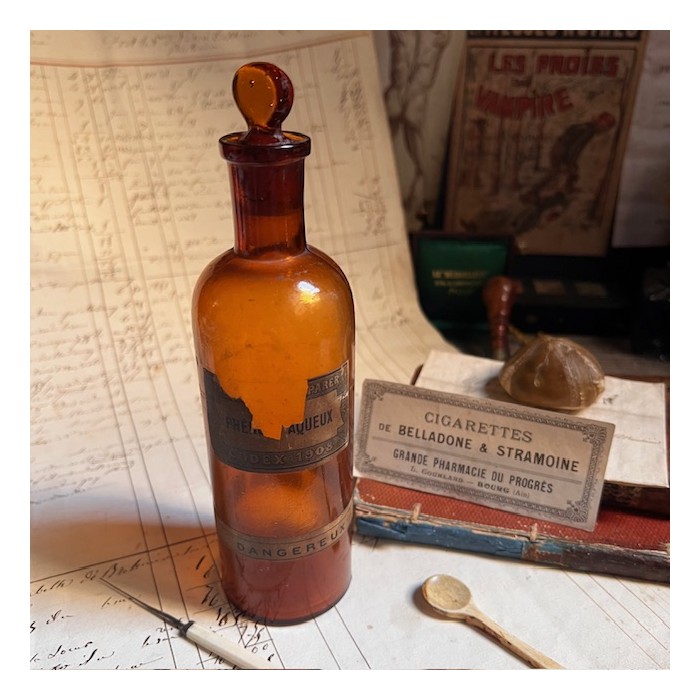
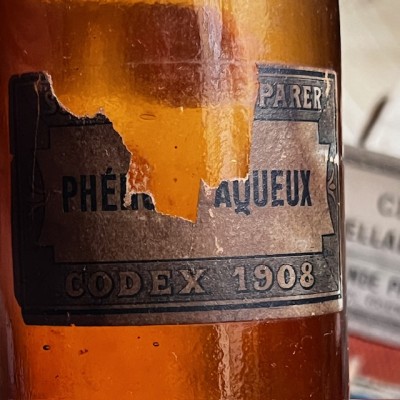
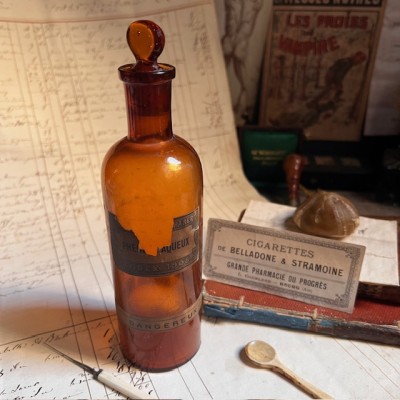
Phénol Aqueux
Antique pharmacy bottle
Green label: SUBSTANCE TO BE SEPARATED - CODEX 1908
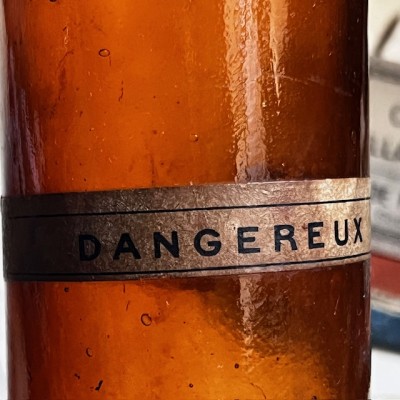
This means that this bottle had to be kept separate from the others because it was dangerous - POISON
EMPTY
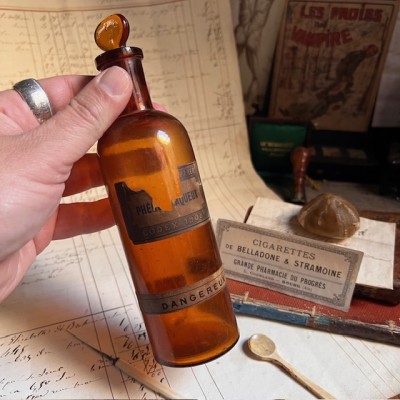
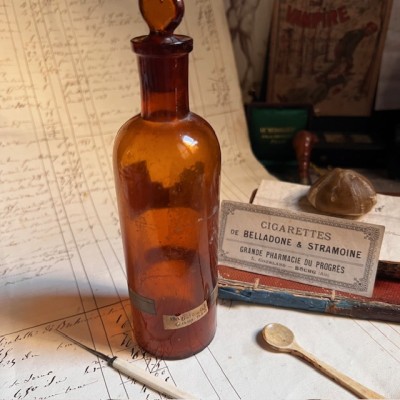
Phénol Aqueux
Antique pharmacy bottle
Green label: SUBSTANCE TO BE SEPARATED - CODEX 1908
This means that this bottle had to be kept separate from the others because it was dangerous - POISON
Extremely corrosive; causes deep tissue burns.
It was the first major antiseptic used in surgery.
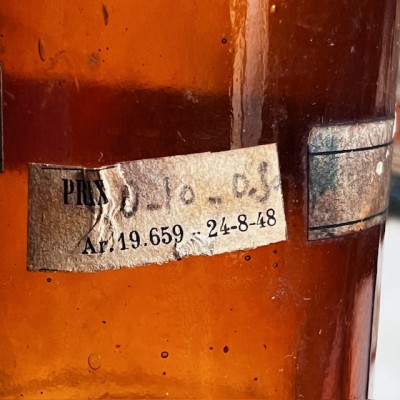
It comes from the old basement laboratory of a Parisian pharmacy. The bottles had not been moved from the shelves since the late 1950s!
Bottle height: 19.5 cm including cap
EMPTY
De l'Homme et de la Femme (Of Man and Woman)
By M. de Lignac - Volume 3
Anatomy of procreation - 1779
Antique wooden advertising crate for Gallia / Ch. Gervais infant milk concentrate
Found in Parisian cellars that served as laboratories and storage rooms for pharmacists preparing their masterful concoctions from 1900 to 1950.
It was used to store products, glass bottles, etc.
Period: Circa 1947–1955
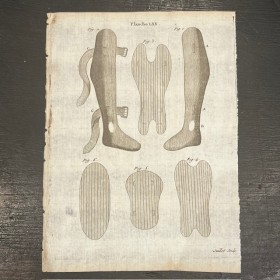
Antique surgical board
From Benjamin Bell's Complete Course in Surgery, published in 1796
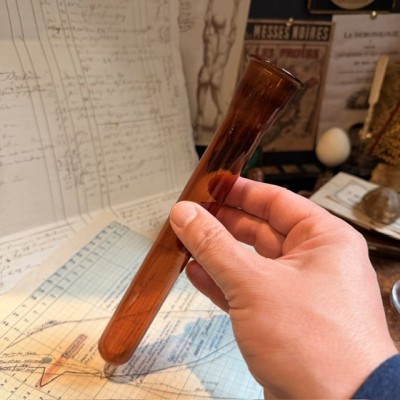
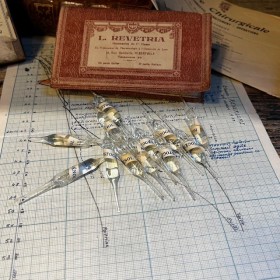
Bulb for hypodermic injection - Camphor (circa 1920)
various manufacturers
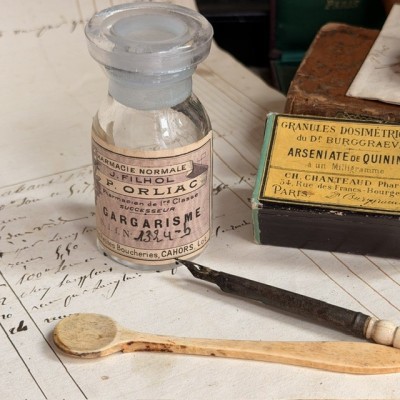
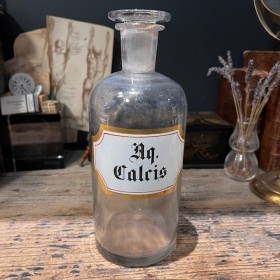
Antique pharmacy bottle from the 19th century
Balsamum Fioravanti - Balm of Fioravanti
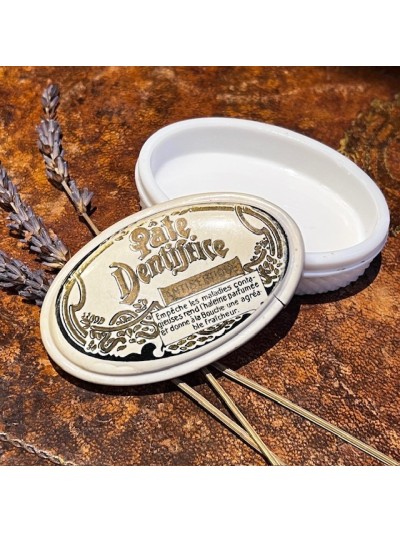
Toothpaste elixir
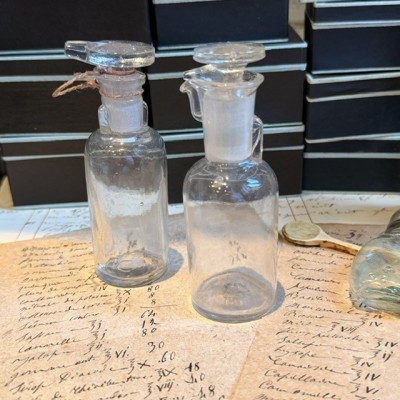
Antique pharmacy bottle
Handwritten label with pen
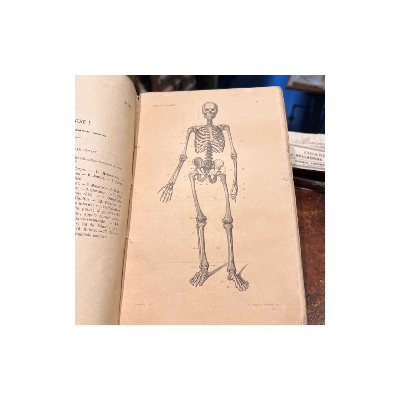
Anatomical Atlas by A. Bossu
Anthropology - End of the XIXth century
20 engravings of Anatomy by Léveillé
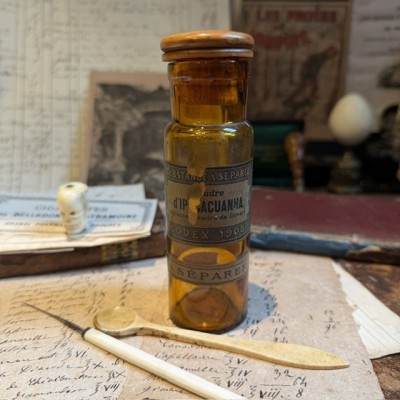
Racine de Ratanhia - Para Rhatany
Pharmacy jar - Herbalism - Apothecary bottle
Dropper Bottle
Antique pharmacy bottle - 1920-30's
EMPTY
Poudre de réglisse - Licorice powder
Large cobalt blue glass pharmacy bottle - Apothecary - Shouldered - H28cm - 19th century
Shouldered apothecary bottle - Antique pharmacy bottle
Mouth-blown glass - Cobalt blue color tinted throughout
This large-capacity jar was a storage jar intended for stockpiling
Specimen jar in blown glass - Inverted apothecary jar - Seed vase
Size S
A vintage laboratory or conservatory container designed for the display and preservation of biological or botanical specimens
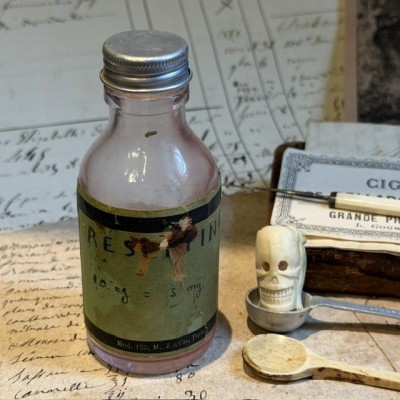
Piperazine
Antique amber glass bottle. The cap is missing
Green label: SUBSTANCE TO BE STORED SEPARATELY – CODEX 1908
Indicating to the pharmacist that it must be stored separately from other substances in the cabinet for toxic substances, the famous ‘poison cabinet’.
It comes from the former cellar-laboratory of a Parisian pharmacy. The bottles had not been moved from the shelves since the late 1950s. The cellar had served as a medical analysis laboratory and a laboratory for the pharmacy’s compounded preparations from 1900 until around 1950.
EMPTY
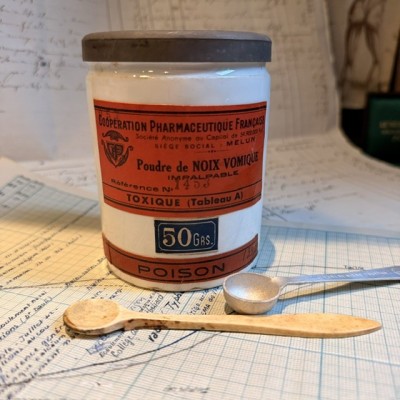
Datura powder
Antique earthenware pot
Intended for the exclusive use of pharmacists for making magistral preparations, the jar displays the regulatory labels "TOXIC" and the red banner "POISON".
Indicating to the pharmacist that it must be stored separately from other substances in the cabinet for toxic substances, the famous ‘poison cabinet’.
It comes from the former cellar-laboratory of a Parisian pharmacy. The bottles had not been moved from the shelves since the late 1950s. The cellar had served as a medical analysis laboratory and a laboratory for the pharmacy’s compounded preparations from 1900 until around 1950.
EMPTY
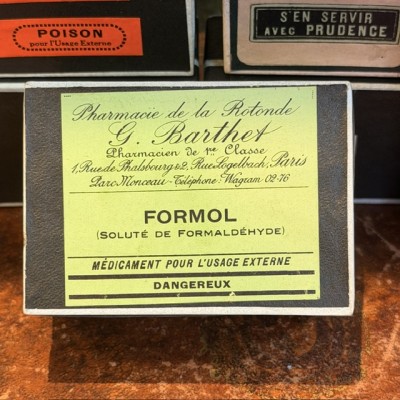
Antique labels in a pharmacy box for cures made of canvas cardboard
Poison label - Ref A
The pharmacist used his boxes of medicine to put away the labels he would then put on the bottles that he would resell to his customers.
Hemlock leaves - POISON
Antique pharmacy bottle - Wide-mouth apothecary jar.
19th-century mouth-blown glass
Red POISON label
Signaling to the pharmacist that it is imperative to keep apart the other substances in the cabinet of toxic substances, the famous poison cabinet.
A fascinating testimony to pharmacology
It comes from an old cellar-laboratory in a Parisian pharmacy. The bottles had not moved since the late 1950s on the shelves. The cellar had served as a laboratory for medical analyses and a laboratory for magistral preparations of the pharmacy from 1900 until around 1950.
Phénol Aqueux
Antique pharmacy bottle
Green label: SUBSTANCE TO BE SEPARATED - CODEX 1908
This means that this bottle had to be kept separate from the others because it was dangerous - POISON
EMPTY