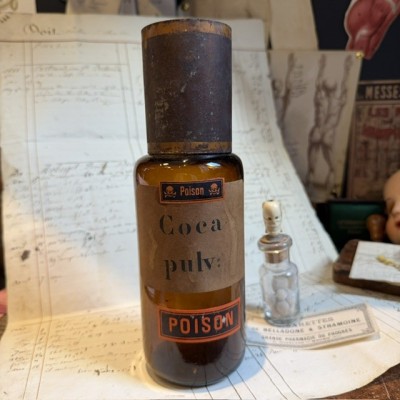

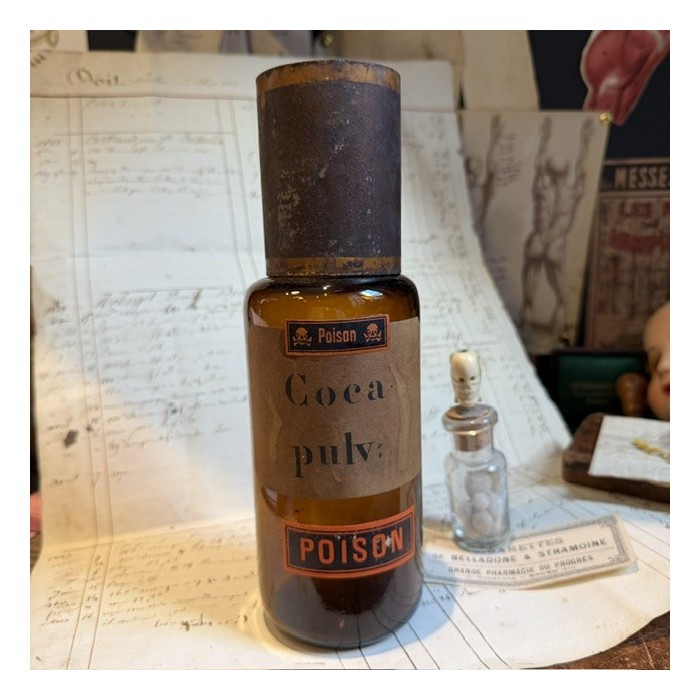
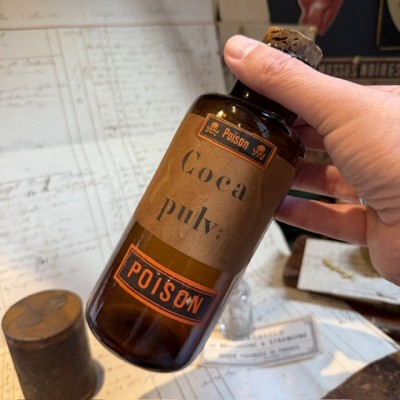
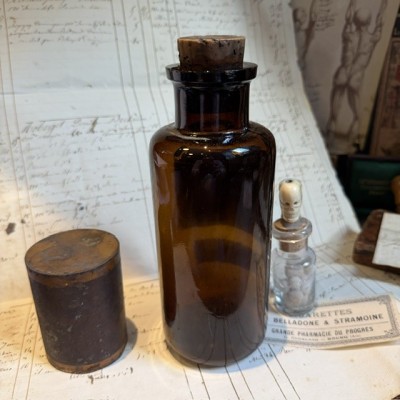
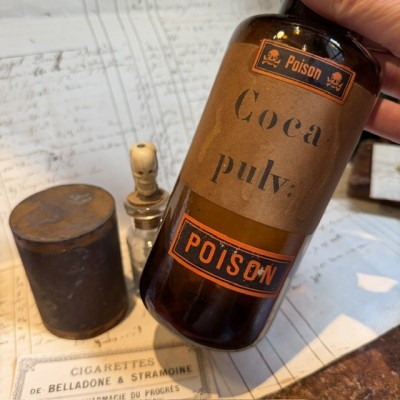
Antique apothecary bottle – Coca powder – Late 19th century/Early 20th century
POISON
Coca powder is the source of cocaine, which was the first effective local anaesthetic used in surgery and dentistry.
SOLD EMPTY
Antique pharmacy bottle – Coca powder – Late 19th century/Early 20th century
POISON
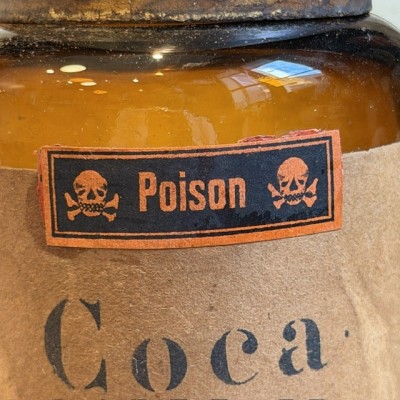
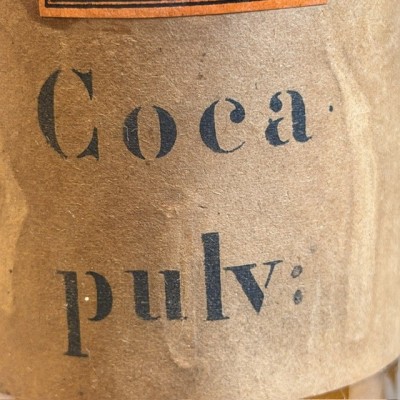
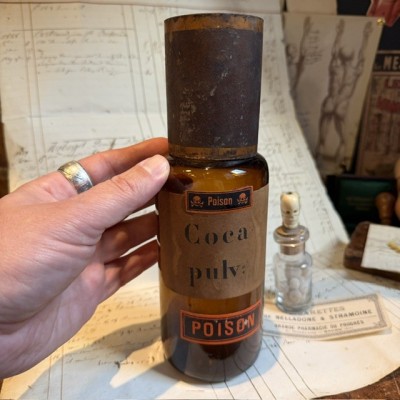
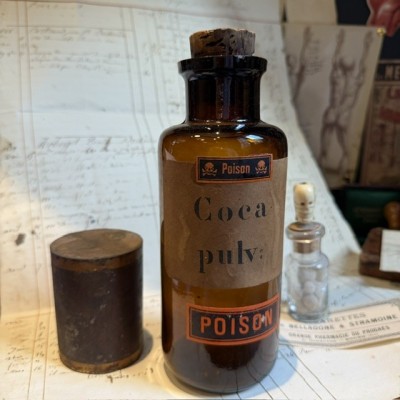
This amber glass pharmacy bottle is a fascinating artefact from the pharmacopoeia of days gone by. It features beautiful original labels with a patina, bearing the handwritten inscription ‘Coca pulv:’ (coca leaf powder).
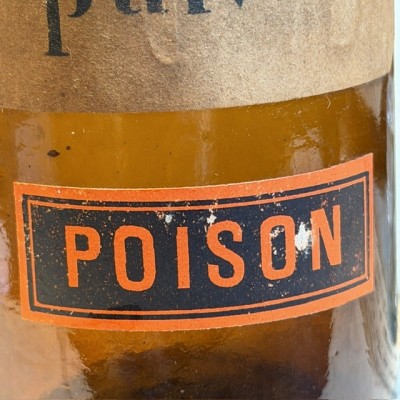
The visual impact is enhanced by two orange and black bands marked ‘POISON’, framed by the famous skull and crossbones, a reminder of the danger and strict regulations surrounding active substances at the time. The bottle is topped with its original metal stopper.
Before being classified as a narcotic and subsequently banned from the pharmacopoeia, coca was a key plant in European medicine, particularly between 1860 and 1920.
Coca powder is the source of cocaine, which was the first effective local anaesthetic used in surgery and dentistry.
The remedy for fatigue: It was used to prepare medicinal wines (such as the famous Vin Mariani), lozenges for sore throats, or powders purported to treat depression, neurasthenia and lethargy. It was praised for its stimulating properties on the nervous and muscular systems.
Appetite suppressant and physical performance: In keeping with traditional Andean practices, it was prescribed to boost physical stamina and reduce feelings of hunger.
By the end of the 19th century, pharmacists were aware of the plant’s toxicity and addictive properties. The bottles were therefore labelled ‘Poison’ to indicate that dispensing was strictly controlled by the pharmacist and kept in the Poison Cabinet.
Diameter 7cm. Height with cap: 22.5cm
SOLD EMPTY
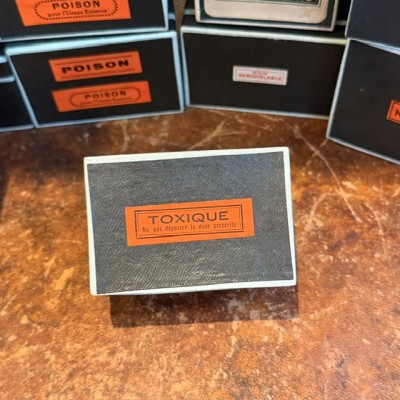
Antique labels in a pharmacy box for cures made of canvas cardboard
TOXIC label - Do not exceed the prescribed dose
The pharmacist used his boxes of medicine to put away the labels he would then put on the bottles that he would resell to his customers.
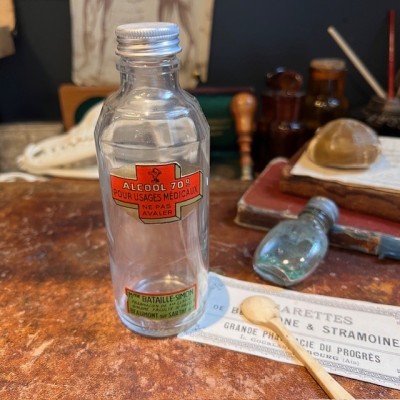
70° alcohol
Antique pharmacy bottle - Apothecary
Mrs Bataille-Simon, First Class Pharmacist in Beaumont sur Sarthe - Tel 9

Eau Régale - Dangerous acid
Skull and crossbones symbol on the label
Antique pharmacy bottle
Red ‘POISON’ label
Indicating to the pharmacist that it must be stored separately from other substances in the cabinet for toxic substances, the famous ‘poison cabinet’.
EMPTY
Eau Régale: Mixture of hydrochloric acid and nitric acid. Very corrosive. The king of acids, it dissolves gold and other noble materials.
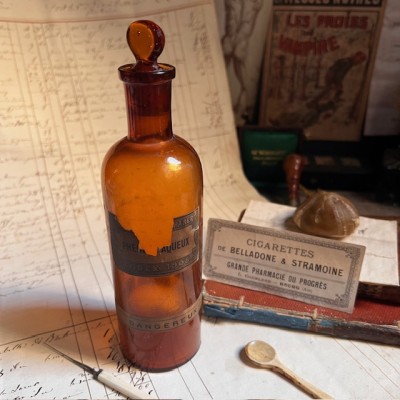
Phénol Aqueux
Antique pharmacy bottle
Green label: SUBSTANCE TO BE SEPARATED - CODEX 1908
This means that this bottle had to be kept separate from the others because it was dangerous - POISON
EMPTY
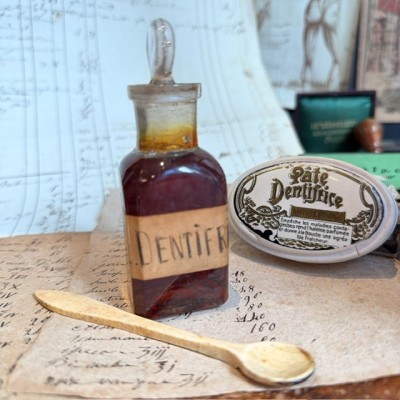
Toothpaste elixir
Antique pharmacy bottle
Handwritten label with pen

Solution N°153
Antique pharmacy bottle
Apothecary vial
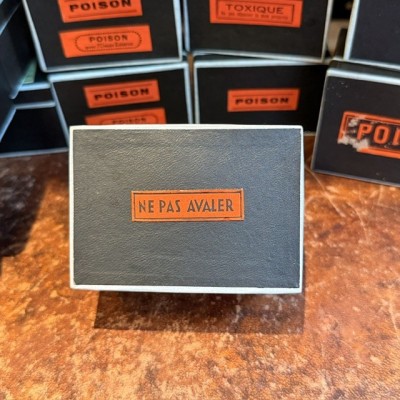
Antique labels in a pharmacy box for cures made of canvas cardboard
Do not swallow label
The pharmacist used his boxes of medicine to put away the labels he would then put on the bottles that he would resell to his customers.
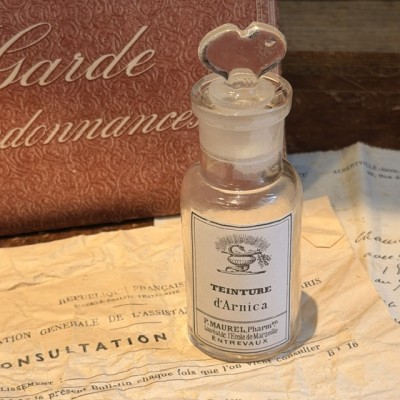
Teinture d'Arnica
Antique pharmacy bottle
EMPTY
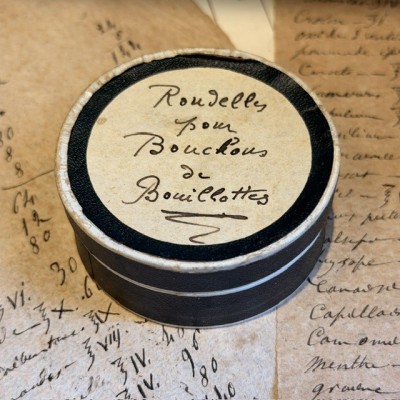
Box of rubber washers for hot water bottles
In its original cardboard box
1939/1940
New Old Stock
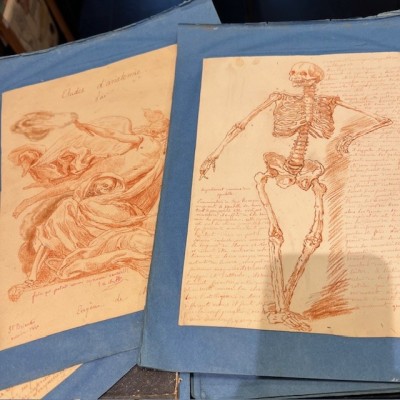
Red chalk drawing- Anatomical drawing
Anatomical study
Drawn by Eugène de Montchoisy in Saint-Brieuc in November 1840
These are not reproductions but original period drawings in red chalk.
You are purchasing one plate, not the entire set of plates
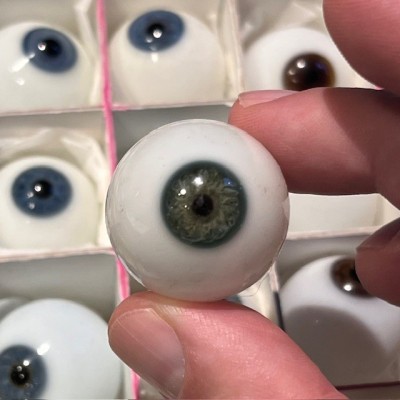
Antique glass eye - Semi-finished
Genuine antique ocular prosthesis
Color variations and irises of different sizes
The price is per unit, for one eye only
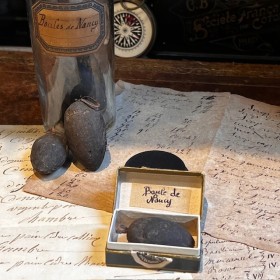
Boule de Nancy - Genuine Mars Vulnerary Ball - Steel Ball
This iron-containing ball was once considered a miracle cure for many ailments and injuries.
The Boule de Nancy is sold individually in a small antique drugstore box
Unavailable today
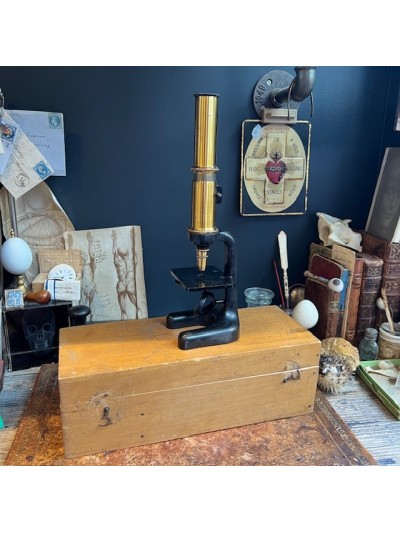
Antique brass and cast-iron rack-and-pinion microscope in wooden case
Late 19th century - Early 20th century
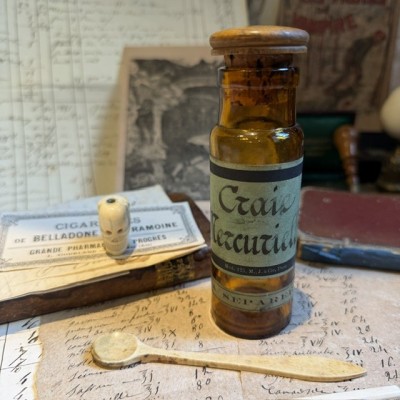
Mercury Chalk – Treatment for Syphilis
Antique amber glass bottle, with a boxwood and cork stopper.
Handwritten label, pen inscription ‘Mercurial Chalk’, neat calligraphy with its thick and thin strokes.
Bottom band ‘TO BE SEPARATED’, instructing the pharmacist to store it in the cabinet for toxic substances, the famous poison cabinet.
It comes from the former cellar-laboratory of a Parisian pharmacy. The bottles had not been moved from the shelves since the late 1950s. The cellar had served as a medical analysis laboratory and a laboratory for the pharmacy’s compounded preparations from 1900 until around 1950.
Period: Judging by the handwriting, late 19th century
EMPTY
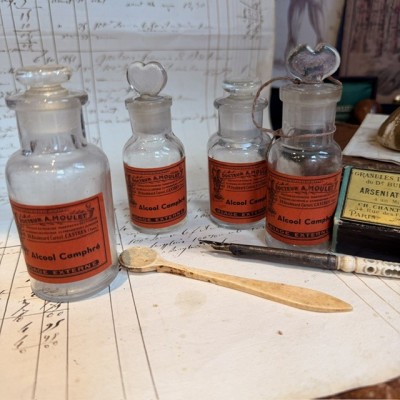
Alcool camphrée
Antique pharmacy bottle
EMPTY
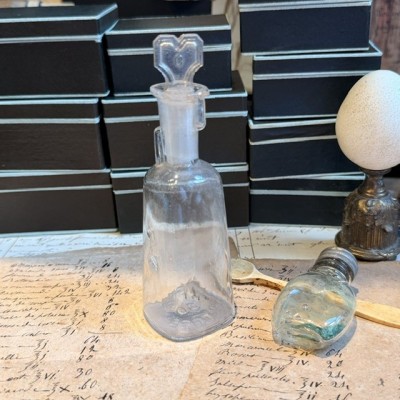
Square Section Dropper Bottle
Antique pharmacy bottle - 1920-30's
Glass stopper honed in the shape of a heart for better grip
EMPTY
Antique apothecary bottle – Coca powder – Late 19th century/Early 20th century
POISON
Coca powder is the source of cocaine, which was the first effective local anaesthetic used in surgery and dentistry.
SOLD EMPTY