
- Created by Curiositas
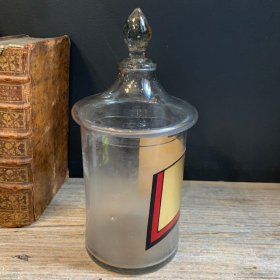
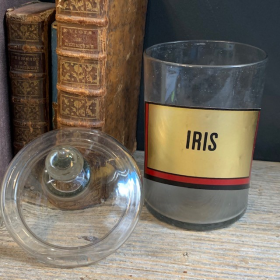
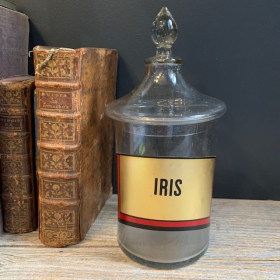
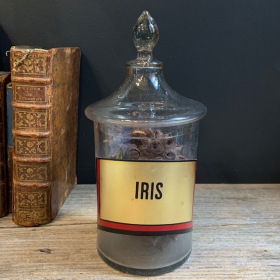
19th century Herbalist's or Pharmacy crystal jar
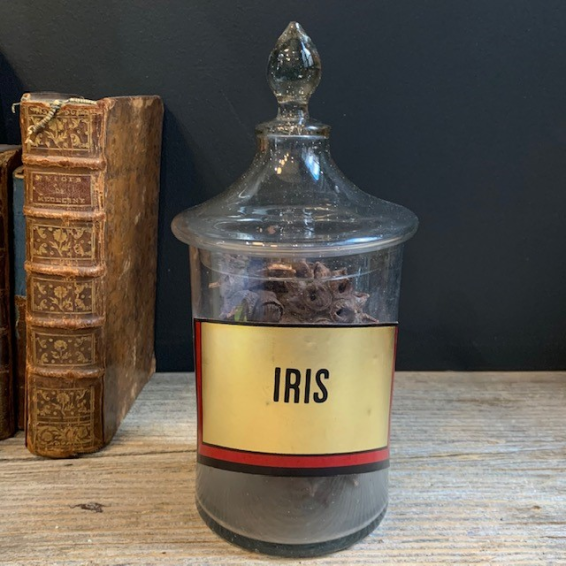
Iris
19th century Herbalist's or Pharmacy crystal jar
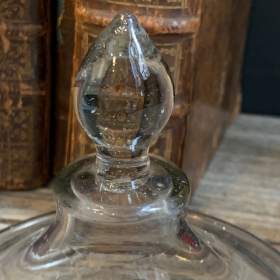
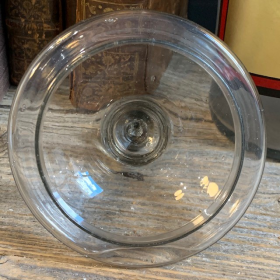
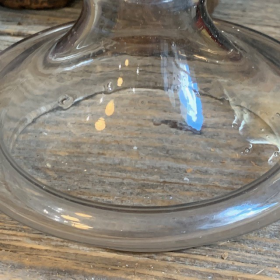
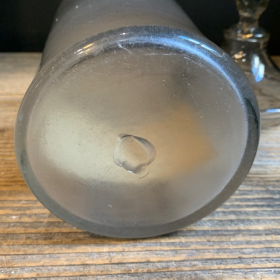
The jar and its lid are made of mouth-blown crystal, the trace of the cane's pontil remains under the jar and the crystal tints well. Late 19th century.
These jars with spiked lids were rarer and are difficult to find today, they were often put forward to show the opulence of the pharmacist's dispensary.
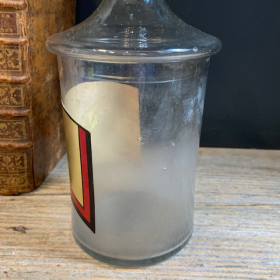
Beautiful red and gold label: Iris
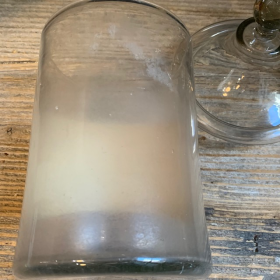
The crystal is no longer transparent, it has become opaque in the lower part of the jar. Presence of bubbles in the spiked lid.
Height 26cm with lid Diameter: 11cm
In the photo, the jar is filled with liquidambar seeds. It is shipped empty without seeds.
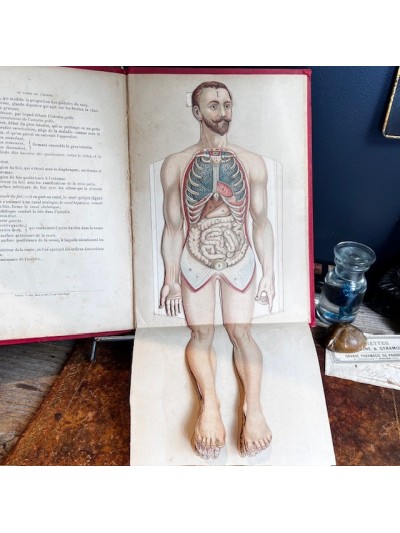
Le corps de l'Homme
Anatomical colour plates with cut-out superimposed leaves
By Edmond Perrier - Schleicher Frères & Cie Editeurs
No date, circa 1900
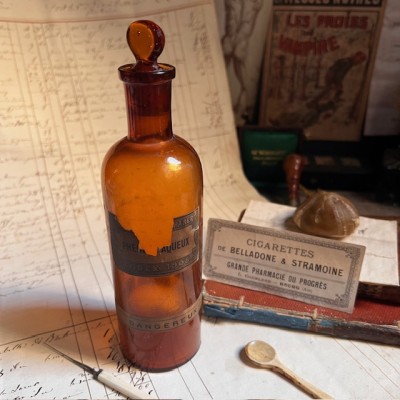
Phénol Aqueux
Antique pharmacy bottle
Green label: SUBSTANCE TO BE SEPARATED - CODEX 1908
This means that this bottle had to be kept separate from the others because it was dangerous - POISON
EMPTY
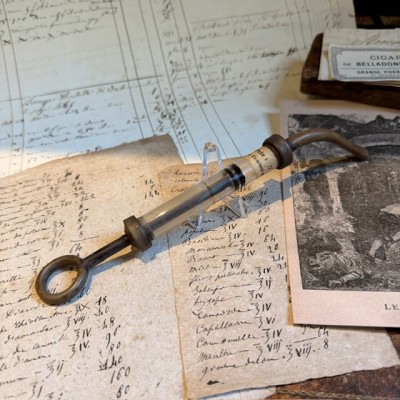
Ebonite and glass laryngeal syringe
For intra-laryngeal injections.
Marketed between May 1939 and sometime in 1940
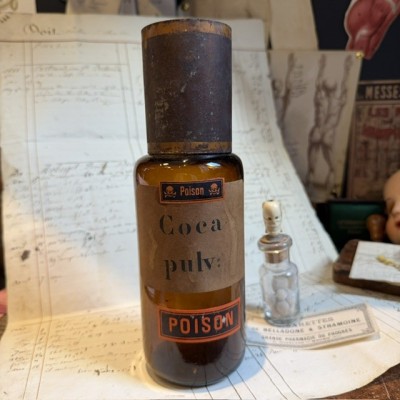
Antique apothecary bottle – Coca powder – Late 19th century/Early 20th century
POISON
Coca powder is the source of cocaine, which was the first effective local anaesthetic used in surgery and dentistry.
SOLD EMPTY
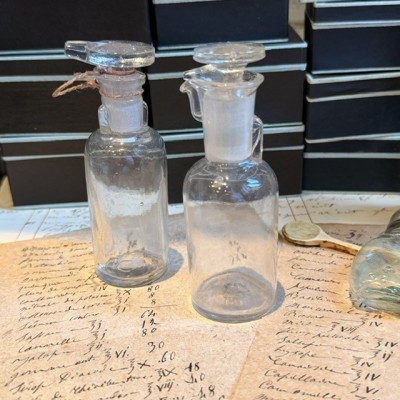
Dropper Bottle
Antique pharmacy bottle - 1920-30's
EMPTY
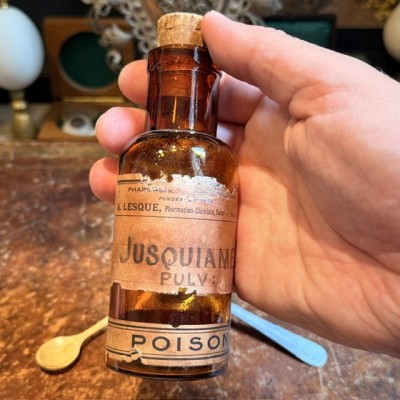
Jusquiame - Henbane
Antique pharmacy bottle.
Red ‘POISON’ label
Indicating to the pharmacist that it must be stored separately from other substances in the cabinet for toxic substances, the famous ‘poison cabinet’.
It comes from the former cellar-laboratory of a Parisian pharmacy. The bottles had not been moved from the shelves since the late 1950s. The cellar had served as a medical analysis laboratory and a laboratory for the pharmacy’s compounded preparations from 1900 until around 1950.
Date: Begining of 20th century
EMPTY
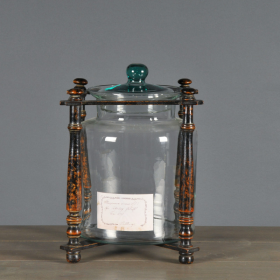
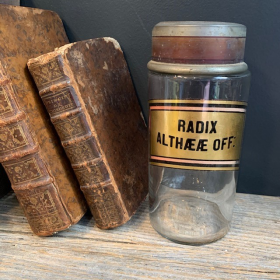
Antique 19th century pharmacy bottle
Radix althaeae Off - Marshmallow
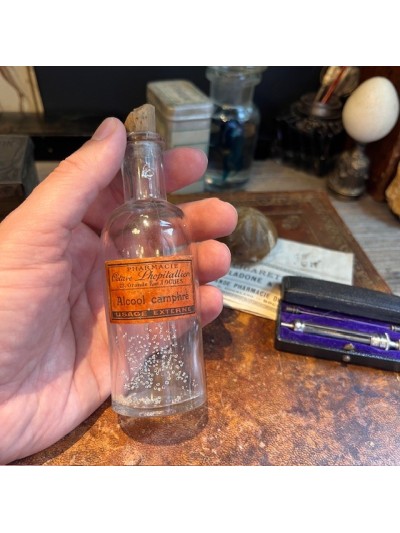
Camphorated alcohol
Antique pharmacy bottle
Apothecary vial
EMPTY
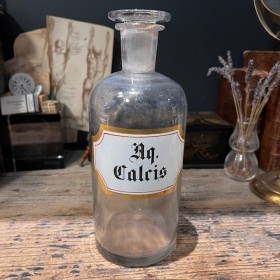
Aqua Calris - Hot water
Antique pharmacy jar
Apothecary

Solution N°153
Antique pharmacy bottle
Apothecary vial
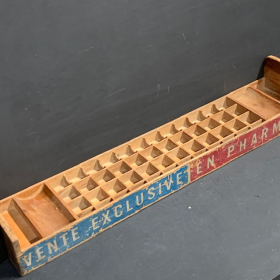

Human jaws in porcelain mounted on a blackened wooden base
Anatomical dental model for dentists
19th century
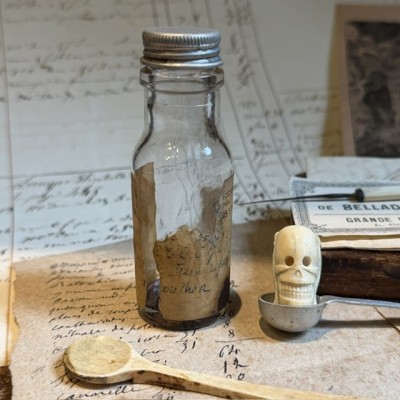
A avaler aux repas To be taken with meals (as far as can be made out from the torn label)
Antique pharmacy bottle
Torn label
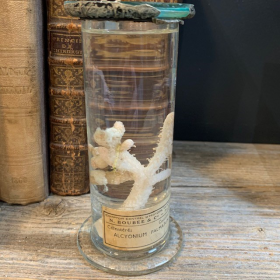
Museum jar - Wet specimen
Soft coral Alcyonium palmatum
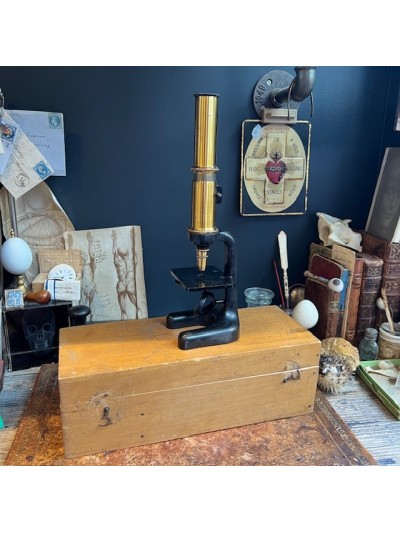
Antique brass and cast-iron rack-and-pinion microscope in wooden case
Late 19th century - Early 20th century
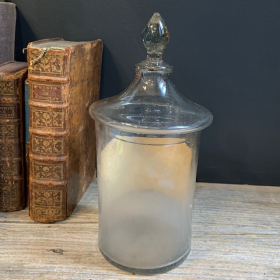
19th century Herbalist's or Pharmacy crystal jar
Iris