
Infangyl Carlier - Antique pharmacy bottle - Apothecary
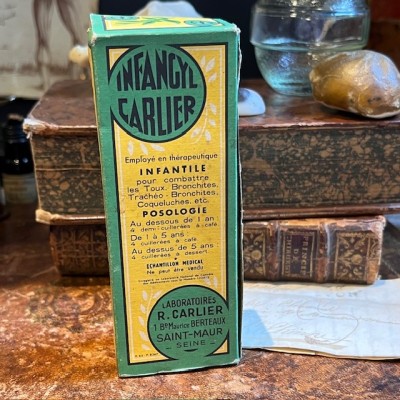
Infangyl Carlier
Antique pharmacy bottle - Apothecary
The box still contains its full, sealed bottle and instructions
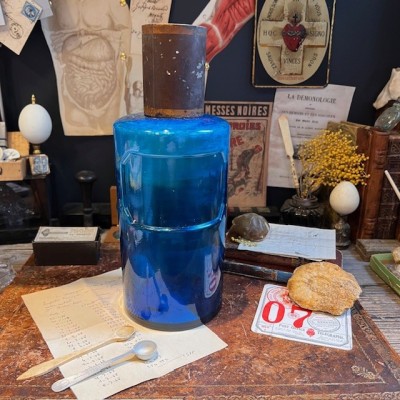
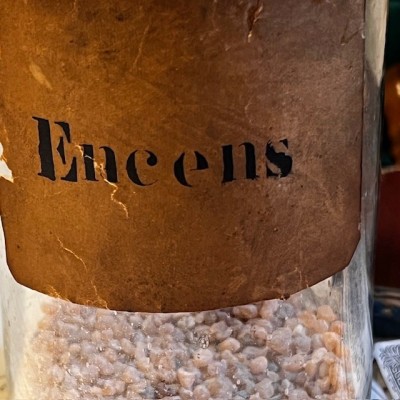
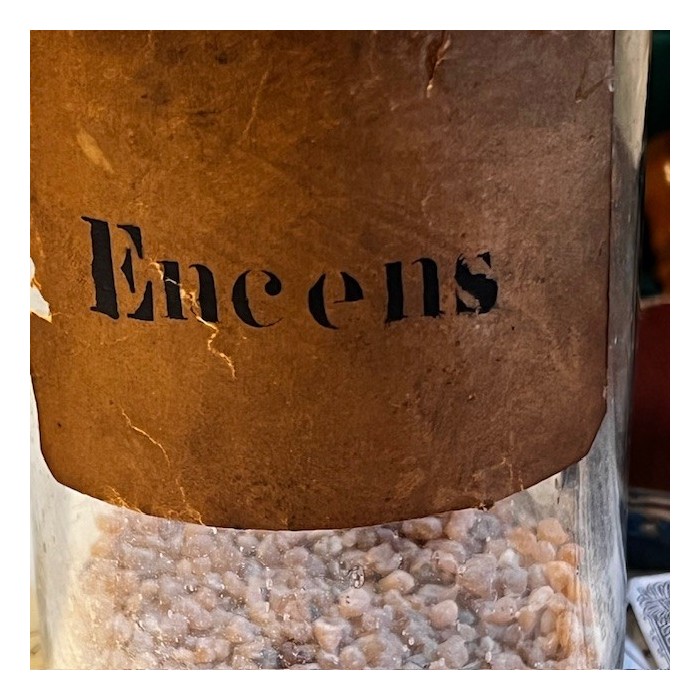
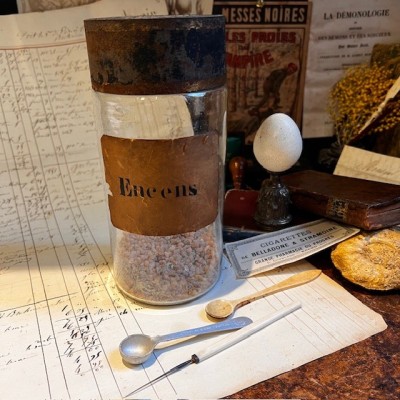
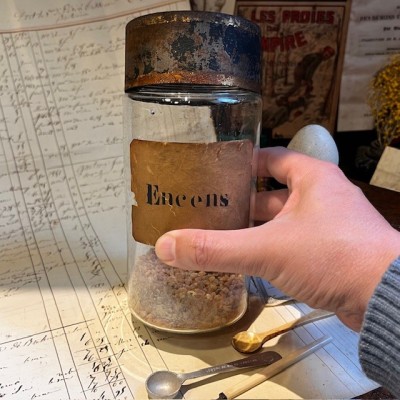
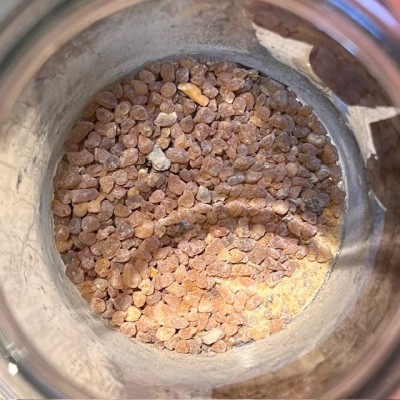
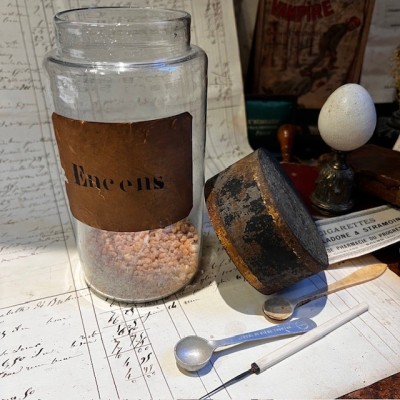
Incense
Antique pharmacy bottle - Wide-mouth apothecary jar.
19th-century mouth-blown glass
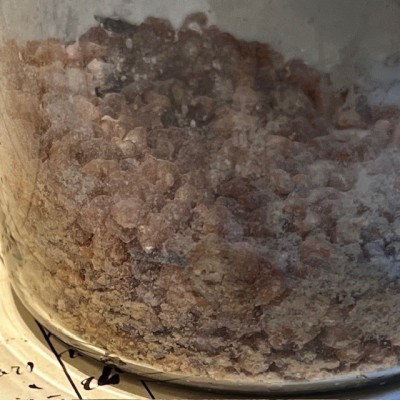
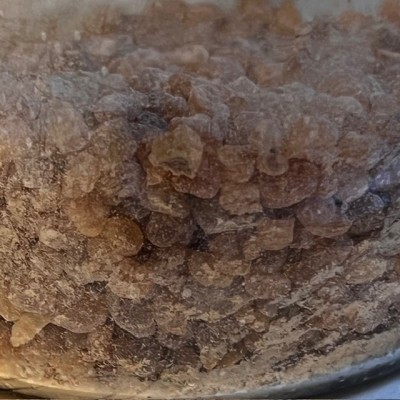
There are still some product inside.
A fascinating artifact from the history of pharmacology
Copper Sulfate Crystals
Antique pharmacy bottle - Wide-mouth apothecary jar.
It comes from the old cellar-laboratory of a Parisian pharmacy. The bottles had not been moved from the shelves since the late 1950s!
There is still some incense left inside.
Back then, incense was used in fumigations for respiratory ailments or even in certain healing poultices.
19th-century mouth-blown glass
This large-capacity jar was a storage jar intended for stockpiling.
Height: 19cm - Diameter: 8.5 cm
Infangyl Carlier
Antique pharmacy bottle - Apothecary
The box still contains its full, sealed bottle and instructions
19th century Herbalist's or Pharmacy crystal jar
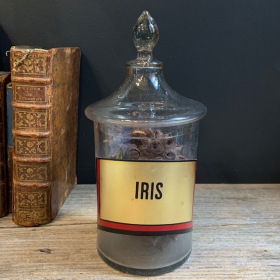
Iris
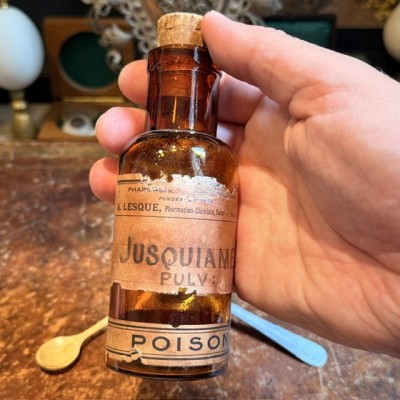
Jusquiame - Henbane
Antique pharmacy bottle.
Red ‘POISON’ label
Indicating to the pharmacist that it must be stored separately from other substances in the cabinet for toxic substances, the famous ‘poison cabinet’.
It comes from the former cellar-laboratory of a Parisian pharmacy. The bottles had not been moved from the shelves since the late 1950s. The cellar had served as a medical analysis laboratory and a laboratory for the pharmacy’s compounded preparations from 1900 until around 1950.
Date: Begining of 20th century
EMPTY
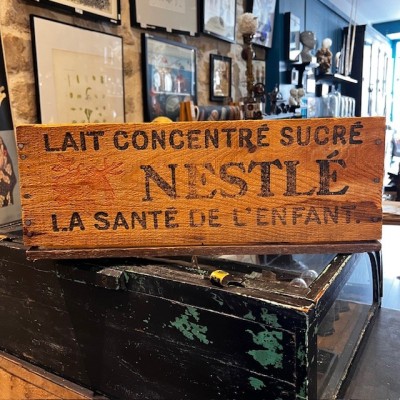
Antique wooden advertising case for Nestlé concentrated infant milk
Found in Parisian cellars that served as laboratories and storage rooms for pharmacists preparing their masterful concoctions from 1900 to 1950.
It was used to store products, glass bottles, etc.
Period: Circa 1910–1930
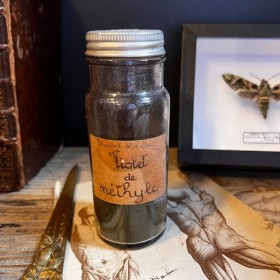
Violet de Méthyle
Antique pharmacy bottle - Droguerie - Apothicaire
Bibliothèque Choisie de Médecine - Volume 8
Selected Library of Medicine
By François PLANQUE - 1750
Complete original edition with 10 fold-out plates
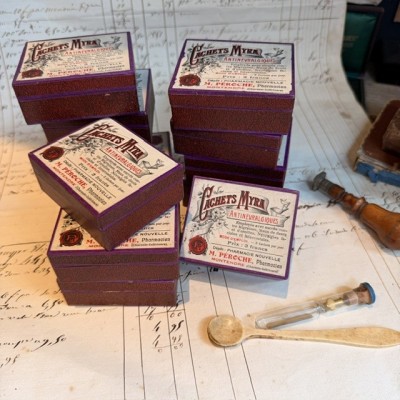
Antique pharmacy box for remedy made of canvas cardboard
Myra pills
Covering in sumptuous red maroquiné/chagrin paper, with edges and slices enhanced with a deep violet/purple very characteristic of the creations of the late nineteenth and early twentieth century: 1890/1910.
You buy 1 box but not the lot
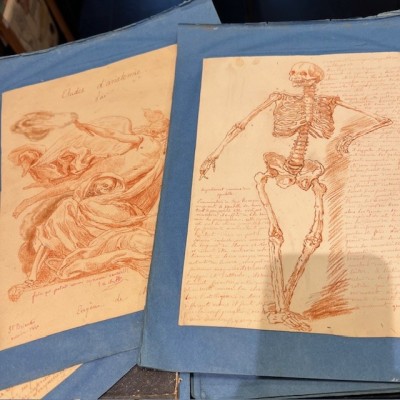
Red chalk drawing- Anatomical drawing
Anatomical study
Drawn by Eugène de Montchoisy in Saint-Brieuc in November 1840
These are not reproductions but original period drawings in red chalk.
You are purchasing one plate, not the entire set of plates
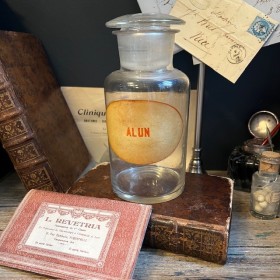
Alum
Antique pharmacy bottle
Apothecary vial
Color pigments have been added to the inside of the jar
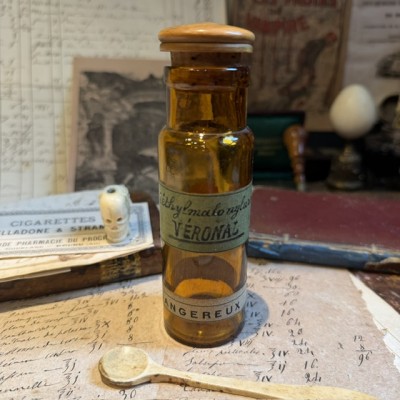
Veronal - Barbiturates - Diethylmalonylurea
Antique amber glass bottle, with a boxwood and cork stopper.
Label: DANGEROUS
Indicating to the pharmacist that it must be stored separately from other substances in the cabinet for toxic substances, the famous ‘poison cabinet’.
It comes from the former cellar-laboratory of a Parisian pharmacy. The bottles had not been moved from the shelves since the late 1950s. The cellar had served as a medical analysis laboratory and a laboratory for the pharmacy’s compounded preparations from 1900 until around 1950.
EMPTY
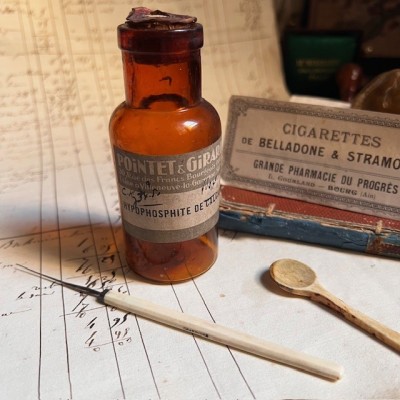
Hypophosphite de Calcium
Antique pharmacy bottle
EMPTY
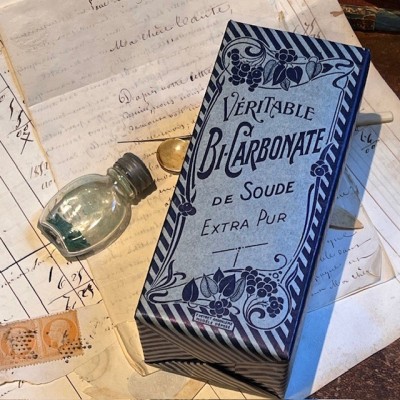
Bi-Carbonate de Soude - Sodium bicarbonate
Antique cardboard pharmacy box
Beautiful typography typical of the Belle Époque: circa 1910-1920
Crin de Florence - Antique suture thread
Catgut
Natural suture thread obtained from the caterpillar of the Bombyx mori butterfly.
Eau de Cologne du Mont St Michel
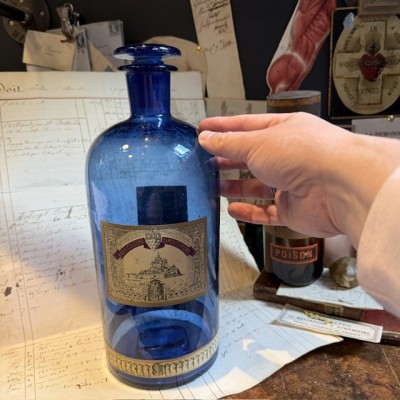
Antique BLUE glass pharmacy bottle
EMPTY
Very Large cobalt blue glass pharmacy bottle - Apothecary - Shouldered - H27.5cm - 19th century
Shouldered apothecary bottle - Antique pharmacy bottle
Mouth-blown glass - Cobalt blue color tinted throughout
This large-capacity jar was a storage jar intended for stockpiling
Incense
Antique pharmacy bottle - Wide-mouth apothecary jar.
19th-century mouth-blown glass
There are still some product inside.
A fascinating artifact from the history of pharmacology