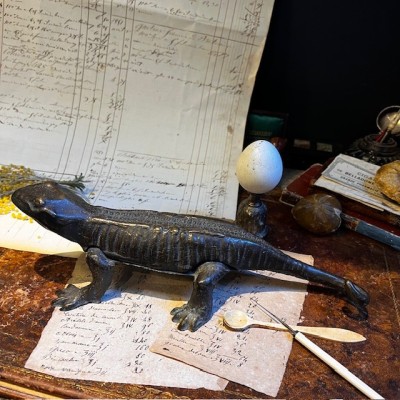

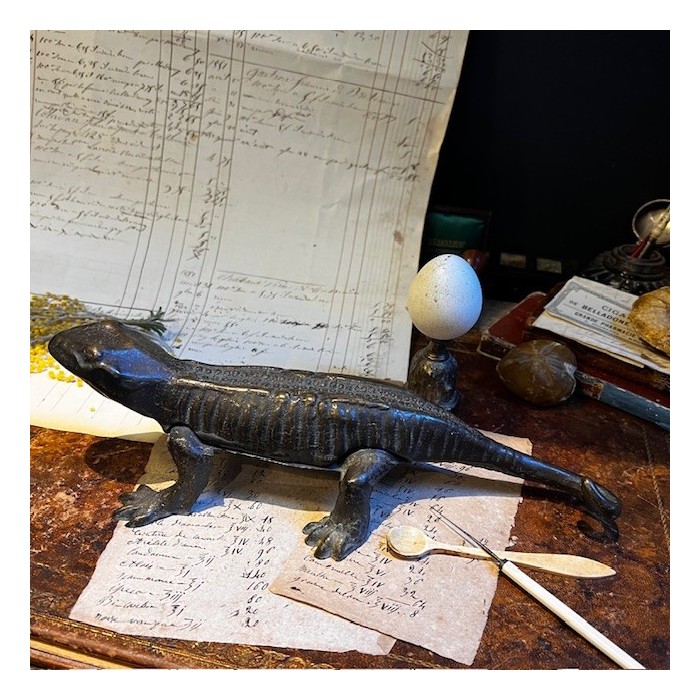
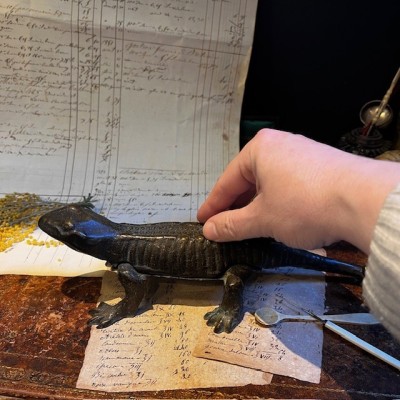
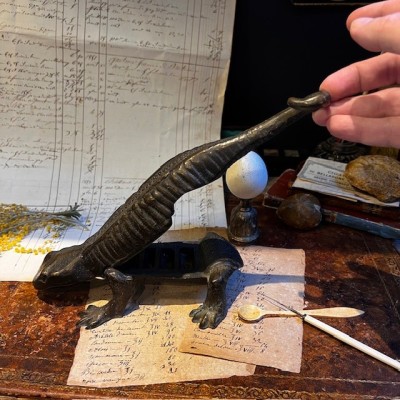
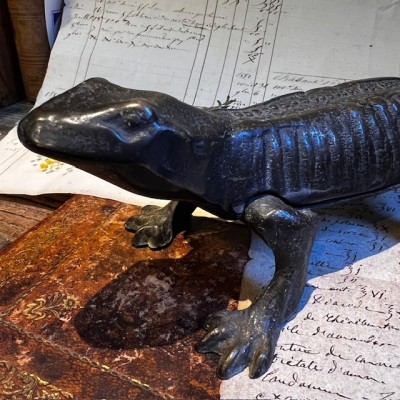
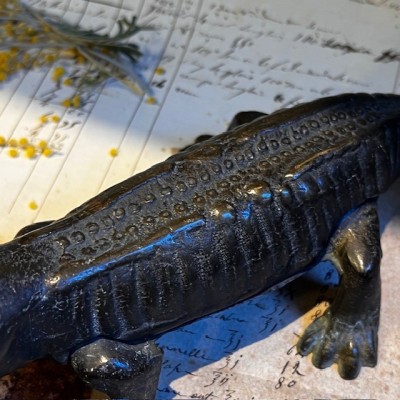
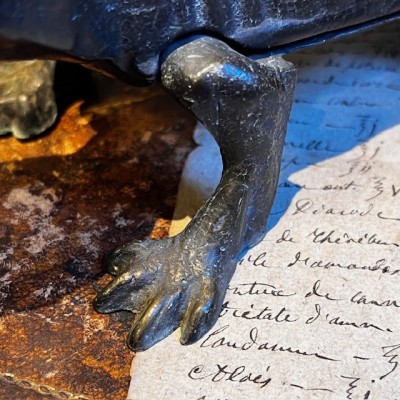
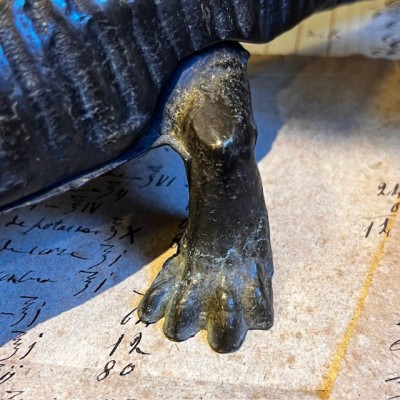
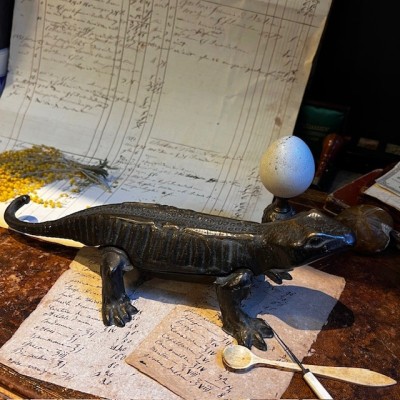
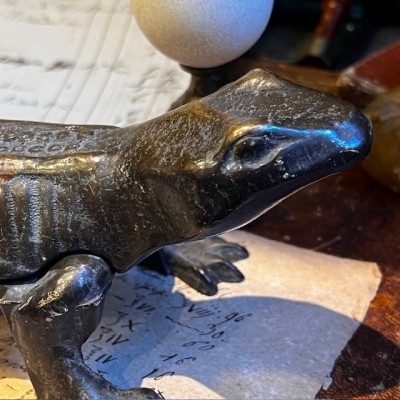
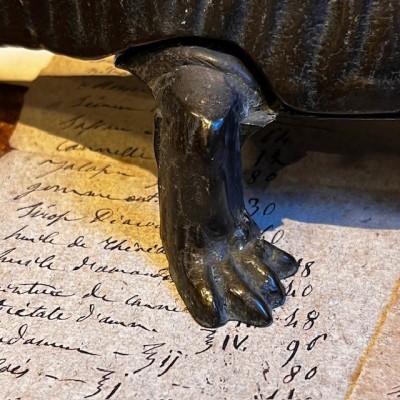
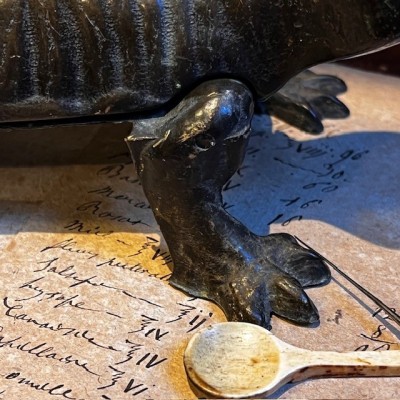
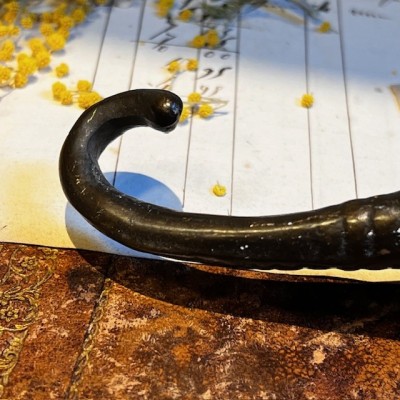
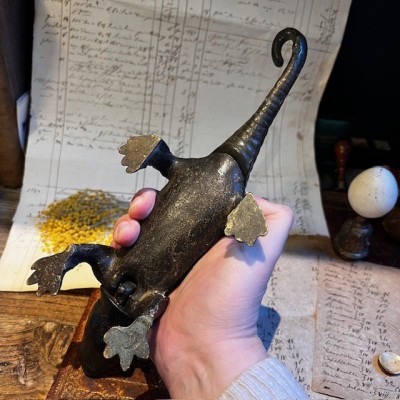
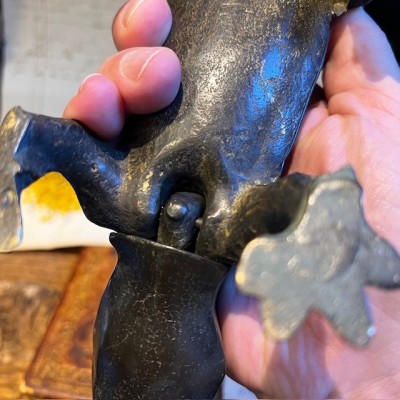
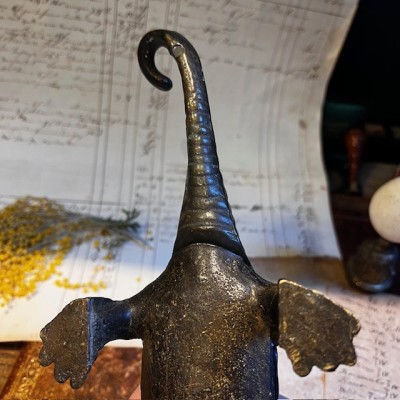
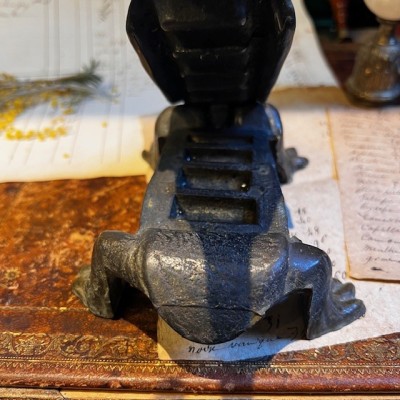
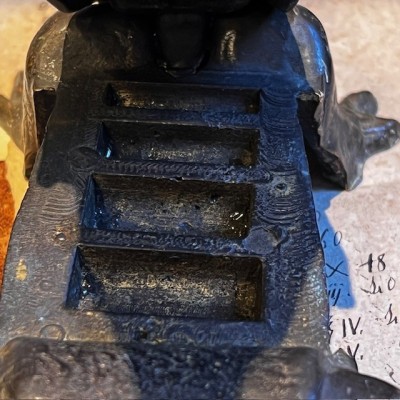
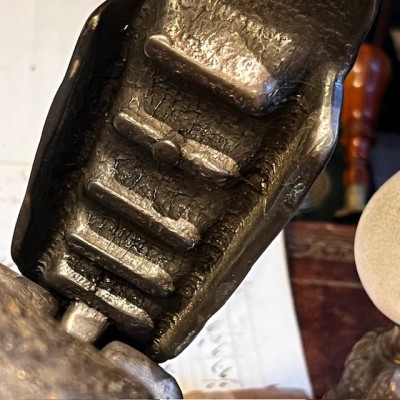
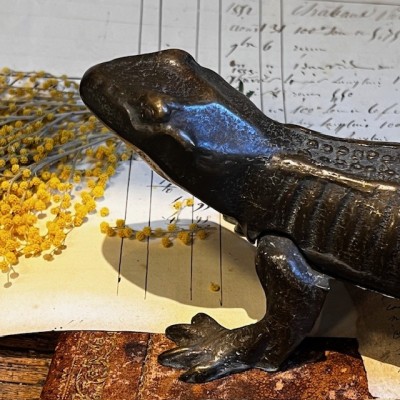
Salamander - Pharmacy corkscrew in bronze
XIXth century
Antique pharmacy corkscrew in the shape of a salamander
Bronze
From the 19th century or early 20th century.
The corkscrew allowed the pharmacist to compress and soften the corks before inserting them in the bottles containing the remedy.
The corkscrew was often fixed in the apothecary's or pharmacist's shop by screwing it to the counter.
Here what is uncommon is that it is in the form of a salamander but one finds it very often in the form of a crocodile, another name of the corkscrew.
Length: 29.5cm
It weighs 1.8Kg
Before these objects appear, the apothecary or the pharmacist chewed himself the corks to insert them in the bottles... From where the term chewing-cork...
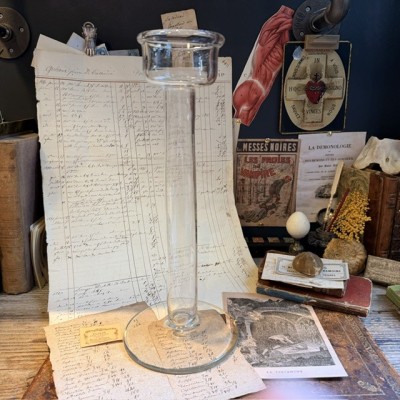
Test Tube with Special Bulb for Mercury Ureometer - 1900 - Pharmacy - Apothecary
Period: 1900 - Pharmacy - Apothecary
To be diverted into a soliflore vase
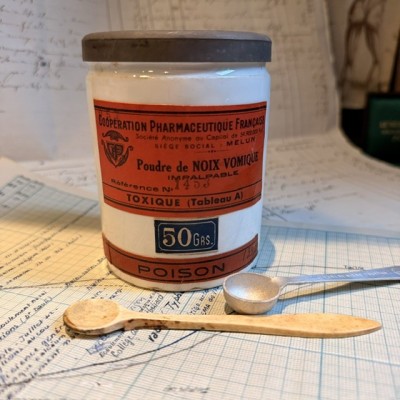
Impalpable Nux Vomica powder
White earthenware pot
Red POISON and TOXIC label
Signaling to the pharmacist that it is imperative to keep apart the other substances in the cabinet of toxic substances, the famous poison cabinet.
It comes from an old cellar-laboratory in a Parisian pharmacy. The bottles had not moved since the late 1950s on the shelves. The cellar had served as a laboratory for medical analyses and a laboratory for magistral preparations of the pharmacy from 1900 until around 1950.
EMPTY
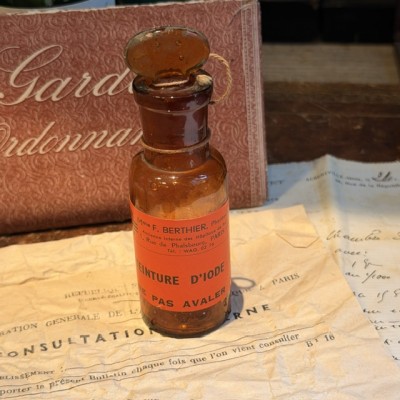
Iodine dye
Antique pharmacy bottle
With the inscription Teinture d'Iode molded in glass
EMPTY
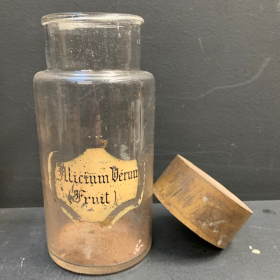
Antique pharmacy jar: Illicium verum (Fruit) / Star anise
Glass pharmacy bottle - XIXth century
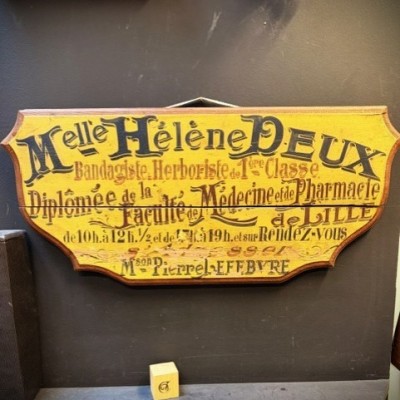
Rare and authentic wall sign panel
Pharmacy and fitting brand - Miss Hélène Deux, Bandagiste & 1st class Herbalist
Officine sign panel in painted wood from the 19th-20th century hinge: 1890-1920.
The sign is made of 2 reinforced wood panels at the back. There is a space between the 2 panels.
The sign features a superb art lettering entirely made freehand by a letter painter (superb contrasts of blue and brown, neat full and loose)
Witness to the history of pharmacy and ancient orthopaedics: the bandagist shaping leather and frames for corsets and restraints, and the herbalist 1st class, a profession that has disappeared since the abolition of the diploma in 1941.
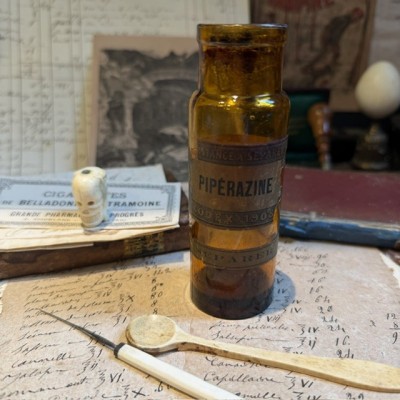
Piperazine
Antique amber glass bottle. The cap is missing
Green label: SUBSTANCE TO BE STORED SEPARATELY – CODEX 1908
Indicating to the pharmacist that it must be stored separately from other substances in the cabinet for toxic substances, the famous ‘poison cabinet’.
It comes from the former cellar-laboratory of a Parisian pharmacy. The bottles had not been moved from the shelves since the late 1950s. The cellar had served as a medical analysis laboratory and a laboratory for the pharmacy’s compounded preparations from 1900 until around 1950.
EMPTY

Antique and large drum microscope
In it's mahogany wooden box
For botanist, entomologist
This is a larger model than those usually found on the market
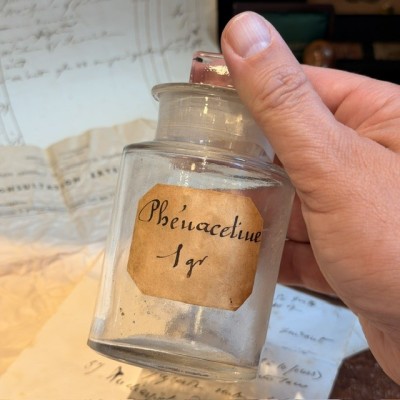
Phenacetin
Antique pharmacy bottle
Phenacetin is one of the first synthetic antalgic and antipyretic (anti-fever) from the chemical industry, very widespread in pharmacies from the end of the 19th century until the second half of the 20th century.
EMPTY - The cap is blocked and does not open
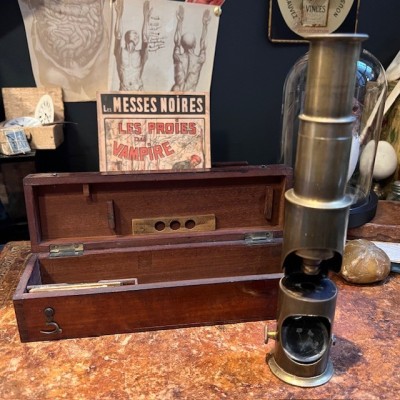
Antique and large drum microscope
In it's mahogany wooden box
For botanist, entomologist - XIXth century
This is a larger model than those usually found on the market
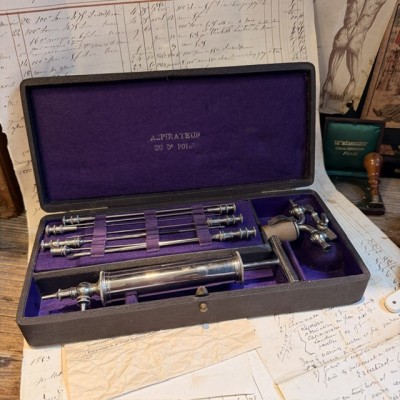
Dr. Potain’s aspirator set in its felt-lined box
Late 19th century, circa 1880
Antique medical instrument without manufacturer marking
non-functional
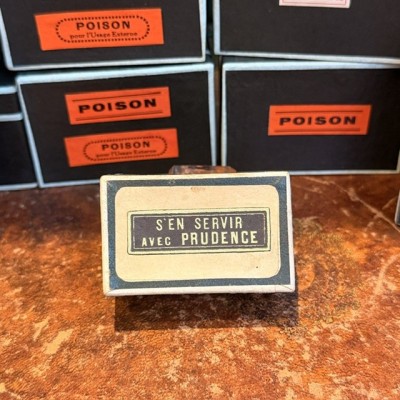
Antique labels in a pharmacy box for cures made of canvas cardboard
Use it with caution label
The pharmacist used his boxes of medicine to put away the labels he would then put on the bottles that he would resell to his customers.
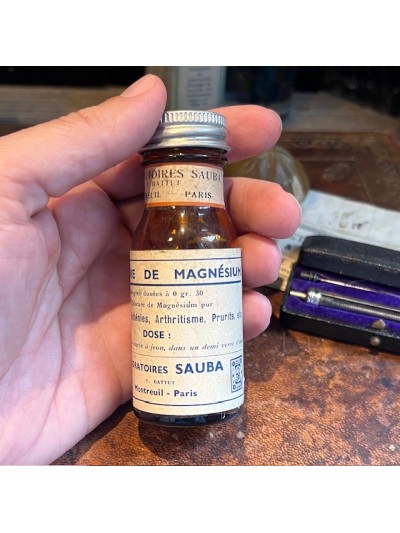
Chlorure de magnésium
Antique pharmacy bottle
Apothecary vial
EMPTY
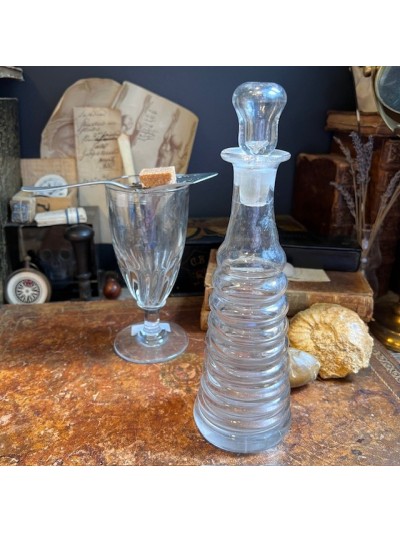
An antique absinthe topette (decanter)
10 Beaded Topette
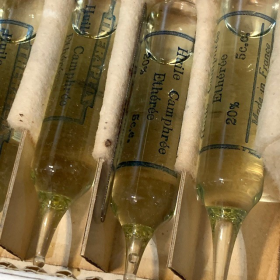
Bulb for hypodermic injection - Camphorated ethereal oil (circa 1920)
THERAPLIX
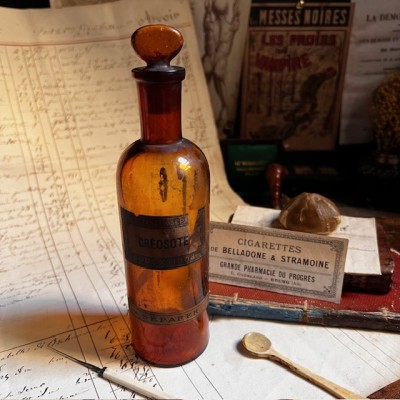
Créosote
Antique pharmacy bottle
Green label: SUBSTANCE TO BE SEPARATED - CODEX 1908
This means that this bottle had to be kept separate from the others because it was dangerous in high doses
EMPTY
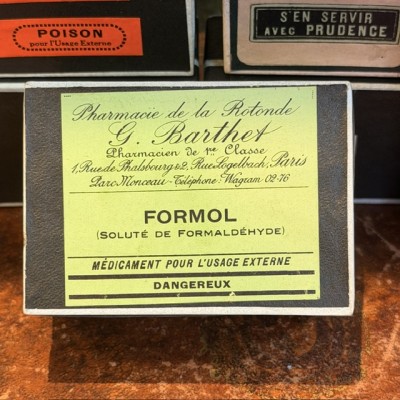
Antique labels in a pharmacy box for cures made of canvas cardboard
Formalin label
The pharmacist used his boxes of medicine to put away the labels he would then put on the bottles that he would resell to his customers.
Salamander - Pharmacy corkscrew in bronze
XIXth century