
- New
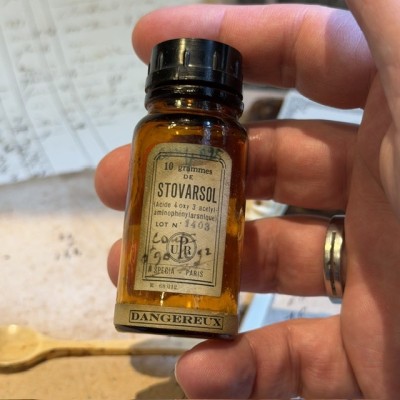
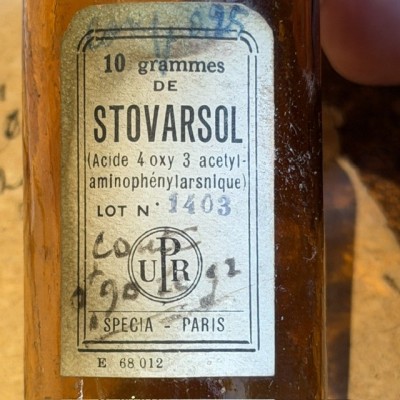
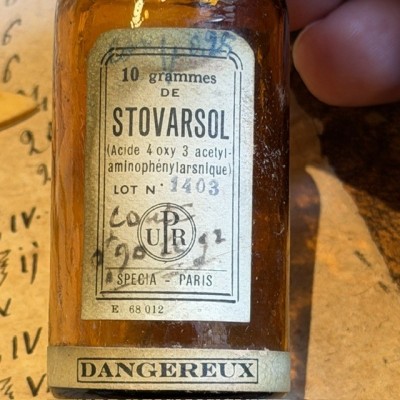
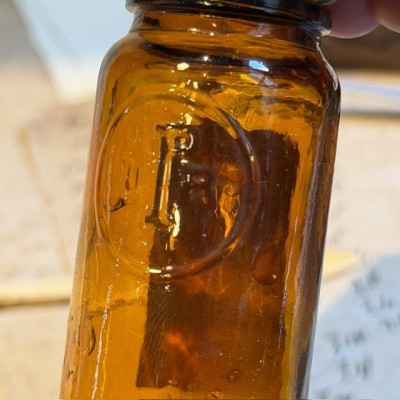
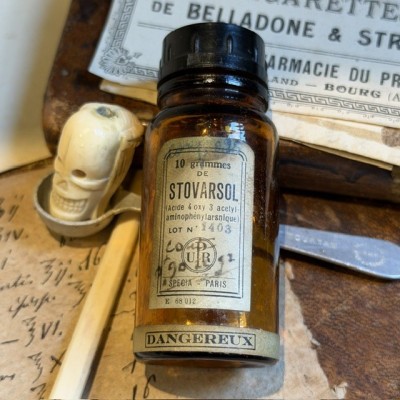
Stovarsol – Arsenic Treatment for Syphilis
From SPECIA Laboratories – 1930–1950
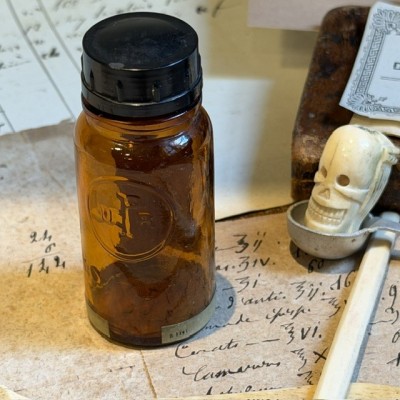
Antique glass bottle
Label: DANGEROUS
Warning the pharmacist that it must be stored separately from other substances in the toxic substances cabinet, the infamous ‘poison cabinet’.
It comes from the former cellar-laboratory of a Parisian pharmacy. The bottles had not been moved from the shelves since the late 1950s. The cellar had served as a medical analysis laboratory and a laboratory for the pharmacy’s compounded preparations from 1900 until around 1950.
EMPTY
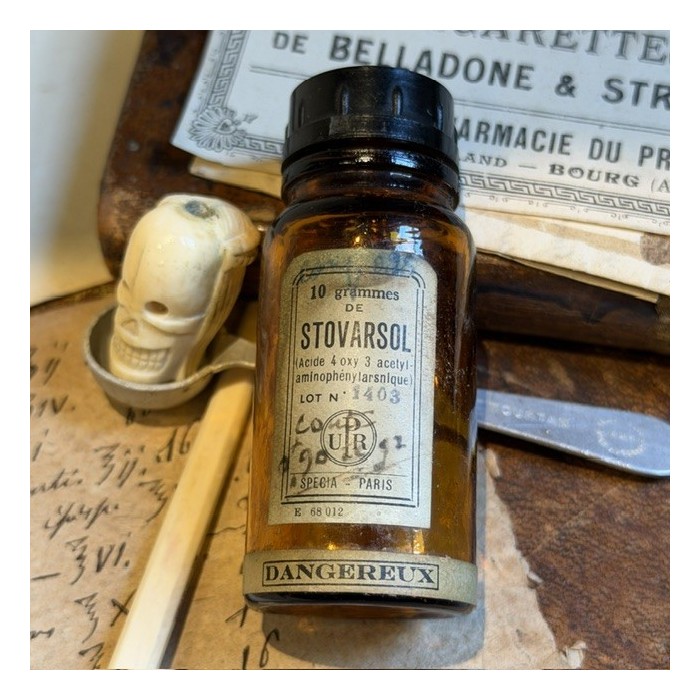
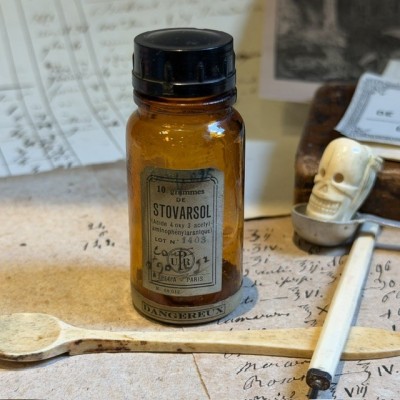
Stovarsol – Arsenic Treatment for Syphilis
From SPECIA Laboratories – 1930–1950
Antique glass bottle
Label: DANGEROUS
Warning the pharmacist that it must be stored separately from other substances in the toxic substances cabinet, the infamous ‘poison cabinet’.
Stovarsol is not just an ordinary remedy. It is an arsenic-based medicine used to treat syphilis.
This was its primary and historical use. Before the discovery and widespread use of penicillin after the Second World War, arsenic derivatives were the only effective weapon against syphilis.
Stovarsol also had the advantage of being administered orally, in tablet form, unlike the older mercury-based injectable treatments.
The arsenic contained in Stovarsol caused very severe and toxic side effects for the patient in the event of prolonged treatment, as the body has great difficulty eliminating arsenic.
But faced with syphilis, which inevitably led to dementia, paralysis and death in the long term, arsenic remained the patient’s only chance of survival.
As soon as penicillin became widely available after 1945, these curative poisons were abandoned. It comes from the former cellar-laboratory of a Parisian pharmacy.
It comes from the former cellar-laboratory of a Parisian pharmacy. The bottles had not been moved from the shelves since the late 1950s. The cellar had served as a medical analysis laboratory and a laboratory for the pharmacy’s compounded preparations from 1900 until around 1950.
Height of the bottle: 7cm with cap
Period: circa 1930s–1950s
EMPTY
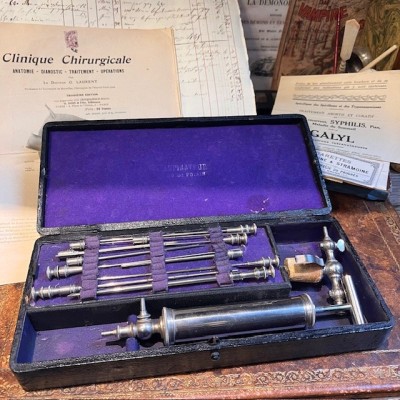
Dr Potain vacuum cleaner in its case
Late 19th century - 1870-1895
Antique medical instrument
However, the box comes from the Hôpital de la Charité in Paris, as indicated by the inscription on the top of the box, from the Bouillaud ward of the hospital.
non-functional
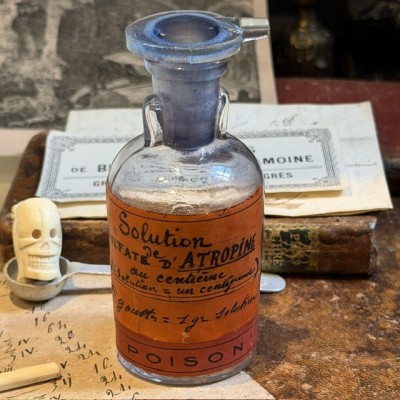
Atropine sulphate
Atropine is extracted from belladonna, the notorious poisonous plant.
Antique dropper bottle.
Red ‘POISON’ label
Indicating to the pharmacist that it must be stored separately from other substances in the cabinet for toxic substances, the famous ‘poison cabinet’.
It comes from the former cellar-laboratory of a Parisian pharmacy. The bottles had not been moved from the shelves since the late 1950s. The cellar had served as a medical analysis laboratory and a laboratory for the pharmacy’s compounded preparations from 1900 until around 1950.
Date: Late 19th century or very early 20th century (circa 1890–1910)
EMPTY
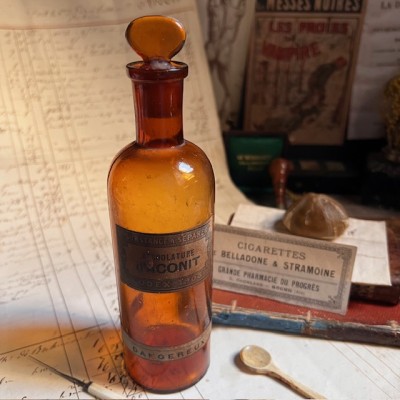
Aconite tincture
Antique pharmacy bottle
Green label: SUBSTANCE A SEPARER - CODEX 1908
This means that this bottle had to be kept separate from the others because it was dangerous in high doses- POISON
EMPTY

Grams / Tablespoons - Graduated bottle
in French: Grammes / Cuillères à soupe
Antique medicine bottle
Apothecary
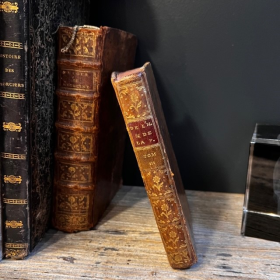
De l'Homme et de la Femme (Of Man and Woman)
By M. de Lignac - Volume 3
Anatomy of procreation - 1779
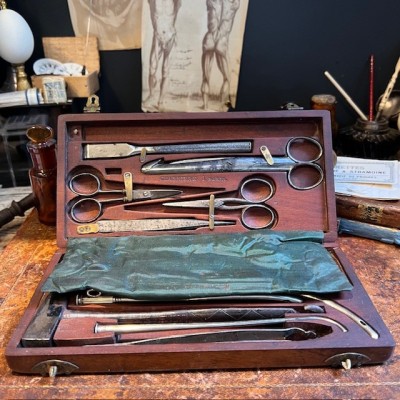
Portable autopsy kit from the mid-19th century
Maison Charrière in Paris, circa 1845–1870
Mahogany case for autopsy and dissection
Small portable mahogany case containing a set of autopsy instruments: hook hammer, bone chisel, enterotome scissors, probes, hooks and suture needles. Used by forensic scientists and anatomists for opening and examining bodies.
Charrière, a major 19th-century Parisian manufacturer, was a pioneer in the design of high-precision surgical and anatomical instruments.
Mahogany and polished steel: 23 × 11 cm
Please note: crack in the wood under the case
A beautiful object, very rare to find
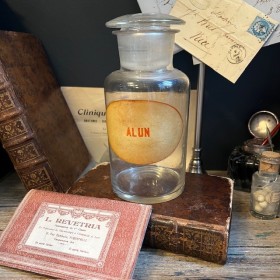
Alum
Antique pharmacy bottle
Apothecary vial
Color pigments have been added to the inside of the jar
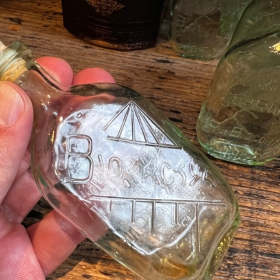
Antique pharmacy bottle
BIOLACTYL Ferment Fournier - Early 1900

Solution N°153
Antique pharmacy bottle
Apothecary vial
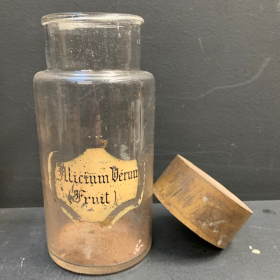
Antique pharmacy jar: Illicium verum (Fruit) / Star anise
Glass pharmacy bottle - XIXth century
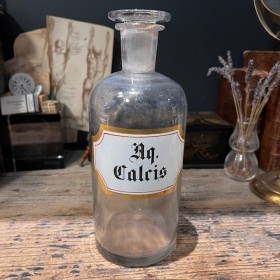
Aqua Calris - Hot water
Antique pharmacy jar
Apothecary
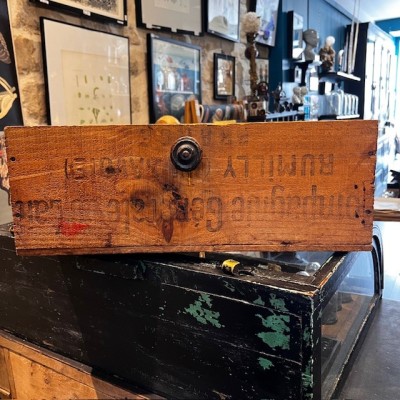
Antique wooden advertising case for Mont Blanc - Rumilly condensed milk - Drawer
Found in Parisian cellars that served as laboratories and storage rooms for pharmacists preparing their masterful concoctions from 1900 to 1950.
It was used to store products, glass bottles, etc.
This box is no longer just a transport container, it has been adopted as a piece of furniture.
Period: Circa 1920–1940
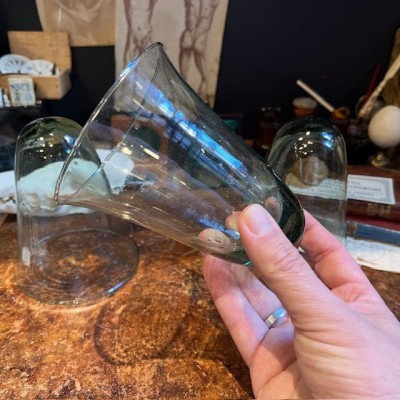
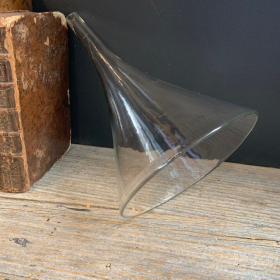
Antique glass bell jar
Apothecary / Laboratory
Thin glass, light green in color and darker at the top, with bubbles
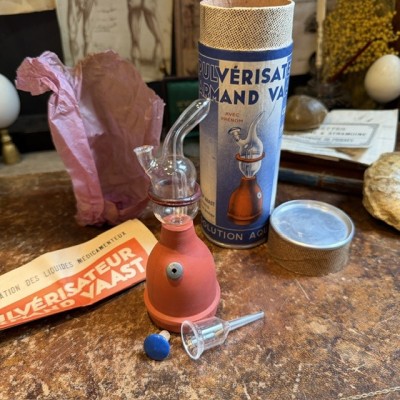
Armand Vaast nasal spray - Oil vaporizer - Antique remedy
In its box
Used in otolaryngology, it was intended for nasal or oral sprays in the treatment of colds and antiseptic treatment of the respiratory tract.
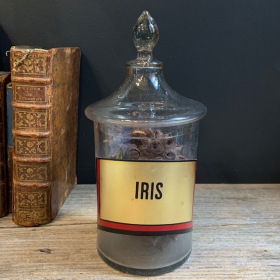
19th century Herbalist's or Pharmacy crystal jar
Iris
Stovarsol – Arsenic Treatment for Syphilis
From SPECIA Laboratories – 1930–1950
Antique glass bottle
Label: DANGEROUS
Warning the pharmacist that it must be stored separately from other substances in the toxic substances cabinet, the infamous ‘poison cabinet’.
It comes from the former cellar-laboratory of a Parisian pharmacy. The bottles had not been moved from the shelves since the late 1950s. The cellar had served as a medical analysis laboratory and a laboratory for the pharmacy’s compounded preparations from 1900 until around 1950.
EMPTY