

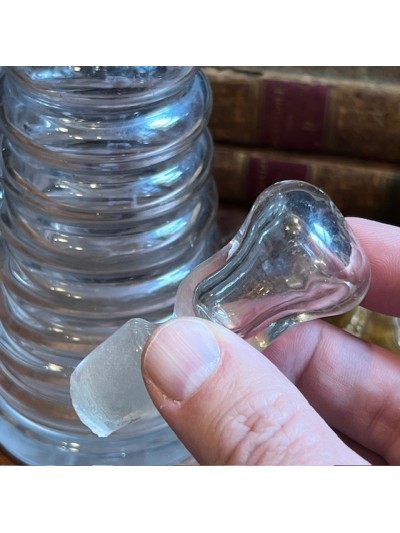
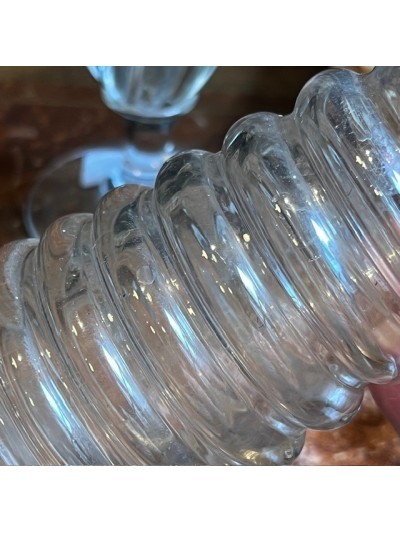
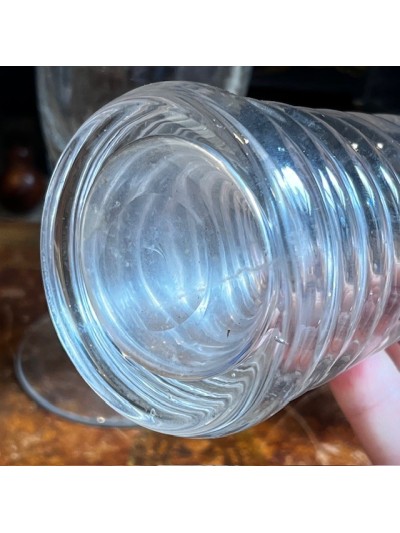
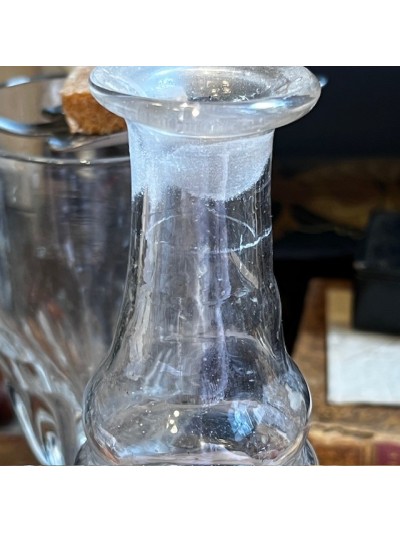
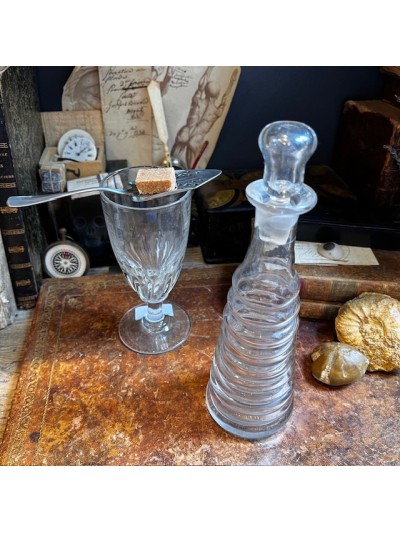
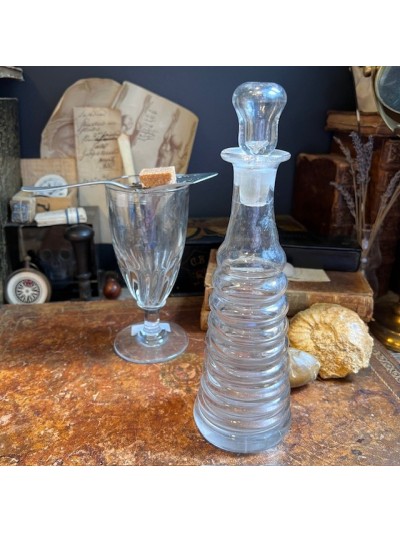
An antique absinthe topette (decanter)
10 Beaded Topette
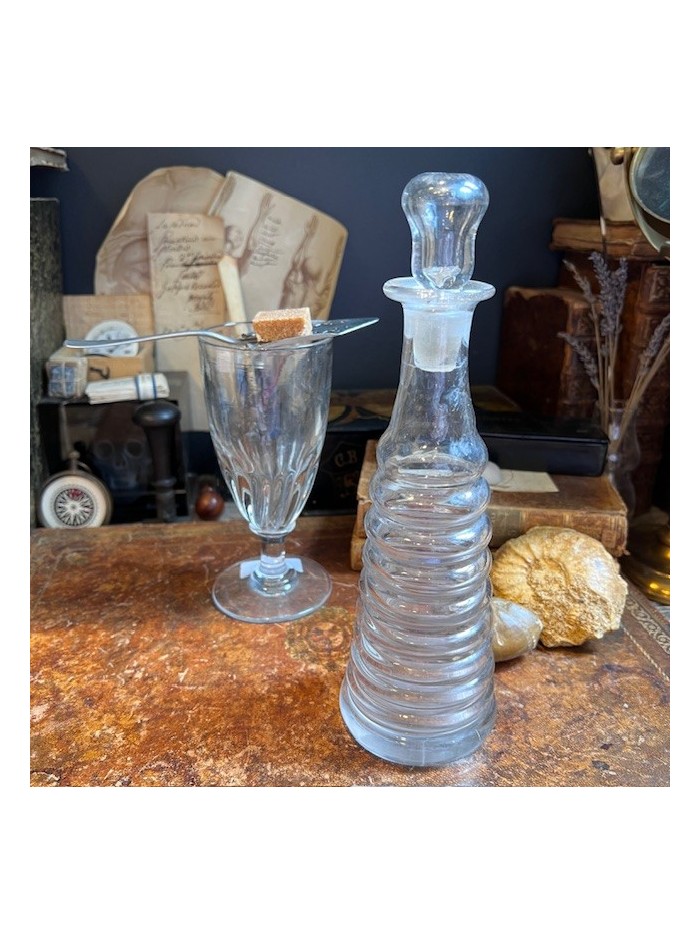
An antique absinthe topette (decanter)
Also known as a divider decanter, made of mouth-blown glass because you can still see the trace of the blowing rod under the decanter.
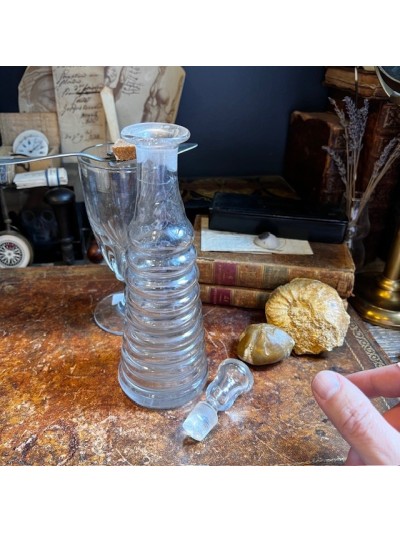
Blown glass peanut stopper.
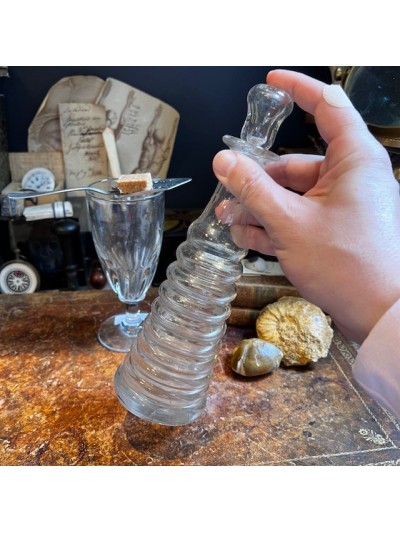
Each bead represents a dose of absinthe. The most common is the double rim, as these carafes are also used for other spirits. Hence the double dose: one dose (1 bourrelet) in the coffee and then the second dose afterwards, the famous ‘pousse-café’!
You pour a slug of absinthe into the glass and then simply put the sugar on the spoon above the glass and let the water run down before tasting.
Very practical for cafe owners to calculate the number of glasses you have drunk.
Model with 10 beads (10 doses): Height: 23.5 cm (with stopper) Diameter: 7cm
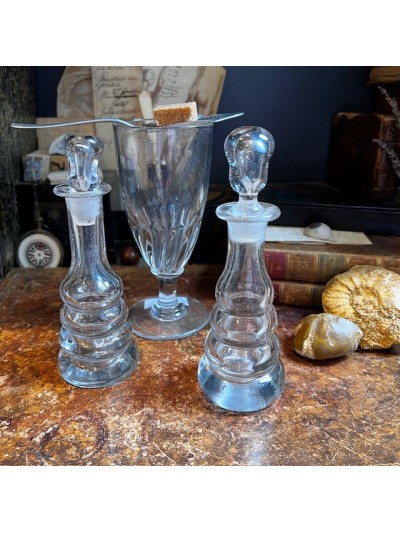
An antique absinthe topette (decanter)
4 Beaded Topette
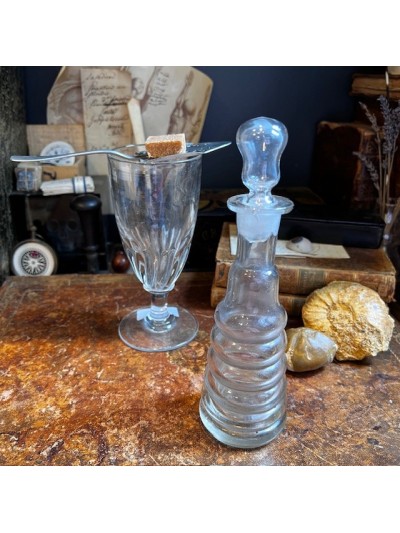
An antique absinthe topette (decanter)
6 Beaded Topette
Residue in the bottom of the carafe
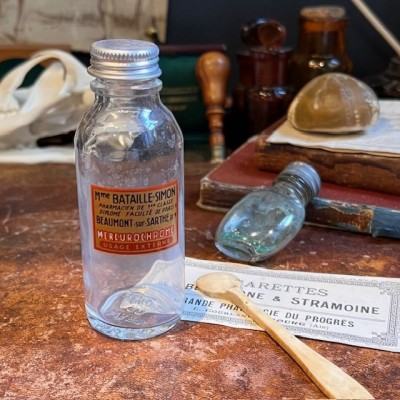
Mercurochrome
Antique pharmacy bottle - Apothecary
Mrs Bataille-Simon, First Class Pharmacist in Beaumont sur Sarthe - Tel 9
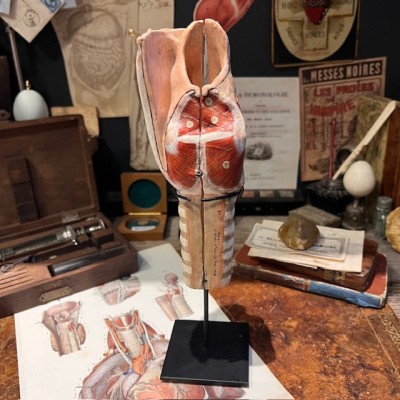
Antique anatomical model of the larynx and trachea made of painted papier-mâché.
Produced by Établissements Auzoux and manually dated 1938.
Model can be dismantled lengthwise, numbered, used for medical teaching.
Please note: one removable side piece is missing. The model remains stable and highly decorative. Authentic piece.
Handwritten inscription from the period: Larynx - Auzoux à St-Aubin-d’Écrosville Eure 1938
Placed in a metal base, it can be easily removed to hold it in your hand.

Tétra-chlorure de Carbone - Carbon Tetrachloride
Antique pharmacy bottle with old label POULENC FRERES circa 1928
It comes from an old cellar-laboratory in a Parisian pharmacy. The bottles had not moved since the late 1950s on the shelves. The cellar had served as a laboratory for medical analyses and a laboratory for magistral preparations of the pharmacy from 1900 until around 1950.
EMPTY
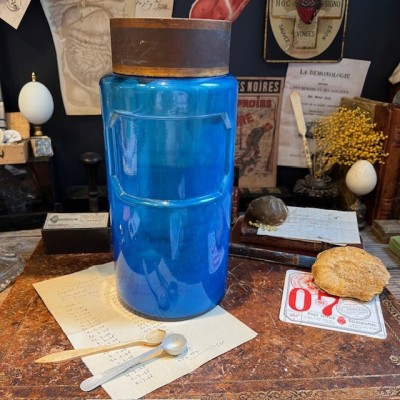
Cobalt blue glass pharmacy jar - Apothecary - Wide neck - H26cm - 19th
Apothecary jar with wide opening. Antique pharmacy bottle
Mouth-blown glass - Cobalt blue color tinted throughout
This large-capacity jar was a storage jar intended for stockpiling
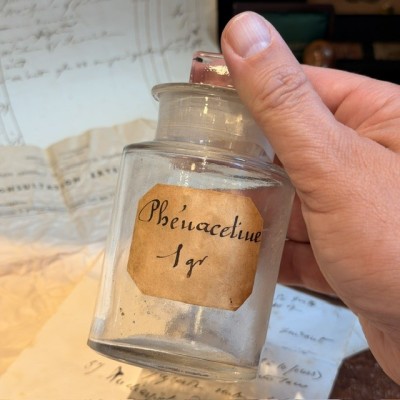
Phenacetin
Antique pharmacy bottle
Phenacetin is one of the first synthetic antalgic and antipyretic (anti-fever) from the chemical industry, very widespread in pharmacies from the end of the 19th century until the second half of the 20th century.
EMPTY - The cap is blocked and does not open
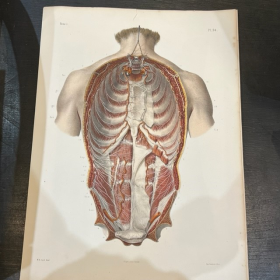
Anatomic lithography: "Traité complet de l'Anatomie de l'Homme"
by Dr Bourgery and draughtsman Jacob
Volume 3 - 1844
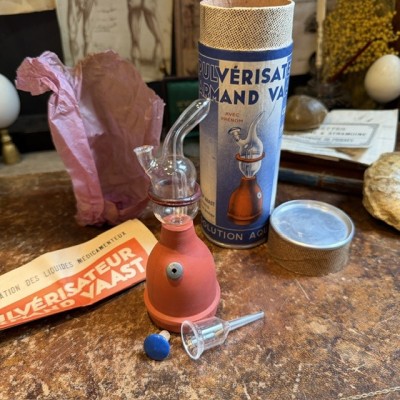
Armand Vaast nasal spray - Oil vaporizer - Antique remedy
In its box
Used in otolaryngology, it was intended for nasal or oral sprays in the treatment of colds and antiseptic treatment of the respiratory tract.
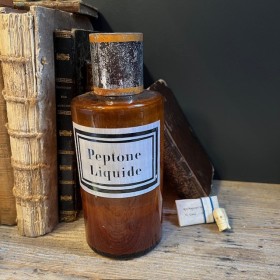
Antique pharmacy jar
Liquid Peptone
Raw meat product very fashionable in the first half of the 20th century.
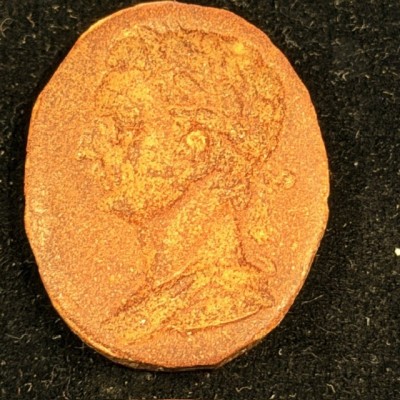
Antique intaglio and cameo print from the Grand Tour of the 19th century
In Brown Wax
True testimony of the Grand Tour carried out by the aristocrats in the 19th century
Profiles in the antique style, mythological scenes or Greco-Roman deities
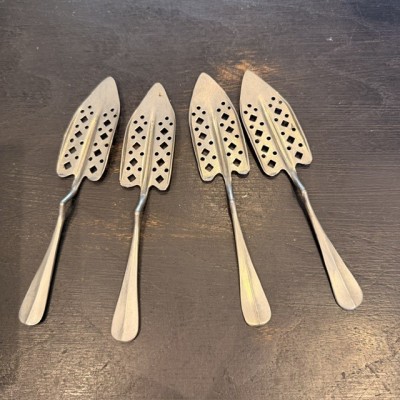
Antique Absinthe Spoon
The spoons have been used, are scratched, badly oxidized, etc.
You buy 1 spoon, not the whole lot
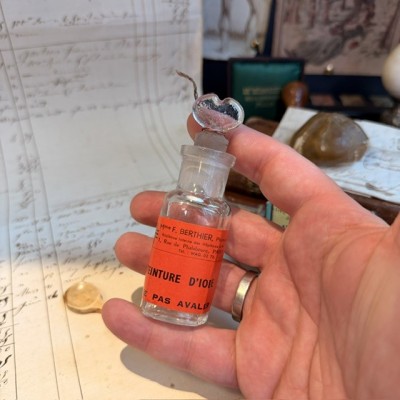
Iodine dye
Antique pharmacy bottle
With the inscription Teinture d'Iode molded in glass
EMPTY
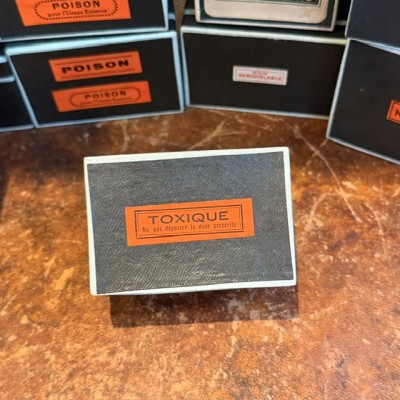
Antique labels in a pharmacy box for cures made of canvas cardboard
TOXIC label - Do not exceed the prescribed dose
The pharmacist used his boxes of medicine to put away the labels he would then put on the bottles that he would resell to his customers.
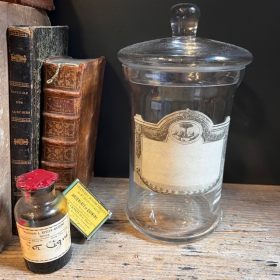
Herbalist's or Pharmacist's jar
Antique blank label of the XVIIIth century
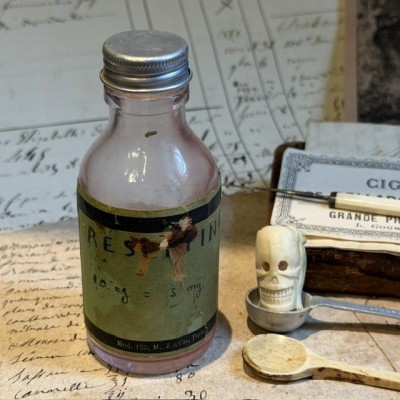
Reseptine
Antique pharmacy bottle
EMPTY
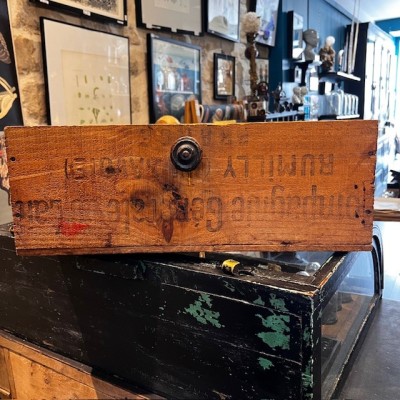
Antique wooden advertising case for Mont Blanc - Rumilly condensed milk - Drawer
Found in Parisian cellars that served as laboratories and storage rooms for pharmacists preparing their masterful concoctions from 1900 to 1950.
It was used to store products, glass bottles, etc.
This box is no longer just a transport container, it has been adopted as a piece of furniture.
Period: Circa 1920–1940
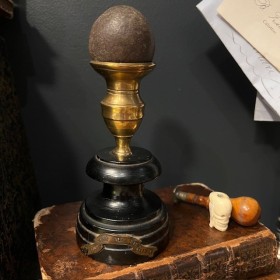
Antique bezoar - Antipoison - Antidote
Once sold by the apothecary, bezoar, also known as gallstone, was reputed to have the same anti-poison properties as the legendary unicorn's horn, hence its excessively high price, also due to its great rarity.
An important piece in a cabinet of curiosities
Sold alone - Without stand, sold separately
An antique absinthe topette (decanter)
10 Beaded Topette