

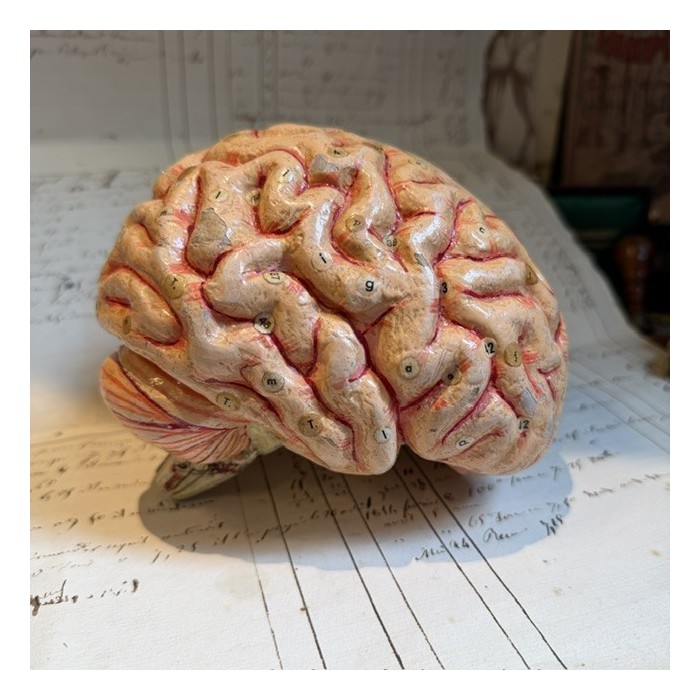
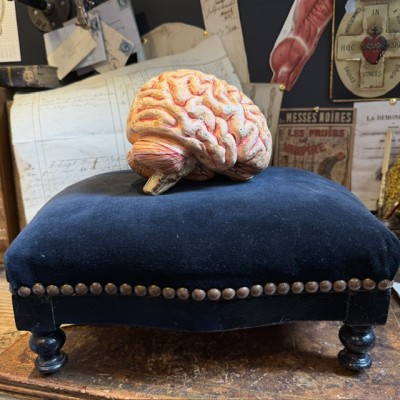
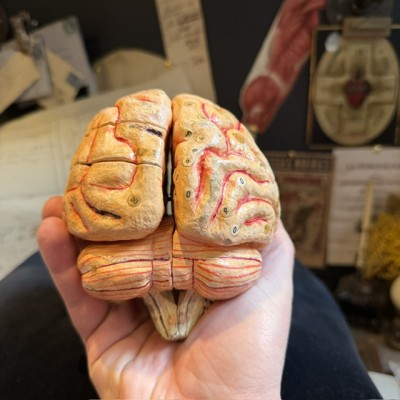
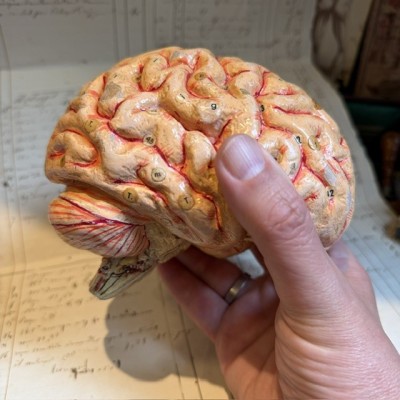
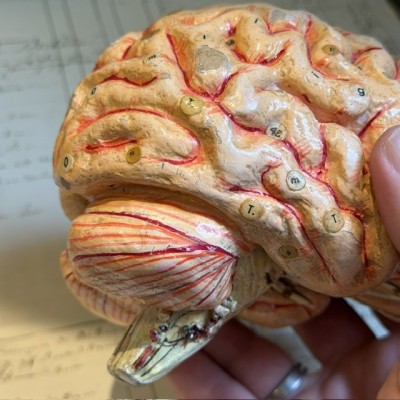
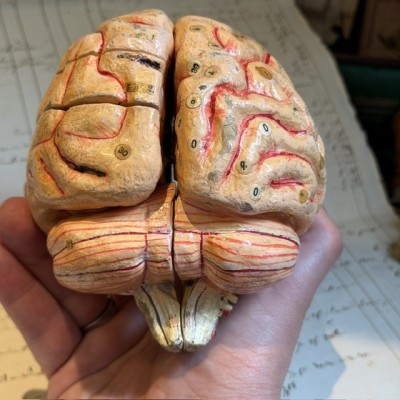
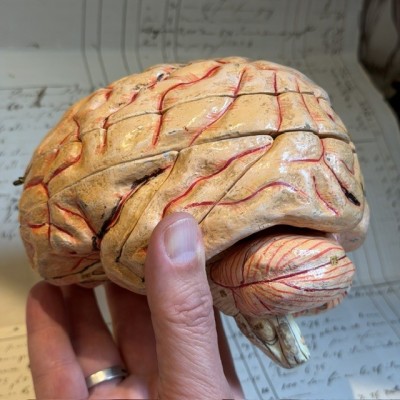
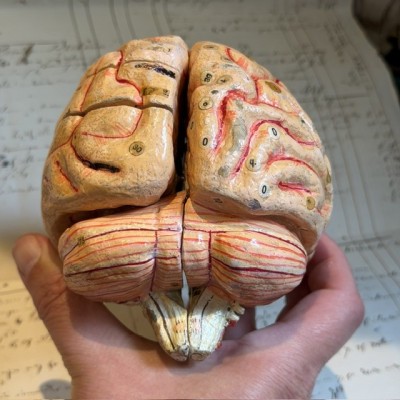
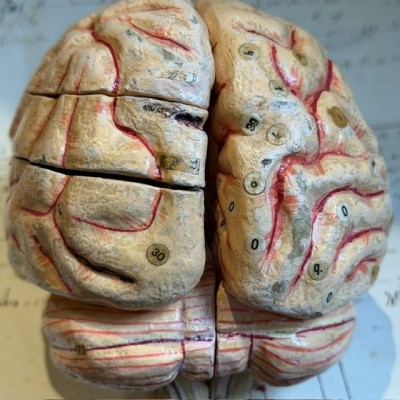
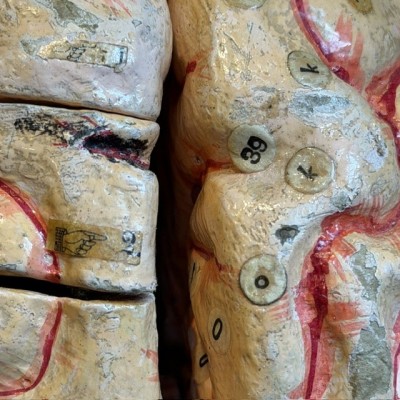
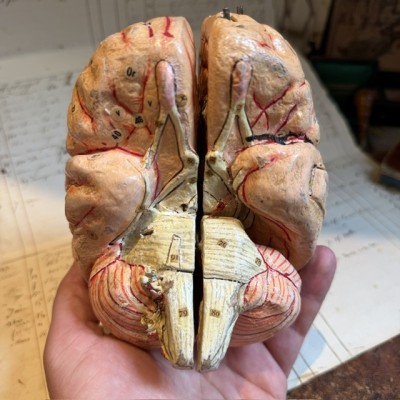
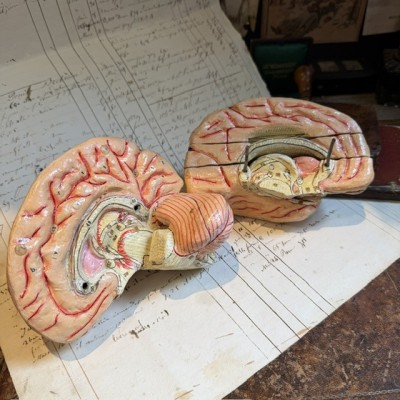
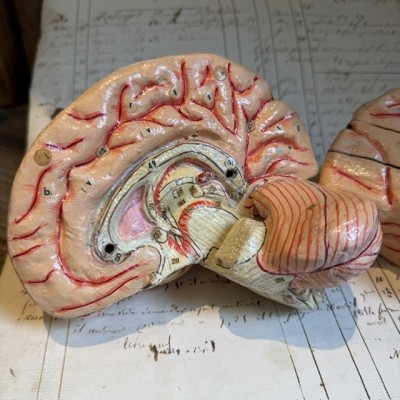
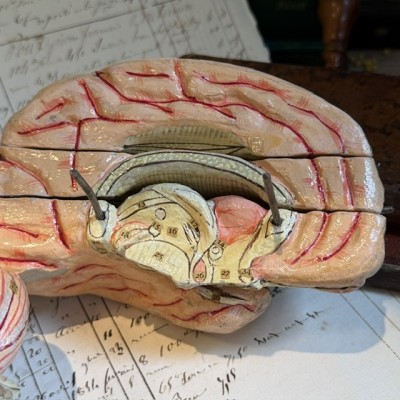
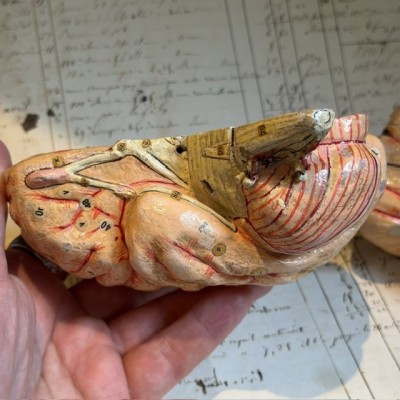
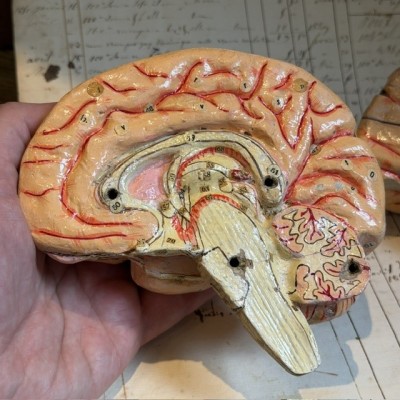
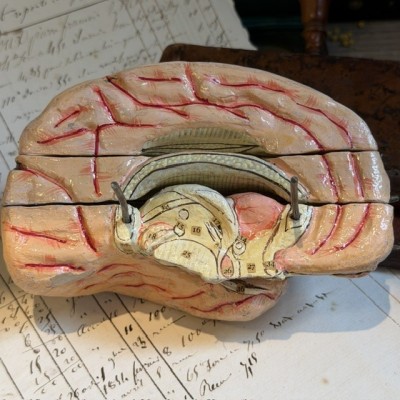
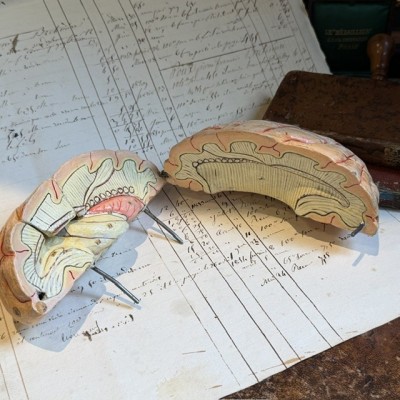
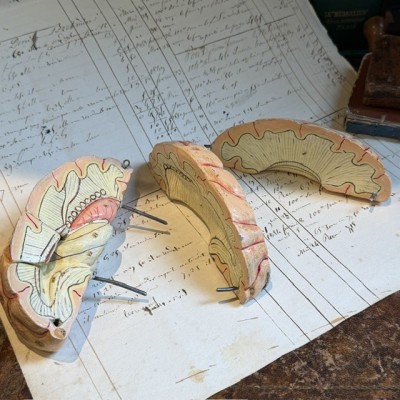
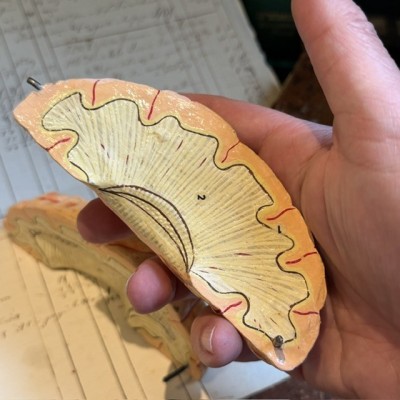
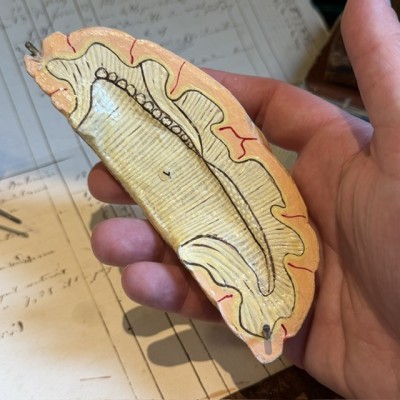
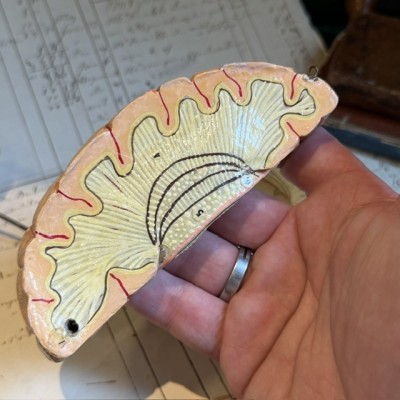
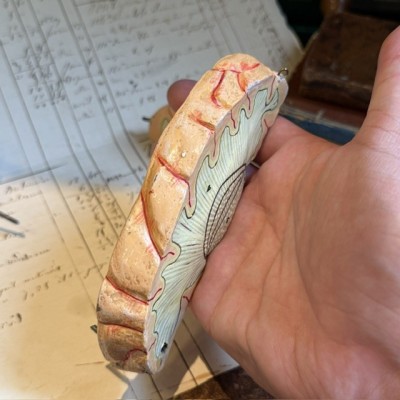
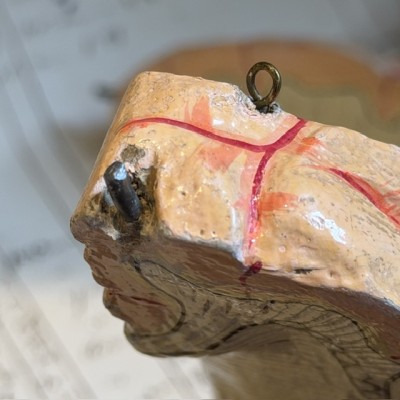
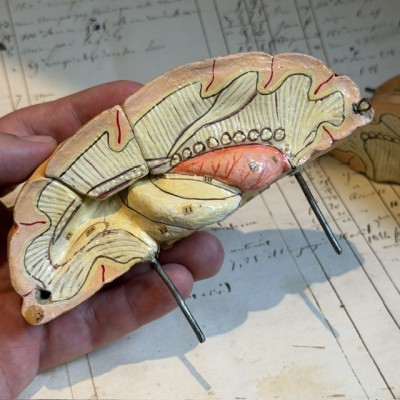
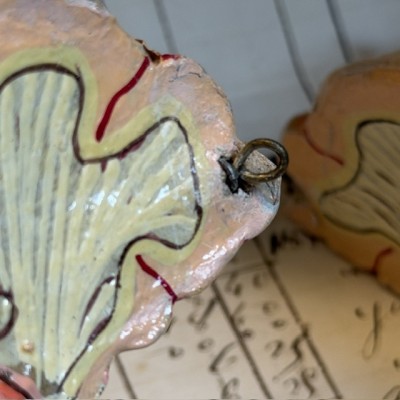
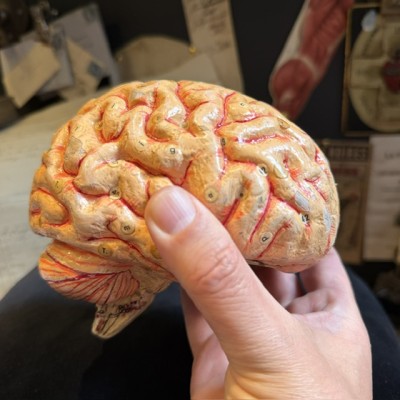
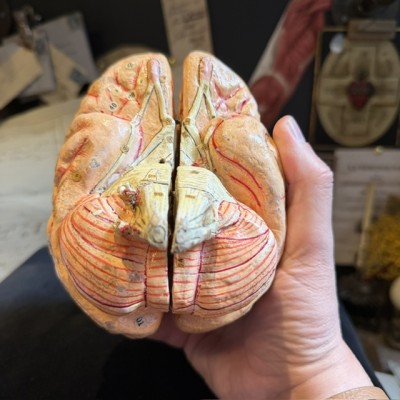
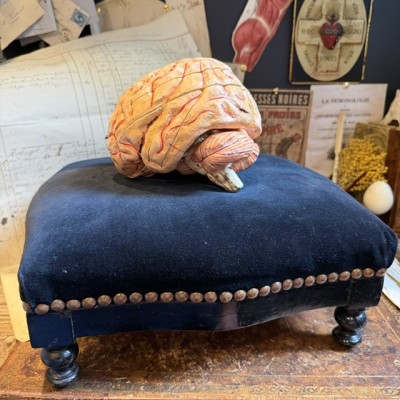
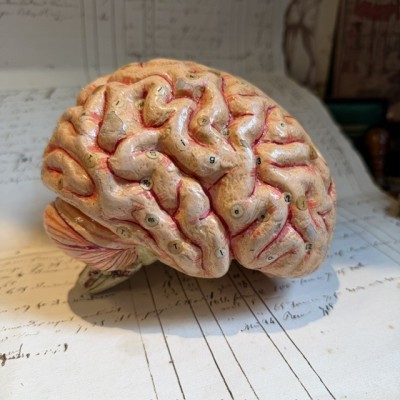
Painted papier-mâché anatomical model of the brain
Produced by Établissements Auzoux
Model No. 12 from the 1874 catalogue
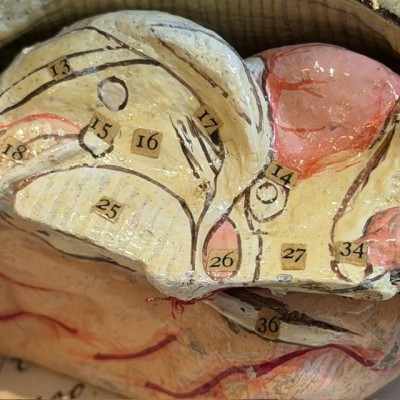
Dismantlable, numbered model, used for medical teaching.
A rare item in excellent working condition
This is a 1:1 scale model of the brain, sold separately at the time as a demonstration model; it is not a brain that was found inside anatomical manikins.
Painted papier-mâché anatomical model of the brain
This anatomical model is an iconic piece from the workshops of Louis Auzoux, dating from the second half of the 19th century.
It corresponds precisely to model No. 12 in the 1874 catalogue.
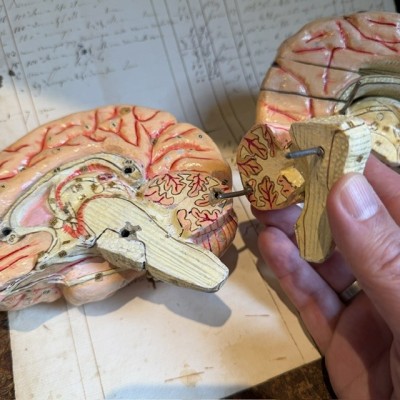
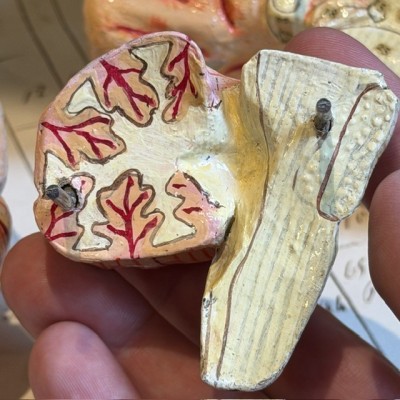
Designed for scientific demonstration, this specimen is not merely a medical object, but a complex educational tool known as a ‘clastic’ model (from the Greek klastos: to break), intended to be completely dismantled for study.
This model is identical to the one now held in the heritage collection of the Faculty of Pharmacy at the University of Lille, which you can view by clicking on the following link:
Auzoux Brain - University of Lille
A rare example from the golden age of the Auzoux workshop, made of papier-mâché.
This is a 1:1 scale model of the brain, sold separately at the time as an anatomical model; it is not a brain that was found in the clastic models.
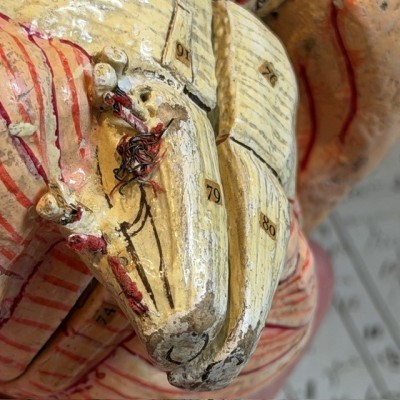
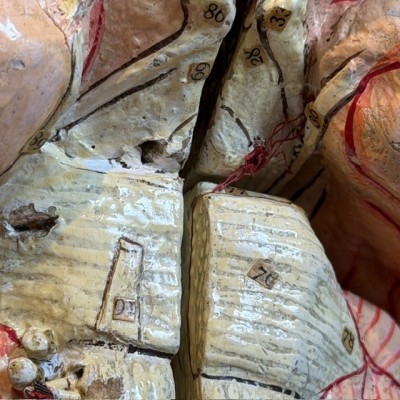
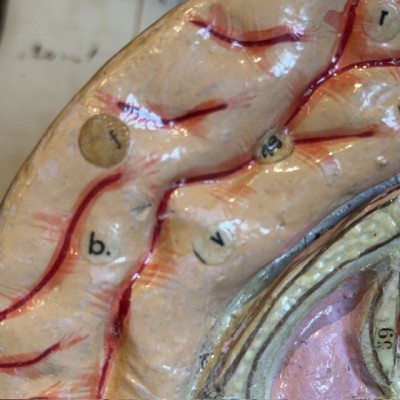
Material: Painted papier-mâché (exclusive Auzoux technique: a mixture of paper, hide glue, tow and cork), offering remarkable strength and lightness.
Dimensions: Height 12 cm – Length 13 cm – Width 14 cm (1:1 scale, life-size).
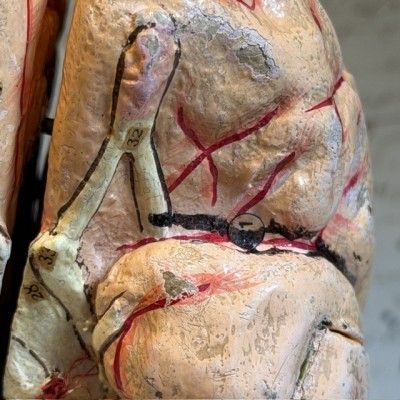
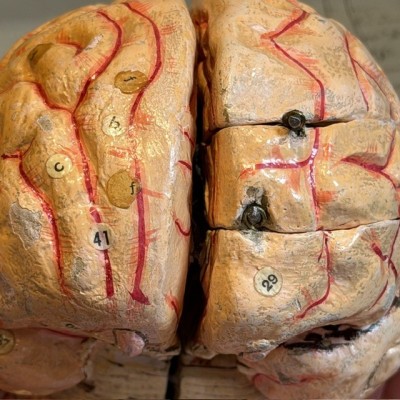
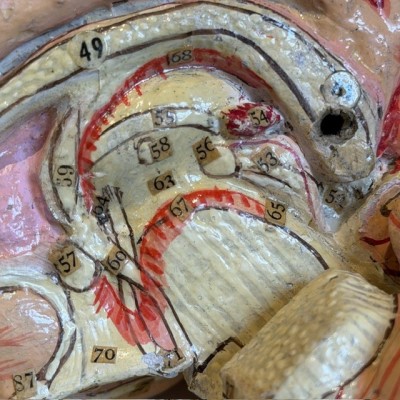
Details: Original polychrome paintwork. Veins and arteries are hand-painted. Features small round numbered labels, characteristic of the Saint-Aubin-d’Ecrosville factory.
The object is made up of several articulated sections and segments representing the human brain, including the cerebellum, the pons and the medulla oblongata. This representation allows one to trace the medullary tracts of the medulla.
A rare piece in excellent working condition. The structure is sound, with no deformation. The guide rods slide perfectly, allowing for smooth disassembly and reassembly. It has a beautiful patina from use, bearing witness to its history in medical lecture theatres.
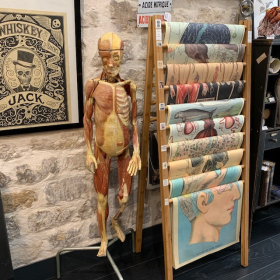
Clastic Mannequin - Dr. Auzoux's anatomical skinned

Lower part of the lower mandible of a horse jaw
Antique model from Maison Auzoux in Paris
Paper-mâché pedagogical model
Model A - 9 months

Lower part of the lower mandible of a horse jaw
Antique model from Maison Auzoux in Paris
Paper-mâché pedagogical model
Model B - 1 year
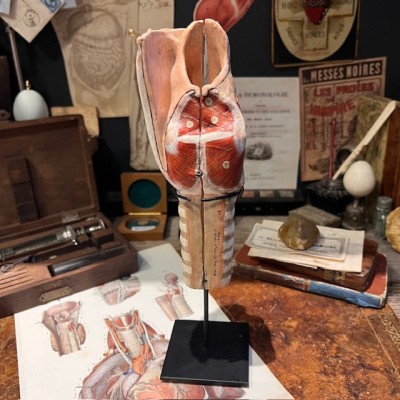
Antique anatomical model of the larynx and trachea made of painted papier-mâché.
Produced by Établissements Auzoux and manually dated 1938.
Model can be dismantled lengthwise, numbered, used for medical teaching.
Please note: one removable side piece is missing. The model remains stable and highly decorative. Authentic piece.
Handwritten inscription from the period: Larynx - Auzoux à St-Aubin-d’Écrosville Eure 1938
Placed in a metal base, it can be easily removed to hold it in your hand.
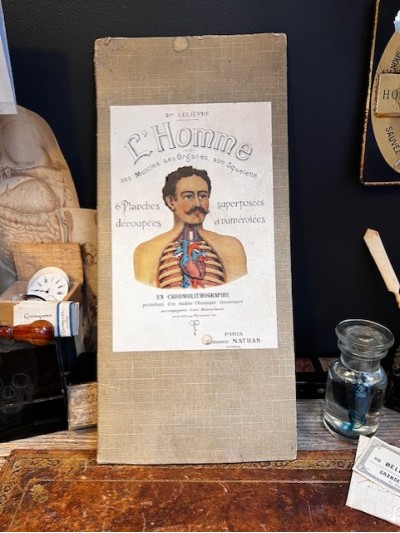
Man - Anatomical chart that can be disassembled
By Fernand Nathan Editeur publisher
Coloured chart with movable, cut-out and superimposed leaves
There are defects on the superimposed boards; the outer board, which was the man's torso, is missing, as are the lungs, which were above the heart. The left hand is missing, the arm being torn.
Antique anatomical model of the larynx and trachea made of painted papier-mâché.
Produced by Établissements Auzoux and manually dated 1938.
Model can be dismantled lengthwise, numbered, used for medical teaching.
Please note: one removable side piece is missing. The model remains stable and highly decorative. Authentic piece.
Handwritten inscription from the period: Larynx - Auzoux à St-Aubin-d’Écrosville Eure 1938
Placed in a metal base, it can be easily removed to hold it in your hand.
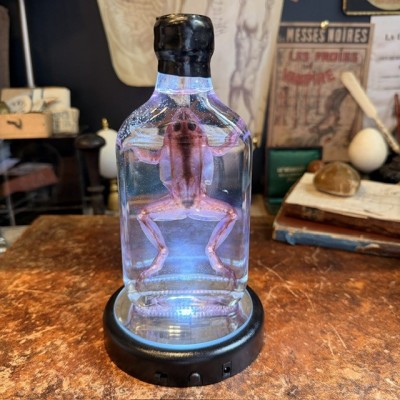
Diaphanization of a frog - Pelophylax ridibundus crossbred INRA (RIVAN92 strain)
Biological preparation
The aim of diaphanization is to render the tissues transparent through a chemical process, and specific dyes are used to highlight the skeleton.
You can see the bones through the skin!
Not a protected species
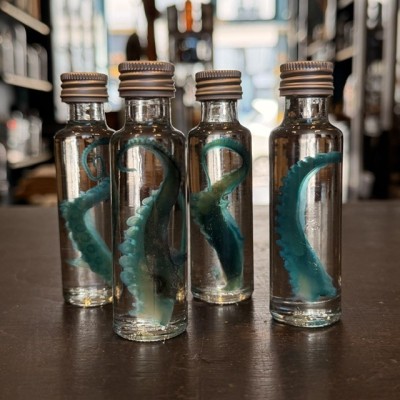
Octopus Tentacle Diaphanisation - Octopus vulgaris
Biological preparation
The purpose of diaphanisation is to make fabrics transparent. The fabrics are made transparent using a chemical process, and specific dyes are used.
The flesh is made transparent, and here the dyes will adhere to the skin that has not been removed.
All tentacles are different: illustrative photos
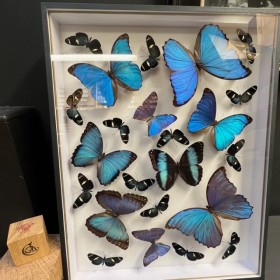
Entomological box
Composition with South American butterflies
Morpho and heliconius
Clastic Mannequin - Dr. Auzoux's anatomical skinned

Australian saltwater crocodile skull: Crocodylus porosus
Estuary crocodile
With its CITES permit
30cm
Can only be sold in the European Union- Shengen Area
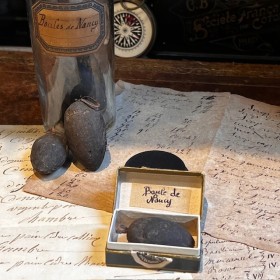
Boule de Nancy - Genuine Mars Vulnerary Ball - Steel Ball
This iron-containing ball was once considered a miracle cure for many ailments and injuries.
The Boule de Nancy is sold individually in a small antique drugstore box
Unavailable today
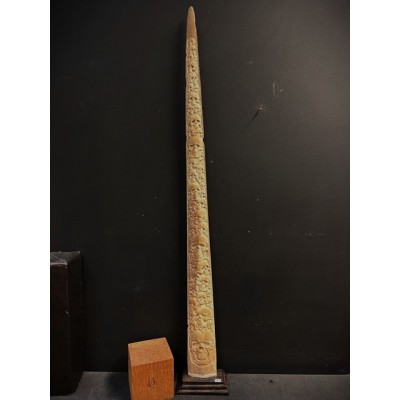
Carved swordfish rostrum: Unique piece
Skulls motifs
Indonesian craftsmanship
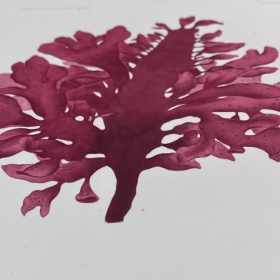
Painted botanical plate - Cryptogamy
Voyage to the South Pole and Oceania on the corvettes the Astrolabe and the Zélée, executed by order of the king during the years 1837-1838-1839-1840 under the command of M. Dumont-d'Urville captain of vessel
Published in 1846
Atlas of Natural History - Botany
Cryptogamy
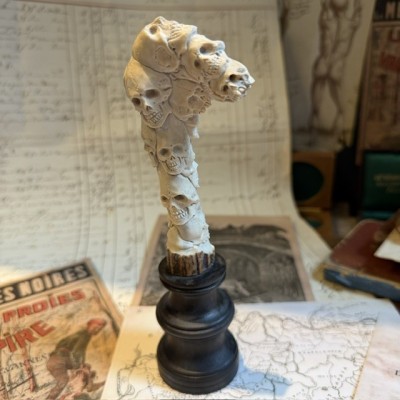
Deer antler sculpture - Totem Skulls on pedestal
Material : Antler
Origin: Hand-carved in Indonesia
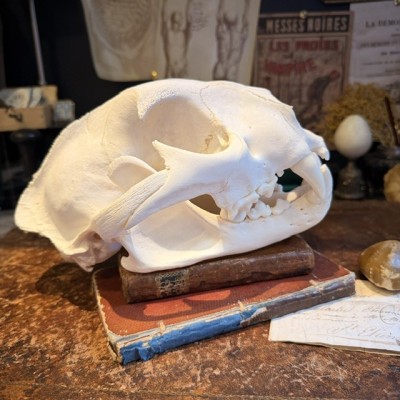
Canadian Cougar Skull - Puma Skull
puma concolor
You must live in the European Union to buy this skull - Not for sale outside the European Union
Sold with its CITES import permit
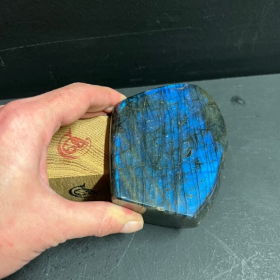
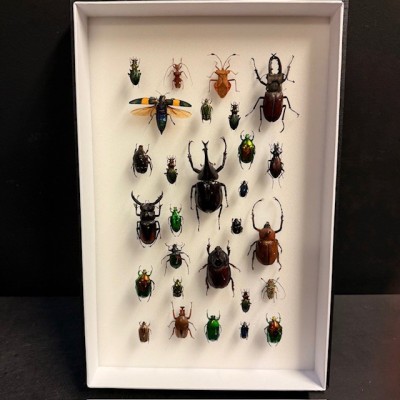
Entomological composition of beetles
28 specimens make up this picture
Black entomological box: 26x39cm
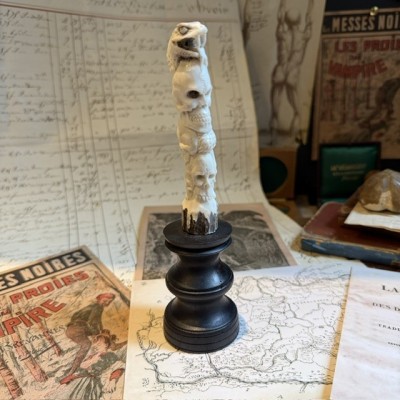
Deer antler sculpture - Snake and Skulls Totem on pedestal
Material : Antler
Origin: Indonesia
Painted papier-mâché anatomical model of the brain
Produced by Établissements Auzoux
Model No. 12 from the 1874 catalogue
Dismantlable, numbered model, used for medical teaching.
A rare item in excellent working condition
This is a 1:1 scale model of the brain, sold separately at the time as a demonstration model; it is not a brain that was found inside anatomical manikins.