Foxglove leaves - POISON
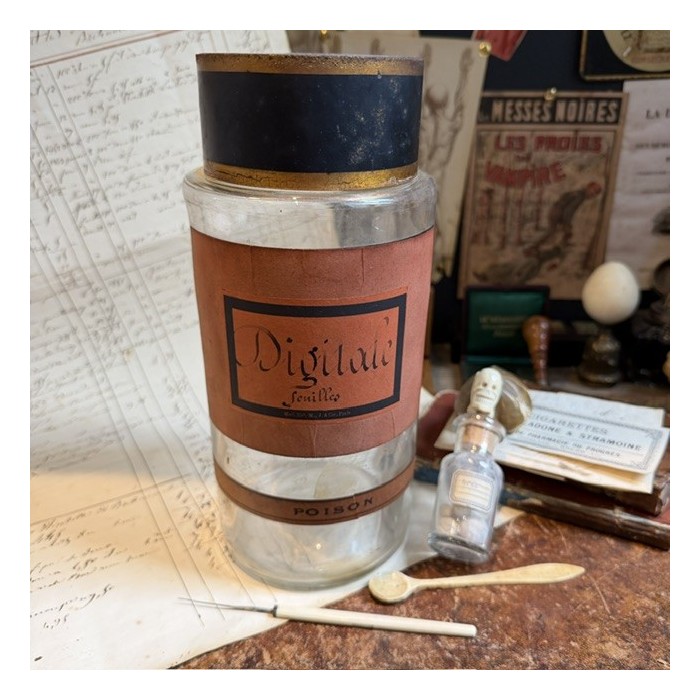
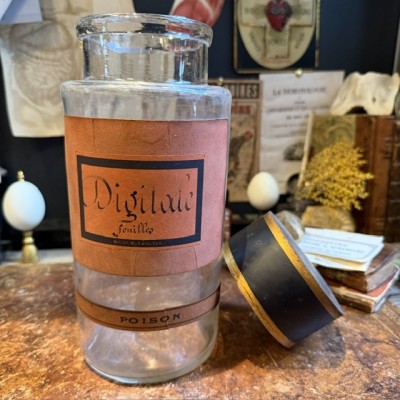
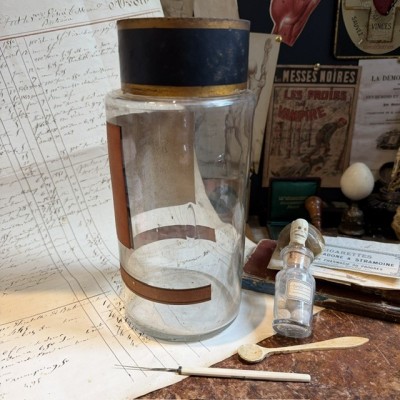
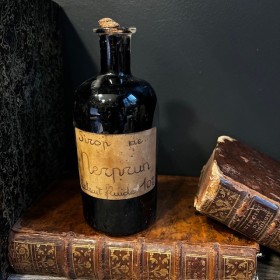
Antique pharmacy bottle - 19th-century mouth-blown glass
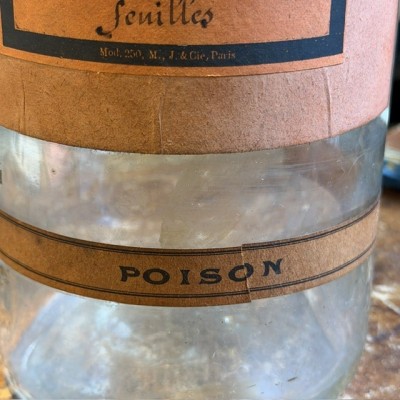
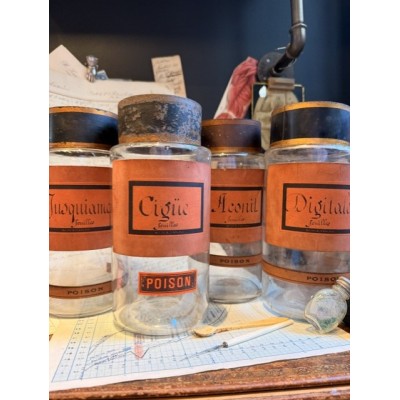
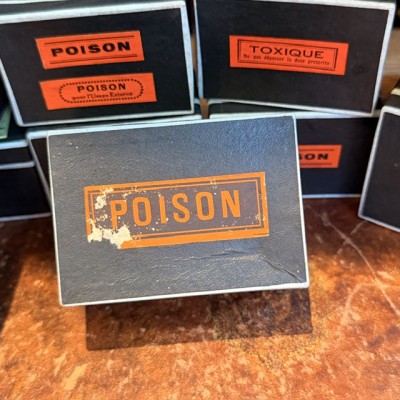
Red POISON label
Signaling to the pharmacist that it is imperative to keep apart the other substances in the cabinet of toxic substances, the famous poison cabinet.
A fascinating testimony to pharmacology
It comes from an old cellar-laboratory in a Parisian pharmacy. The bottles had not moved since the late 1950s on the shelves. The cellar had served as a laboratory for medical analyses and a laboratory for magistral preparations of the pharmacy from 1900 until around 1950.
Description
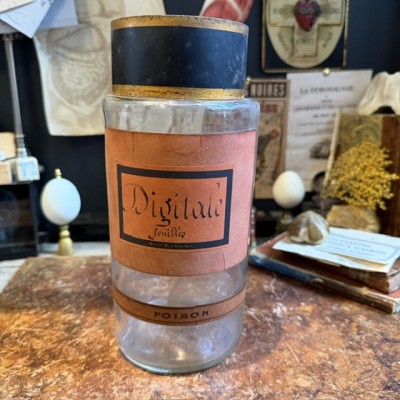
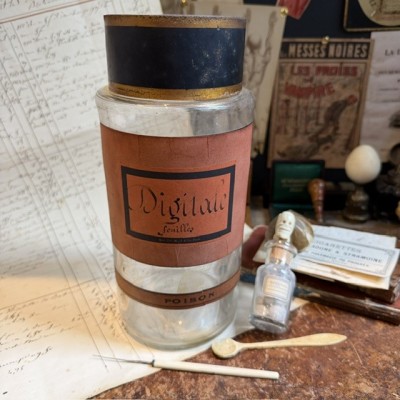
Foxglove leaves - POISON
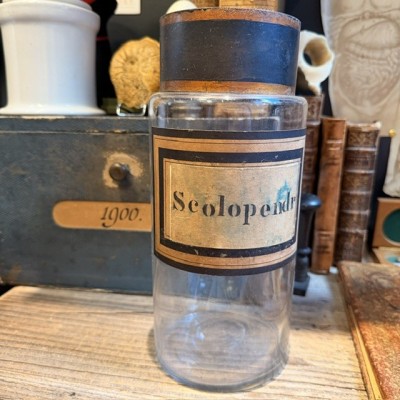
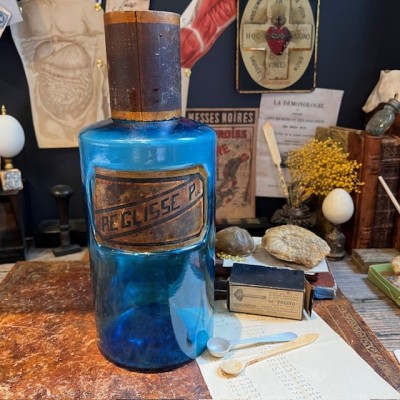
Antique pharmacy jar - Wide-mouthed apothecary jar. 19th-century mouth-blown glass.
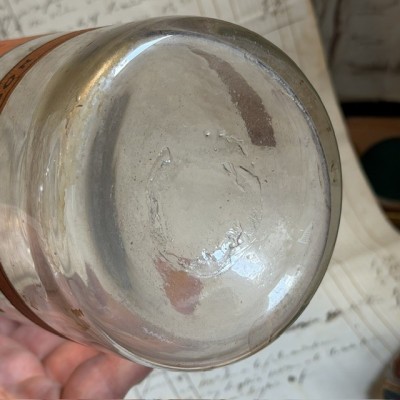
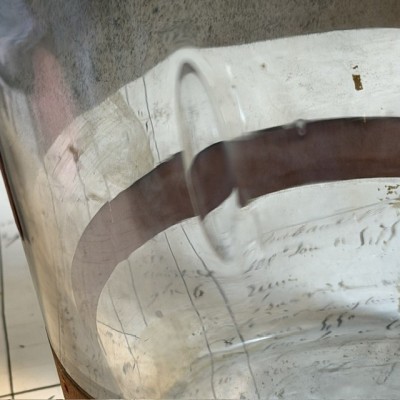
The glass displays the typical irregularities – air bubbles and slight ripples – characteristic of semi-industrial production from the early 20th century or end of 19th. The base shows a mark from the blowing rod.
Red POISON label
Signaling to the pharmacist that it is imperative to keep apart the other substances in the cabinet of toxic substances, the famous poison cabinet.
It comes from an old cellar-laboratory in a Parisian pharmacy. The bottles had not moved since the late 1950s on the shelves. The cellar had served as a laboratory for medical analyses and a laboratory for magistral preparations of the pharmacy from 1900 until around 1950.
This large-capacity jar was a reserve jar intended for the storage of raw materials to be processed into powders, tinctures or infusions in the pharmacy laboratory.
It was used to store dried foxglove leaves (Digitalis purpurea), a plant used as a cardiotonic treatment at the time, employed to strengthen heart contractions and regulate the heart rate (particularly for dropsy and heart failure).
The ‘POISON’ label at the bottom of the jar is not decorative. Foxglove has a very narrow therapeutic window: the curative dose is very close to the toxic dose. Handling the dried leaves required extreme precision and was strictly regulated due to its high toxicity.
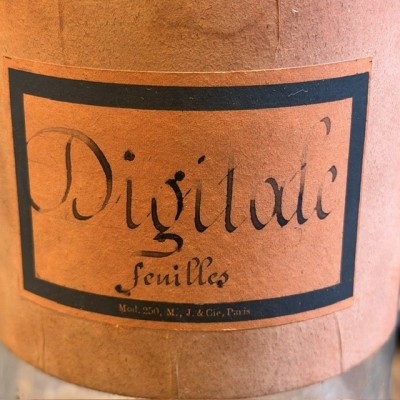
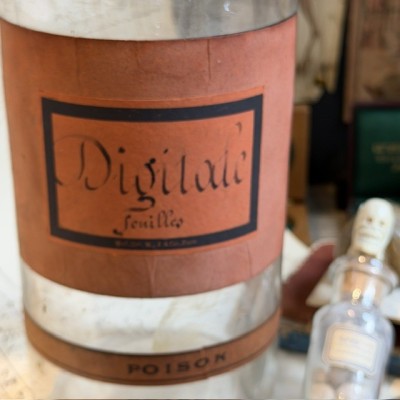
Beautiful handwritten cursive script in pen on the label.
The red paper used for the label was intended for toxic substances, so that the chemist could immediately distinguish them from non-toxic substances. The label also bears the supplier’s details: “Mod. 250, M., J. & Cie, Paris”.
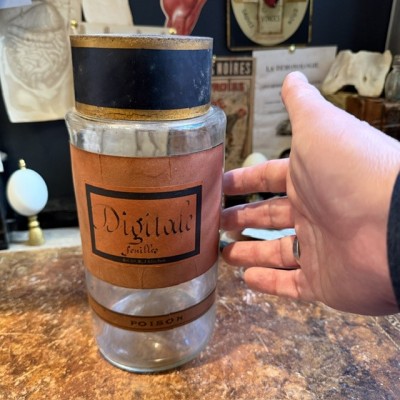
Height: 23.5 cm – Diameter: 10 cm