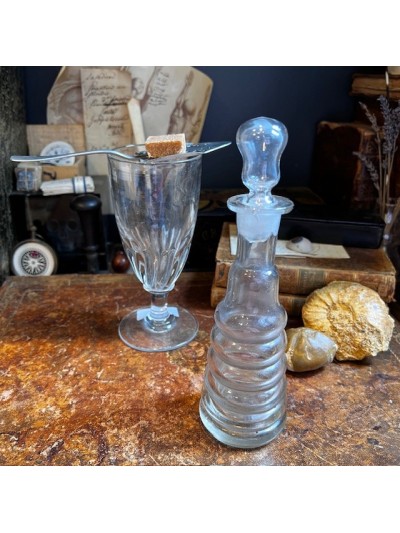

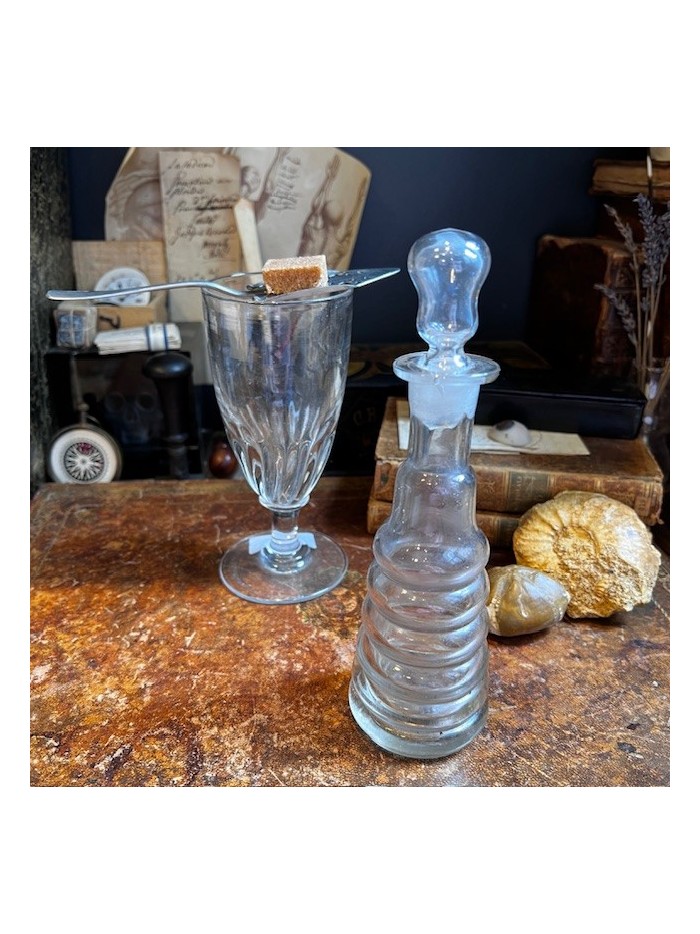
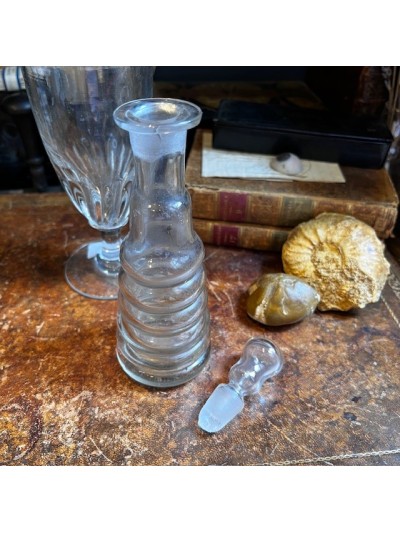
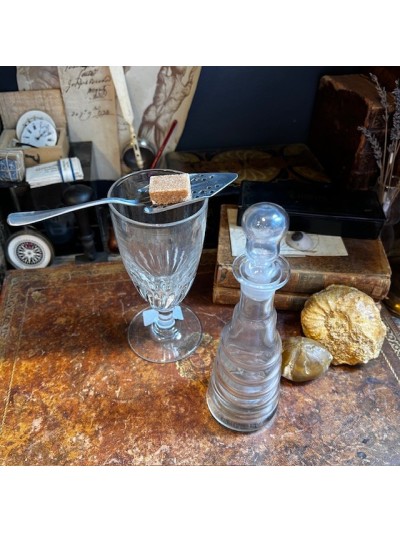
An antique absinthe topette (decanter)
6 Beaded Topette
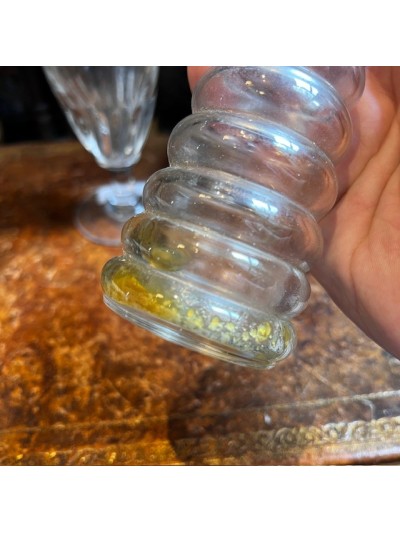
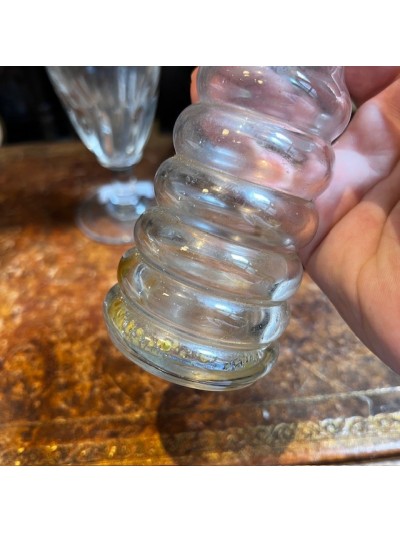
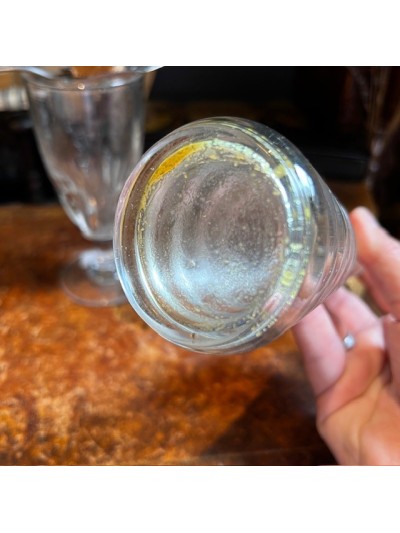
Residue in the bottom of the carafe
An antique absinthe topette (decanter)
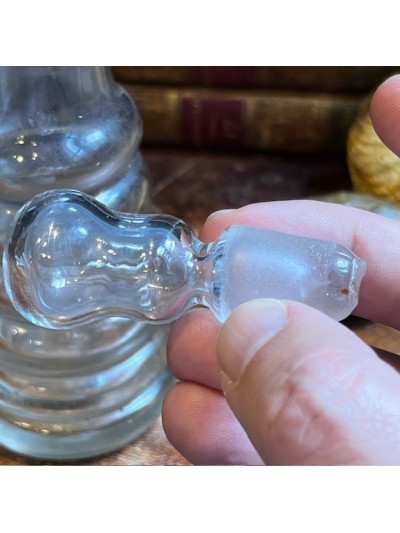
Also known as a divider decanter, made of mouth-blown glass because you can still see the trace of the blowing rod under the decanter.
Blown glass peanut stopper.
Each bead represents a dose of absinthe. The most common is the double rim, as these carafes are also used for other spirits. Hence the double dose: one dose (1 bourrelet) in the coffee and then the second dose afterwards, the famous ‘pousse-café’!
You pour a slug of absinthe into the glass and then simply put the sugar on the spoon above the glass and let the water run down before tasting.
Very practical for cafe owners to calculate the number of glasses you have drunk.
Model with 6 beads (6 doses): Height: 19.5 cm (with stopper) Diameter: 5.5cm
Residue in the bottom of the carafe
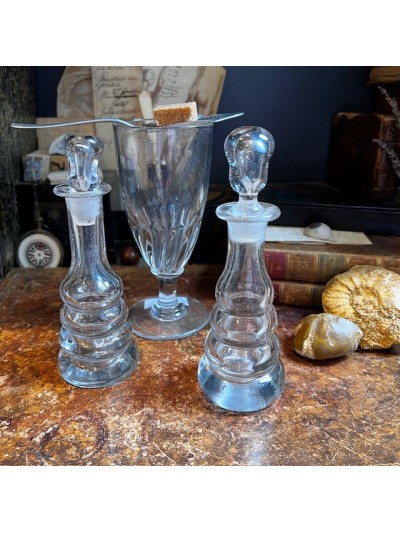
An antique absinthe topette (decanter)
4 Beaded Topette
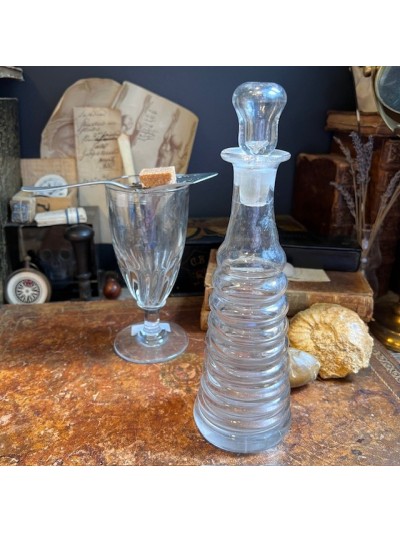
An antique absinthe topette (decanter)
10 Beaded Topette
An antique absinthe topette (decanter)
4 Beaded Topette
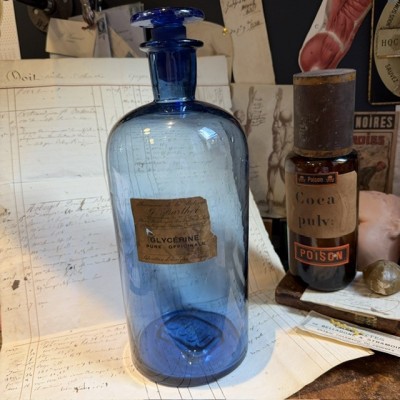
Glycérine pure officinale
Pure pharmaceutical-grade glycerine
Antique BLUE glass pharmacy bottle
EMPTY
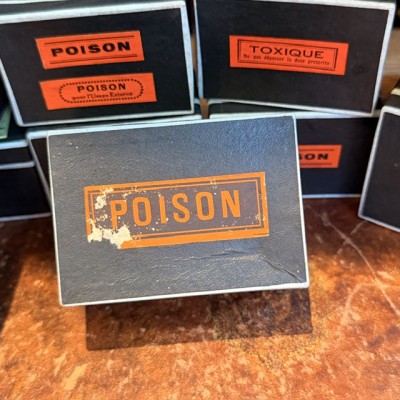
Antique labels in a pharmacy box for cures made of canvas cardboard
Poison label - Ref A
The pharmacist used his boxes of medicine to put away the labels he would then put on the bottles that he would resell to his customers.
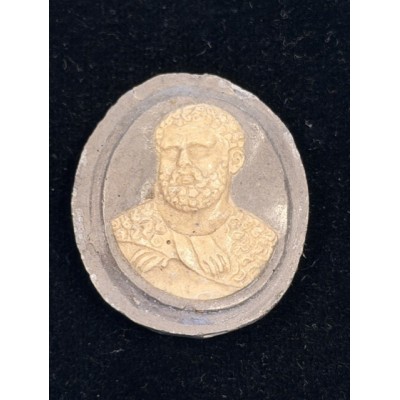
Antique intaglio and cameo print from the Grand Tour of the 19th century
Two-tone sulfur print
True testimony of the Grand Tour carried out by the aristocrats in the 19th century
Antique bust / scholar profile
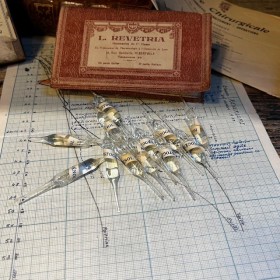
Antique ampoule for hypodermic injection
Histogénol - (circa 1900)
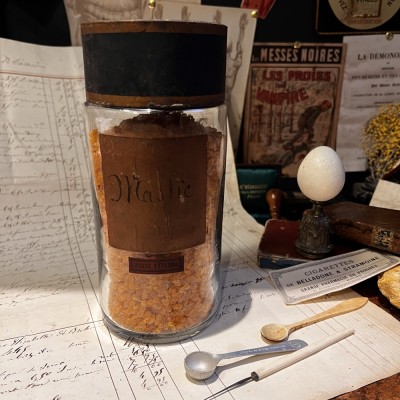
Mastic of Chios
Antique pharmacy bottle - Wide-mouth apothecary jar.
19th-century mouth-blown glass
There is still some product left inside
A fascinating artifact from the history of pharmacology

Essence of star anise
Antique pharmacy bottle
Apothecary vial
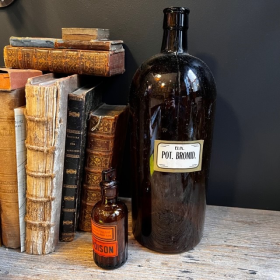
Potassium Bromide Elixir
Antique and large brown English pharmacy bottle
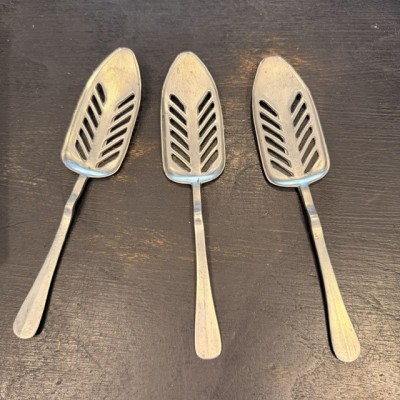
Antique Absinthe Spoon
The spoons have been used, are scratched, badly oxidized, etc.
You buy 1 spoon, not the whole lot

Solution N°153
Antique pharmacy bottle
Apothecary vial

Collodion
Used as a liquid dressing
Antique pharmacy bottle
EMPTY
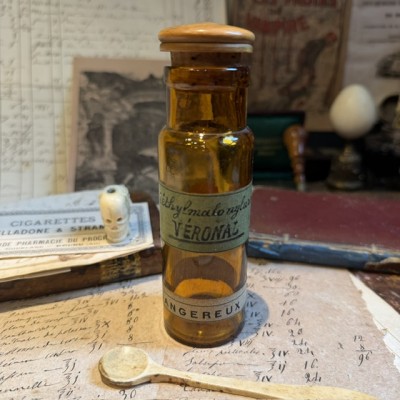
Veronal - Barbiturates - Diethylmalonylurea
Antique amber glass bottle, with a boxwood and cork stopper.
Label: DANGEROUS
Indicating to the pharmacist that it must be stored separately from other substances in the cabinet for toxic substances, the famous ‘poison cabinet’.
It comes from the former cellar-laboratory of a Parisian pharmacy. The bottles had not been moved from the shelves since the late 1950s. The cellar had served as a medical analysis laboratory and a laboratory for the pharmacy’s compounded preparations from 1900 until around 1950.
EMPTY

Archimedes screw magnifier - Photographer's Achromatic focusingmagnifier
Photographer's magnifying glass from the late 19th century, early 20th century
When taking a photograph, the photographer would use this focusing magnifier against the frosted glass of his camera to assess the sharpness of the image formed.
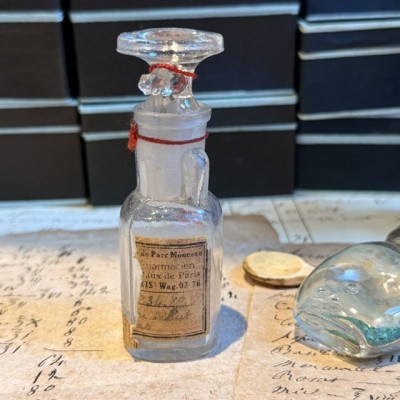
Dropper bottle
Antique pharmacy bottle - 1920-30's
Remains of a label from the Parc du Monceau Pharmacy
Is there any bluish residue left inside, and the bottle may have served as an inkwell at one time?
EMPTY
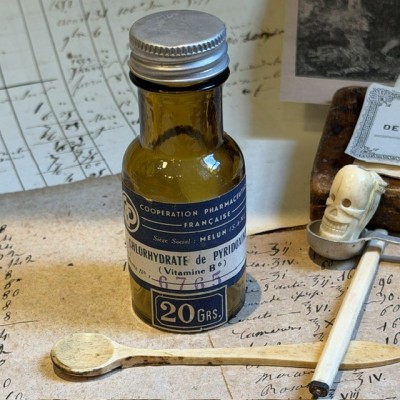
Pyridoxine hydrochloride - Vitamin B6
Antique pharmacy bottle
EMPTY
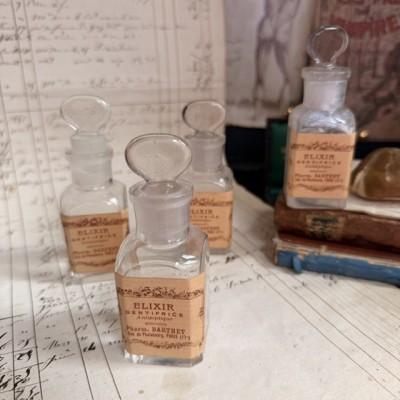
Toothpaste elixir
Antique pharmacy bottle
EMPTY
An antique absinthe topette (decanter)
6 Beaded Topette
Residue in the bottom of the carafe