- New
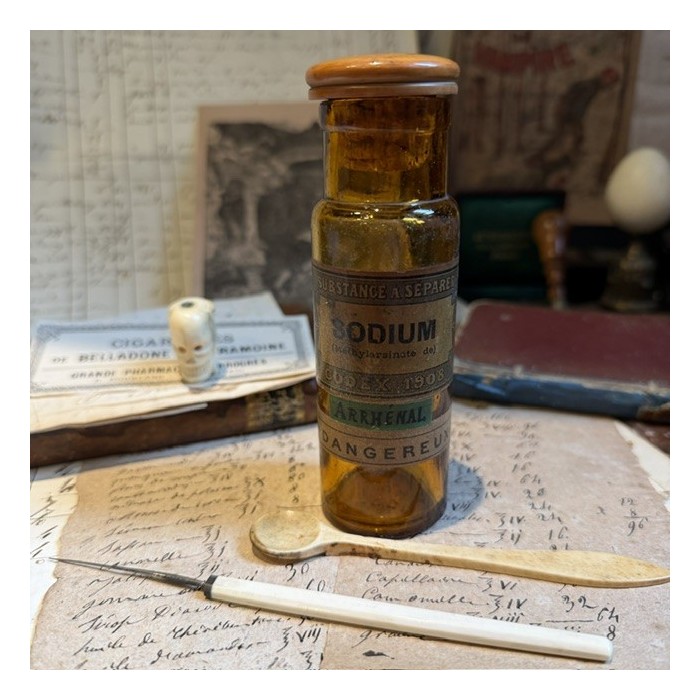
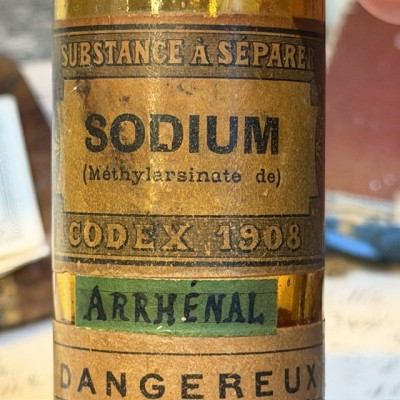
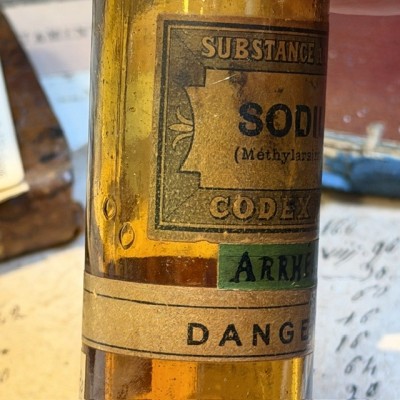
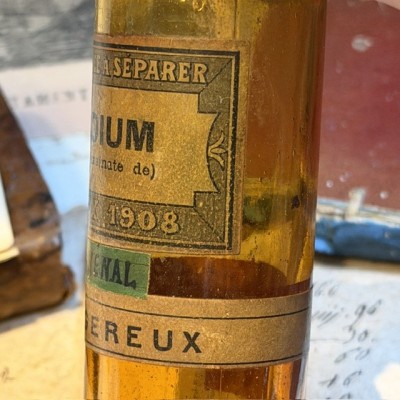
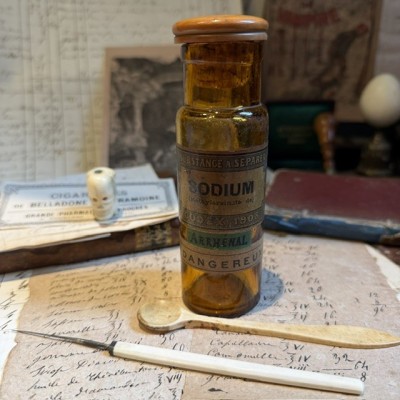
Arrhénal - Sodium methylarsinate - Arsenic
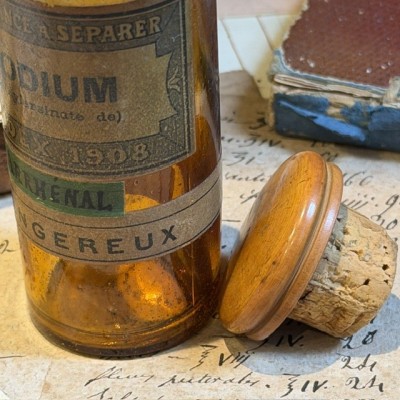
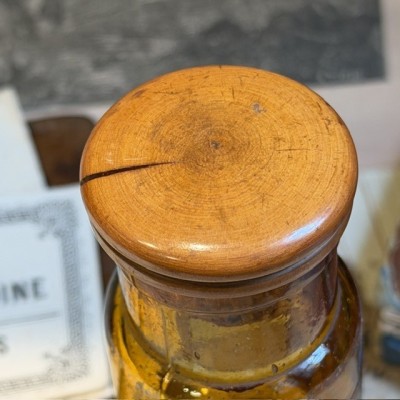
Antique amber glass bottle, with a boxwood and cork stopper.
Green label: SUBSTANCE TO BE STORED SEPARATELY – CODEX 1908
Indicating to the pharmacist that it must be stored separately from other substances in the cabinet for toxic substances, the famous ‘poison cabinet’.
It comes from the former cellar-laboratory of a Parisian pharmacy. The bottles had not been moved from the shelves since the late 1950s. The cellar had served as a medical analysis laboratory and a laboratory for the pharmacy’s compounded preparations from 1900 until around 1950.
EMPTY
Arrhénal - Sodium methylarsinate - Arsenic
Antique amber glass bottle, with a boxwood and cork stopper.
Green label: SUBSTANCE TO BE STORED SEPARATELY – CODEX 1908
Indicating to the pharmacist that it must be stored separately from other substances in the cabinet for toxic substances, the famous ‘poison cabinet’.
In very small doses, Arrhénal was used at the time as a general tonic, particularly to treat anaemia, malaria and tuberculosis.
However, at higher doses or with prolonged use, it led to severe chronic poisoning (arsenic poisoning), causing skin lesions, digestive disorders, nerve damage and irreversible damage to the liver and kidneys.
It comes from the former cellar-laboratory of a Parisian pharmacy. The bottles had not been moved from the shelves since the late 1950s. The cellar had served as a medical analysis laboratory and a laboratory for the pharmacy’s compounded preparations from 1900 until around 1950.
Height of the bottle: 12cm with stopper
EMPTY

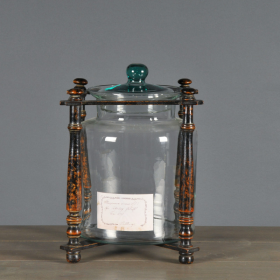
Cobalt blue glass pharmacy jar - Apothecary - Wide neck - H26cm - 19th
Apothecary jar with wide opening. Antique pharmacy bottle
Mouth-blown glass - Cobalt blue color tinted throughout
This large-capacity jar was a storage jar intended for stockpiling
Orthoforme
Antique pharmacy bottle - Droguerie - Apothicaire
Silver medal at Paris 1889
Le corps de l'Homme
Anatomical colour plates with cut-out superimposed leaves
By Edmond Perrier - Schleicher Frères & Cie Editeurs
No date, circa 1900
Herbalist's or Pharmacist's jar
Antique blank label of the XVIIIth century
Aconit leaves - POISON
Antique pharmacy bottle - Wide-mouth apothecary jar.
19th-century mouth-blown glass
Red POISON label
Signaling to the pharmacist that it is imperative to keep apart the other substances in the cabinet of toxic substances, the famous poison cabinet.
A fascinating testimony to pharmacology
It comes from an old cellar-laboratory in a Parisian pharmacy. The bottles had not moved since the late 1950s on the shelves. The cellar had served as a laboratory for medical analyses and a laboratory for magistral preparations of the pharmacy from 1900 until around 1950.
Cumin Epicea Pill - Pil: Cum Picea
Antique blown glass pharmacy jar
Apothecary
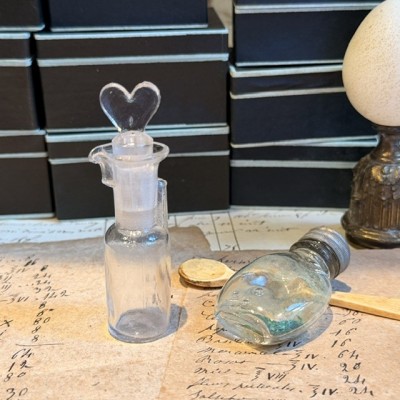
Hamamelis fluid extract – Dropper bottle
Antique pharmacy bottle - 1920-30's
EMPTY
Salamander - Pharmacy corkscrew in bronze
XIXth century
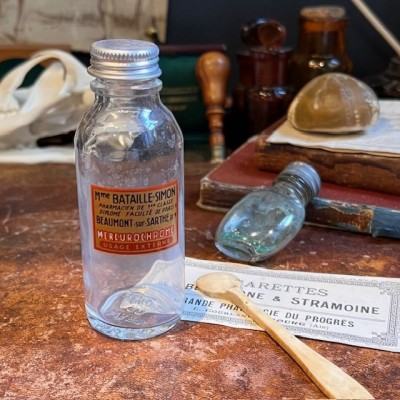
Mercurochrome
Antique pharmacy bottle - Apothecary
Mrs Bataille-Simon, First Class Pharmacist in Beaumont sur Sarthe - Tel 9
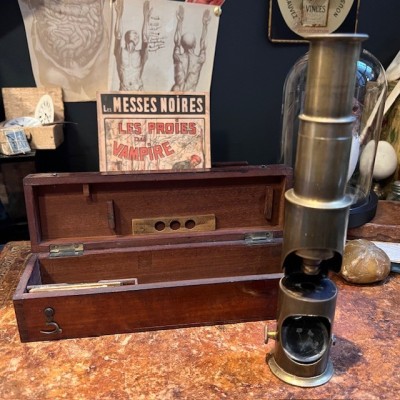
Dr Potain vacuum cleaner in its case
Late 19th century - 1870-1895
Antique medical instrument
However, the box comes from the Hôpital de la Charité in Paris, as indicated by the inscription on the top of the box, from the Bouillaud ward of the hospital.
non-functional
Poudre de réglisse - Licorice powder
Large cobalt blue glass pharmacy bottle - Apothecary - Shouldered - H28cm - 19th century
Shouldered apothecary bottle - Antique pharmacy bottle
Mouth-blown glass - Cobalt blue color tinted throughout
This large-capacity jar was a storage jar intended for stockpiling
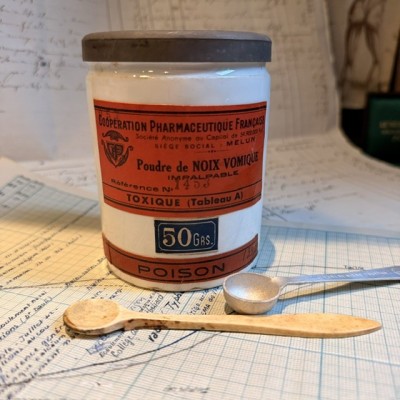
Strophanthus extract - Codex 1908
Early/ mid-20th century pharmacy jar in white earthenware
Beautiful labels: Red POISON label with the famous skull and crossbones and the Poisonous Substances label
Signaling to the pharmacist that it is imperative to keep apart the other substances in the cabinet of toxic substances, the famous poison cabinet.
It comes from an old cellar-laboratory in a Parisian pharmacy. The bottles had not moved since the late 1950s on the shelves. The cellar had served as a laboratory for medical analyses and a laboratory for magistral preparations of the pharmacy from 1900 until around 1950.
EMPTY
Delphinium staphisagria - Stavesacre
Pharmacy jar - Herbalism - Apothecary bottle
Late 19th century, early 20th century.
Créosote
Antique pharmacy bottle
Green label: SUBSTANCE TO BE SEPARATED - CODEX 1908
This means that this bottle had to be kept separate from the others because it was dangerous in high doses
EMPTY
Potassium Cyanide and Iron
Also known as yellow potassium prussiate
Antique 19th-century pharmacy bottle
EMPTY
Anatomical Atlas by A. Bossu
Anthropology - End of the XIXth century
20 engravings of Anatomy by Léveillé
Arrhénal - Sodium methylarsinate - Arsenic
Antique amber glass bottle, with a boxwood and cork stopper.
Green label: SUBSTANCE TO BE STORED SEPARATELY – CODEX 1908
Indicating to the pharmacist that it must be stored separately from other substances in the cabinet for toxic substances, the famous ‘poison cabinet’.
It comes from the former cellar-laboratory of a Parisian pharmacy. The bottles had not been moved from the shelves since the late 1950s. The cellar had served as a medical analysis laboratory and a laboratory for the pharmacy’s compounded preparations from 1900 until around 1950.
EMPTY