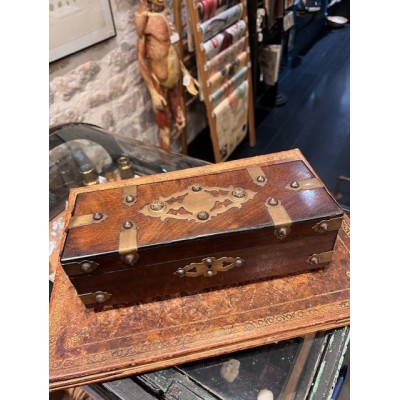

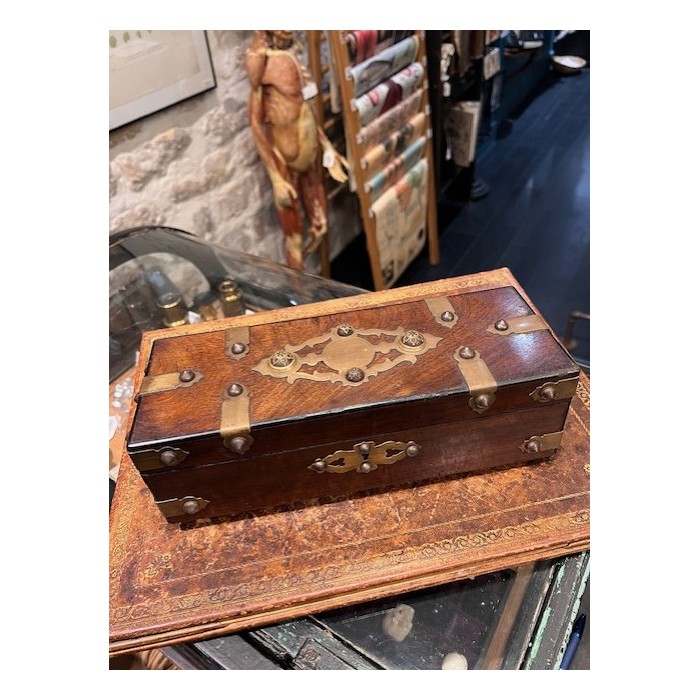
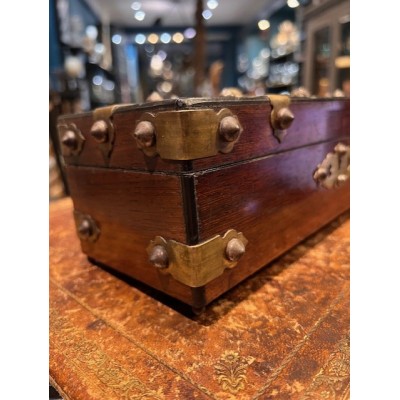
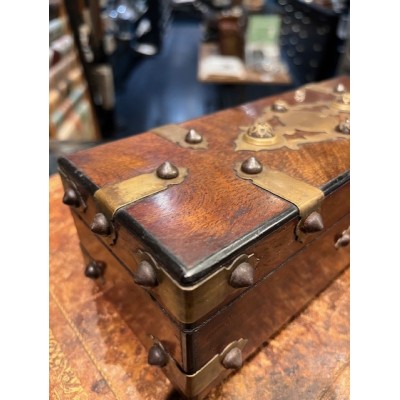
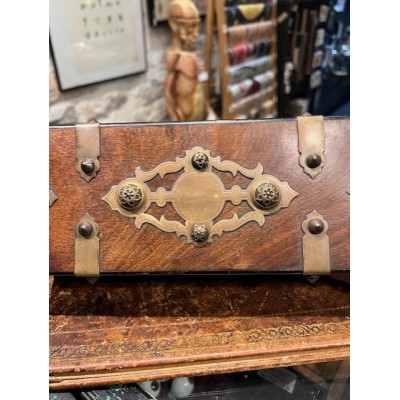
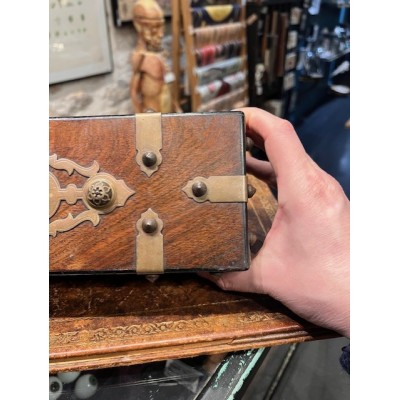
Napoleon III period glove box in Neo-Renaissance style
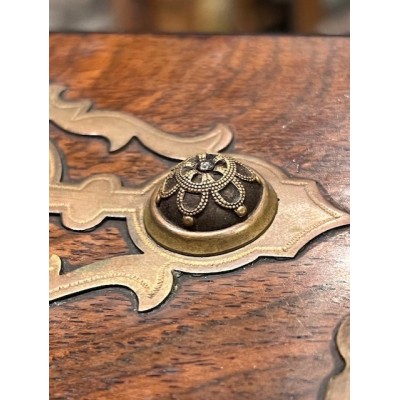
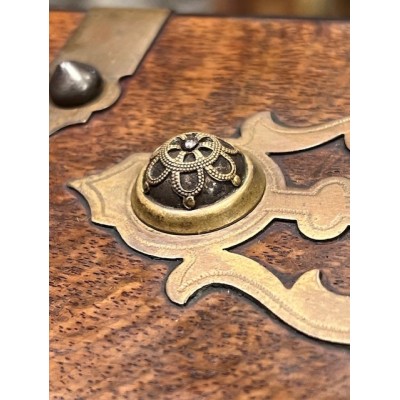
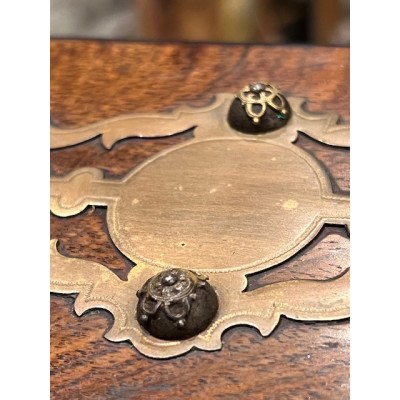
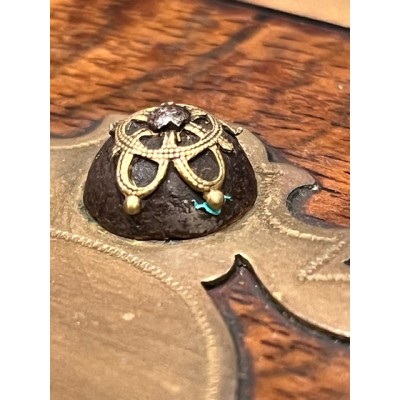
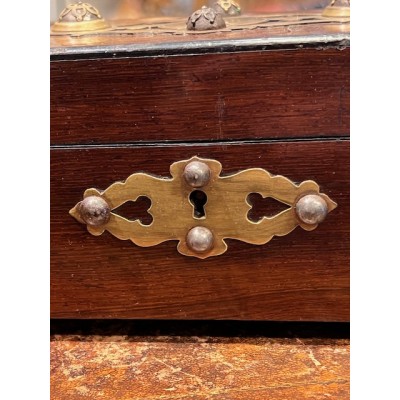
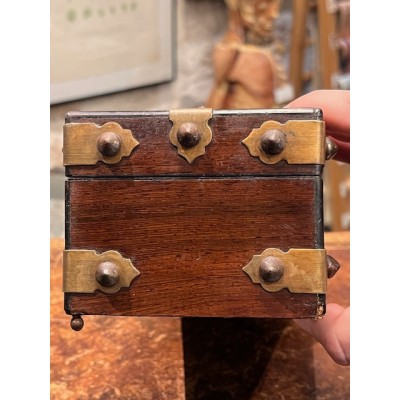
Elegant Napoleon III period glove box, circa 1865–1875, in deep brown stained veneered wood, richly decorated with ironwork and decorative brass studs in the Neo-Renaissance style popular at the time.
19th century - Period: Napoleon III, circa 1865–1875
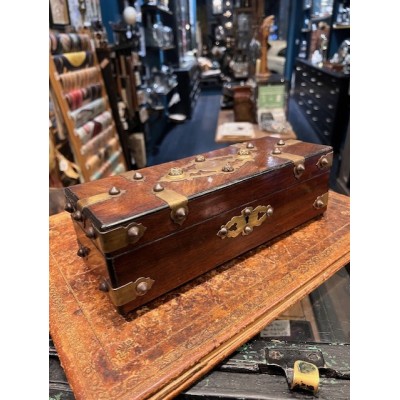
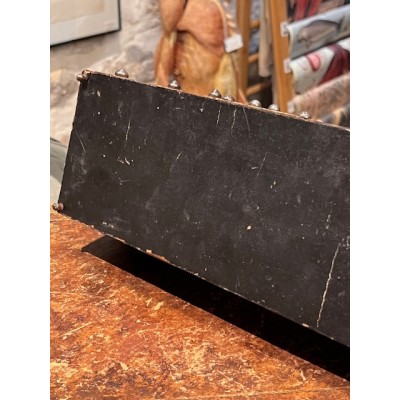
One foot is missing from under the box: see photo - No key
SOLD EMPTY
Napoleon III period glove box in Neo-Renaissance style
Elegant Napoleon III period glove box, circa 1865–1875, in deep brown stained veneered wood, richly decorated with ironwork and decorative brass studs in the Neo-Renaissance style popular at the time.
These boxes were used to store gloves, letters or accessories.
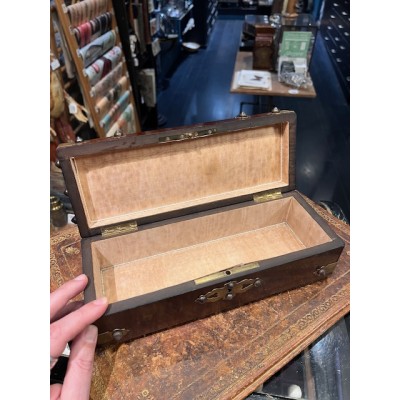
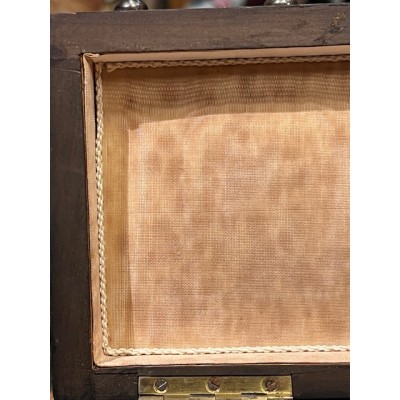
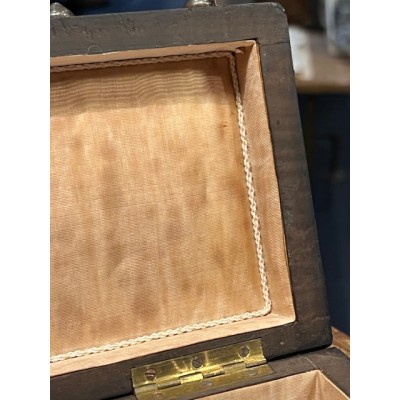
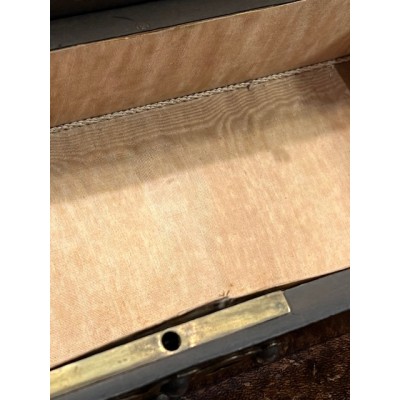
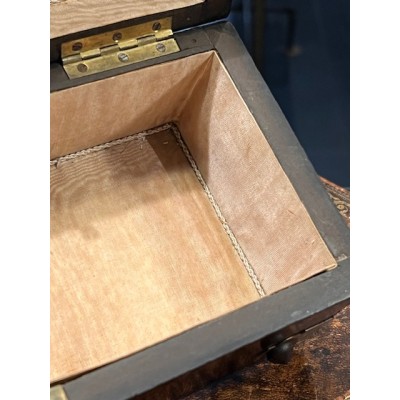
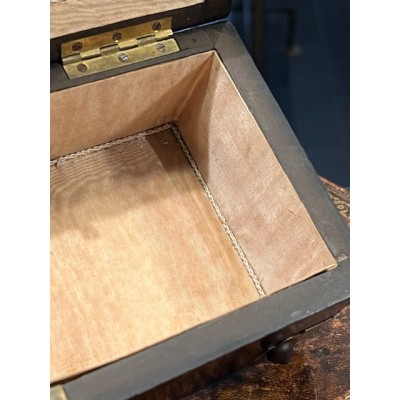
The interior is lined with original moiré silk in a champagne colour, patinated by time, showing that it is in good condition.
A refined decorative piece, typical of 19th-century Parisian lifestyle.
19th century - Period: Napoleon III, circa 1865–1875
Its studded decoration and brass bands evoke Renaissance chests and the medieval imagination as dreamt and reinterpreted in the 19th century.
This historicist aesthetic, very much in vogue under Napoleon III, transforms a simple domestic box into a miniature antique chest, both protective and theatrical. Less conventional than the blackened boxes with stamped varnish, this architectural version has a strong decorative presence, ideal for a cabinet of curiosities interior.
Dimensions: 28 x 11 cm Height: 8.5 cm
One foot is missing from under the box: see photo - No key
SOLD EMPTY
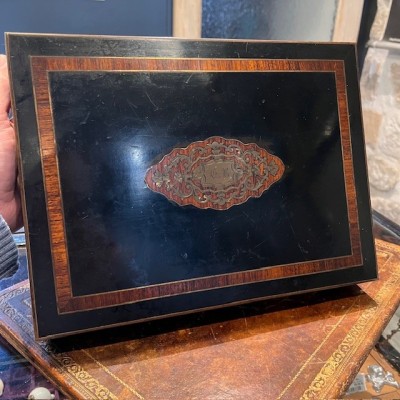
Napoleon III box in black lacquered wood and marquetry
Napoleon III period Circa 1860–1880
Black veneer highlighted with precious wood marquetry inlays and brass strips. Beautiful central cartouche monogrammed E.R. It must have been an old game box for storing tokens.
NO KEY - SOLD EMPTY
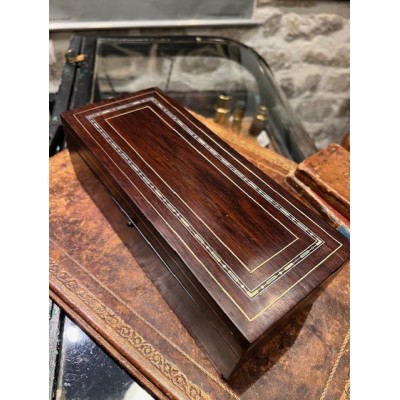
Napoleon III box in rosewood and polychrome marquetry
These boxes were used to store gloves, letters or accessories. This one was probably used to store dominoes, judging by the interior compartments.
A refined decorative piece, typical of 19th-century Parisian lifestyle.
19th century - Period: Napoleon III, circa 1850–1875
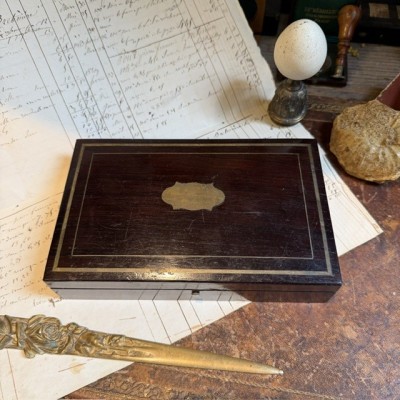
Napoleon III compartmentalised box in rosewood veneer
These boxes were used to store gloves, letters, accessories or sewing supplies.
A refined decorative piece, typical of 19th-century Parisian lifestyle.
19th century - Period: Napoleon III, circa 1850–1875
Sold EMPTY
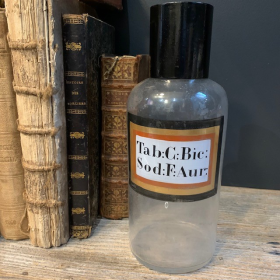
Antique pharmacy jar: Sodium bicarbonate and Gold Flower tablets
Glass pharmacy bottle - XIXth century
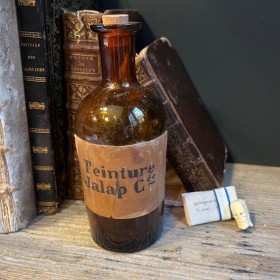
Tincture of Jalap Compound also known as German brandy
A purgative powder is extracted from the Jalap plant.
Antique pharmacy bottle
Apothecary vial
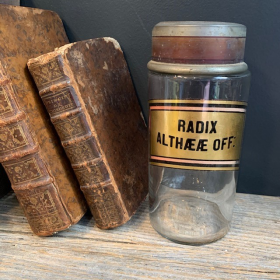
Antique 19th century pharmacy bottle
Radix althaeae Off - Marshmallow
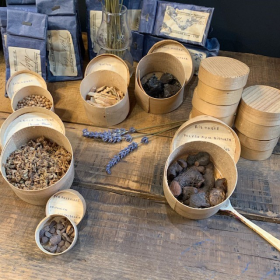
Antique wooden box for herbal medicine - Samples of plants, seeds, bark etc.
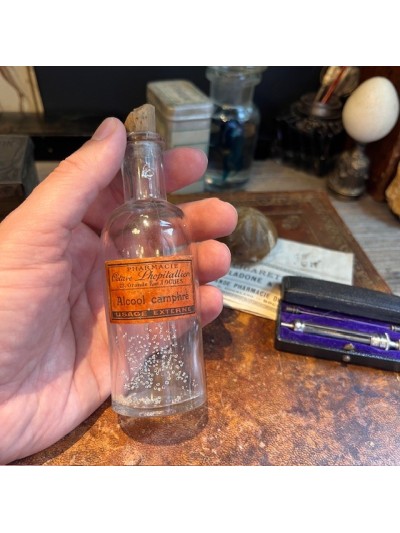
Camphorated alcohol
Antique pharmacy bottle
Apothecary vial
EMPTY

Grams / Tablespoons - Graduated bottle
in French: Grammes / Cuillères à soupe
Antique medicine bottle
Apothecary
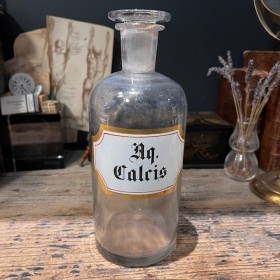
Aqua Calris - Hot water
Antique pharmacy jar
Apothecary
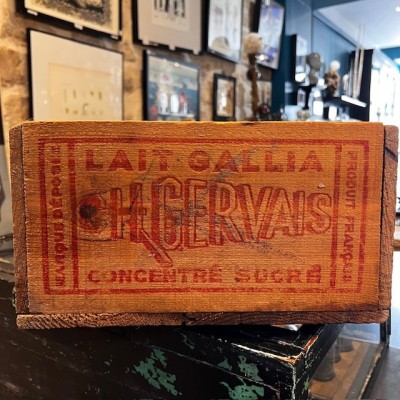
Antique wooden advertising crate for Gallia / Ch. Gervais infant milk concentrate
Found in Parisian cellars that served as laboratories and storage rooms for pharmacists preparing their masterful concoctions from 1900 to 1950.
It was used to store products, glass bottles, etc.
Period: Circa 1947–1955
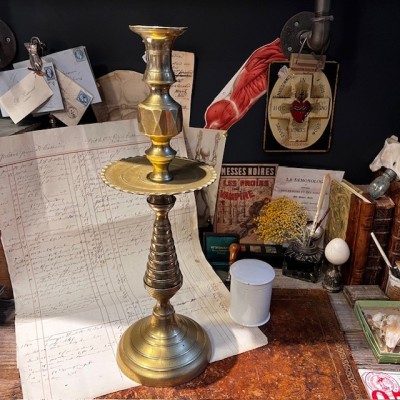
Large brass candlestick - Candleholder
20th century
Height 42cm Weight: 1.65kg
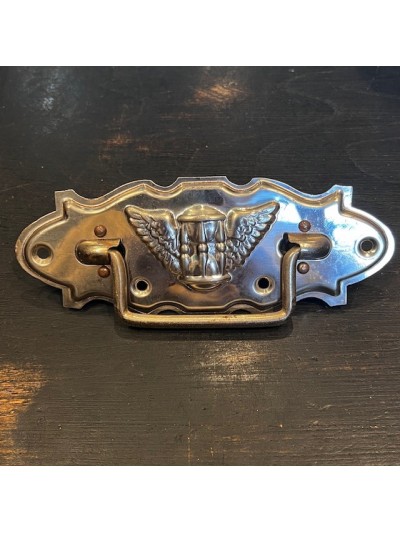
Antique chromed metal coffin handle
Winged hourglass
Early 20th century - Some traces of oxidation
New at the time, it has never been installed

Antique and large drum microscope
In it's mahogany wooden box
For botanist, entomologist
This is a larger model than those usually found on the market
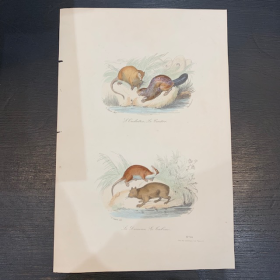
Ancient engraving - board of Natural History XIXth century.
In color. Mammals.
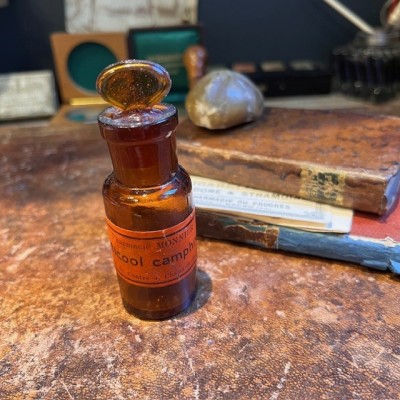
Alcool camphré
Antique pharmacy bottle - Apothecary
empty - The plug is stuck

Cours d'opérations de chirurgie, démontrées au Jardin Royal
Course of surgical operations, demonstrated in the Royal Garden
Published in 1751 in Paris, by d'Houry, sole printer and bookseller to Monseigneur le Duc d'Orléans
Fourth edition
Illustrated with numerous plates and engravings in the text, including the famous plate of Poor Malabou and her scrotal elephantiasis on page 112/113, which the author mentions on page 373.
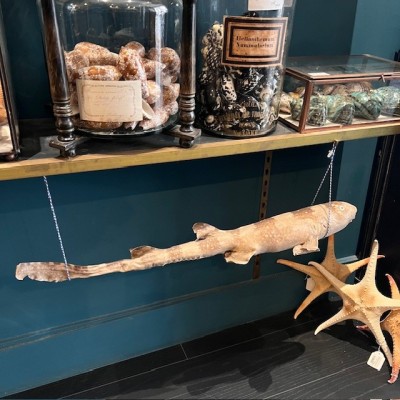
Brownbanded bamboo shark
Naturalized
Chiloscyllium punctatum
Unprotected species - Old taxidermy: visible suture under the belly and on the left side near the mouth
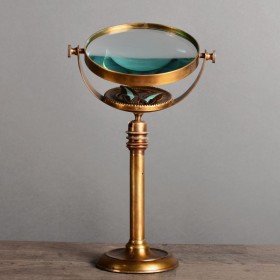
Entomologist's magnifying glass on stand
Reedition
Low magnification, magnifier cannot be removed from its base
Napoleon III period glove box in Neo-Renaissance style
Elegant Napoleon III period glove box, circa 1865–1875, in deep brown stained veneered wood, richly decorated with ironwork and decorative brass studs in the Neo-Renaissance style popular at the time.
19th century - Period: Napoleon III, circa 1865–1875
One foot is missing from under the box: see photo - No key
SOLD EMPTY