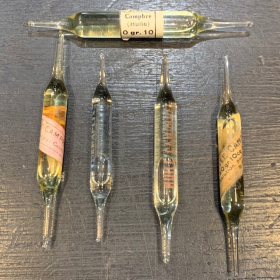
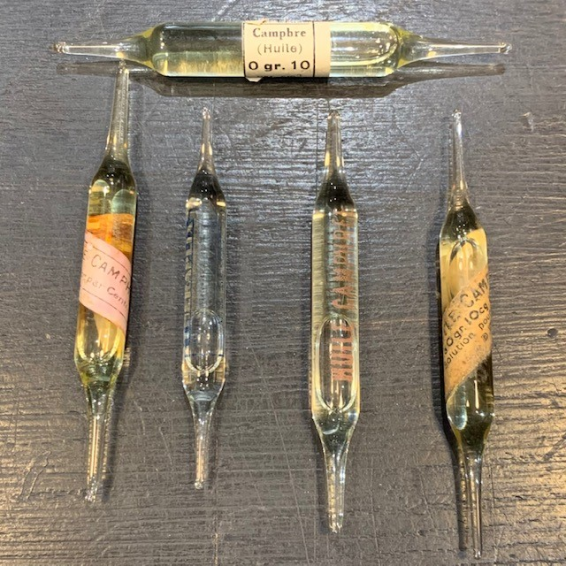
Bulb for hypodermic injection - Camphor (circa 1920)
various manufacturers
Bulb for hypodermic injection - Camphor from various manufacturers
Circa 1920
A Pravaz syringe was all that was needed to inject the product.
Hypodermic solution: Camphor.
Bulb sold by unit, without the box - Model according to remaining stock
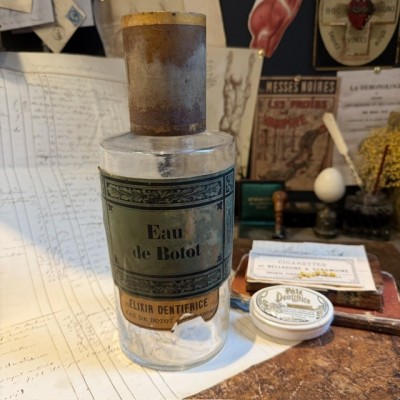
Eau de Botot - Tooth-cleansing Elixir
CODEX 1884
Antique 19th-century pharmacy bottle
EMPTY
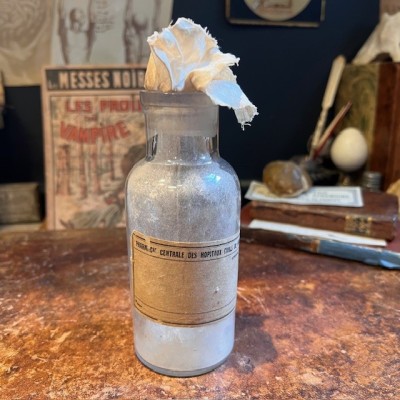
Central Pharmacy of the Civil Hospitals of Paris
Antique pharmacy bottle
Apothecary
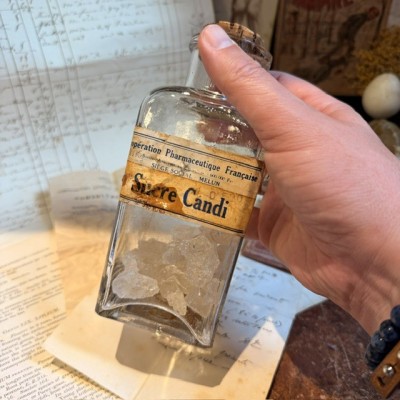
Rock Candy
Antique Apothecary Bottle of Rock Candy – Coopération Pharmaceutique Française (circa 1930–1940)
It comes from the former cellar-laboratory of a Parisian pharmacy. The bottles had remained untouched on the shelves since the late 1950s. The cellar served as a medical analysis laboratory and as a laboratory for the pharmacy's compounded preparations from 1900 until around 1950.
It still contains large crystals of rock candy (Saccharum candi), perfectly preserved.
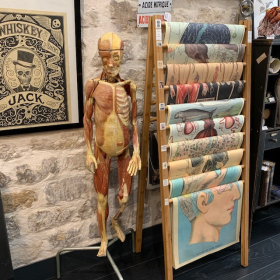
Clastic Mannequin - Dr. Auzoux's anatomical skinned
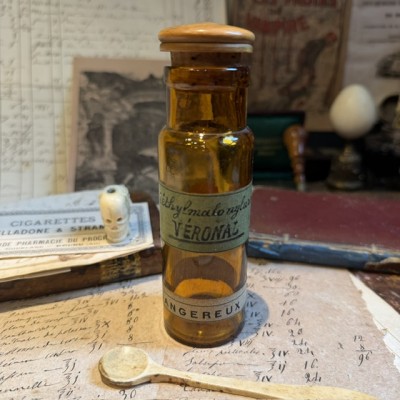
Veronal - Barbiturates - Diethylmalonylurea
Antique amber glass bottle, with a boxwood and cork stopper.
Label: DANGEROUS
Indicating to the pharmacist that it must be stored separately from other substances in the cabinet for toxic substances, the famous ‘poison cabinet’.
It comes from the former cellar-laboratory of a Parisian pharmacy. The bottles had not been moved from the shelves since the late 1950s. The cellar had served as a medical analysis laboratory and a laboratory for the pharmacy’s compounded preparations from 1900 until around 1950.
EMPTY
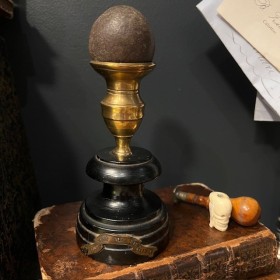
Antique bezoar - Antipoison - Antidote
Once sold by the apothecary, bezoar, also known as gallstone, was reputed to have the same anti-poison properties as the legendary unicorn's horn, hence its excessively high price, also due to its great rarity.
An important piece in a cabinet of curiosities
Sold alone - Without stand, sold separately
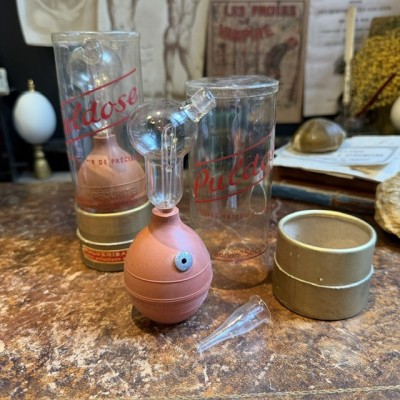
Puldose Nasal Spray for aqueous solutions - Antique remedy
In its Plastic box
Used in otolaryngology, it was intended for nasal or oral sprays in the treatment of colds and antiseptic treatment of the respiratory tract.
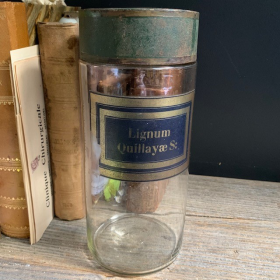
Antique pharmacy jar: Lignum Quillayae Saponaria
Panama wood - 19th century jar

Grams / Tablespoons - Graduated bottle
in French: Grammes / Cuillères à soupe
Antique medicine bottle
Apothecary
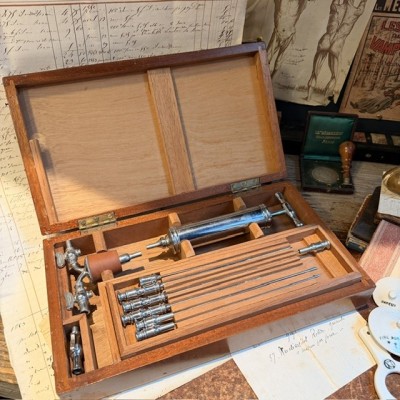
Potain’s Aspirator in its Light Wood Case
Beginning of 20th century
English maker: THACKRAY LEEDS ENGLAND
non-functional
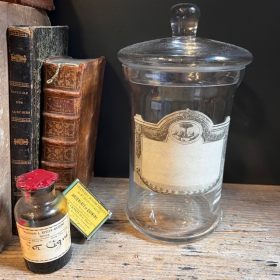
Herbalist's or Pharmacist's jar
Antique blank label of the XVIIIth century
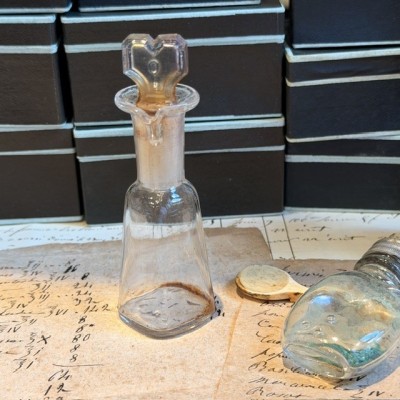
Square Section Dropper Bottle
Antique pharmacy bottle - 1920-30's
Glass stopper honed in the shape of a heart for better grip
EMPTY
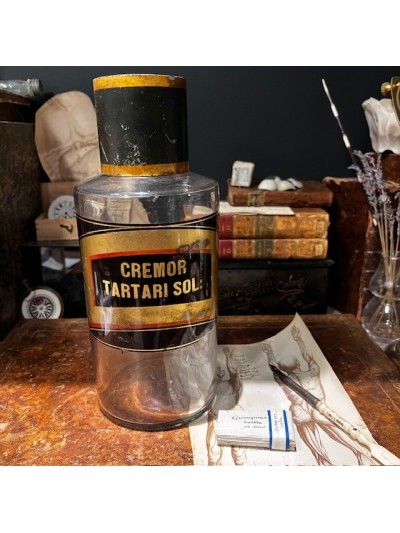
Cremor tartari sol - Cream of tartar
Potassium bitartrate
Pharmacy jar - Herbalism - Apothecary bottle
Late 19th century
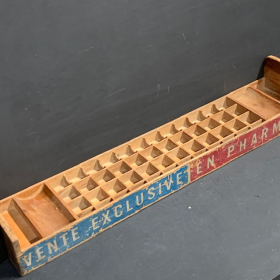
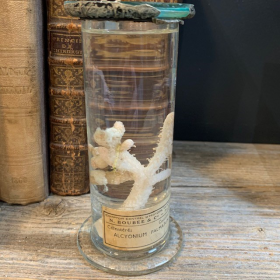
Museum jar - Wet specimen
Soft coral Alcyonium palmatum
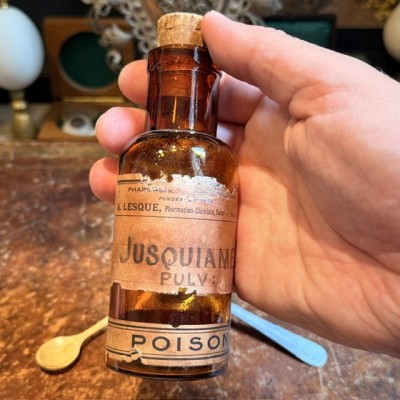
Jusquiame - Henbane
Antique pharmacy bottle.
Red ‘POISON’ label
Indicating to the pharmacist that it must be stored separately from other substances in the cabinet for toxic substances, the famous ‘poison cabinet’.
It comes from the former cellar-laboratory of a Parisian pharmacy. The bottles had not been moved from the shelves since the late 1950s. The cellar had served as a medical analysis laboratory and a laboratory for the pharmacy’s compounded preparations from 1900 until around 1950.
Date: Begining of 20th century
EMPTY
Bulb for hypodermic injection - Camphor (circa 1920)
various manufacturers