

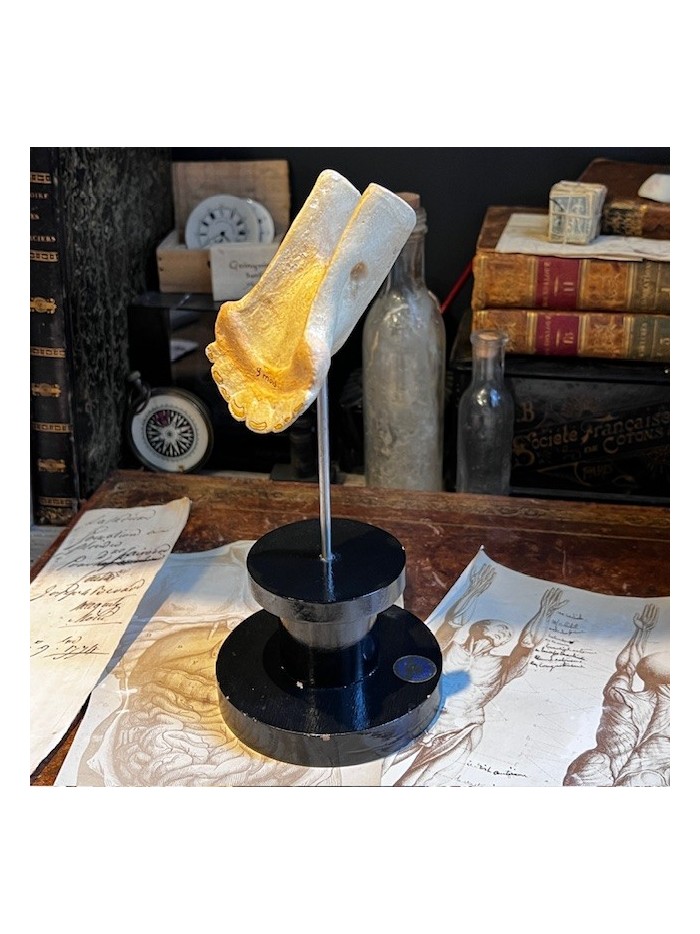
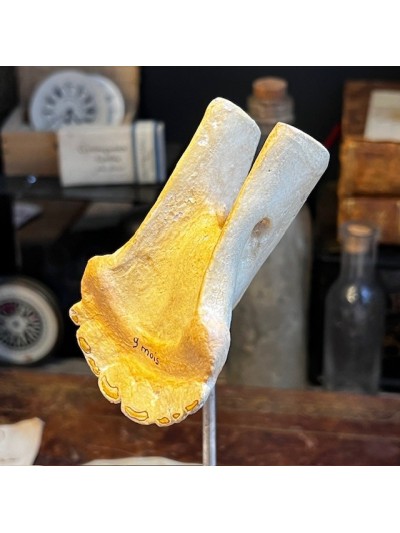
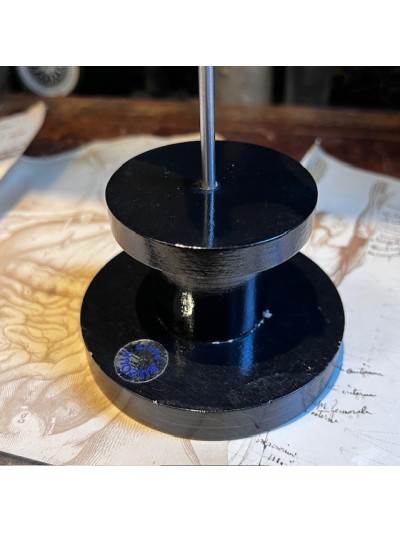
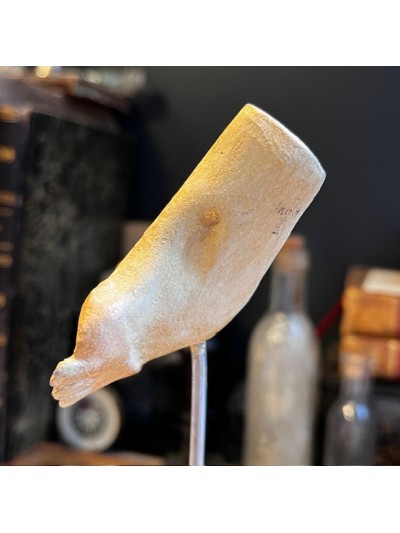
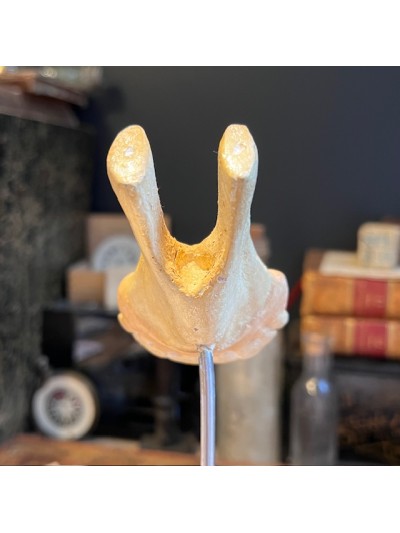
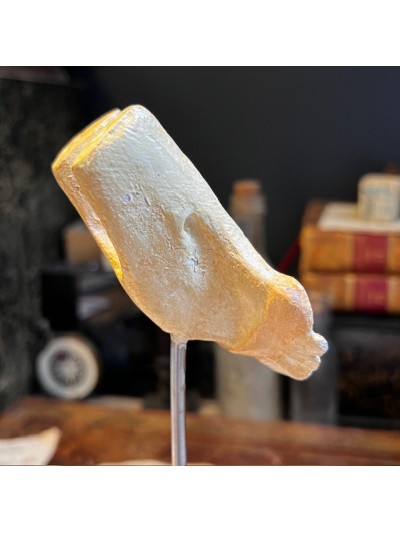
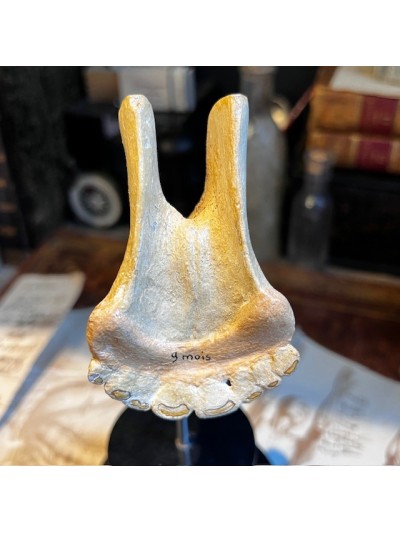
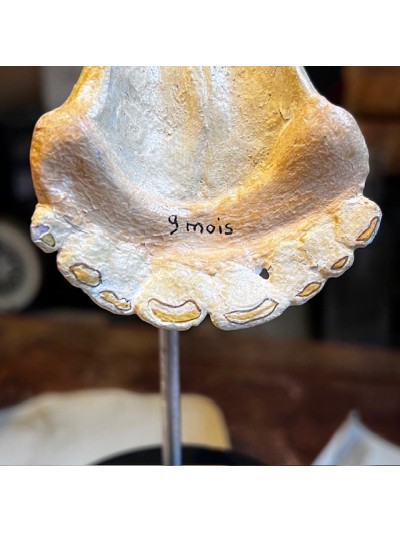
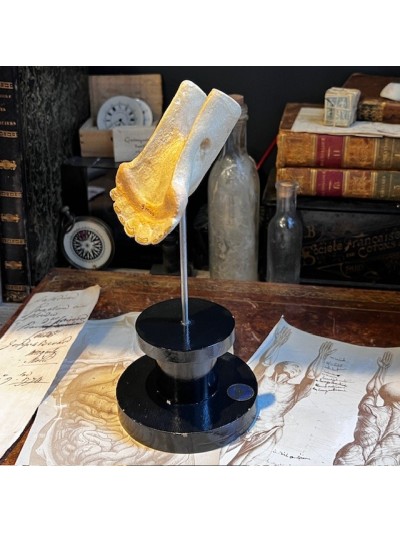
Lower part of the lower mandible of a horse jaw
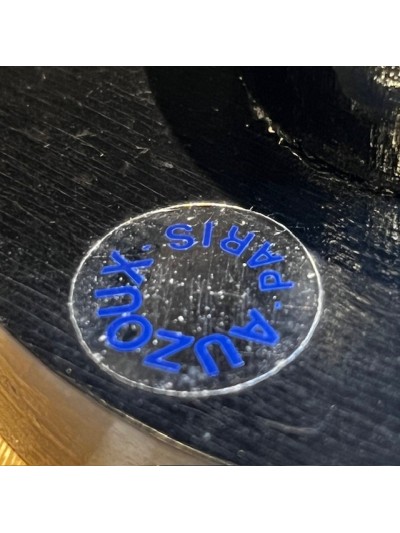
Antique model from Maison Auzoux in Paris
Paper-mâché pedagogical model
Model A - 9 months
Lower part of the lower mandible of a horse jaw
Antique model from Maison Auzoux in Paris
Paper-mâché pedagogical model
Model A
Inscription: 9 mois (months)
From 1830 onwards, Dr Louis Auzoux developed the industrial production of dismantlable anatomical models for human or animal parts in papier-mâché, known as clastic anatomy models (from the Greek to break into pieces).
Much lighter than plaster or wooden models, and less expensive than wax models. His secret to making his pieces light and easy to handle without being too fragile lies in the way he makes his paste and adds cork powder.
In this way, he met the strong demand for human or animal models for teaching purposes in schools.
Dr Auzoux died in 1878, and the business was taken over by his widow and nephews. In 1926, it was bought by Henri Barral, who merged it with Maison Vasseur-Tramond, which specialised in ceroplasty (wax models). From 1959 onwards, the arrival of synthetic resins meant that papier-mâché anatomical models were gradually abandoned.
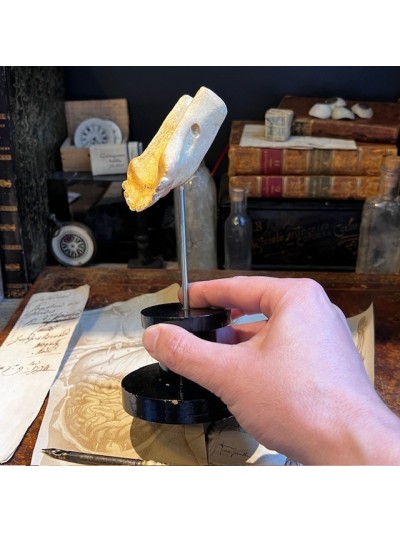
Height: 20cm - Diameter: 9cm
Chips in the black lacquer on the painted wooden base and chips in the paint on the papier-mâché in places, but the piece is in good condition.
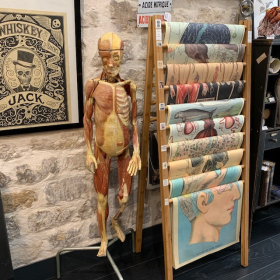
Clastic Mannequin - Dr. Auzoux's anatomical skinned

Lower part of the lower mandible of a horse jaw
Antique model from Maison Auzoux in Paris
Paper-mâché pedagogical model
Model B - 1 year
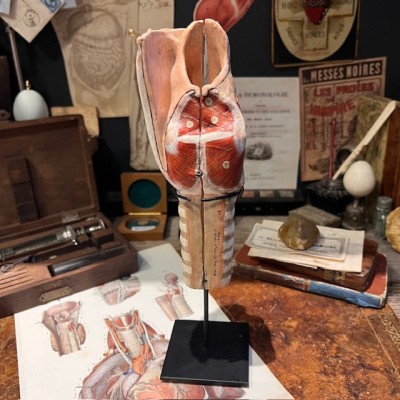
Antique anatomical model of the larynx and trachea made of painted papier-mâché.
Produced by Établissements Auzoux and manually dated 1938.
Model can be dismantled lengthwise, numbered, used for medical teaching.
Please note: one removable side piece is missing. The model remains stable and highly decorative. Authentic piece.
Handwritten inscription from the period: Larynx - Auzoux à St-Aubin-d’Écrosville Eure 1938
Placed in a metal base, it can be easily removed to hold it in your hand.
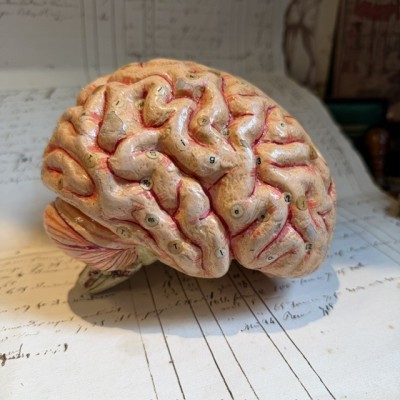
Painted papier-mâché anatomical model of the brain
Produced by Établissements Auzoux
Model No. 12 from the 1874 catalogue
Dismantlable, numbered model, used for medical teaching.
A rare item in excellent working condition
This is a 1:1 scale model of the brain, sold separately at the time as a demonstration model; it is not a brain that was found inside anatomical manikins.
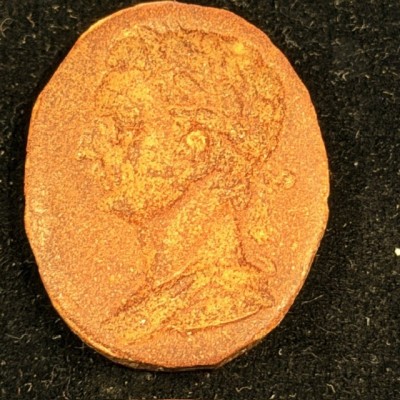
Antique intaglio and cameo print from the Grand Tour of the 19th century
In Brown Wax
True testimony of the Grand Tour carried out by the aristocrats in the 19th century
Profiles in the antique style, mythological scenes or Greco-Roman deities
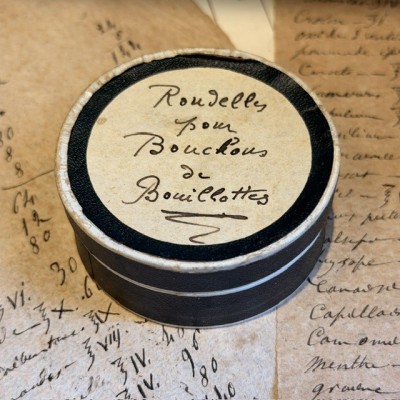
Box of rubber washers for hot water bottles
In its original cardboard box
1939/1940
New Old Stock
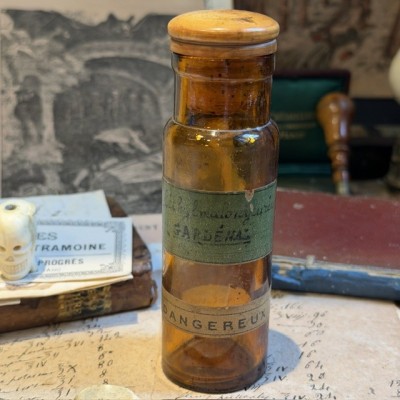
Gardénal - Phenobarbital - Barbiturates
Phényléthylmalonylurée
Antique amber glass bottle, with a boxwood and cork stopper.
Label: DANGEROUS
Indicating to the pharmacist that it must be stored separately from other substances in the cabinet for toxic substances, the famous ‘poison cabinet’.
It comes from the former cellar-laboratory of a Parisian pharmacy. The bottles had not been moved from the shelves since the late 1950s. The cellar had served as a medical analysis laboratory and a laboratory for the pharmacy’s compounded preparations from 1900 until around 1950.
EMPTY
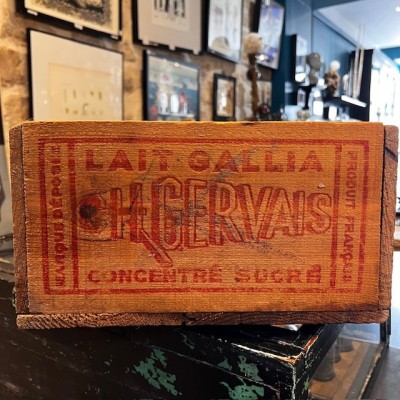
Antique wooden advertising crate for Gallia / Ch. Gervais infant milk concentrate
Found in Parisian cellars that served as laboratories and storage rooms for pharmacists preparing their masterful concoctions from 1900 to 1950.
It was used to store products, glass bottles, etc.
Period: Circa 1947–1955

Brass plate number per unit
Numbered oval brass plate
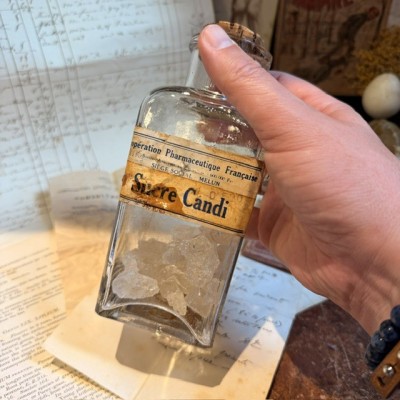
Rock Candy
Antique Apothecary Bottle of Rock Candy – Coopération Pharmaceutique Française (circa 1930–1940)
It comes from the former cellar-laboratory of a Parisian pharmacy. The bottles had remained untouched on the shelves since the late 1950s. The cellar served as a medical analysis laboratory and as a laboratory for the pharmacy's compounded preparations from 1900 until around 1950.
It still contains large crystals of rock candy (Saccharum candi), perfectly preserved.
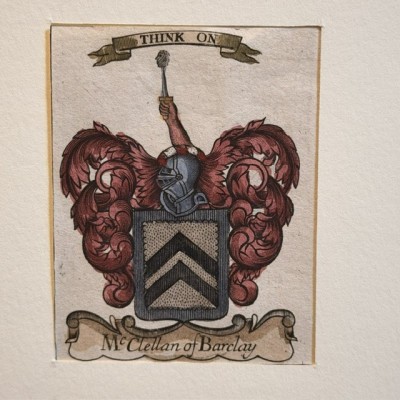
Original heraldic engraving on copper (1722) in colour - A System of Heraldry - By Alexander Nisbet
The vignette was cut from an original folio sheet and then hand-enhanced with a subtle watercolor painting.
The event is presented under a modern passe-partout
Family coat of arms: McClellan of Barclay
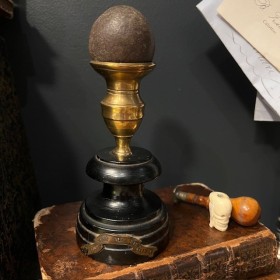
Antique bezoar - Antipoison - Antidote
Once sold by the apothecary, bezoar, also known as gallstone, was reputed to have the same anti-poison properties as the legendary unicorn's horn, hence its excessively high price, also due to its great rarity.
An important piece in a cabinet of curiosities
Sold alone - Without stand, sold separately
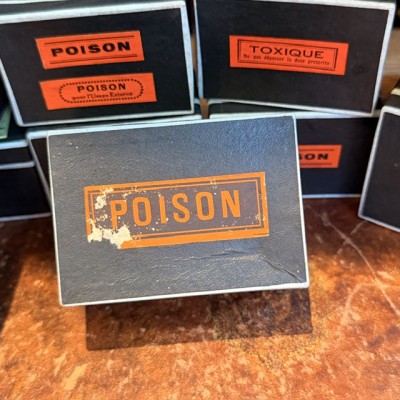
Antique labels in a pharmacy box for cures made of canvas cardboard
Poison label - Ref A
The pharmacist used his boxes of medicine to put away the labels he would then put on the bottles that he would resell to his customers.
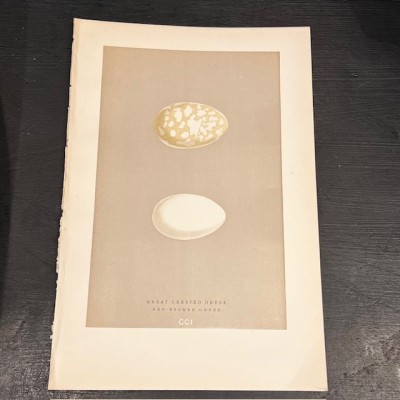
Plate - 19th century colour engraving from Natural History
By Morris, circa 1870 - A History of British Birds
Birds Eggs - In colour
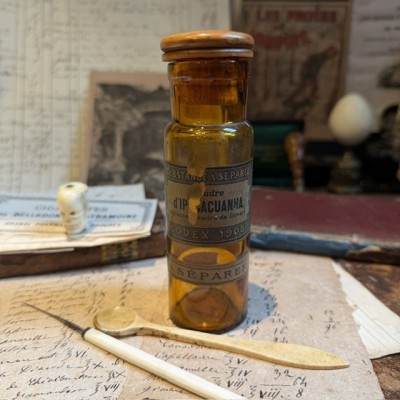
Ipecacuanha Opiate Powder - Dover's Powder
Antique amber glass bottle, with a boxwood and cork stopper.
Green label: SUBSTANCE TO BE STORED SEPARATELY – CODEX 1908
Indicating to the pharmacist that it must be stored separately from other substances in the cabinet for toxic substances, the famous ‘poison cabinet’.
It comes from the former cellar-laboratory of a Parisian pharmacy. The bottles had not been moved from the shelves since the late 1950s. The cellar had served as a medical analysis laboratory and a laboratory for the pharmacy’s compounded preparations from 1900 until around 1950.
EMPTY
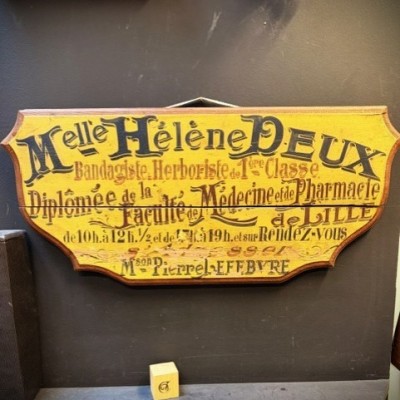
Rare and authentic wall sign panel
Pharmacy and fitting brand - Miss Hélène Deux, Bandagiste & 1st class Herbalist
Officine sign panel in painted wood from the 19th-20th century hinge: 1890-1920.
The sign is made of 2 reinforced wood panels at the back. There is a space between the 2 panels.
The sign features a superb art lettering entirely made freehand by a letter painter (superb contrasts of blue and brown, neat full and loose)
Witness to the history of pharmacy and ancient orthopaedics: the bandagist shaping leather and frames for corsets and restraints, and the herbalist 1st class, a profession that has disappeared since the abolition of the diploma in 1941.
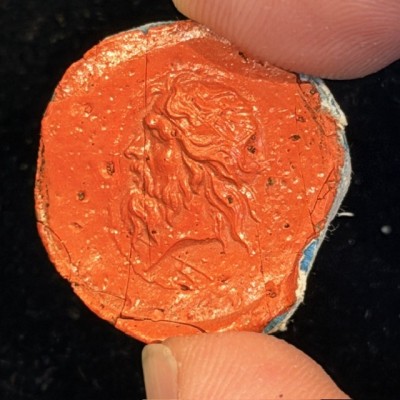
Antique intaglio and cameo print from the Grand Tour of the 19th century
In Red Sealing Wax
True testimony of the Grand Tour carried out by the aristocrats in the 19th century
Profiles in the antique style, mythological scenes or Greco-Roman deities
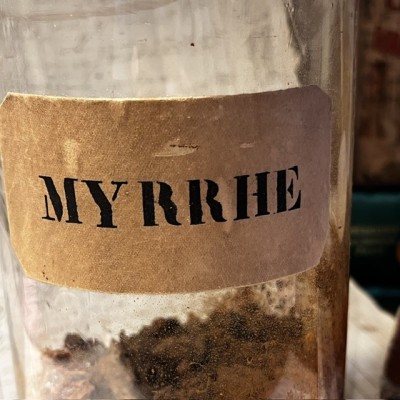
Myrrh
Antique pharmacy bottle - Wide-mouth apothecary jar.
19th-century mouth-blown glass
There is still some product left inside
A fascinating artifact from the history of pharmacology
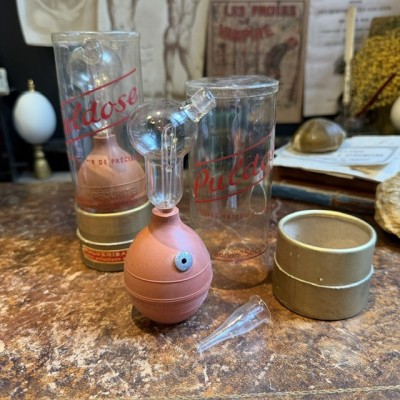
Puldose Nasal Spray for aqueous solutions - Antique remedy
In its Plastic box
Used in otolaryngology, it was intended for nasal or oral sprays in the treatment of colds and antiseptic treatment of the respiratory tract.
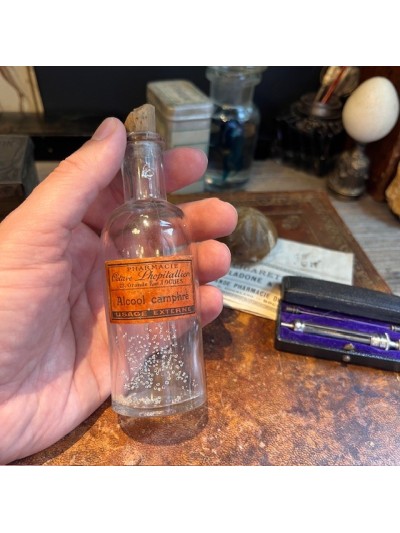
Camphorated alcohol
Antique pharmacy bottle
Apothecary vial
EMPTY
Lower part of the lower mandible of a horse jaw
Antique model from Maison Auzoux in Paris
Paper-mâché pedagogical model
Model A - 9 months
