
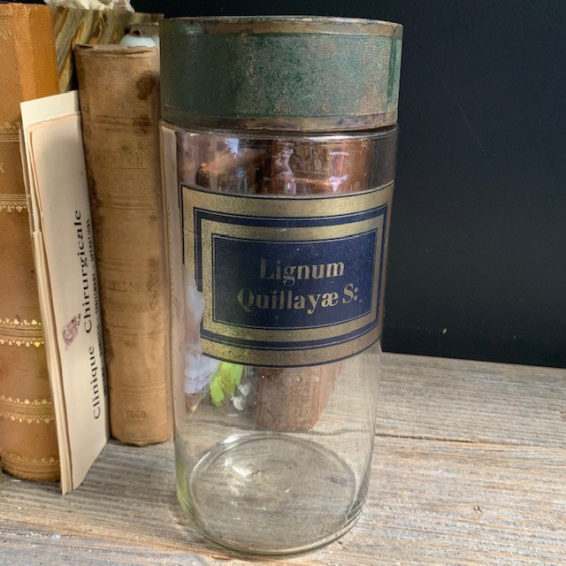
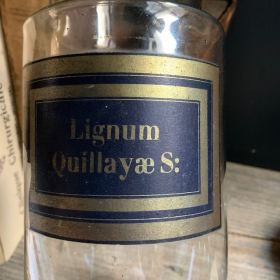
Antique pharmacy jar: Lignum Quillayae Saponaria
Panama wood - 19th century jar
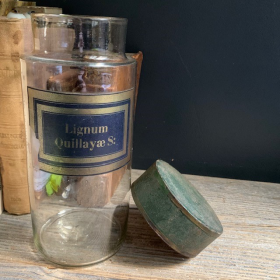
Antique pharmacy jar, tin stopper - Late 19th century
Lignum Quillayae Saponaria - Panama wood
The bark of this tree growing in Chile contains saponin and is therefore used as soap.
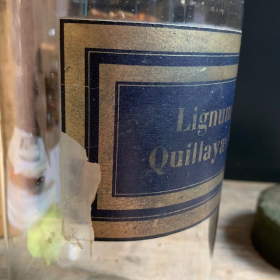
Very nice green and gold label, torn on one edge.
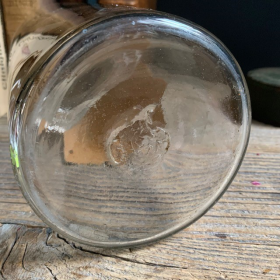
Mouth-blown glass, there remains the trace of the pontil of the cane underneath.
Height 25.5cm with stopper Diameter: 10.5cm
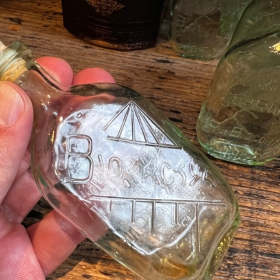
Antique pharmacy bottle
BIOLACTYL Ferment Fournier - Early 1900
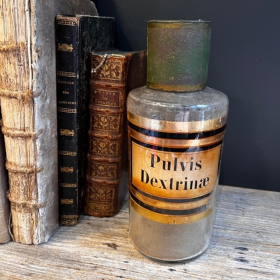
Dextrin powder - Starch - Pulvis Dextrinae
Antique pharmacy bottle
Blown glass

Antipyrina Knorr
Named after its German discoverer: Ludwig Knorr
Pharmacy jar - Herbalism - Apothecary bottle
Late 19th century
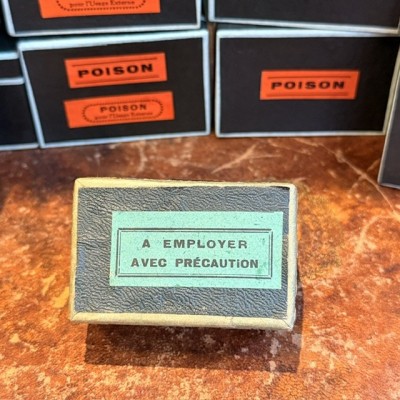
Antique labels in a pharmacy box for cures made of canvas cardboard
To be used with care label
The pharmacist used his boxes of medicine to put away the labels he would then put on the bottles that he would resell to his customers.

Zinc Phosphide: The Killer Gas
Antique pharmacy bottle.
Red ‘POISON’ label
Indicating to the pharmacist that it must be stored separately from other substances in the cabinet for toxic substances, the famous ‘poison cabinet’.
It comes from the former cellar-laboratory of a Parisian pharmacy. The bottles had not been moved from the shelves since the late 1950s. The cellar had served as a medical analysis laboratory and a laboratory for the pharmacy’s compounded preparations from 1900 until around 1950.
Date: Circa 1890–1910: Belle Epoque
EMPTY
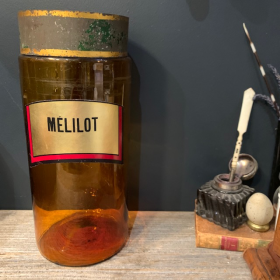
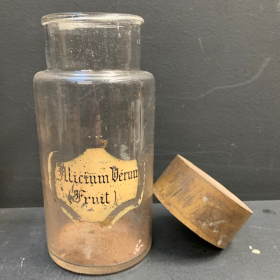
Antique pharmacy jar: Illicium verum (Fruit) / Star anise
Glass pharmacy bottle - XIXth century
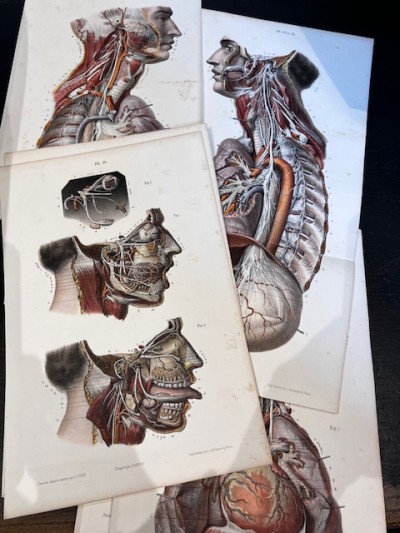
Anatomical chart by Ludovic Hirschfeld drawn by Léveillé
From Traité et iconographie du système nerveux et des organes des sens de l'homme avec leur mode de préparation
Published in 1866
Lithography
You buy 1 plate, not the whole set
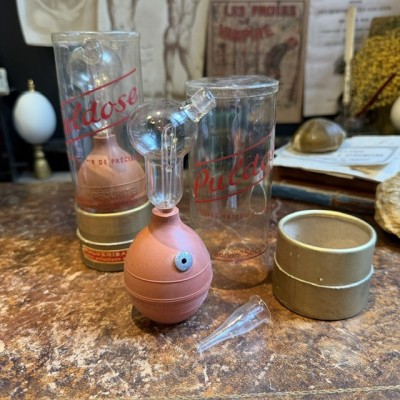
Puldose Nasal Spray for aqueous solutions - Antique remedy
In its Plastic box
Used in otolaryngology, it was intended for nasal or oral sprays in the treatment of colds and antiseptic treatment of the respiratory tract.
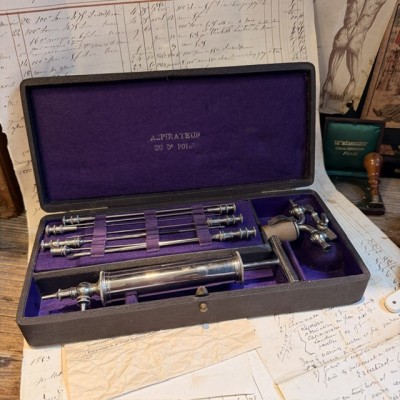
Dr. Potain’s aspirator set in its felt-lined box
Late 19th century, circa 1880
Antique medical instrument without manufacturer marking
non-functional
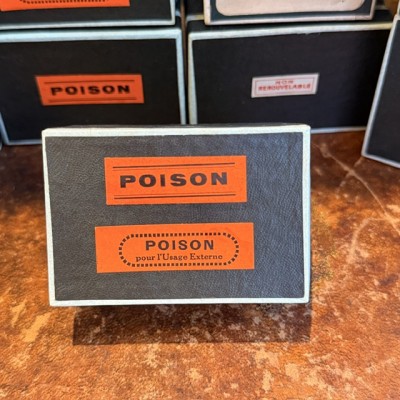
Antique labels in a pharmacy box for cures made of canvas cardboard
Poison label - Ref A
The pharmacist used his boxes of medicine to put away the labels he would then put on the bottles that he would resell to his customers.
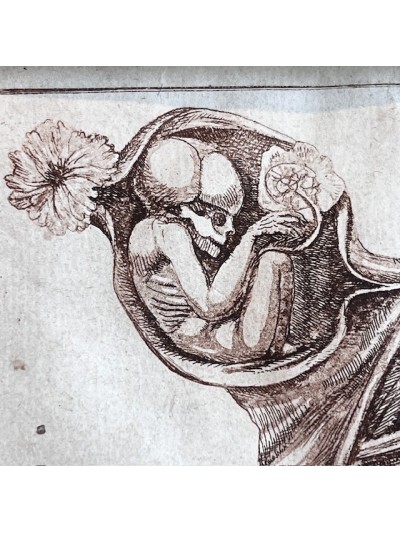
L'art de procréer les sexes à volonté - The art of procreating sexes at will
By Millot - With illustrated plates
Antique book from 1802 (Year X of the Republic) - Third edition
The author explains how to procreate boys and girls, and gives his recipes for treating sterility and malformations...

Sparteine sulphate
Used as a tonic for nervous syndromes at the very beginning of the 20th century, sparteine was also used to facilitate morphine withdrawal.
Antique pharmacy bottle
Apothecary vial
Some product left inside
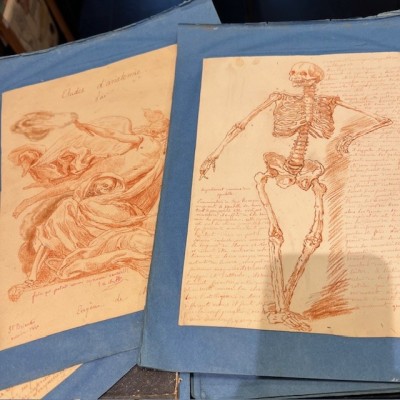
Red chalk drawing- Anatomical drawing
Anatomical study
Drawn by Eugène de Montchoisy in Saint-Brieuc in November 1840
These are not reproductions but original period drawings in red chalk.
You are purchasing one plate, not the entire set of plates
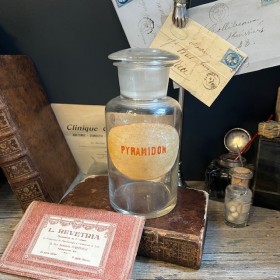
Pyramidon
Antique pharmacy bottle
Apothecary vial
Color pigments have been added to the inside of the jar
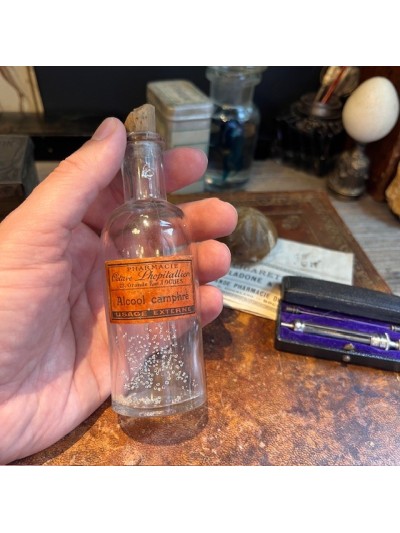
Camphorated alcohol
Antique pharmacy bottle
Apothecary vial
EMPTY
Antique pharmacy jar: Lignum Quillayae Saponaria
Panama wood - 19th century jar