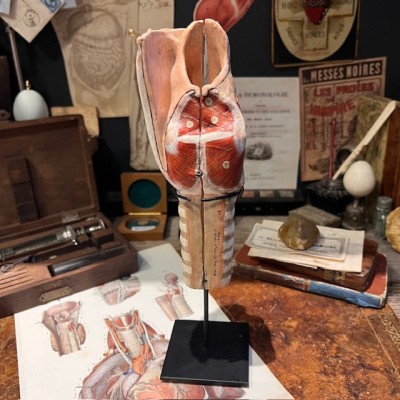

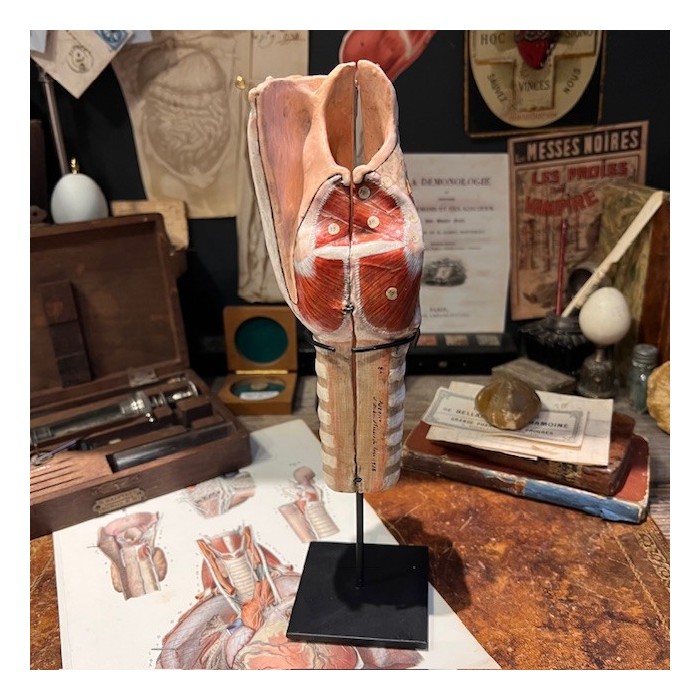
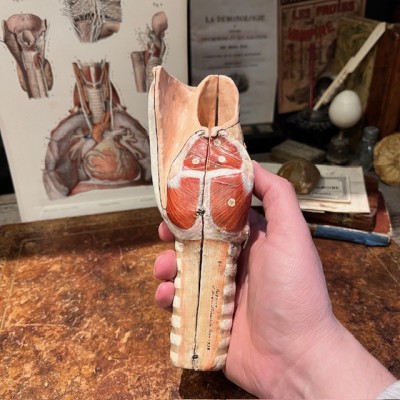
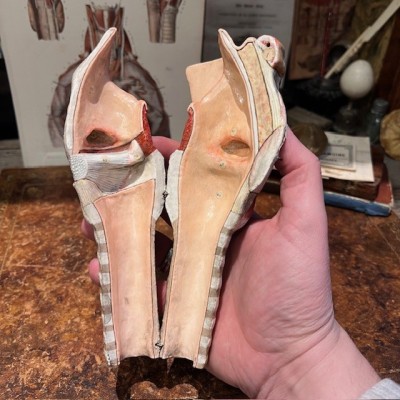
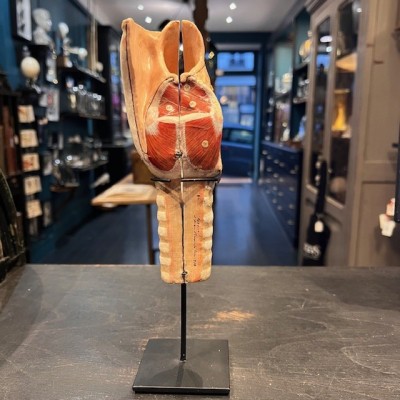
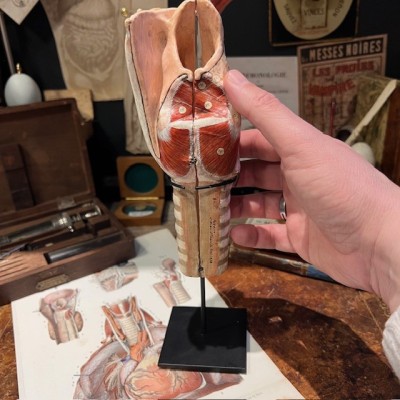
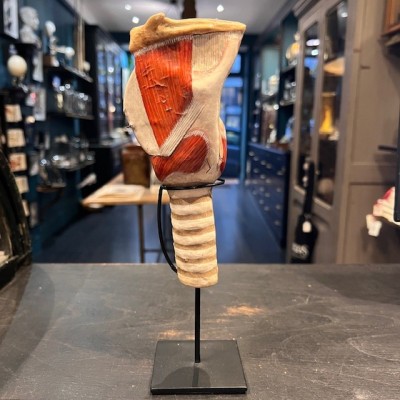
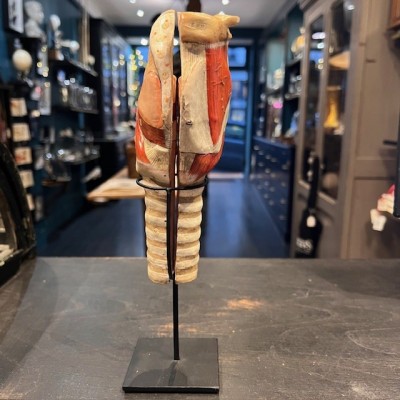
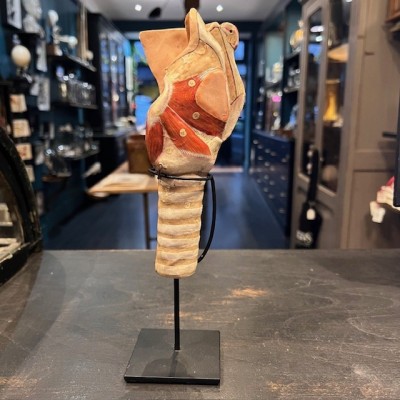
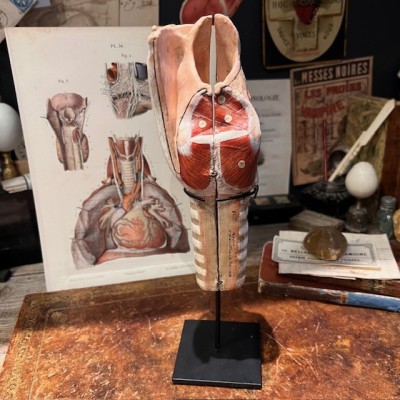
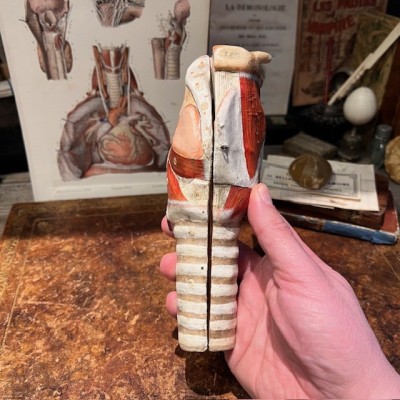
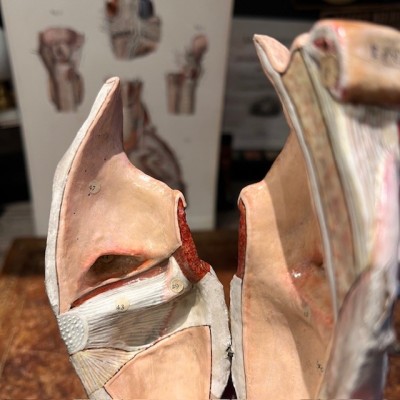
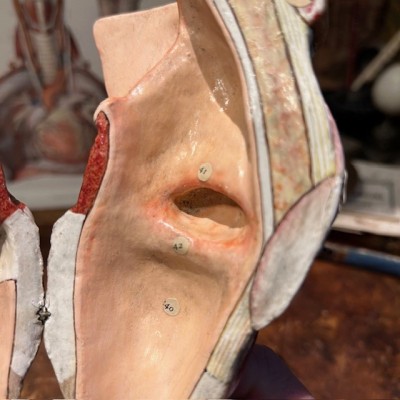
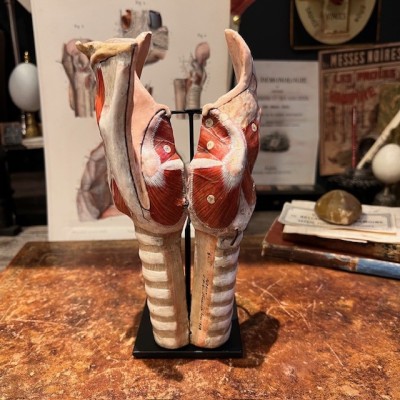
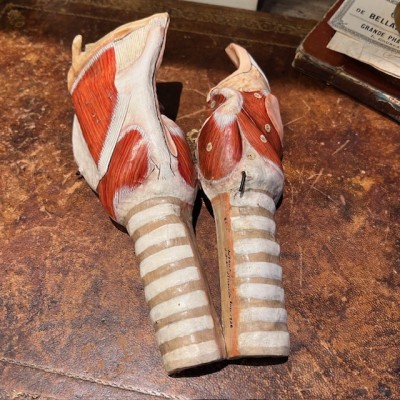
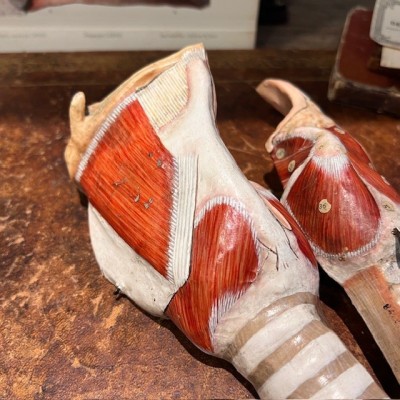
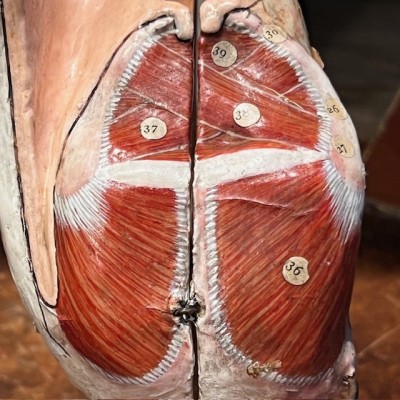
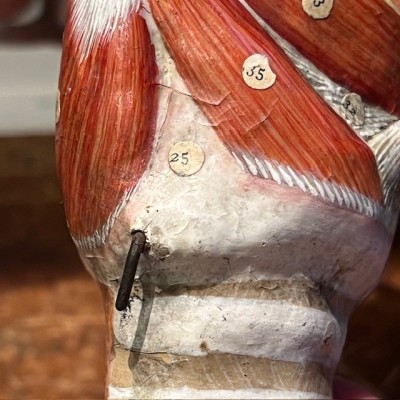
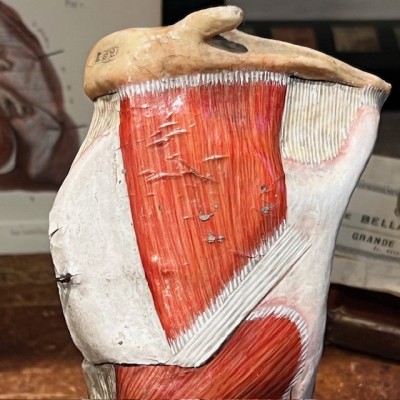
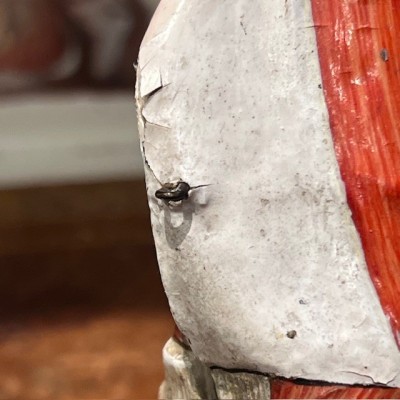
Antique anatomical model of the larynx and trachea made of painted papier-mâché.
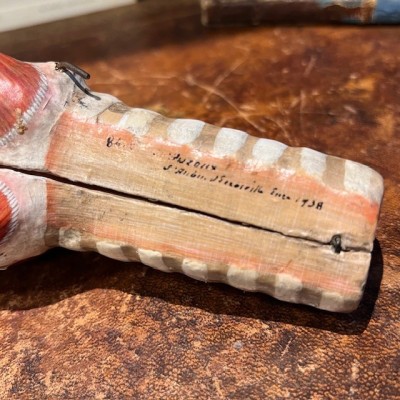
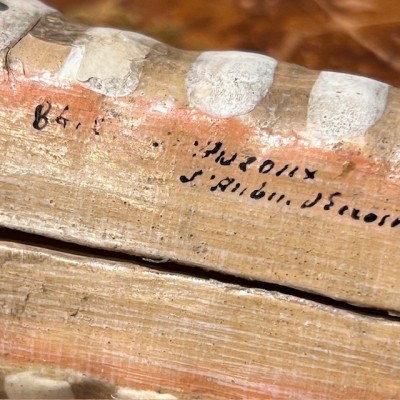
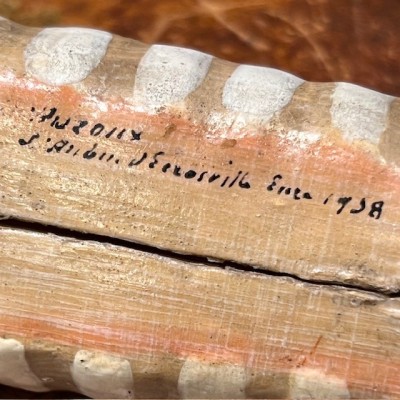
Produced by Établissements Auzoux and manually dated 1938.
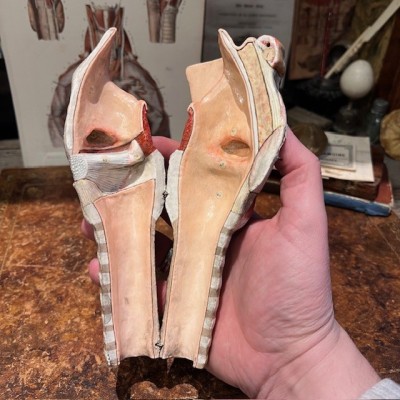
Model can be dismantled lengthwise, numbered, used for medical teaching.
Please note: one removable side piece is missing. The model remains stable and highly decorative. Authentic piece.
Handwritten inscription from the period: Larynx - Auzoux à St-Aubin-d’Écrosville Eure 1938
Placed in a metal base, it can be easily removed to hold it in your hand.
Anatomical model of the human larynx, split in two, with trachea and removable parts.
Early model by Dr. Auzoux in Paris.
Educational model made of painted papier-mâché. The articulated piece opens in two.
Handwritten inscription from the period: Larynx - Auzoux à St-Aubin-d’Écrosville Eure 1938
Anatomical model of the larynx, half larger than life. The cartilage, muscles, vessels, nerves, trachea, and division of the bronchi down to the last branches are represented.
The hinged right side piece that went over the top is missing.
Placed in a metal base, it can be easily removed to hold it in your hand.
You can see the complete model with this missing articulated part by following this link, belonging to the University of Lille, Faculty of Science and Technology, Department of Biology.
This is therefore the same model from the 1893 mold still in use in 1938.
From 1830 onwards, Dr. Louis Auzoux developed the industrial production of demountable anatomical models of human and animal parts made of papier-mâché, known as plastic anatomy models (from the Greek for “to break into pieces”).
These were much lighter than plaster or wooden models and less expensive than wax ones. His secret to making his pieces light and easy to handle without being too fragile lay in the manufacture of his paste and the addition of cork powder.
He thus responded to the high demand for human and animal models for use in schools.
Dr. Auzoux died in 1878, and the establishments were taken over by his widow and nephews. In 1926, they were bought by Henri Barral, who merged them with Maison Vasseur-Tramond, a specialist in ceroplasty (wax models). From 1959 onwards, the advent of synthetic resins marked the gradual abandonment of papier-mâché anatomical models.
Polychrome educational model of plastic anatomy, made in France.
Model number: B4. ?
Height: approximately 20cm - On base: 26.5cm
Beautiful colours still vivid
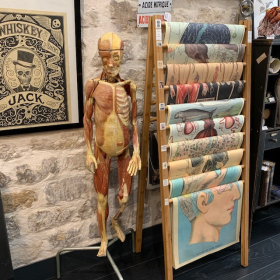
Clastic Mannequin - Dr. Auzoux's anatomical skinned

Lower part of the lower mandible of a horse jaw
Antique model from Maison Auzoux in Paris
Paper-mâché pedagogical model
Model A - 9 months

Lower part of the lower mandible of a horse jaw
Antique model from Maison Auzoux in Paris
Paper-mâché pedagogical model
Model B - 1 year
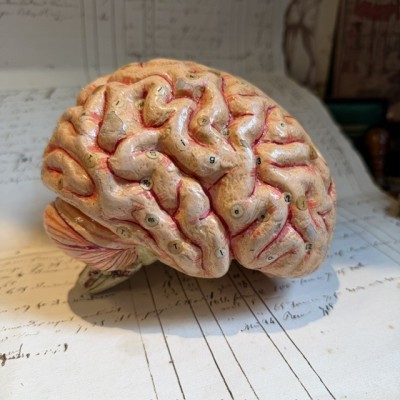
Painted papier-mâché anatomical model of the brain
Produced by Établissements Auzoux
Model No. 12 from the 1874 catalogue
Dismantlable, numbered model, used for medical teaching.
A rare item in excellent working condition
This is a 1:1 scale model of the brain, sold separately at the time as a demonstration model; it is not a brain that was found inside anatomical manikins.
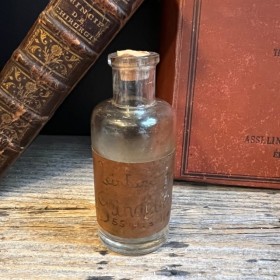
Grindelia Tincture
Antique medicine bottle
Apothecary
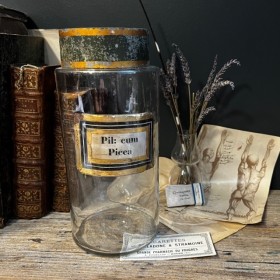
Cumin Epicea Pill - Pil: Cum Picea
Antique blown glass pharmacy jar
Apothecary
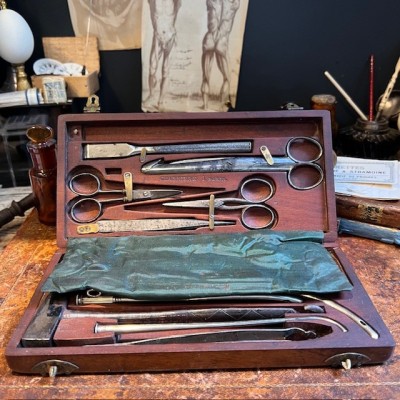
Portable autopsy kit from the mid-19th century
Maison Charrière in Paris, circa 1845–1870
Mahogany case for autopsy and dissection
Small portable mahogany case containing a set of autopsy instruments: hook hammer, bone chisel, enterotome scissors, probes, hooks and suture needles. Used by forensic scientists and anatomists for opening and examining bodies.
Charrière, a major 19th-century Parisian manufacturer, was a pioneer in the design of high-precision surgical and anatomical instruments.
Mahogany and polished steel: 23 × 11 cm
Please note: crack in the wood under the case
A beautiful object, very rare to find
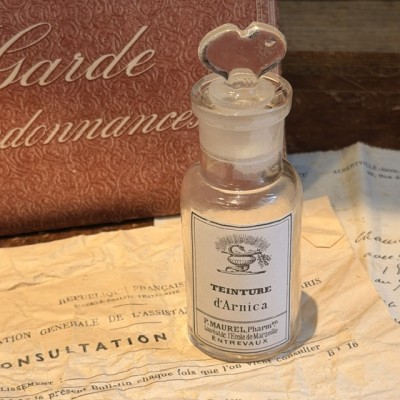
Teinture d'Arnica
Antique pharmacy bottle
EMPTY

Ancient First-aid kit for healing snake bites
antique first-aid kit from the Pharmacie Michel LEGROS
Glass syringe in its case
Antique Snake Oil Salesmen product! Quack Medicine
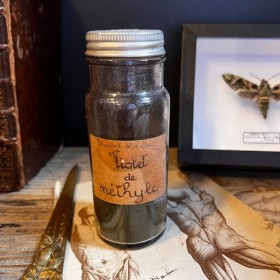
Violet de Méthyle
Antique pharmacy bottle - Droguerie - Apothicaire
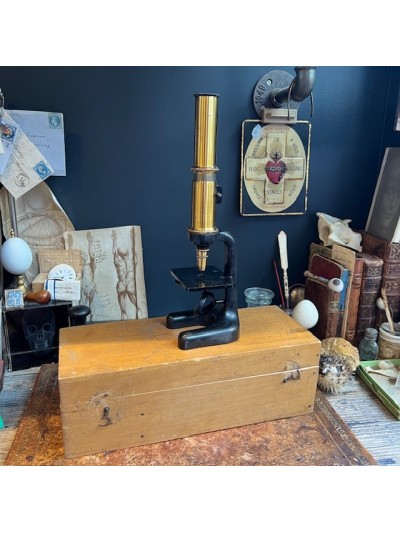
Antique brass and cast-iron rack-and-pinion microscope in wooden case
Late 19th century - Early 20th century
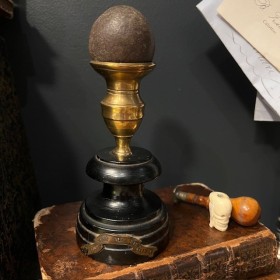
Antique bezoar - Antipoison - Antidote
Once sold by the apothecary, bezoar, also known as gallstone, was reputed to have the same anti-poison properties as the legendary unicorn's horn, hence its excessively high price, also due to its great rarity.
An important piece in a cabinet of curiosities
Sold alone - Without stand, sold separately

Mercury Proto-Iodide - Syphilis Treatment
Antique pharmacy bottle.
Red ‘POISON’ label
Indicating to the pharmacist that it must be stored separately from other substances in the cabinet for toxic substances, the famous "poison cabinet".
It comes from the former cellar-laboratory of a Parisian pharmacy. The bottles had not been moved from the shelves since the late 1950s. The cellar had served as a medical analysis laboratory and a laboratory for the pharmacy’s compounded preparations from 1900 until around 1950.
Period: Late 19th century - Very early 20th century (circa 1890–1910)
EMPTY
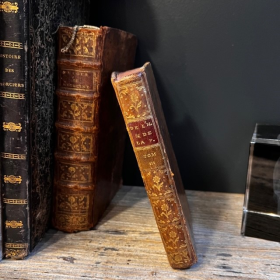
De l'Homme et de la Femme (Of Man and Woman)
By M. de Lignac - Volume 3
Anatomy of procreation - 1779
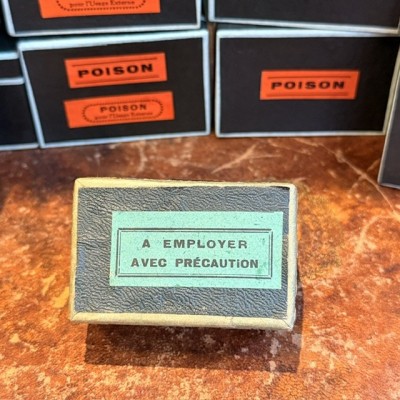
Antique labels in a pharmacy box for cures made of canvas cardboard
To be used with care label
The pharmacist used his boxes of medicine to put away the labels he would then put on the bottles that he would resell to his customers.
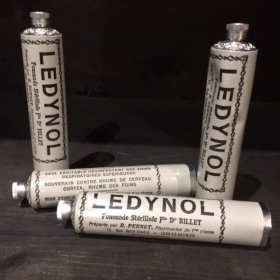
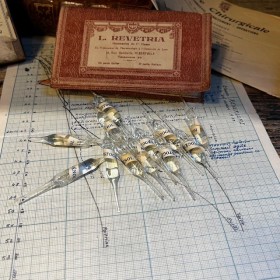
Antique ampoule for hypodermic injection
Histogénol - (circa 1900)
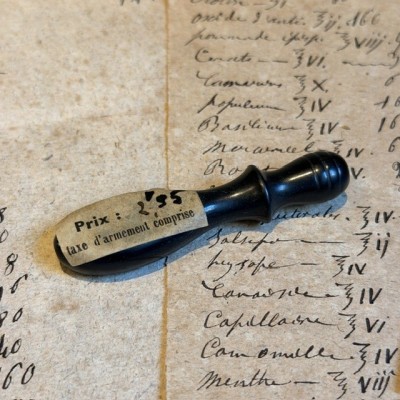
Ebonite cannula tip
Tips for enema or medical irrigation cannulas. New Old Stock
Marketed between May 1939 and sometime in 1940
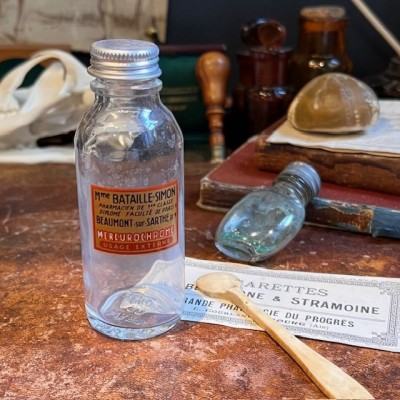
Mercurochrome
Antique pharmacy bottle - Apothecary
Mrs Bataille-Simon, First Class Pharmacist in Beaumont sur Sarthe - Tel 9
Lower part of the lower mandible of a horse jaw
Antique model from Maison Auzoux in Paris
Paper-mâché pedagogical model
Model A - 9 months
Antique anatomical model of the larynx and trachea made of painted papier-mâché.
Produced by Établissements Auzoux and manually dated 1938.
Model can be dismantled lengthwise, numbered, used for medical teaching.
Please note: one removable side piece is missing. The model remains stable and highly decorative. Authentic piece.
Handwritten inscription from the period: Larynx - Auzoux à St-Aubin-d’Écrosville Eure 1938
Placed in a metal base, it can be easily removed to hold it in your hand.