Grams / Tablespoons - Graduated bottle - Antique medicine...
Grams / Tablespoons - Graduated bottle
in French: Grammes / Cuillères à soupe
Antique medicine bottle
Apothecary
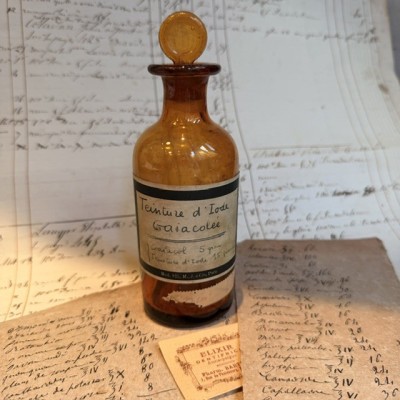
Gaiacolated Tincture of Iodine
Antique pharmacy bottle
EMPTY
Gaiacolated Tincture of Iodine
Antique pharmacy bottle
At the turn of the 20th century (and until the 1940s-1950s), Gaiacolated Tincture of Iodine was a very common preparation, mainly used in basting or topical applications for its powerful antiseptic, analgesic and resolving properties. It was frequently prescribed to treat respiratory ailments (by painting on the chest), joint pain, lymph nodes or throat inflammation.
It comes from the old cellar-laboratory of a Parisian pharmacy. The bottles had not been moved from the shelves since the late 1950s. The cellar had served as a medical analysis laboratory and a laboratory for the pharmacy’s compounded preparations from 1900 until around 1950.
Height of the bottle: 15 cm
EMPTY
Grams / Tablespoons - Graduated bottle
in French: Grammes / Cuillères à soupe
Antique medicine bottle
Apothecary
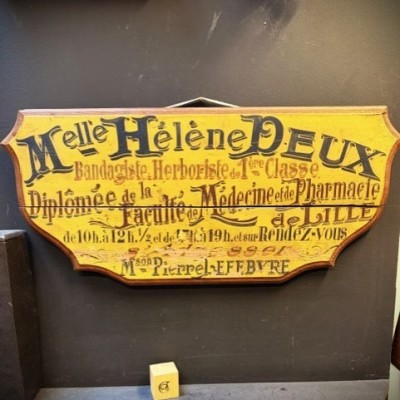
Rare and authentic wall sign panel
Pharmacy and fitting brand - Miss Hélène Deux, Bandagiste & 1st class Herbalist
Officine sign panel in painted wood from the 19th-20th century hinge: 1890-1920.
The sign is made of 2 reinforced wood panels at the back. There is a space between the 2 panels.
The sign features a superb art lettering entirely made freehand by a letter painter (superb contrasts of blue and brown, neat full and loose)
Witness to the history of pharmacy and ancient orthopaedics: the bandagist shaping leather and frames for corsets and restraints, and the herbalist 1st class, a profession that has disappeared since the abolition of the diploma in 1941.

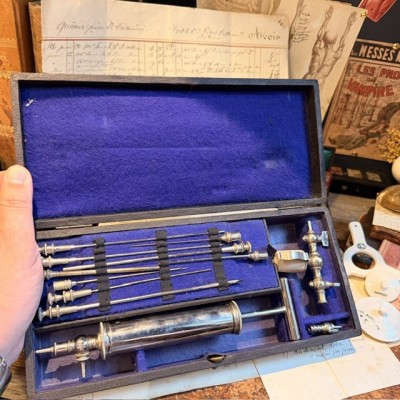
Dr. Potain’s aspirator set in its felt-lined box
Late 19th century, circa 1880
Antique medical instrument maker without manufacturer marking
non-functional
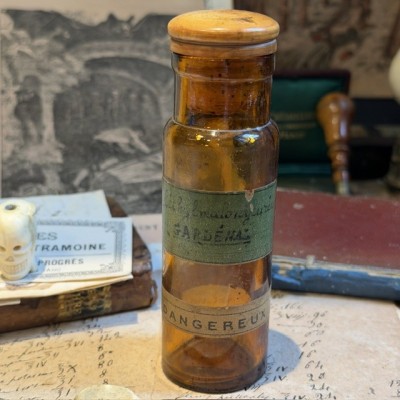
Gardénal - Phenobarbital - Barbiturates
Phényléthylmalonylurée
Antique amber glass bottle, with a boxwood and cork stopper.
Label: DANGEROUS
Indicating to the pharmacist that it must be stored separately from other substances in the cabinet for toxic substances, the famous ‘poison cabinet’.
It comes from the former cellar-laboratory of a Parisian pharmacy. The bottles had not been moved from the shelves since the late 1950s. The cellar had served as a medical analysis laboratory and a laboratory for the pharmacy’s compounded preparations from 1900 until around 1950.
EMPTY
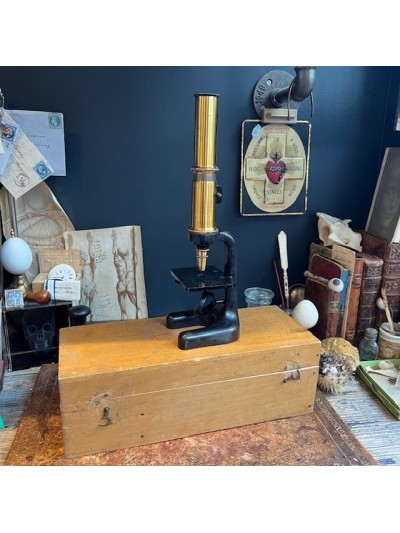
Antique brass and cast-iron rack-and-pinion microscope in wooden case
Late 19th century - Early 20th century
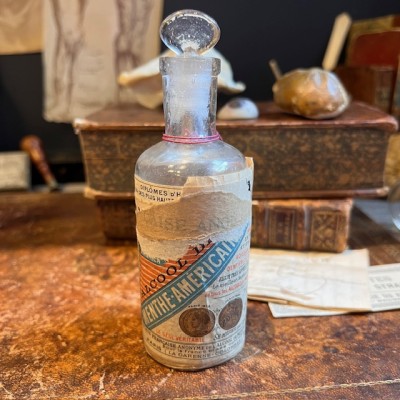
American mint alcohol
Antique pharmacy bottle
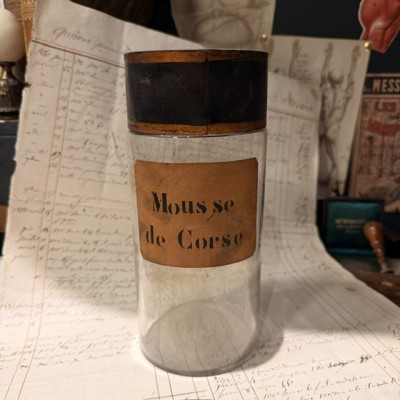
Corsican Moss
Pharmacy jar - Herbalism - Apothecary Mouth-blown glass bottle
Corsican Moss (Helminthochorton or Sphaerococcus helminthochorton) is a mixture of red seaweeds harvested along the coast of Corsica. It was one of the most famous deworming agents used in traditional medicine to eliminate intestinal worms.
Late 19th century - Beginning of the 20th
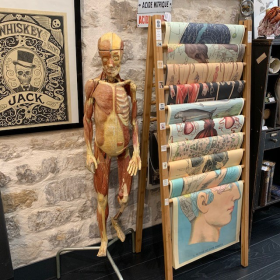
Clastic Mannequin - Dr. Auzoux's anatomical skinned
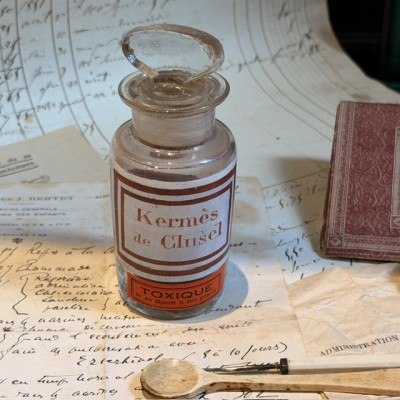
Kermes de Clusel - Antimony Sulfide
Antique pharmacy bottle made of blown glass and enameled painted label.
Red TOXIC label
Signaling to the pharmacist that it is imperative to keep apart the other substances in the cabinet of toxic substances, the famous poison cabinet.
Dating: 19th century
EMPTY
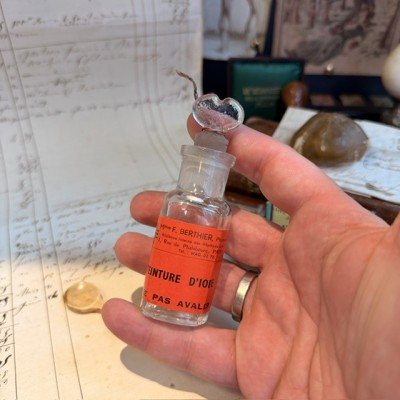
Iodine dye
Antique pharmacy bottle
With the inscription Teinture d'Iode molded in glass
EMPTY
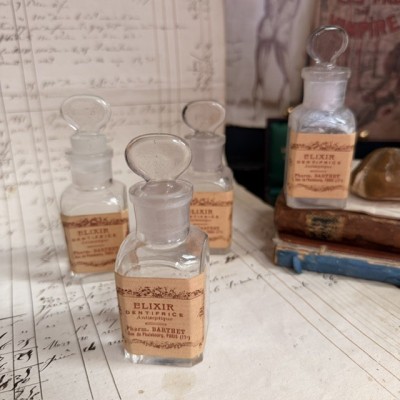
Toothpaste elixir
Antique pharmacy bottle
EMPTY
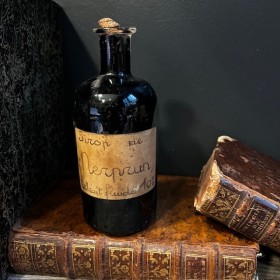
Buckthorns syrup
Antique pharmacy bottle
Apothecary vial
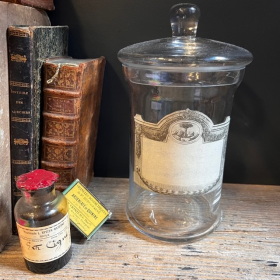
Herbalist's or Pharmacist's jar
Antique blank label of the XVIIIth century
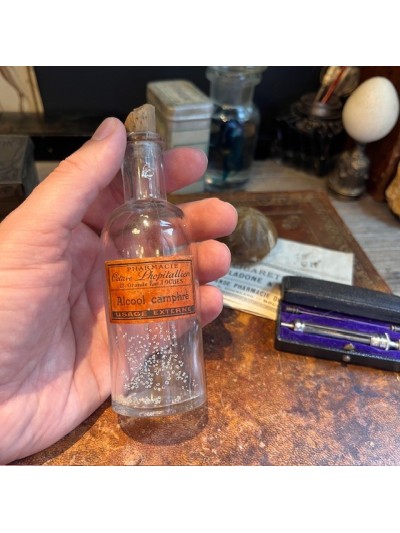
Camphorated alcohol
Antique pharmacy bottle
Apothecary vial
EMPTY
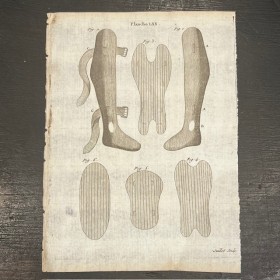
Antique surgical board
From Benjamin Bell's Complete Course in Surgery, published in 1796
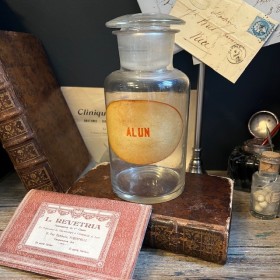
Alum
Antique pharmacy bottle
Apothecary vial
Color pigments have been added to the inside of the jar
Gaiacolated Tincture of Iodine
Antique pharmacy bottle
EMPTY