

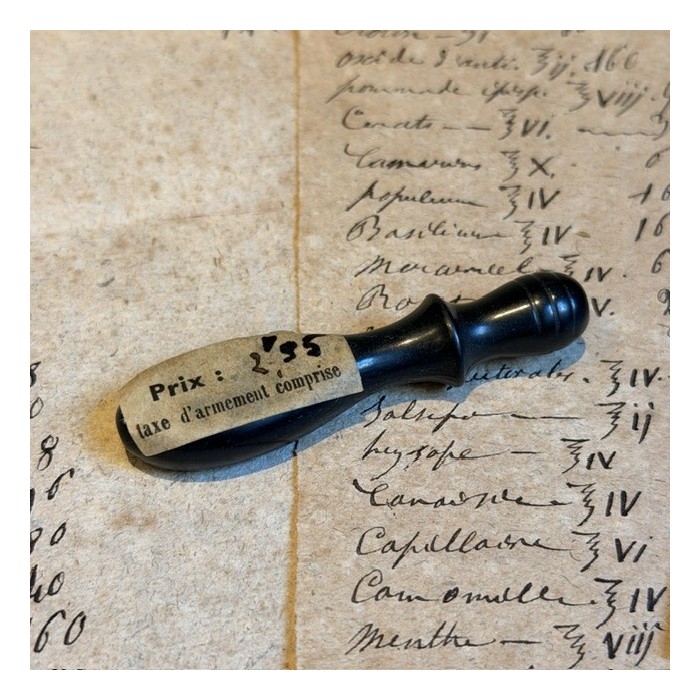
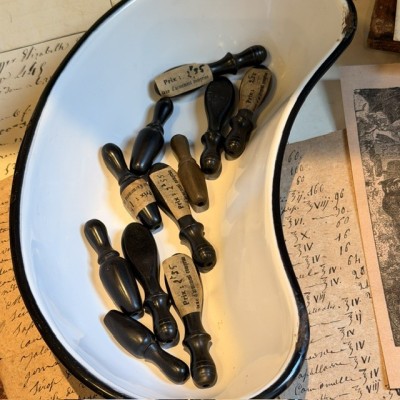
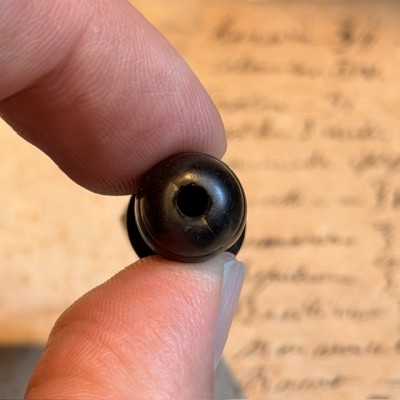
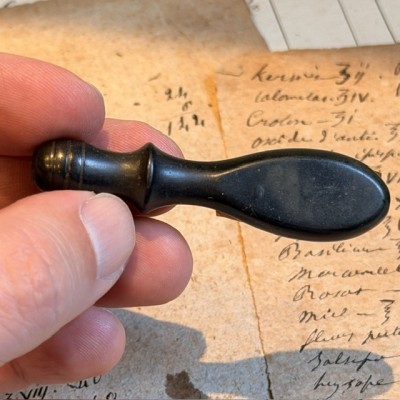
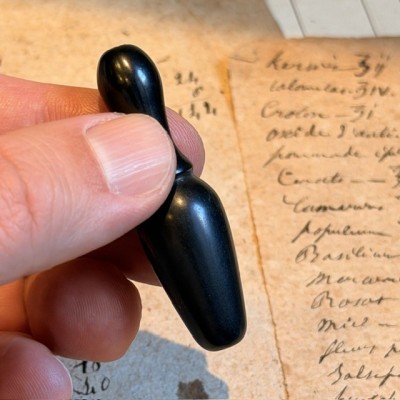
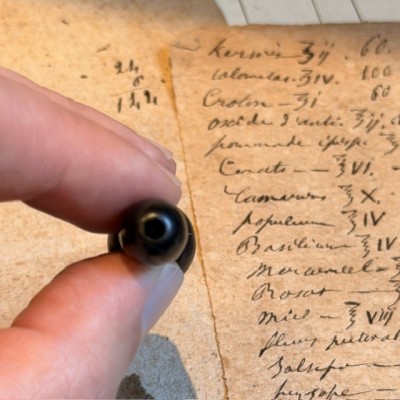
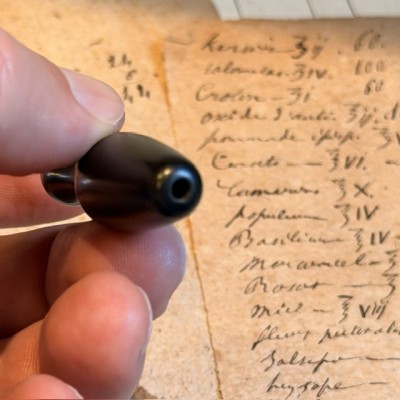
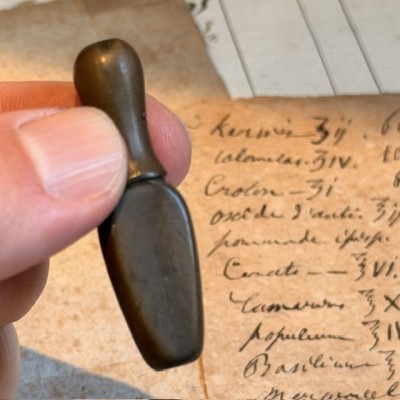
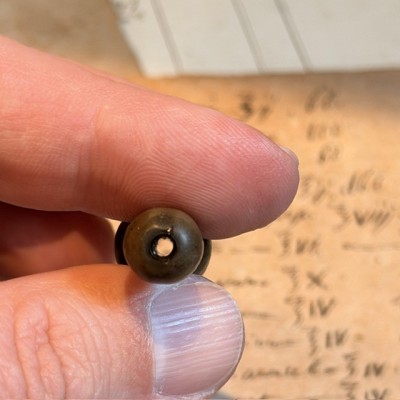
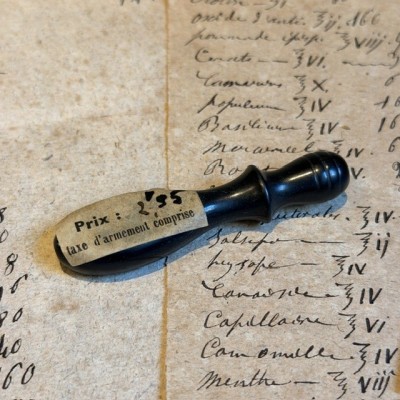
Ebonite cannula tip
Tips for enema or medical irrigation cannulas. New Old Stock
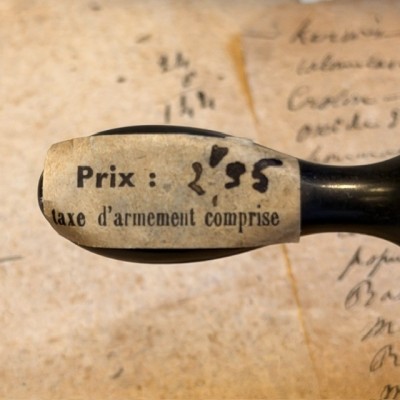
Marketed between May 1939 and sometime in 1940
Ebonite cannula tip
Tips for enema or medical irrigation cannulas. New old stock
This reference serves as a chronological marker: the armament tax (at a rate of 1%) was introduced in France by the decree-law of 21 April 1939 to finance the nation’s rearmament. This cannula tip was therefore sold between May 1939 and sometime in 1940.
It comes from the former cellar-laboratory of a Parisian pharmacy. The vials and other items had not been moved from the shelves since the late 1950s. The cellar had served as a medical analysis laboratory and a laboratory for the pharmacy’s compounded preparations from 1900 until around 1950.
Length varies depending on the cannulas: Between 4.5cm and 6.5cm

Antique and large drum microscope
In it's mahogany wooden box
For botanist, entomologist
This is a larger model than those usually found on the market
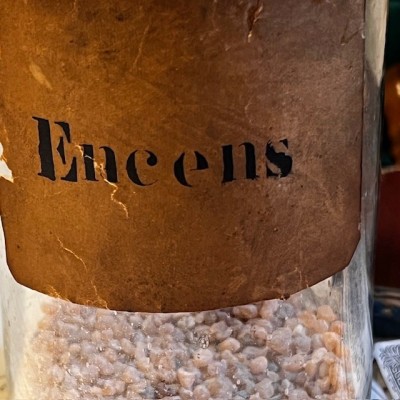
Incense
Antique pharmacy bottle - Wide-mouth apothecary jar.
19th-century mouth-blown glass
There are still some product inside.
A fascinating artifact from the history of pharmacology
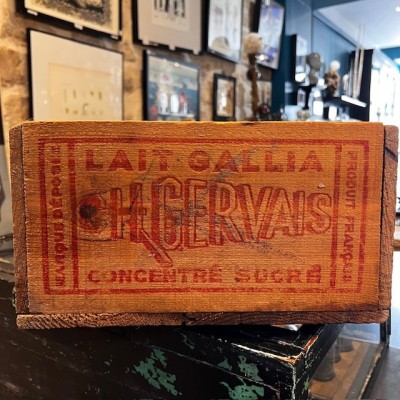
Antique wooden advertising crate for Gallia / Ch. Gervais infant milk concentrate
Found in Parisian cellars that served as laboratories and storage rooms for pharmacists preparing their masterful concoctions from 1900 to 1950.
It was used to store products, glass bottles, etc.
Period: Circa 1947–1955
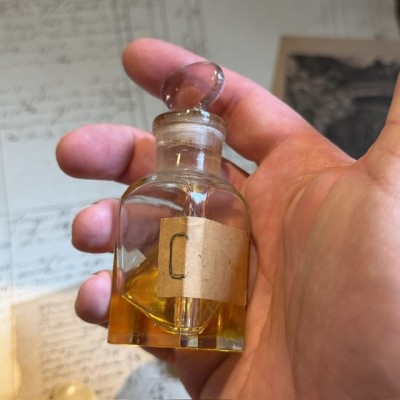
Cèdre - Cedarwood Oil
Antique pharmacy bottle
There is some product left, but the stopper is stuck
The writing has faded, but in oblique light one can make out CEDRE
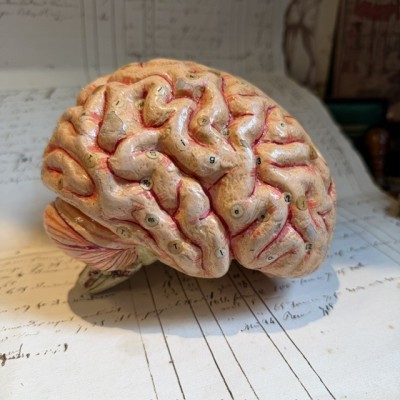
Painted papier-mâché anatomical model of the brain
Produced by Établissements Auzoux
Model No. 12 from the 1874 catalogue
Dismantlable, numbered model, used for medical teaching.
A rare item in excellent working condition
This is a 1:1 scale model of the brain, sold separately at the time as a demonstration model; it is not a brain that was found inside anatomical manikins.
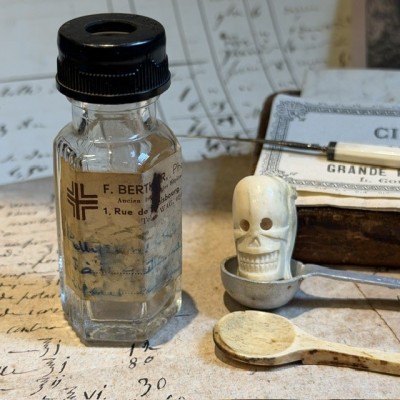
Dropper No. xx05
Antique pharmacy bottle
He's lost his rubber duck
EMPTY
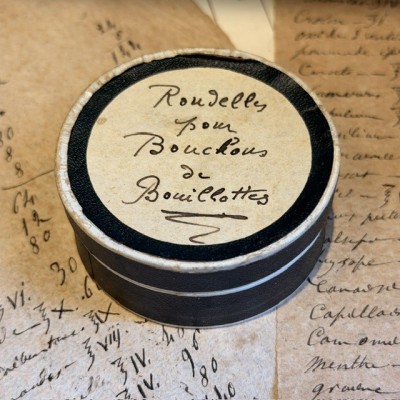
Box of rubber washers for hot water bottles
In its original cardboard box
1939/1940
New Old Stock

Carbonate de Potasse
Antique pharmacy bottle
Early 20th century (circa 1910 - 1920)
EMPTY
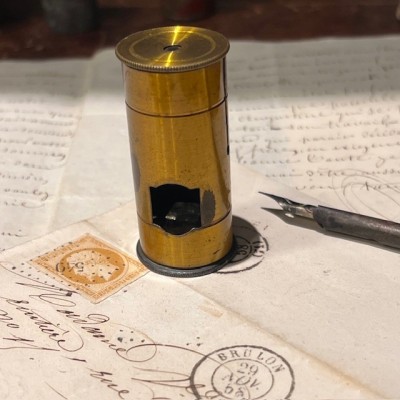
Floroscope
Botanist's microscope
Pocket microscope Late 19th - early 20th century
Warning: Here composed of 2 Stanhope lenses

Grams / Tablespoons - Graduated bottle
in French: Grammes / Cuillères à soupe
Antique medicine bottle
Apothecary
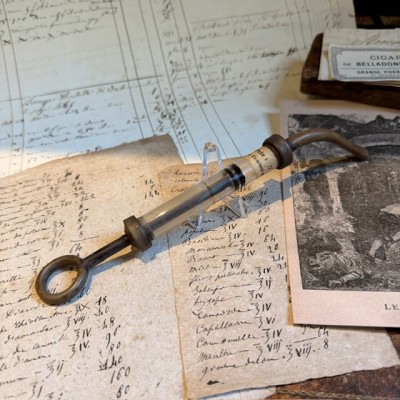
Ebonite and glass laryngeal syringe
For intra-laryngeal injections.
Marketed between May 1939 and sometime in 1940
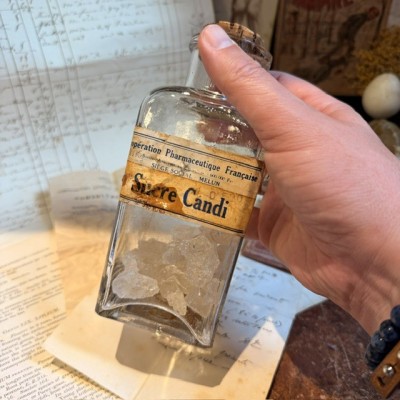
Rock Candy
Antique Apothecary Bottle of Rock Candy – Coopération Pharmaceutique Française (circa 1930–1940)
It comes from the former cellar-laboratory of a Parisian pharmacy. The bottles had remained untouched on the shelves since the late 1950s. The cellar served as a medical analysis laboratory and as a laboratory for the pharmacy's compounded preparations from 1900 until around 1950.
It still contains large crystals of rock candy (Saccharum candi), perfectly preserved.
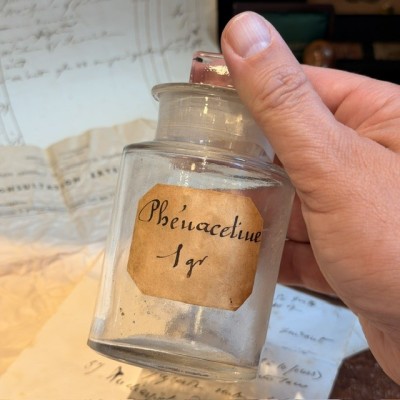
Phenacetin
Antique pharmacy bottle
Phenacetin is one of the first synthetic antalgic and antipyretic (anti-fever) from the chemical industry, very widespread in pharmacies from the end of the 19th century until the second half of the 20th century.
EMPTY - The cap is blocked and does not open
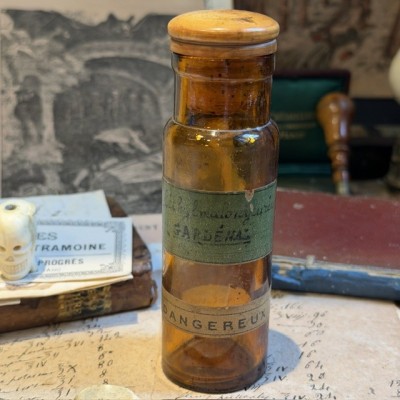
Gardénal - Phenobarbital - Barbiturates
Phényléthylmalonylurée
Antique amber glass bottle, with a boxwood and cork stopper.
Label: DANGEROUS
Indicating to the pharmacist that it must be stored separately from other substances in the cabinet for toxic substances, the famous ‘poison cabinet’.
It comes from the former cellar-laboratory of a Parisian pharmacy. The bottles had not been moved from the shelves since the late 1950s. The cellar had served as a medical analysis laboratory and a laboratory for the pharmacy’s compounded preparations from 1900 until around 1950.
EMPTY
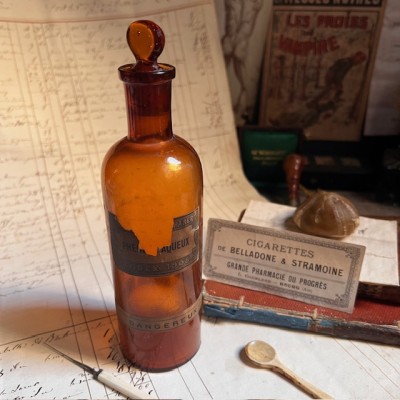
Phénol Aqueux
Antique pharmacy bottle
Green label: SUBSTANCE TO BE SEPARATED - CODEX 1908
This means that this bottle had to be kept separate from the others because it was dangerous - POISON
EMPTY
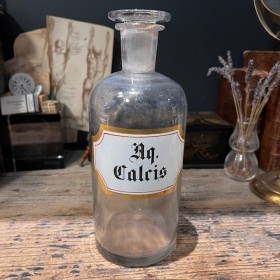
Aqua Calris - Hot water
Antique pharmacy jar
Apothecary
Ebonite cannula tip
Tips for enema or medical irrigation cannulas. New Old Stock
Marketed between May 1939 and sometime in 1940