Sodium Nitrite
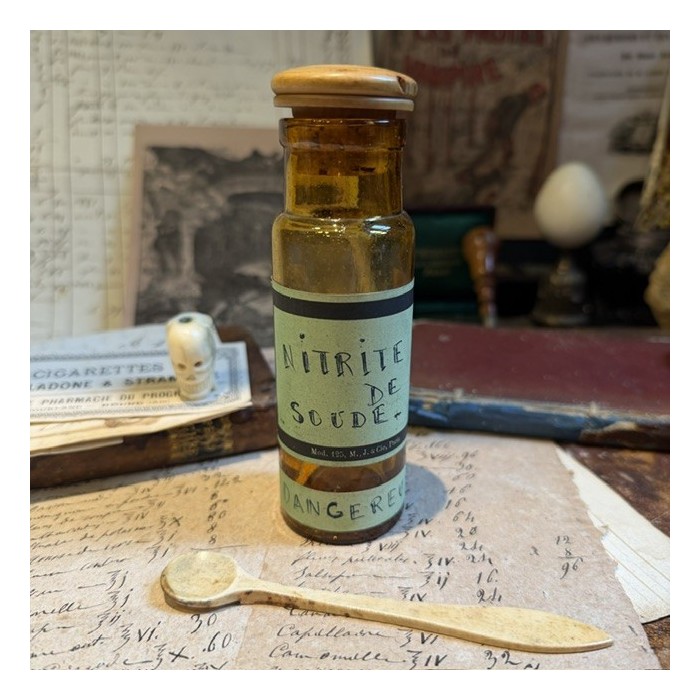
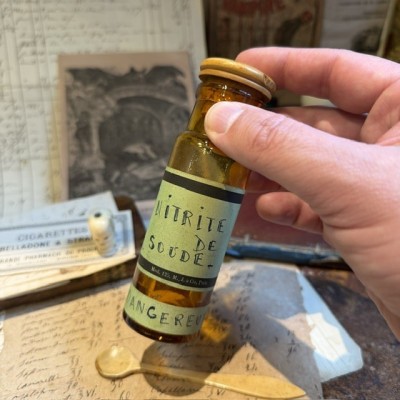
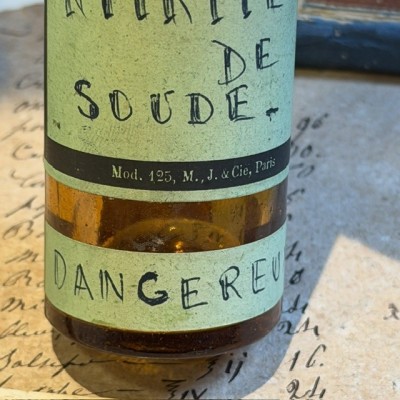
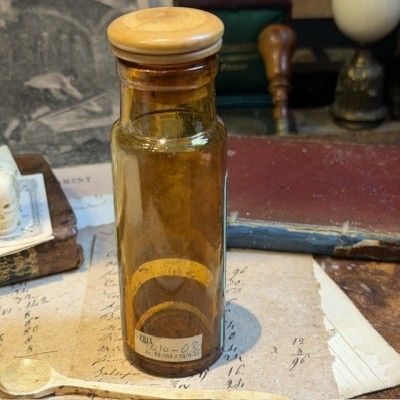
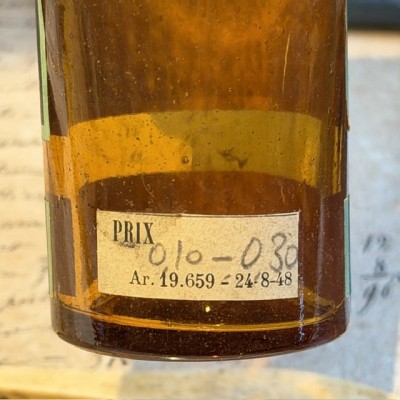
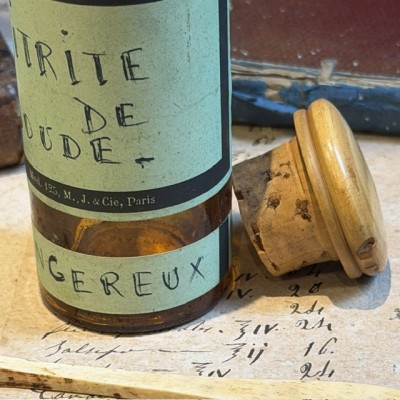
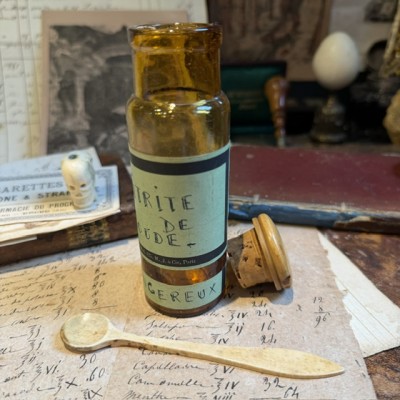
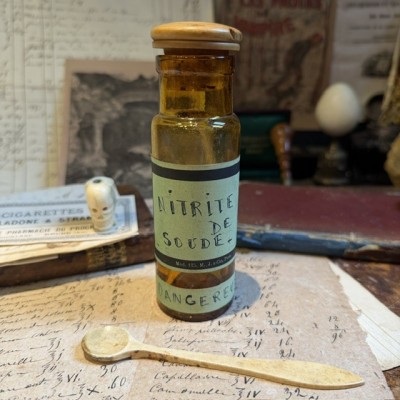
Antique amber glass bottle, with a boxwood and cork stopper.
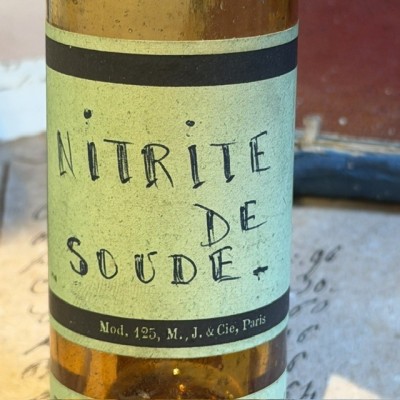
Label: DANGEROUS
Indicating to the pharmacist that it must be stored separately from other substances in the cabinet for toxic substances, the famous ‘poison cabinet’.
It comes from the former cellar-laboratory of a Parisian pharmacy. The bottles had not been moved from the shelves since the late 1950s. The cellar had served as a medical analysis laboratory and a laboratory for the pharmacy’s compounded preparations from 1900 until around 1950.
EMPTY
Description
Sodium Nitrite
Antique amber glass bottle, with a boxwood and cork stopper.
Label: DANGEROUS
Indicating to the pharmacist that it must be stored separately from other substances in the cabinet for toxic substances, the famous ‘poison cabinet’.
In the late 19th and early 20th centuries, it was used in medicine to regulate blood pressure (as an antihypertensive) and to relieve angina attacks, before being replaced by more stable and less toxic derivatives.
It was also long used as an emergency antidote for cyanide poisoning.
Classified as toxic and dangerous. In high doses, it causes acute methaemoglobinaemia: the blood can no longer carry oxygen, leading to severe cyanosis and cardiovascular failure.
It comes from the former cellar-laboratory of a Parisian pharmacy. The bottles had not been moved from the shelves since the late 1950s. The cellar had served as a medical analysis laboratory and a laboratory for the pharmacy’s compounded preparations from 1900 until around 1950.
Height of the bottle: 12cm with stopper
EMPTY