
- New
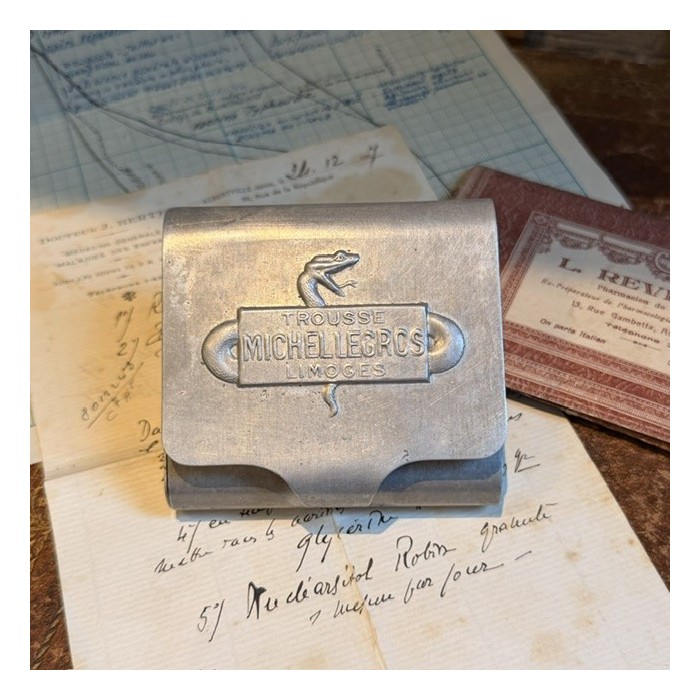
Antique First aid kit for the healing of snake bites
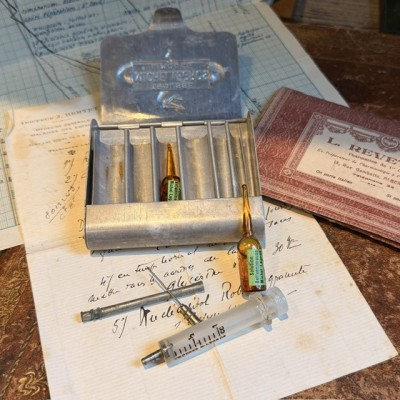
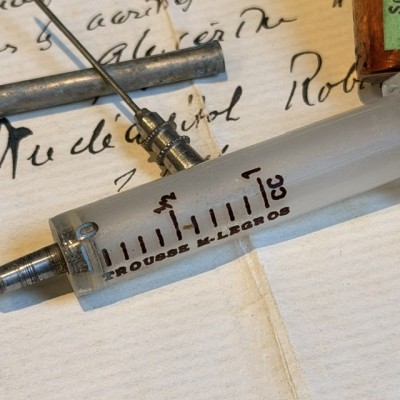
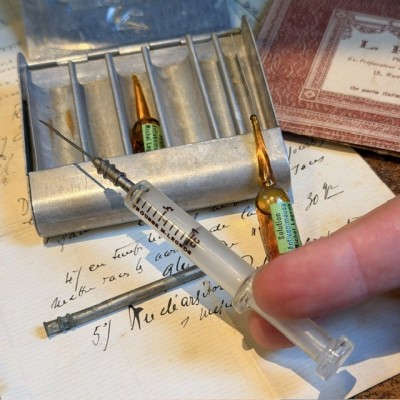
Glass syringe and 2 vintage doses of vaccine
Vintage quack remedy!
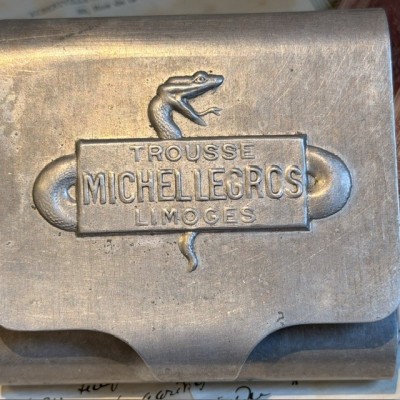
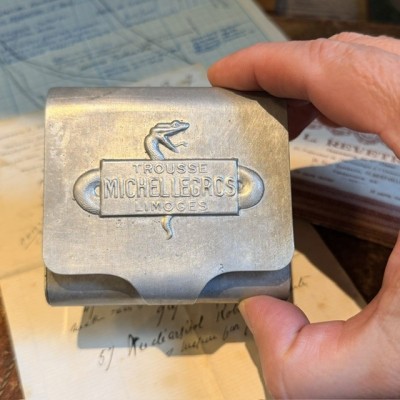
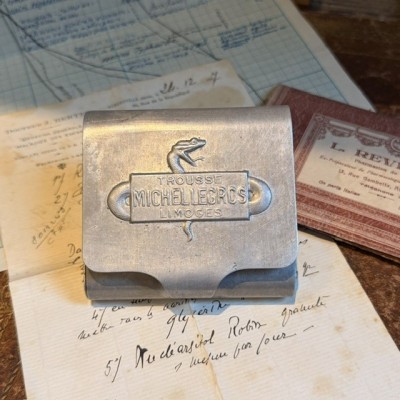
Beautiful snake illustration on the aluminium box
Antique First aid kit for the healing of snake bites.
Manufactured by Michel LEGROS, a pharmacist from Limoges.
Aluminum case with a beautiful embossed illustration.
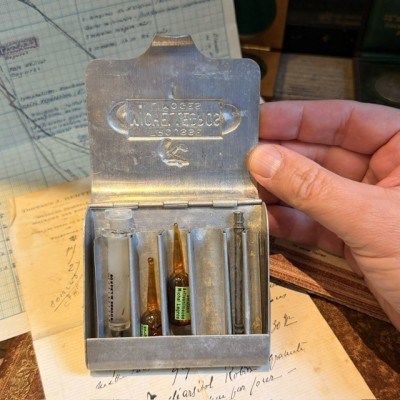
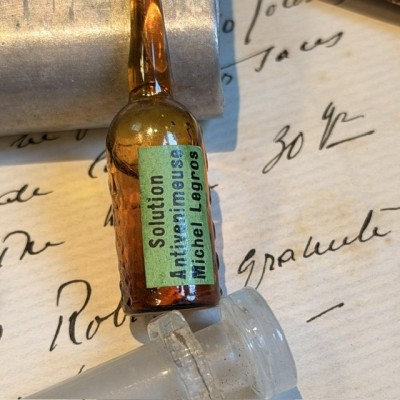
The metal box contains 2 ampoules filled with a herbal remedy.
In the early 20th century, Michel Legros, a pharmacist in Limoges, was a leading expert in botany.
He developed a product that, according to him, cured people bitten by venomous snakes with impressive speed...
Hunters, fishermen, and farmers in the region flocked to his pharmacy to purchase this kit.
The ampoule contained a solution of chromic anhydride, or chromium trioxide.
Legros’s instructions claimed that his solution was “oxygenating” and that it “restored the vital qualities of arterial blood to blood that had been deoxygenated by the venom.” This was scientifically completely false. Chromium trioxide is a powerful chemical oxidizing agent, but it does not supply breathable oxygen to cells and does nothing to neutralize the destructive enzymatic complexes in viper venom.
On the contrary, chromium trioxide is an extremely aggressive chemical compound, now classified as a carcinogen and highly corrosive.
In reality, injecting this product caused local tissue necrosis—the destruction of flesh.
His first-aid kit became famous throughout France and even abroad well into the 1960s.
It was only then that the effectiveness and safety of the products had to be proven... In reality, this antivenom had no effect on snake bites!
The kit contains:
- 2 ampoules of orange-colored antivenom
- 1 glass syringe labeled “Trousse MICHEL LEGROS” with a locked plunger
- 2 needles in the needle holder
Case dimensions: 8 x 7.5 cm
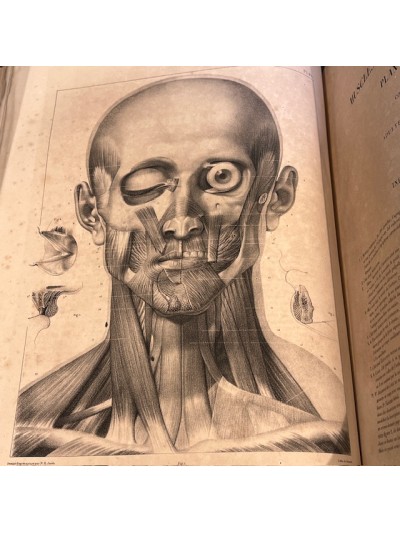
Anatomie de L'Homme - 1831
Anatomy of Man
Volume 2 with its black and white Atlas - 99 lithography
By Dr Bourgery and the illustrator Jacob
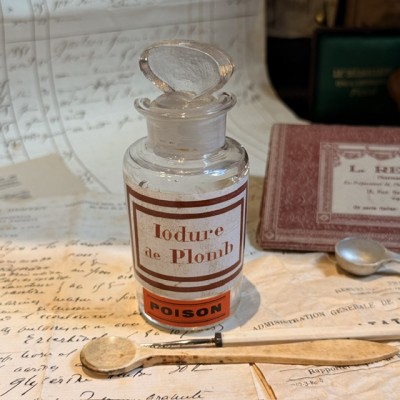
Lead iodide
Antique pharmacy bottle made of blown glass and enameled painted label.
Red POISON label
Signaling to the pharmacist that it is imperative to keep apart the other substances in the cabinet of toxic substances, the famous poison cabinet.
Dating: 19th century
EMPTY
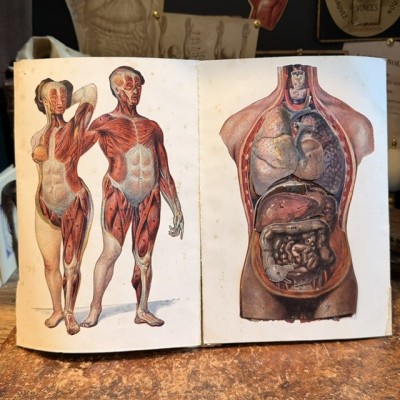
Man and Woman
Anatomy booklet with removable boards
Around 1930's
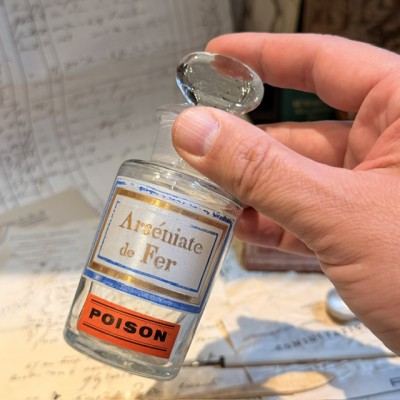
Arsenic - Iron arsenate
Antique pharmacy bottle made of blown glass and enameled painted label with golden blue threads
Red POISON label
Signaling to the pharmacist that it is imperative to keep apart the other substances in the cabinet of toxic substances, the famous poison cabinet.
Dating: 19th century
EMPTY
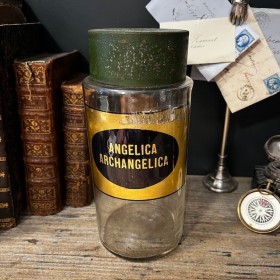
Angelica Archangelica
Pharmacy jar - Herbalism - Apothecary bottle
Late 19th century, early 20th century
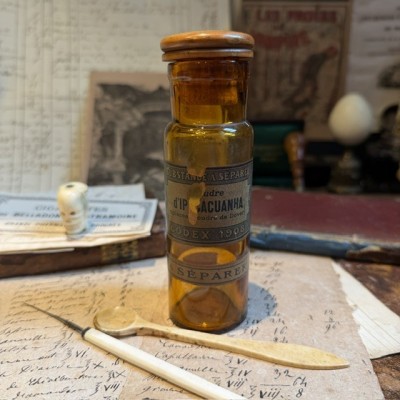
Ipecacuanha Opiate Powder - Dover's Powder
Antique amber glass bottle, with a boxwood and cork stopper.
Green label: SUBSTANCE TO BE STORED SEPARATELY – CODEX 1908
Indicating to the pharmacist that it must be stored separately from other substances in the cabinet for toxic substances, the famous ‘poison cabinet’.
It comes from the former cellar-laboratory of a Parisian pharmacy. The bottles had not been moved from the shelves since the late 1950s. The cellar had served as a medical analysis laboratory and a laboratory for the pharmacy’s compounded preparations from 1900 until around 1950.
EMPTY
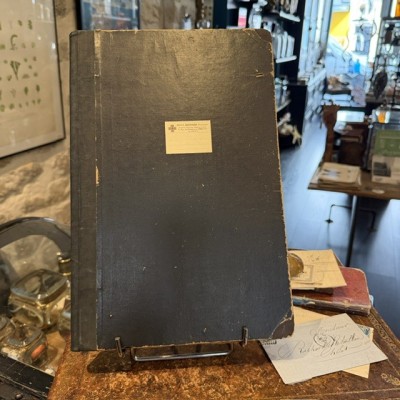
Notebook – Order book from the Berthier Pharmacy in Paris
Writing on the first four pages only; the rest is blank
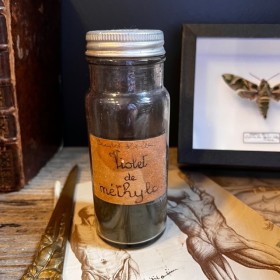
Violet de Méthyle
Antique pharmacy bottle - Droguerie - Apothicaire
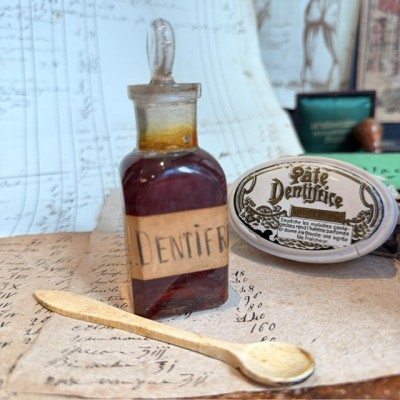
Toothpaste elixir
Antique pharmacy bottle
Handwritten label with pen
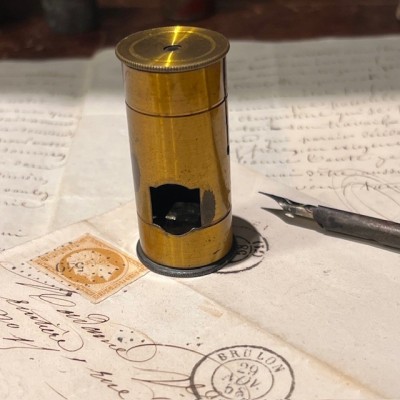
Floroscope
Botanist's microscope
Pocket microscope Late 19th - early 20th century
Warning: Here composed of 2 Stanhope lenses
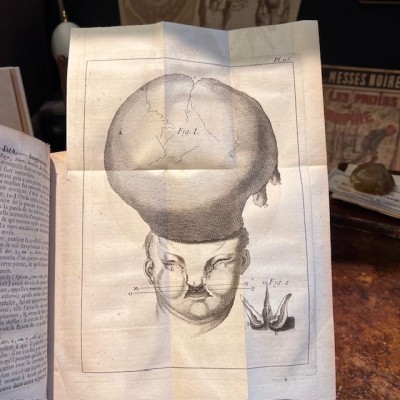
Bibliothèque Choisie de Médecine - Volume 16
Selected Library of Medicine
By François PLANQUE - 1761
Complete original edition with 10 fold-out plates
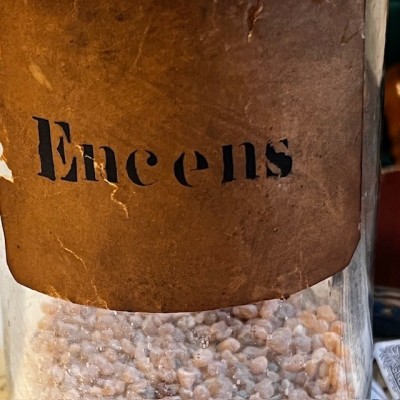
Incense
Antique pharmacy bottle - Wide-mouth apothecary jar.
19th-century mouth-blown glass
There are still some product inside.
A fascinating artifact from the history of pharmacology
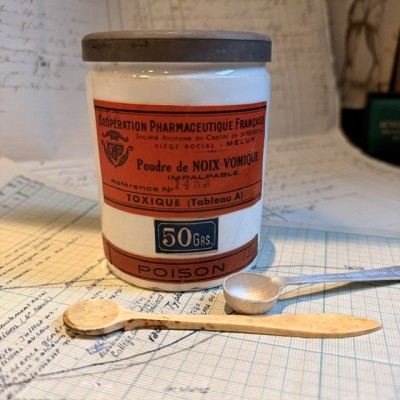
Impalpable Nux Vomica powder
White earthenware pot
Red POISON and TOXIC label
Signaling to the pharmacist that it is imperative to keep apart the other substances in the cabinet of toxic substances, the famous poison cabinet.
It comes from an old cellar-laboratory in a Parisian pharmacy. The bottles had not moved since the late 1950s on the shelves. The cellar had served as a laboratory for medical analyses and a laboratory for magistral preparations of the pharmacy from 1900 until around 1950.
EMPTY
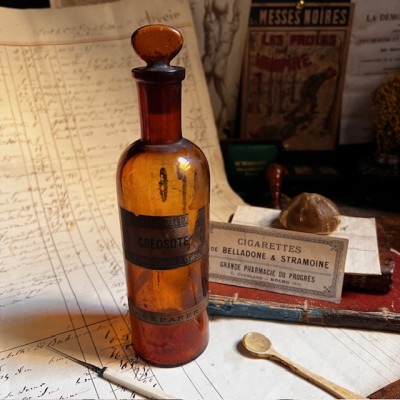
Créosote
Antique pharmacy bottle
Green label: SUBSTANCE TO BE SEPARATED - CODEX 1908
This means that this bottle had to be kept separate from the others because it was dangerous in high doses
EMPTY
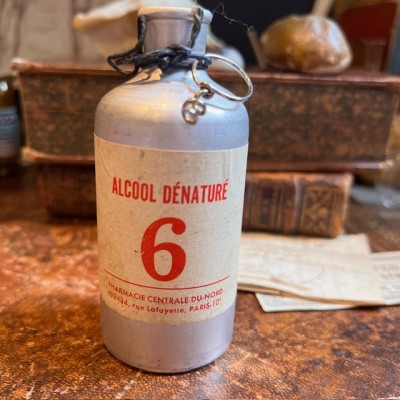
Alcool dénaturé - Alcool à brûler
Denatured alcohol - Methylated spirits
Antique pharmacy bottle - Apothecary
Empty
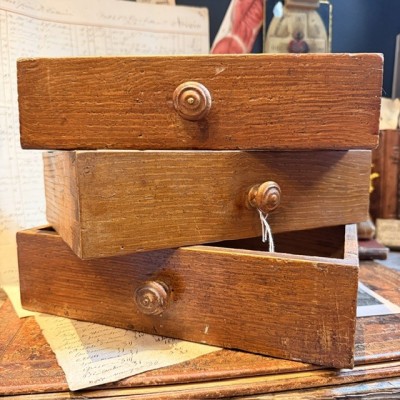
The Apothecary’s Little Drawer
Small antique wooden apothecary’s drawer that can be used as a storage box – Trade drawer
To be diverted on the shelf or niche for your curiosities
Handcrafted using traditional methods, with dovetail joints and a turned wooden handle
Width: 26cm - Length: 15.5cm - Height: 5.5cm
All the drawers are different, with stains and varying signs of age on each one
Sold empty, without accessories
Antique First aid kit for the healing of snake bites
Glass syringe and 2 vintage doses of vaccine
Vintage quack remedy!
Beautiful snake illustration on the aluminium box