

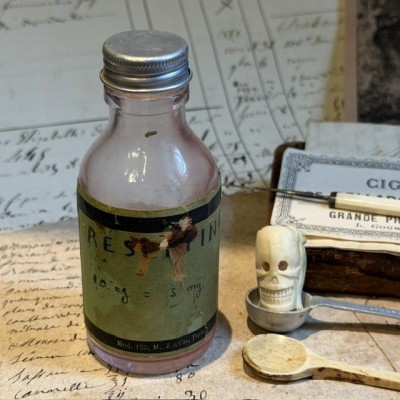
Reseptine - Antique pharmacy bottle - Apothecary - EMPTY
Reseptine
Antique pharmacy bottle
EMPTY
Price
€12.00
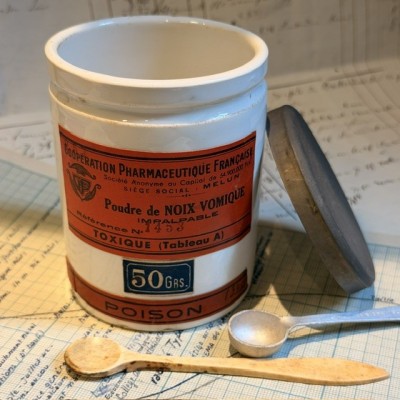
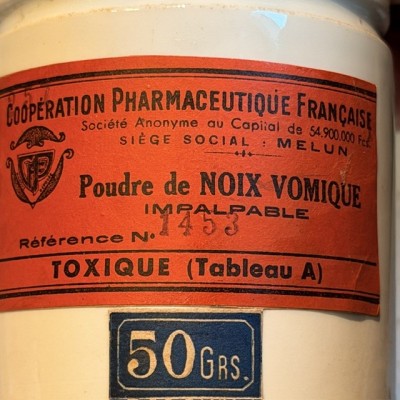
Impalpable Nux Vomica powder
White earthenware pot
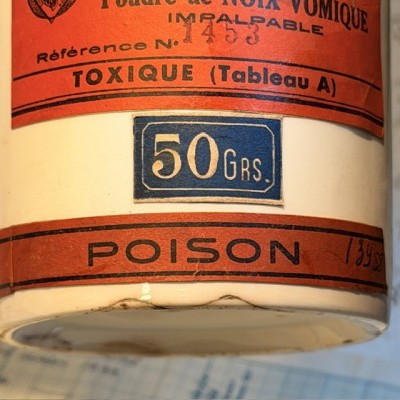
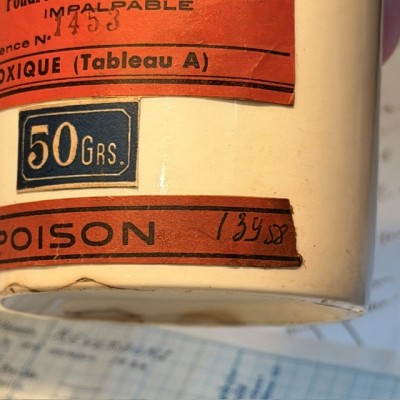
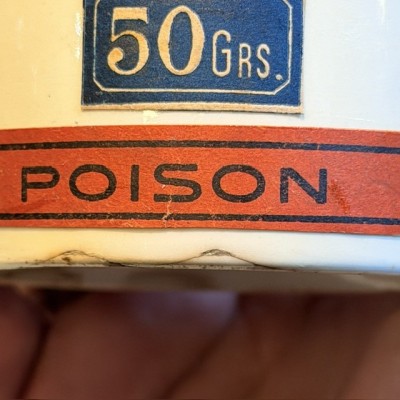
Red POISON and TOXIC label
Signaling to the pharmacist that it is imperative to keep apart the other substances in the cabinet of toxic substances, the famous poison cabinet.
It comes from an old cellar-laboratory in a Parisian pharmacy. The bottles had not moved since the late 1950s on the shelves. The cellar had served as a laboratory for medical analyses and a laboratory for magistral preparations of the pharmacy from 1900 until around 1950.
EMPTY
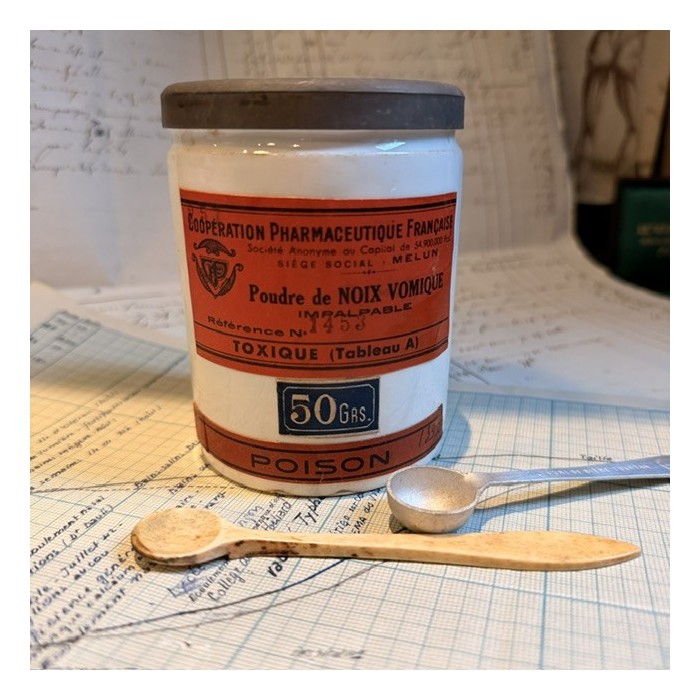
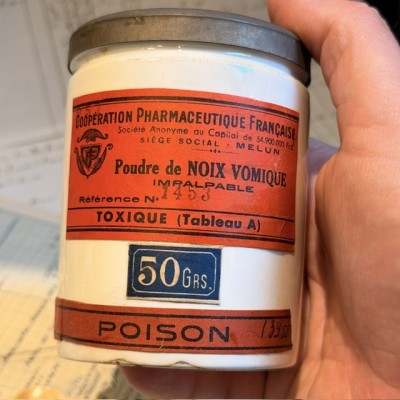
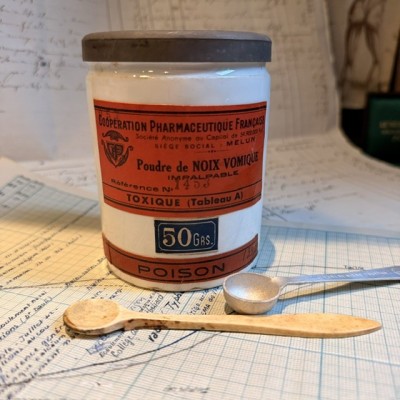
Impalpable Nux Vomica powder
Early/ mid-20th century pharmacy pot in white earthenware.
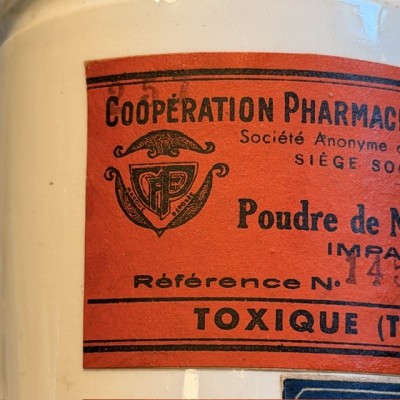
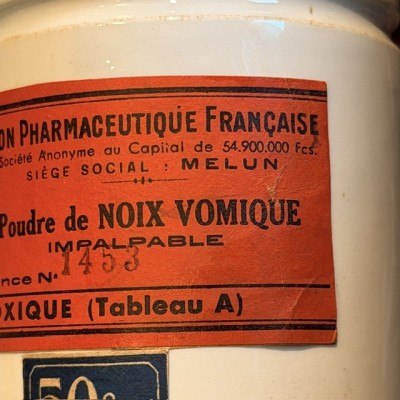
Red POISON and TOXIC label. The labels display the mandatory regulatory red banner "POISON" as well as the historical classification "TOXIC" (Table A)
Signaling to the pharmacist that it is imperative to keep apart the other substances in the cabinet of toxic substances, the famous poison cabinet.
This laboratory container has a label from the French Pharmaceutical Cooperation (Melun).
It initially contained "Impalpable Nux Vomica powder," the main plant source of the dreaded strychnine.
In the pharmacopoeia of the first half of the 20th century, Nux Vomica powder was used in infinitesimal doses as a powerful stimulant of the nervous system, digestive system and circulatory system.
However, its therapeutic margin was extremely narrow: the gap between the effective dose and the lethal dose was tiny.
A minute breach of the prescription transformed this tonic into an overwhelming poison, causing terrible deadly convulsions by asphyxiation. It is this extreme dangerousness that made him excluded from modern medicine.
It comes from an old cellar-laboratory in a Parisian pharmacy. The bottles had not moved since the late 1950s on the shelves. The cellar had served as a laboratory for medical analyses and a laboratory for magistral preparations of the pharmacy from 1900 until around 1950.
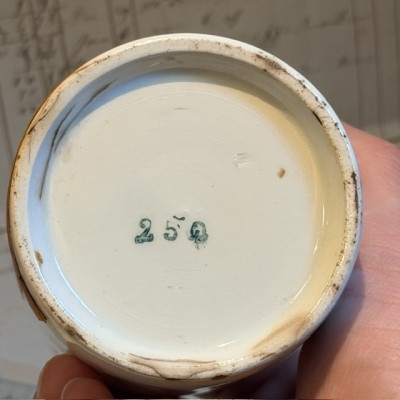
Material: White earthenware, original metal lid
Dimensions: Height: 9.5 cm - Diameter: 7 cm
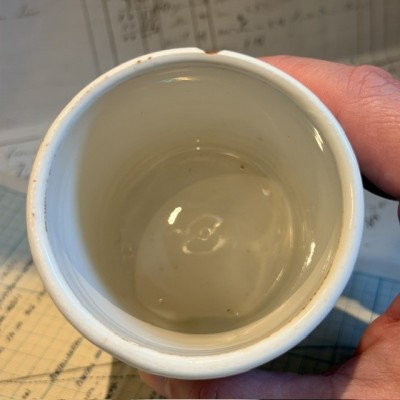
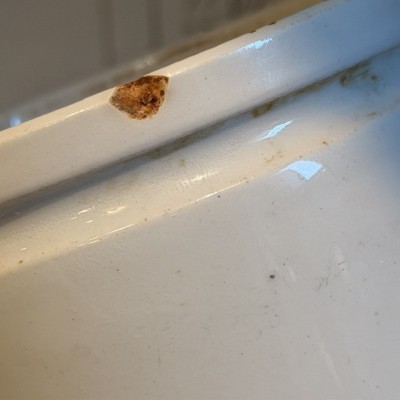
Splinters in some places on the pot
Period: Early 20th century
EMPTY
Reseptine
Antique pharmacy bottle
EMPTY
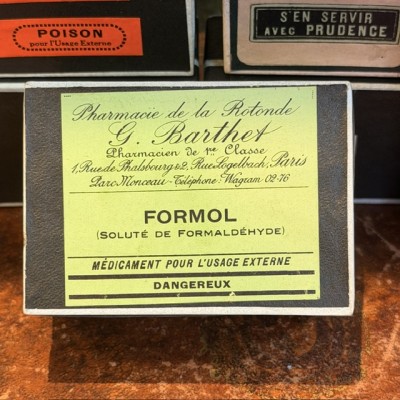
Antique labels in a pharmacy box for cures made of canvas cardboard
Formalin label
The pharmacist used his boxes of medicine to put away the labels he would then put on the bottles that he would resell to his customers.
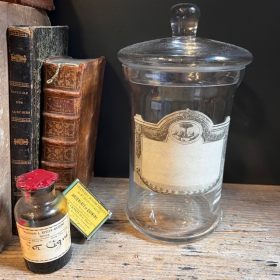
Herbalist's or Pharmacist's jar
Antique blank label of the XVIIIth century
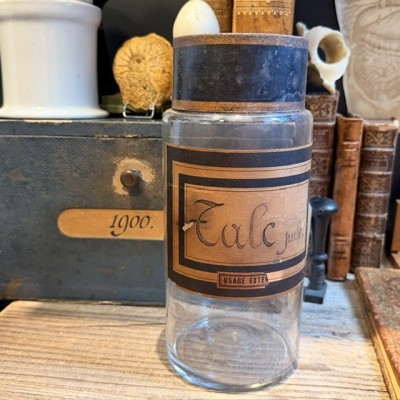
Talc powder
Pharmacy jar - Herbalism - Apothecary Mouth-blown glass bottle
Late 19th century - Beginning of the 20th
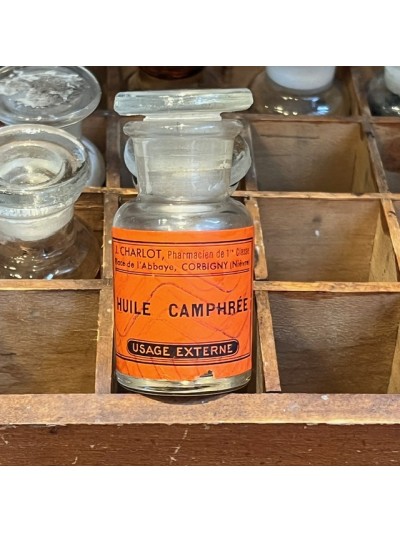
Camphorated oil
Antique pharmacy bottle
Apothecary vial
EMPTY but cap is blocked and bottle will not open
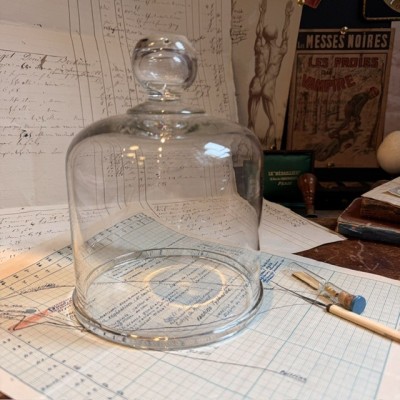
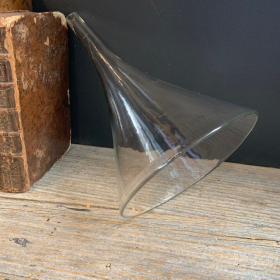
Protective laboratory bell jar - Low form with knob in blown glass
Period: 1900 - Pharmacy - Apothecary
Used by the pharmacist to cover precision instruments or isolate preparations undergoing analysis
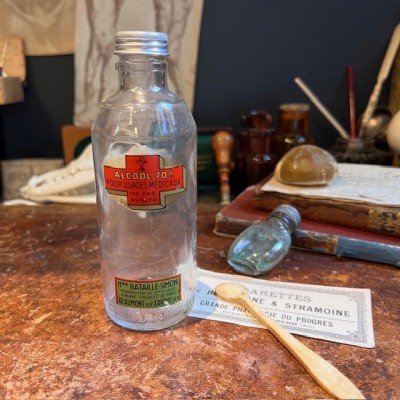
70° alcohol
Antique pharmacy bottle - Apothecary
Mrs Bataille-Simon, First Class Pharmacist in Beaumont sur Sarthe - Tel 9
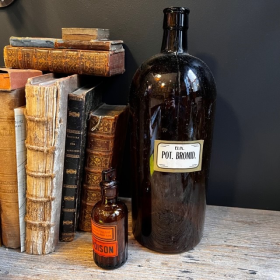
Potassium Bromide Elixir
Antique and large brown English pharmacy bottle
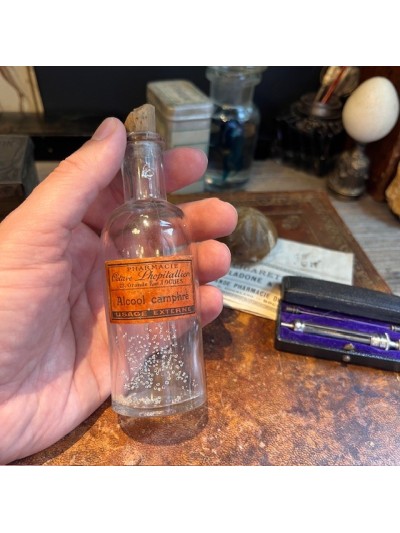
Camphorated alcohol
Antique pharmacy bottle
Apothecary vial
EMPTY
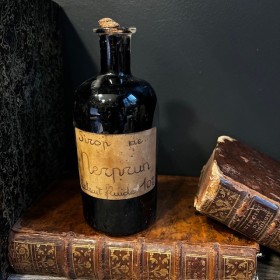
Buckthorns syrup
Antique pharmacy bottle
Apothecary vial
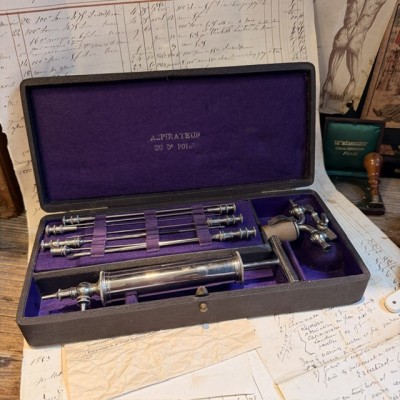
Dr. Potain’s aspirator set in its felt-lined box
Late 19th century, circa 1880
Antique medical instrument without manufacturer marking
non-functional
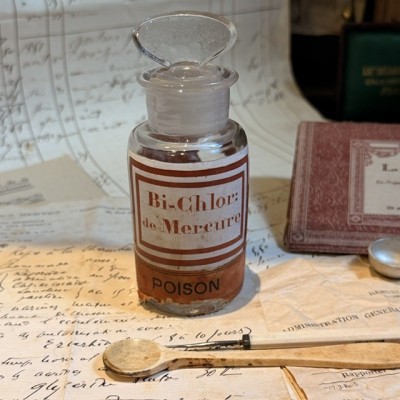
Corrosive sublimate - Bichloride of mercury
Antique pharmacy bottle made of blown glass and enameled painted label.
Red POISON label
Signaling to the pharmacist that it is imperative to keep apart the other substances in the cabinet of toxic substances, the famous poison cabinet.
Dating: 19th century
EMPTY
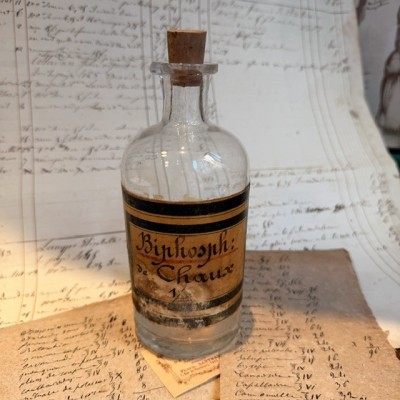
Biphosphate de Chaux
Antique pharmacy bottle
EMPTY
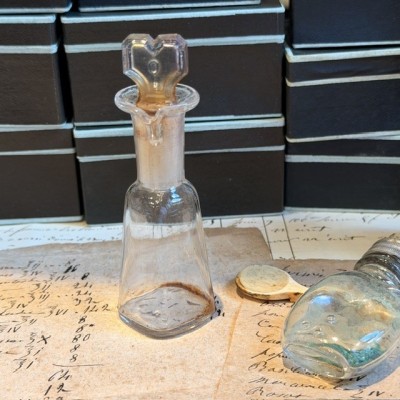
Square Section Dropper Bottle
Antique pharmacy bottle - 1920-30's
Glass stopper honed in the shape of a heart for better grip
EMPTY

Ancient First-aid kit for healing snake bites
antique first-aid kit from the Pharmacie Michel LEGROS
Glass syringe in its case
Antique Snake Oil Salesmen product! Quack Medicine
Impalpable Nux Vomica powder
White earthenware pot
Red POISON and TOXIC label
Signaling to the pharmacist that it is imperative to keep apart the other substances in the cabinet of toxic substances, the famous poison cabinet.
It comes from an old cellar-laboratory in a Parisian pharmacy. The bottles had not moved since the late 1950s on the shelves. The cellar had served as a laboratory for medical analyses and a laboratory for magistral preparations of the pharmacy from 1900 until around 1950.
EMPTY