

- New
Lead iodide
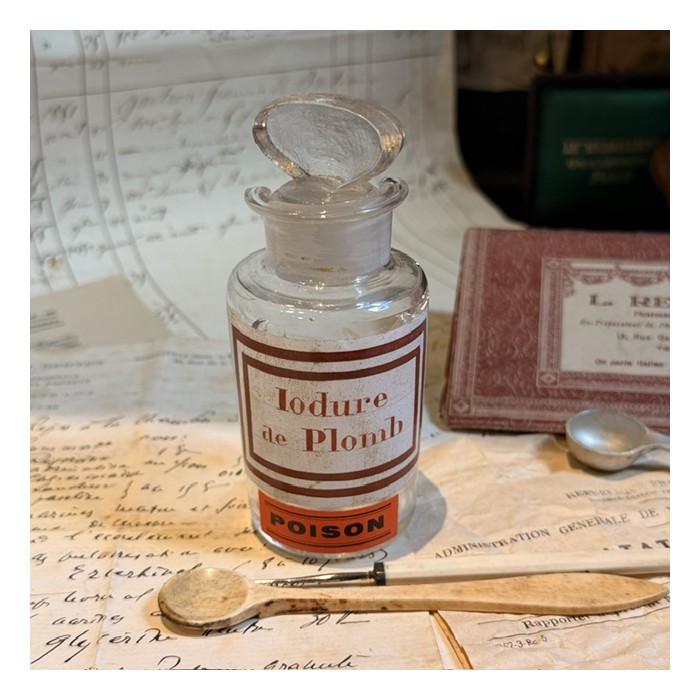
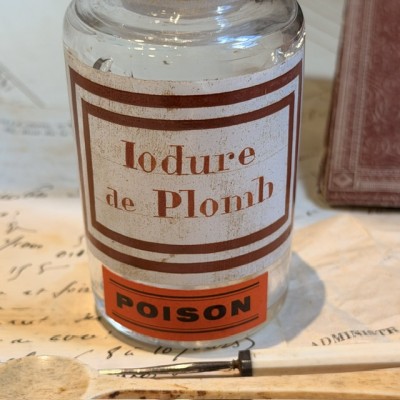
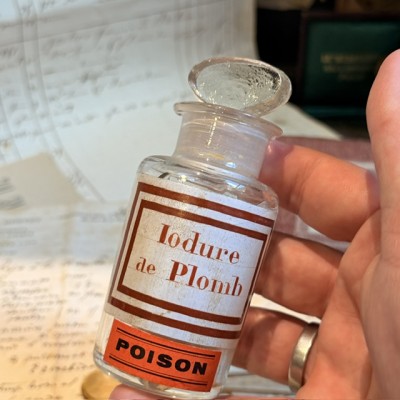
Antique pharmacy bottle made of blown glass and enameled painted label.
Red POISON label
Signaling to the pharmacist that it is imperative to keep apart the other substances in the cabinet of toxic substances, the famous poison cabinet.
Dating: 19th century
EMPTY
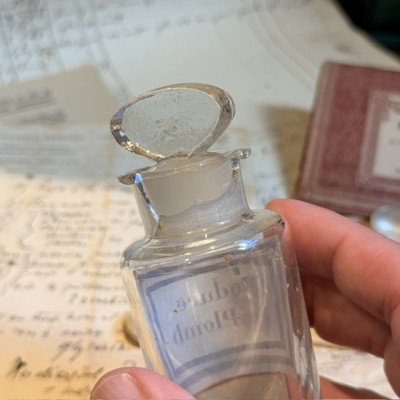
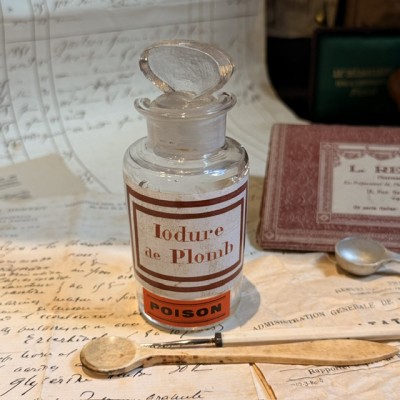
Lead iodide
Antique pharmacy bottle made of blown glass and enameled painted label.
Red POISON label
Signaling to the pharmacist that it is imperative to keep apart the other substances in the cabinet of toxic substances, the famous poison cabinet.
Laboratory or pharmaceutical dispensary bottle, typical of the late nineteenth or early twentieth century.
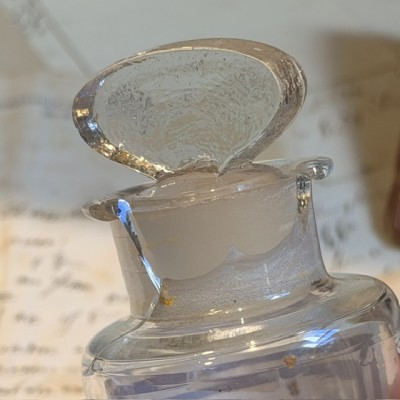
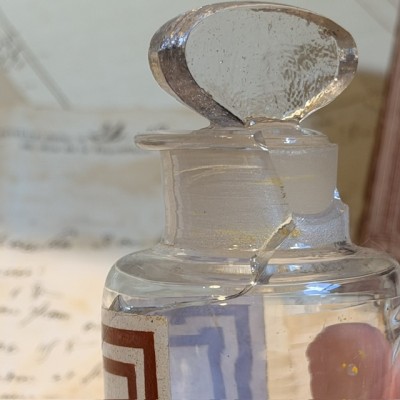
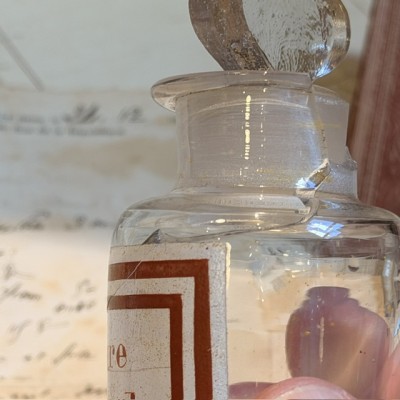
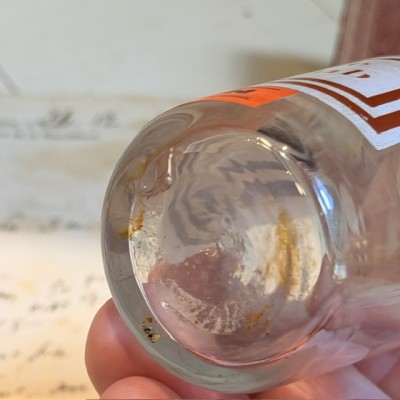
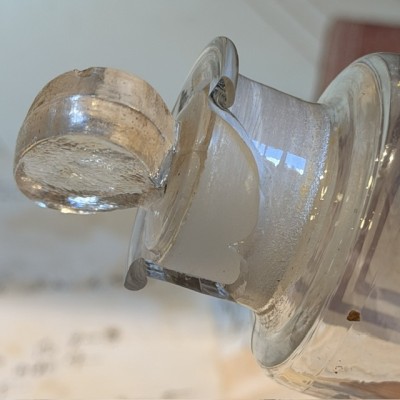
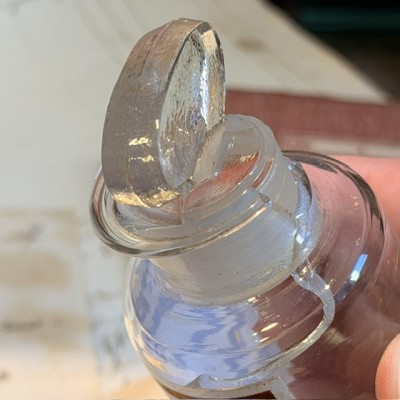
Made of blown transparent glass, it has a trace of pontil visible on the bottom, reflecting traditional artisanal manufacturing. It has its original cap honed with emery BUT the bottle is stuck, broken, and cannot be opened, sealed by time. The glass neck features significant period damage (a crack and breakage on the neck) and its original ground-glass stopper is stuck in the rim.
Beautiful enamelled label stenciled surrounded by a brown/red border. This baked enamel technique guaranteed great resistance to handling and chemicals in the pharmacy. A red regulatory label marked "POISON" is applied at the bottom, indicating the poisonous nature of the substance.
Mainly used in the nineteenth century as ointment, lead iodide was applied to the skin to treat ganglionic swellings, goiter and scrofulous tumors.
Formidable toxic, combining the risks of lead and iodine, its prolonged use exposed patients to lead poisoning, this heavy intoxication causing excruciating colic, nerve paralysis and serious neurological disorders.
Although the toxicity of lead has been known since ancient times, doctors in the nineteenth century continued to use lead iodide ointment. They believed that the skin was a sufficiently watertight barrier and favored its powerful astringent and resolutive properties to deflate ganglionic blockages and goiters, at a time when there were no safe therapeutic alternatives.
The glass neck has a significant period accident (crack/accident on the neck) and its original ground-glass cap is stuck in the hole.
Height of the bottle: 11cm with blown glass cap - Diameter at the base: 4cm
Dating: 19th century
EMPTY - The glass neck features significant period damage (a crack and breakage on the neck) and its original ground-glass stopper is stuck in the rim.
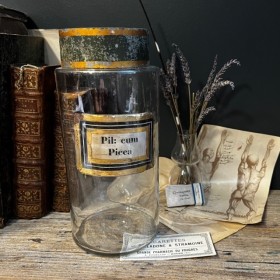
Cumin Epicea Pill - Pil: Cum Picea
Antique blown glass pharmacy jar
Apothecary
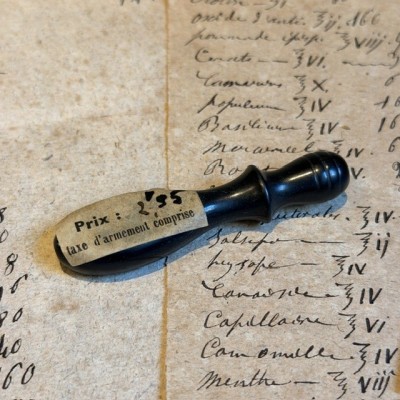
Ebonite cannula tip
Tips for enema or medical irrigation cannulas. New Old Stock
Marketed between May 1939 and sometime in 1940
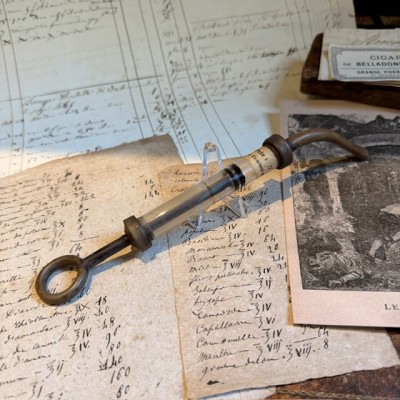
Ebonite and glass laryngeal syringe
For intra-laryngeal injections.
Marketed between May 1939 and sometime in 1940
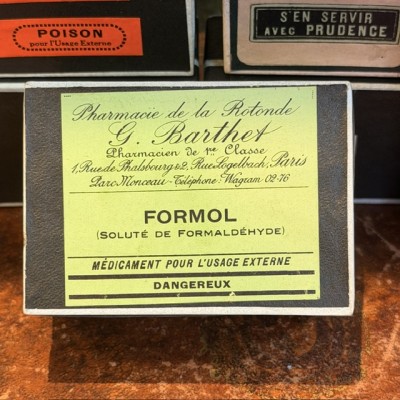
Antique labels in a pharmacy box for cures made of canvas cardboard
Formalin label
The pharmacist used his boxes of medicine to put away the labels he would then put on the bottles that he would resell to his customers.

Antipyrina Knorr
Named after its German discoverer: Ludwig Knorr
Pharmacy jar - Herbalism - Apothecary bottle
Late 19th century
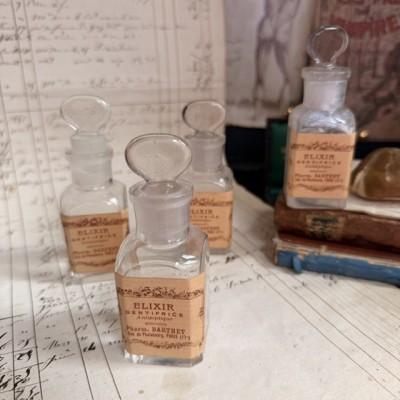
Toothpaste elixir
Antique pharmacy bottle
EMPTY
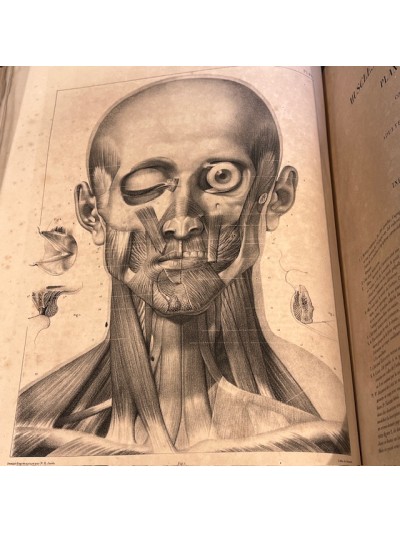
Anatomie de L'Homme - 1831
Anatomy of Man
Volume 2 with its black and white Atlas - 99 lithography
By Dr Bourgery and the illustrator Jacob

Antique and large drum microscope
In it's mahogany wooden box
For botanist, entomologist
This is a larger model than those usually found on the market
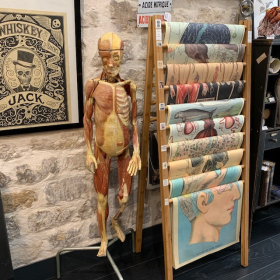
Clastic Mannequin - Dr. Auzoux's anatomical skinned
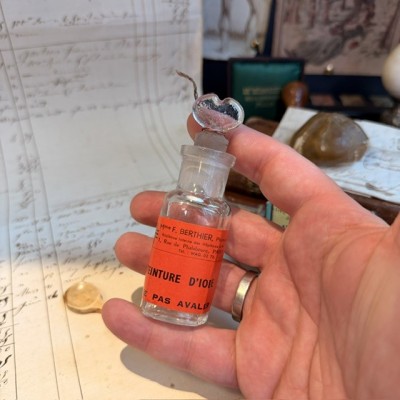
Iodine dye
Antique pharmacy bottle
With the inscription Teinture d'Iode molded in glass
EMPTY
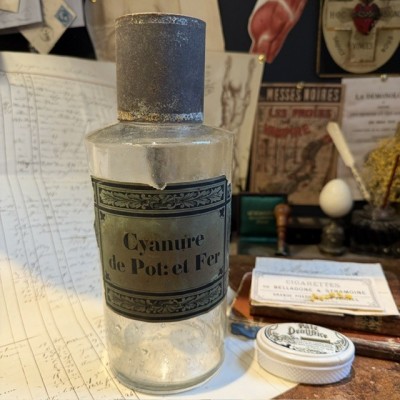
Potassium Cyanide and Iron
Also known as yellow potassium prussiate
Antique 19th-century pharmacy bottle
EMPTY
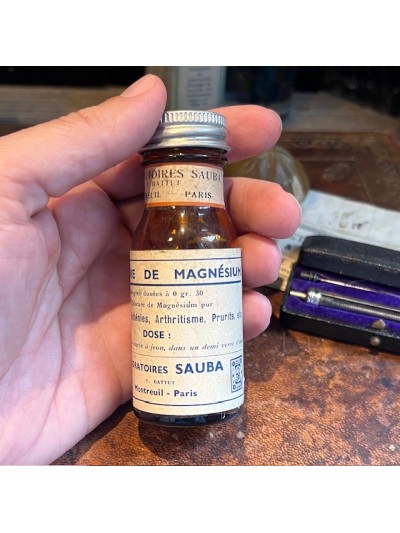
Chlorure de magnésium
Antique pharmacy bottle
Apothecary vial
EMPTY
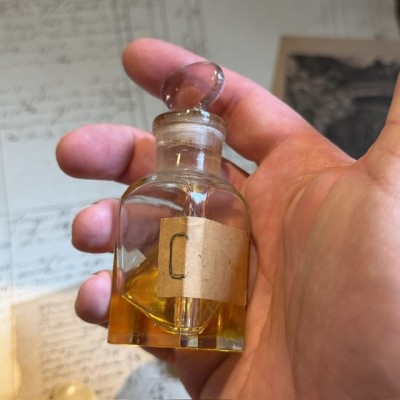
Cèdre - Cedarwood Oil
Antique pharmacy bottle
There is some product left, but the stopper is stuck
The writing has faded, but in oblique light one can make out CEDRE

Aqua Piris - Pear water
Antique pharmacy jar
Apothecary
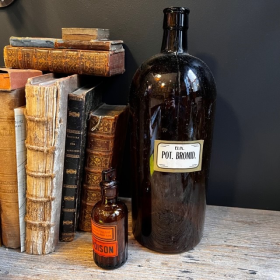
Potassium Bromide Elixir
Antique and large brown English pharmacy bottle
Lead iodide
Antique pharmacy bottle made of blown glass and enameled painted label.
Red POISON label
Signaling to the pharmacist that it is imperative to keep apart the other substances in the cabinet of toxic substances, the famous poison cabinet.
Dating: 19th century
EMPTY