
Antique glass dropper in white glass - Apothecary -...
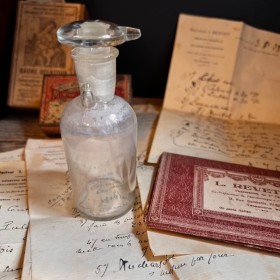
Antique glass dropper in white glass
Apothecary - Pharmacy
Price
€15.00
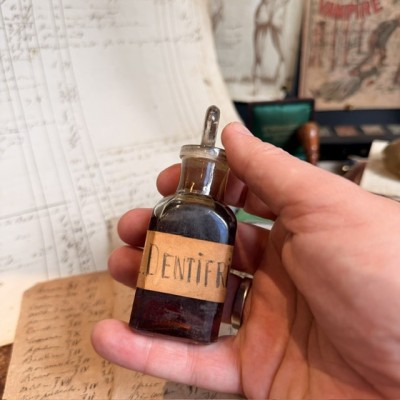
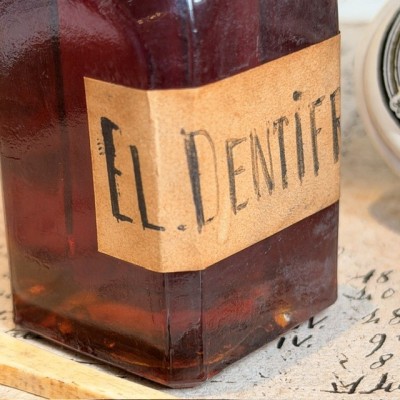
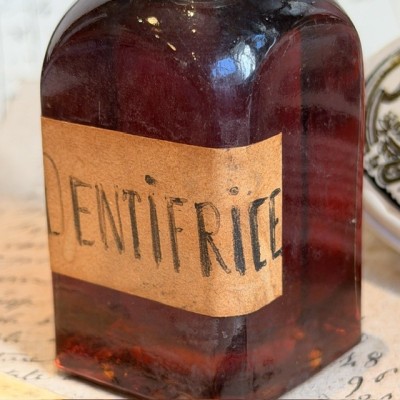
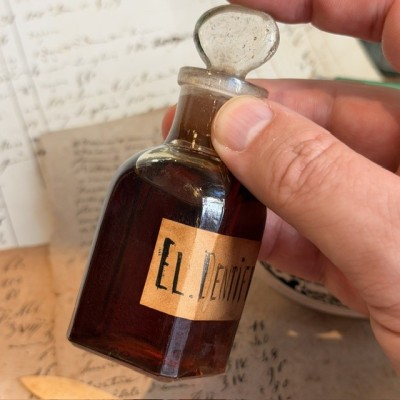
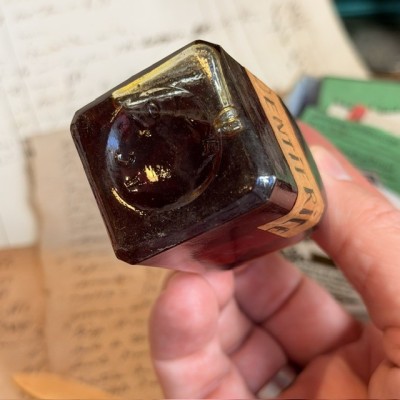
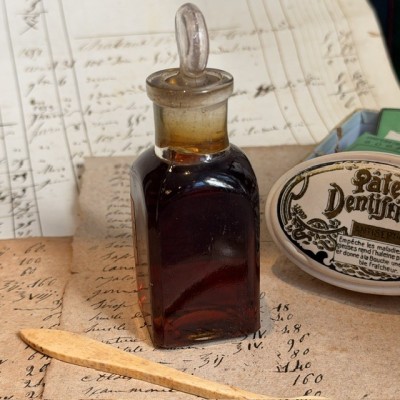
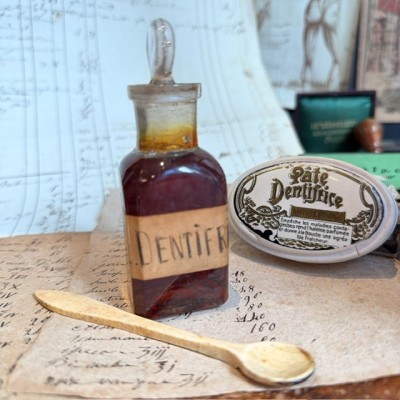
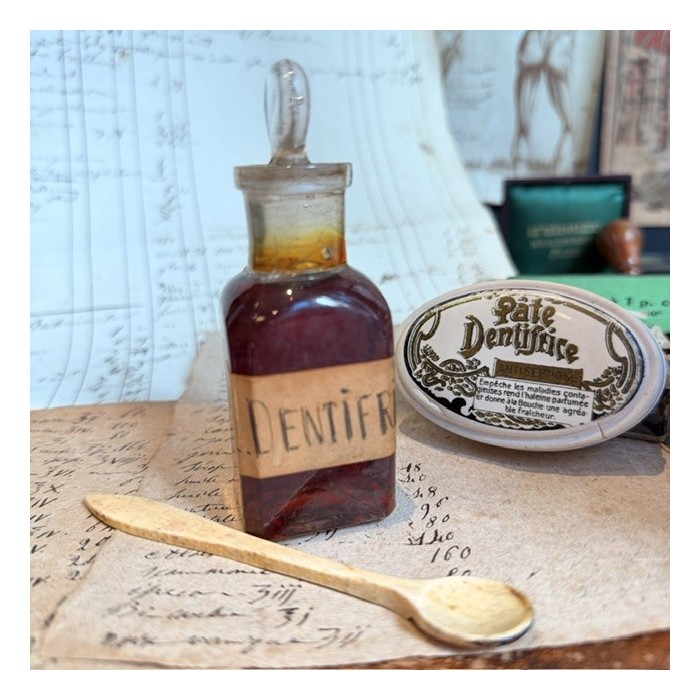
Toothpaste elixir
Antique pharmacy bottle
Handwritten label with pen
Toothpaste elixir
Antique pharmacy bottle
Handwritten label with pen
Throughout the nineteenth century and early twentieth century, the pharmacist was a true craftsman, he prepared his own remedies and lotions such as elixirs of toothpaste for example. Customers do not come to look for brands, but the formula of the local apothecary. Each pharmacy has its own laboratory at the back where it prepares its own powders, pastes and elixirs.
At the time, these alcoholic elixirs (often with mint, cinnamon or cloves) were used diluted in a glass of water as a mouthwash or directly on the toothbrush.
Period: Late 19th century - early 20th century. 1880-1920 approximately.
There is still some product inside but the cap is blocked and sealed, it won’t open.
It comes from the old cellar-laboratory of a Parisian pharmacy. The bottles had not been moved from the shelves since the late 1950s. The cellar had served as a medical analysis laboratory and a laboratory for the pharmacy’s compounded preparations from 1900 until around 1950.
Height of the bottle: 10 cm
Antique glass dropper in white glass
Apothecary - Pharmacy
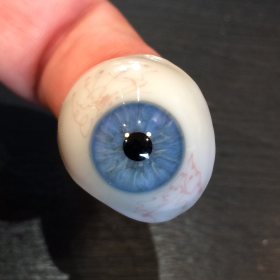
Antique glass eye
Real antique eye prosthesis

Antipyrina Knorr
Named after its German discoverer: Ludwig Knorr
Pharmacy jar - Herbalism - Apothecary bottle
Late 19th century
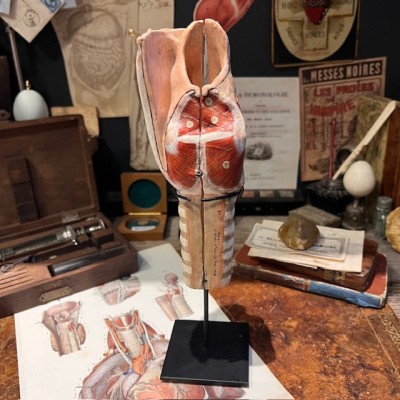
Antique anatomical model of the larynx and trachea made of painted papier-mâché.
Produced by Établissements Auzoux and manually dated 1938.
Model can be dismantled lengthwise, numbered, used for medical teaching.
Please note: one removable side piece is missing. The model remains stable and highly decorative. Authentic piece.
Handwritten inscription from the period: Larynx - Auzoux à St-Aubin-d’Écrosville Eure 1938
Placed in a metal base, it can be easily removed to hold it in your hand.
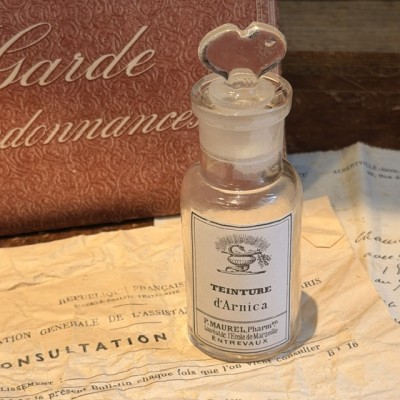
Teinture d'Arnica
Antique pharmacy bottle
EMPTY
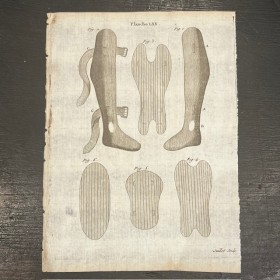
Antique surgical board
From Benjamin Bell's Complete Course in Surgery, published in 1796
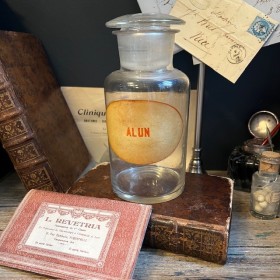
Alum
Antique pharmacy bottle
Apothecary vial
Color pigments have been added to the inside of the jar
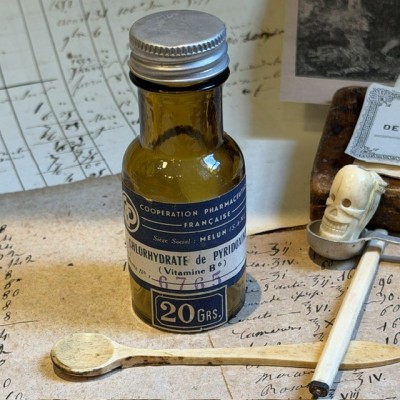
Pyridoxine hydrochloride - Vitamin B6
Antique pharmacy bottle
EMPTY
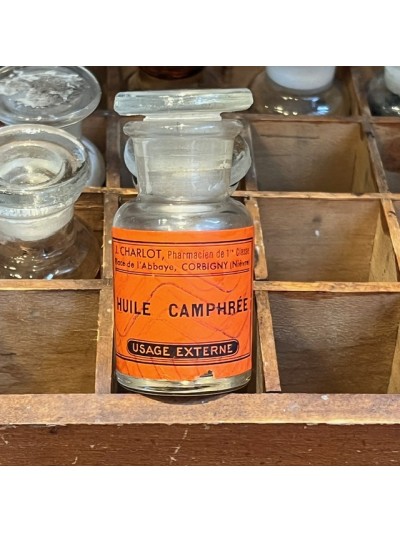
Camphorated oil
Antique pharmacy bottle
Apothecary vial
EMPTY but cap is blocked and bottle will not open
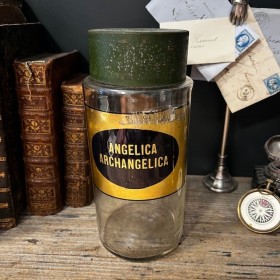
Angelica Archangelica
Pharmacy jar - Herbalism - Apothecary bottle
Late 19th century, early 20th century
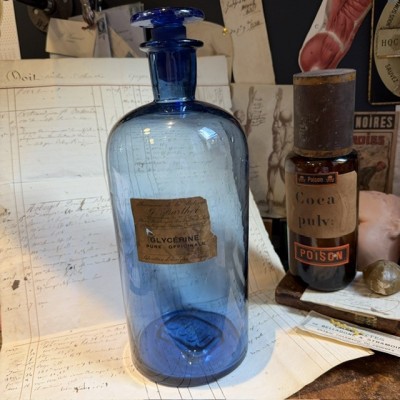
Glycérine pure officinale
Pure pharmaceutical-grade glycerine
Antique BLUE glass pharmacy bottle
EMPTY
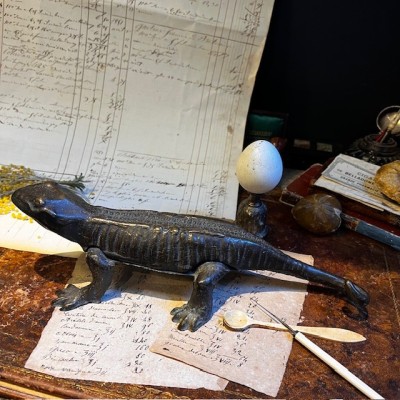
Salamander - Pharmacy corkscrew in bronze
XIXth century
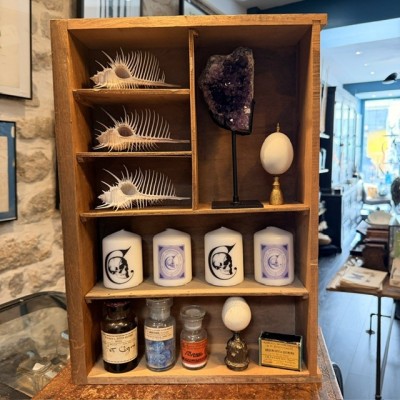
Large antique wooden pharmacy drawer with compartments
6 compartments
Curiosity shelf
Ref C - 48x34.5cm - Thickness 9.5cm
Can be used as a presentation furniture
SOLD EMPTY WITHOUT ACCESSORIES
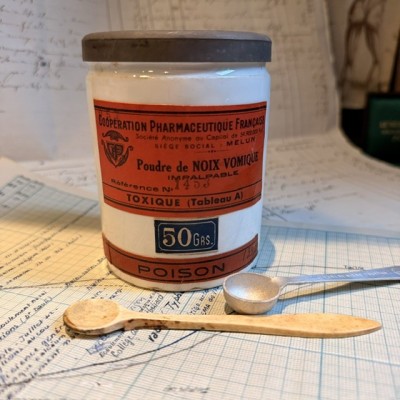
Impalpable Nux Vomica powder
White earthenware pot
Red POISON and TOXIC label
Signaling to the pharmacist that it is imperative to keep apart the other substances in the cabinet of toxic substances, the famous poison cabinet.
It comes from an old cellar-laboratory in a Parisian pharmacy. The bottles had not moved since the late 1950s on the shelves. The cellar had served as a laboratory for medical analyses and a laboratory for magistral preparations of the pharmacy from 1900 until around 1950.
EMPTY
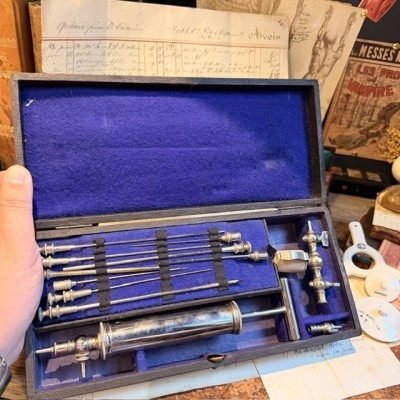
Dr. Potain’s aspirator set in its felt-lined box
Late 19th century, circa 1880
Antique medical instrument maker without manufacturer marking
non-functional
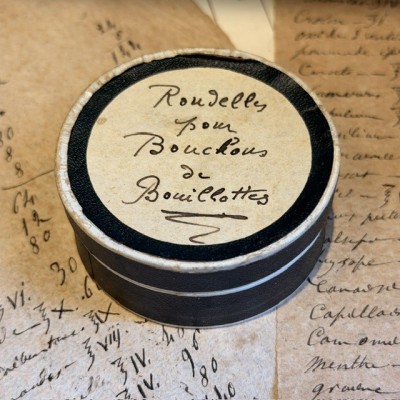
Box of rubber washers for hot water bottles
In its original cardboard box
1939/1940
New Old Stock
Toothpaste elixir
Antique pharmacy bottle
Handwritten label with pen