
- New
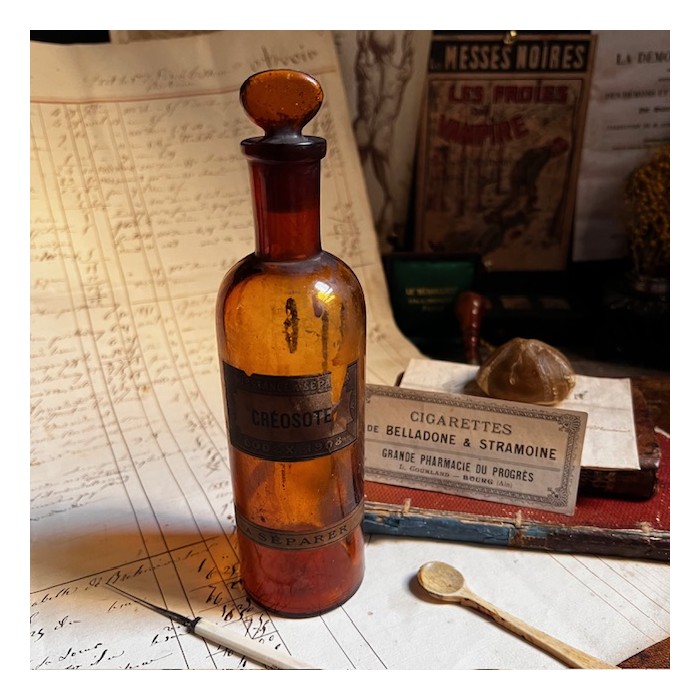
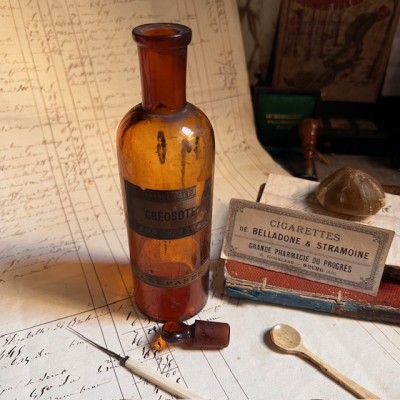
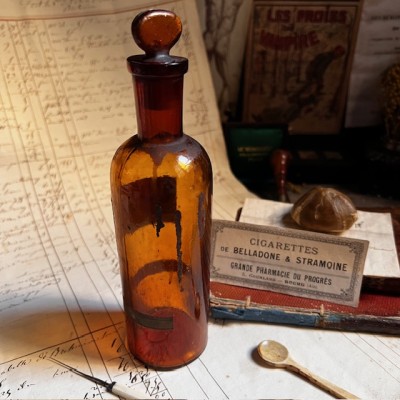
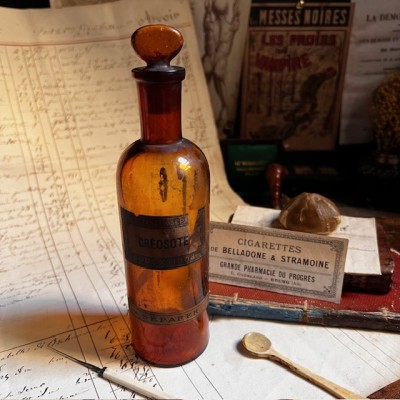
Créosote
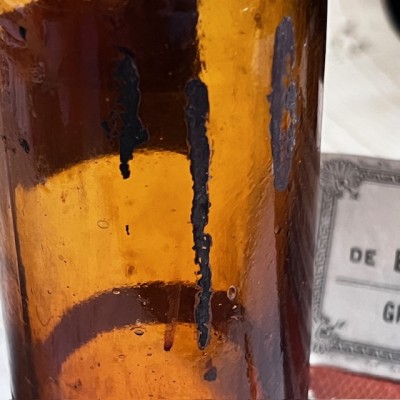
Antique pharmacy bottle
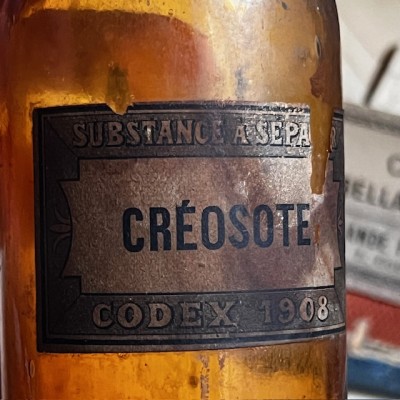
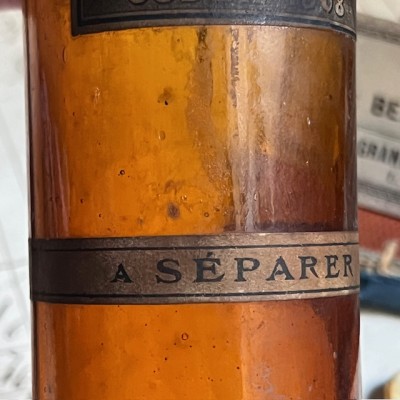
Green label: SUBSTANCE TO BE SEPARATED - CODEX 1908
This means that this bottle had to be kept separate from the others because it was dangerous in high doses
EMPTY
Créosote
Antique pharmacy bottle
Green label: SUBSTANCE TO BE SEPARATED - CODEX 1908
This means that this bottle had to be kept separate from the others because it was dangerous due to its corrosive nature and, above all, its extremely strong smell!
Creosote was a remedy used to treat tuberculosis, but it was toxic to the kidneys and liver in high doses or with prolonged use.
It comes from the old basement laboratory of a Parisian pharmacy. The bottles had not been moved from the shelves since the late 1950s!
Bottle height: 19.5 cm including cap
EMPTY
Museum jar - Wet specimen
Soft coral Alcyonium palmatum
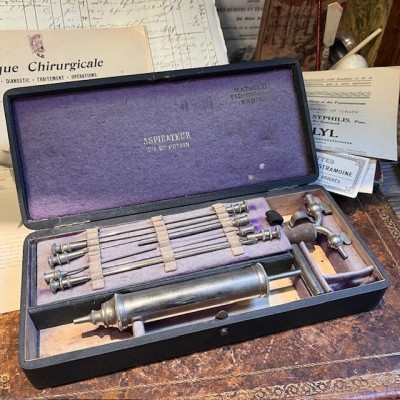
Dr Potain vacuum cleaner in its case
Late 19th century - 1885-1894
Antique medical instrument from manufacturer MATHIEU in Paris
non-functional
Collector’s bronze dental articulator
Circa 1920 for the bronze frame
The plaster and resin forming the gums and teeth are modern.
Anatomie de L'Homme - 1831
Anatomy of Man
Volume 2 with its black and white Atlas - 99 lithography
By Dr Bourgery and the illustrator Jacob
The Pharmacist's Drawer
Small antique wooden pharmacy drawer that can be used as a storage box
A true time capsule!
Sold with its contents, just as they were found when discovered in the basement of this Parisian pharmacy.
Bi-Carbonate de Soude - Sodium bicarbonate
Antique cardboard pharmacy box
Beautiful typography typical of the Belle Époque: circa 1910-1920
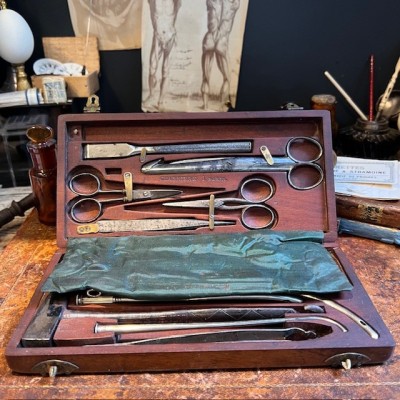
Antique box of scalpels - Surgery from Collin Manufacturer
Late 19th/early 20th century
11 instruments
Antique drum microscope for botanist, entomologist
Mirror missing
Late 19th century, early 20th century
Septichrome
Antique pharmacy bottle
Apothecary vial
Pravaz hypodermic injection syringe
Early 20th century
Non-functional
SOLD ALONE WITHOUT CASE
Floroscope
Botanist's microscope
Pocket microscope Late 19th - early 20th century
Warning: Here composed of 2 Stanhope lenses
Acide Chlorhydrique
Antique pharmacy bottle
Handwritten text on a label from the Berthier Pharmacy, located at the Rotonde Marceau in Paris. The label shows the telephone number 02-76 with the Wagram area code, which dates the bottle to between 1912—when area codes were first introduced—and the 1930s or 1940s.
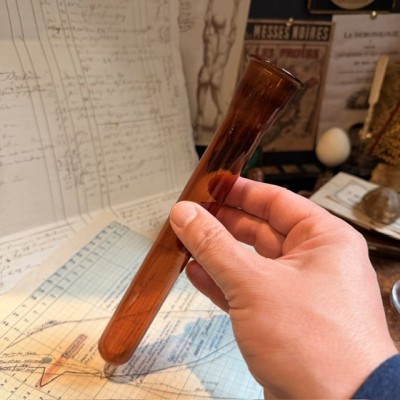
Tube of eye spatulas
Antique pharmacy bottle
“Taxe d'Armement” label: 1939/1940
Anatomical chart by Paulet and Sarazin
From the Traité d'anatomie topographique (Treatise on topographical anatomy)
Published in 1867-1870
Chromolithography
You buy 1 plate, not the whole set
Soufre sublimé - Sublimed sulfur
Pharmacy jar - Herbalism - Apothecary bottle
Delphinium staphisagria - Stavesacre
Pharmacy jar - Herbalism - Apothecary bottle
Late 19th century, early 20th century.
Créosote
Antique pharmacy bottle
Green label: SUBSTANCE TO BE SEPARATED - CODEX 1908
This means that this bottle had to be kept separate from the others because it was dangerous in high doses
EMPTY