
- New
Arsenic - Sodium arsenate
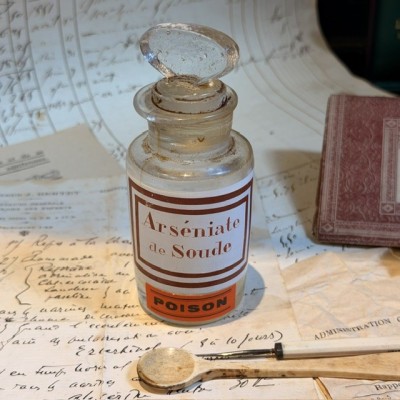
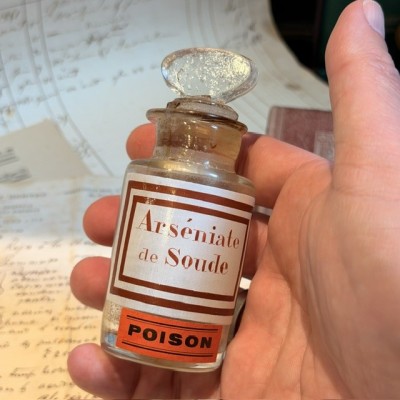
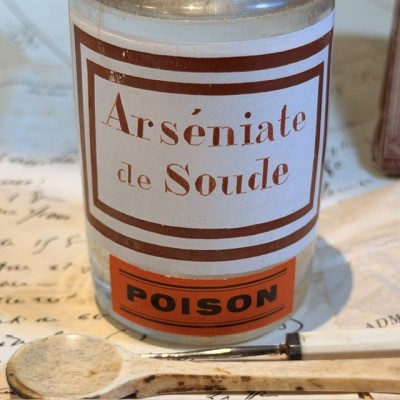
Antique pharmacy bottle made of blown glass and enameled painted label. Yes, it is indeed the arsenic you know!
Red POISON label
Signaling to the pharmacist that it is imperative to keep apart the other substances in the cabinet of toxic substances, the famous poison cabinet.
Dating: 19th century
EMPTY but the cap is blocked and does not open.
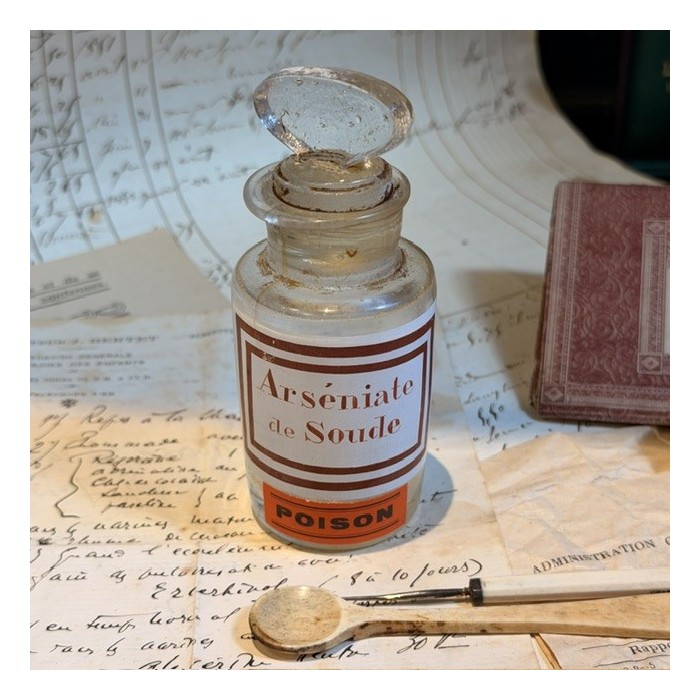
Arsenic - Sodium arsenate
Antique pharmacy bottle made of blown glass and enameled painted label. Yes, it is indeed the arsenic you know!
Red POISON label
Signaling to the pharmacist that it is imperative to keep apart the other substances in the cabinet of toxic substances, the famous poison cabinet.
Laboratory or pharmaceutical dispensary bottle, typical of the late nineteenth or early twentieth century.
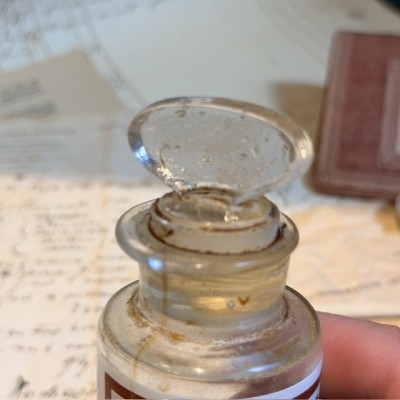
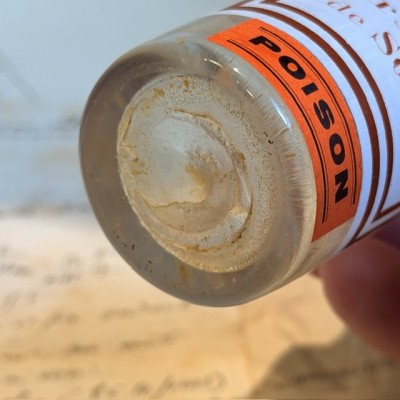
Made of blown transparent glass, it has a trace of pontil visible on the bottom, reflecting traditional artisanal manufacturing. It has its original cap honed with emery BUT the bottle is blocked and does not open, sealed by time.
Beautiful enamelled label stenciled surrounded by a brown/red border. The bottle still contains its original powder of a brilliant yellow. This baked enamel technique guaranteed great resistance to handling and chemicals in the pharmacy. A red regulatory label marked "POISON" is applied at the bottom, indicating the poisonous nature of the substance.
In the nineteenth and early twentieth centuries, this bottle contained sodium arsenate, the pharmaceutical form of the famous arsenic.
Once prescribed by doctors in infinitesimal doses to stimulate the appetite, fight against asthenia or treat conditions as diverse as eczema, psoriasis or asthma.
He embodies par excellence the slow poison of detective novels.
Immortalized by the masters of the genre such as Agatha Christie or Sir Arthur Conan Doyle and at the heart of the greatest historical criminal cases, arsenic was feared for its insidious administration and cumulative toxicity that escaped the diagnoses of the time.
Handled with extreme care by the pharmacist for his preparations, it illustrates the fragile boundary between remedy and fatal substance.
Height of the bottle: 11cm with blown glass cap - Diameter at the base: 4cm
Dating: 19th century
EMPTY but the cap is blocked and does not open.
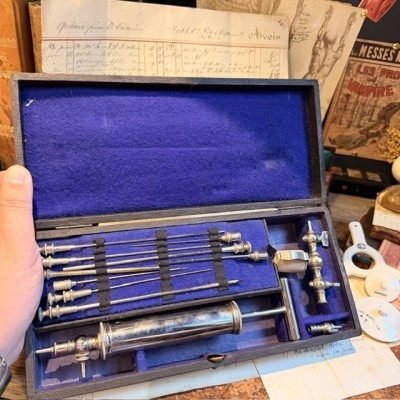
Dr. Potain’s aspirator set in its felt-lined box
Late 19th century, circa 1880
Antique medical instrument maker without manufacturer marking
non-functional
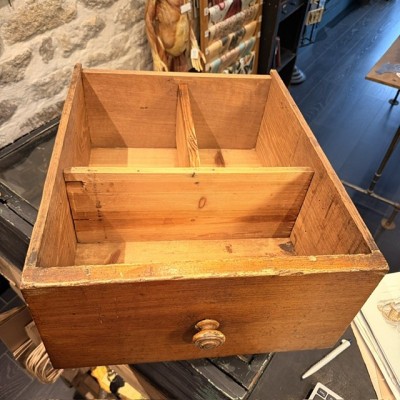
Large antique wooden pharmacy drawer with compartments - From a pharmacy or herbalist's cabinet
3 compartments
Ref C - 39.5x50cm
Can be used as a storage box
Weight: 4.1kg !
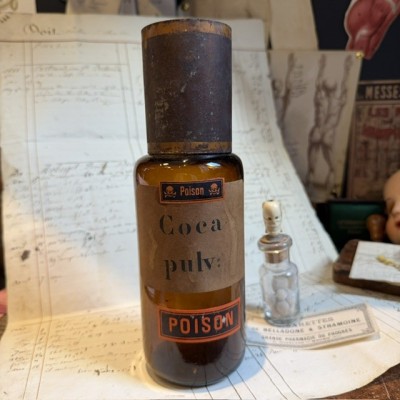
Antique apothecary bottle – Coca powder – Late 19th century/Early 20th century
POISON
Coca powder is the source of cocaine, which was the first effective local anaesthetic used in surgery and dentistry.
SOLD EMPTY
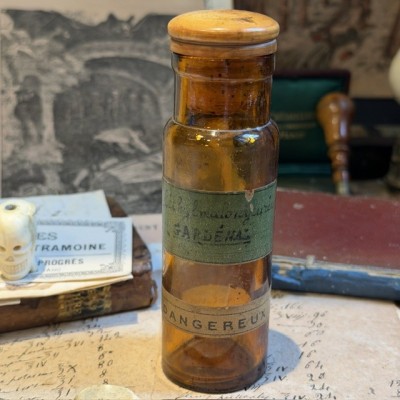
Gardénal - Phenobarbital - Barbiturates
Phényléthylmalonylurée
Antique amber glass bottle, with a boxwood and cork stopper.
Label: DANGEROUS
Indicating to the pharmacist that it must be stored separately from other substances in the cabinet for toxic substances, the famous ‘poison cabinet’.
It comes from the former cellar-laboratory of a Parisian pharmacy. The bottles had not been moved from the shelves since the late 1950s. The cellar had served as a medical analysis laboratory and a laboratory for the pharmacy’s compounded preparations from 1900 until around 1950.
EMPTY
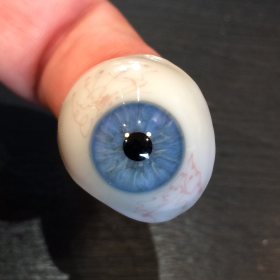
Antique glass eye
Real antique eye prosthesis
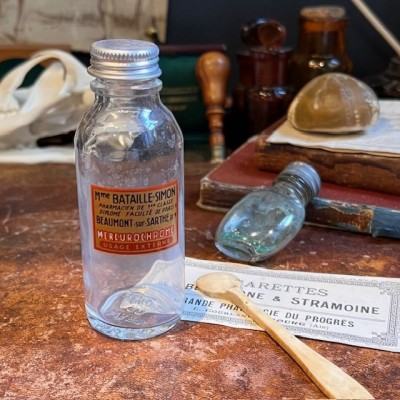
Mercurochrome
Antique pharmacy bottle - Apothecary
Mrs Bataille-Simon, First Class Pharmacist in Beaumont sur Sarthe - Tel 9
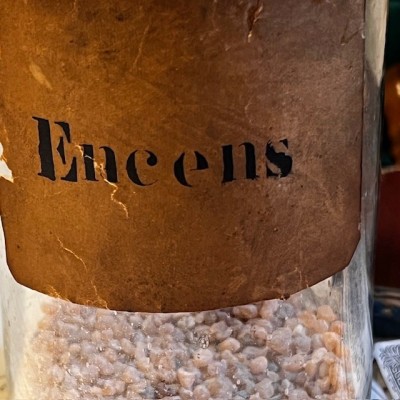
Incense
Antique pharmacy bottle - Wide-mouth apothecary jar.
19th-century mouth-blown glass
There are still some product inside.
A fascinating artifact from the history of pharmacology
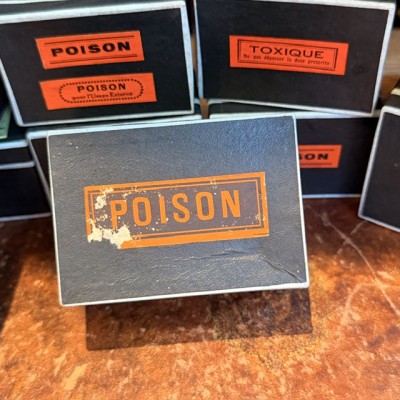
Antique labels in a pharmacy box for cures made of canvas cardboard
Poison label - Ref A
The pharmacist used his boxes of medicine to put away the labels he would then put on the bottles that he would resell to his customers.
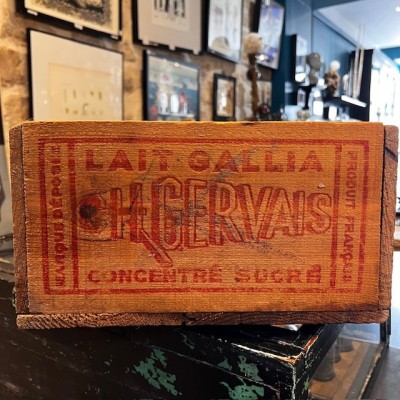
Antique wooden advertising crate for Gallia / Ch. Gervais infant milk concentrate
Found in Parisian cellars that served as laboratories and storage rooms for pharmacists preparing their masterful concoctions from 1900 to 1950.
It was used to store products, glass bottles, etc.
Period: Circa 1947–1955
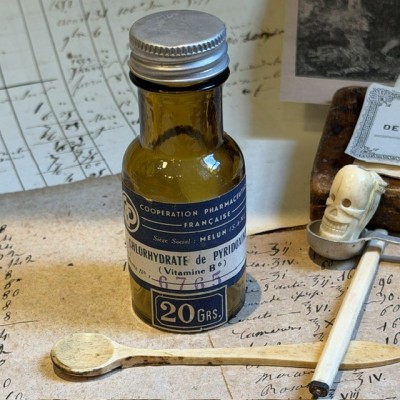
Pyridoxine hydrochloride - Vitamin B6
Antique pharmacy bottle
EMPTY
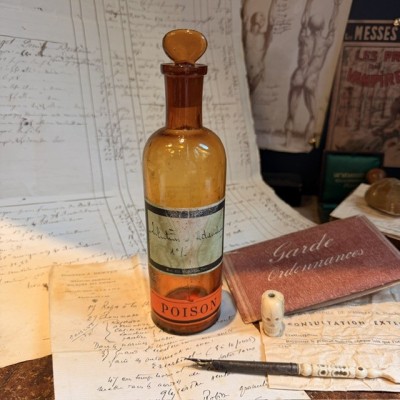
Adrenaline Solution at 1‰
Antique pharmacy bottle
Label leftovers: TO BE SEPARATED and POISON label
This means that this bottle had to be kept separate from the others because it was dangerous - POISON
EMPTY
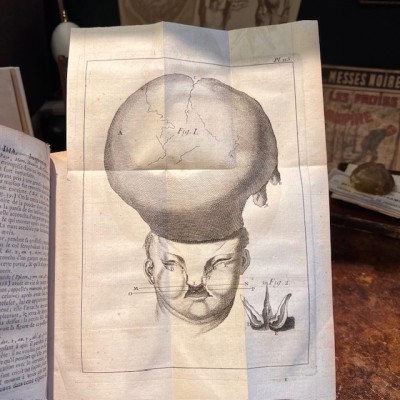
Bibliothèque Choisie de Médecine - Volume 16
Selected Library of Medicine
By François PLANQUE - 1761
Complete original edition with 10 fold-out plates
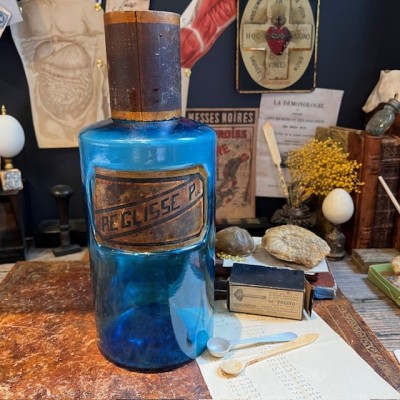
Poudre de réglisse - Licorice powder
Large cobalt blue glass pharmacy bottle - Apothecary - Shouldered - H28cm - 19th century
Shouldered apothecary bottle - Antique pharmacy bottle
Mouth-blown glass - Cobalt blue color tinted throughout
This large-capacity jar was a storage jar intended for stockpiling
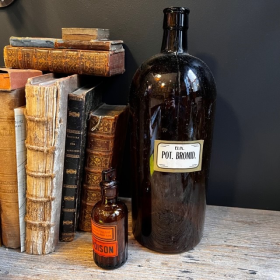
Potassium Bromide Elixir
Antique and large brown English pharmacy bottle
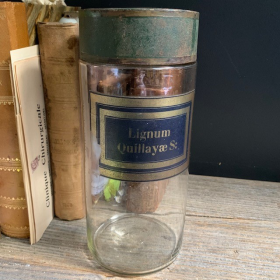
Antique pharmacy jar: Lignum Quillayae Saponaria
Panama wood - 19th century jar
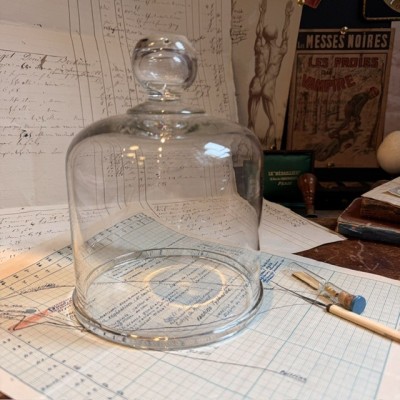
Protective laboratory bell jar - Low form with knob in blown glass
Period: 1900 - Pharmacy - Apothecary
Used by the pharmacist to cover precision instruments or isolate preparations undergoing analysis
Arsenic - Sodium arsenate
Antique pharmacy bottle made of blown glass and enameled painted label. Yes, it is indeed the arsenic you know!
Red POISON label
Signaling to the pharmacist that it is imperative to keep apart the other substances in the cabinet of toxic substances, the famous poison cabinet.
Dating: 19th century
EMPTY but the cap is blocked and does not open.