
- New
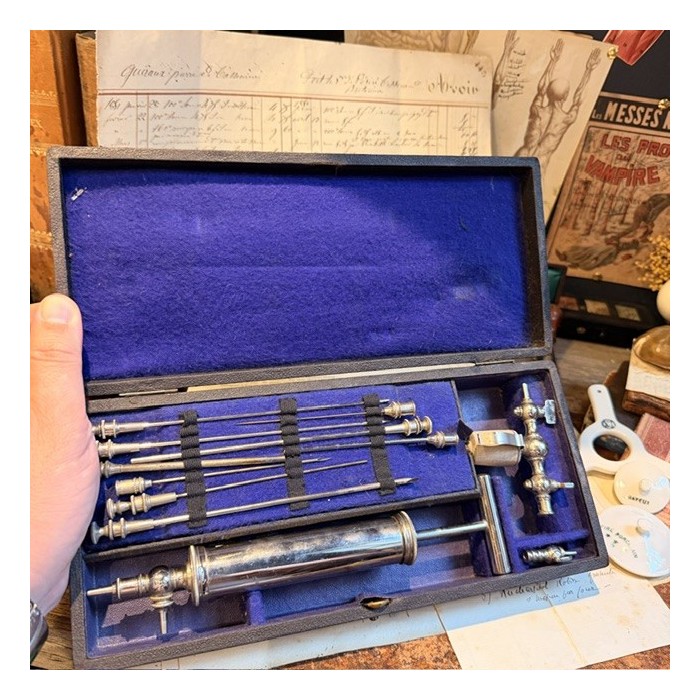
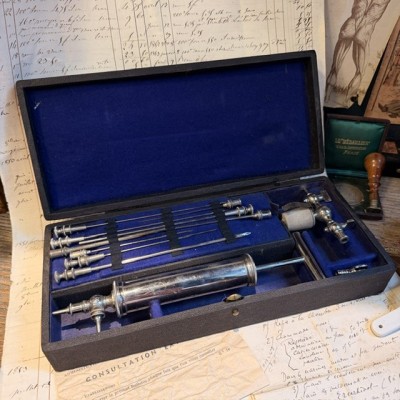
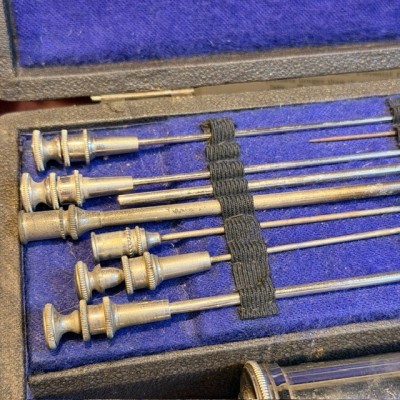
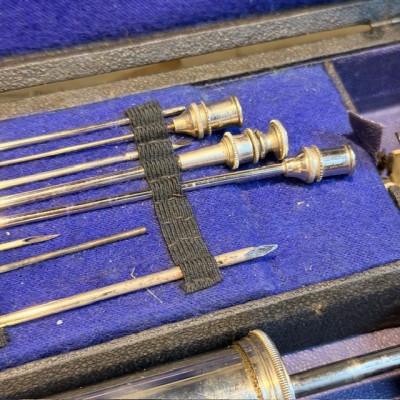
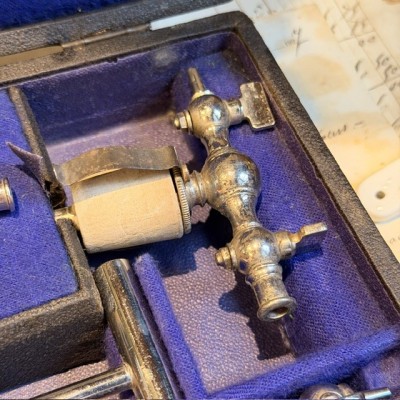
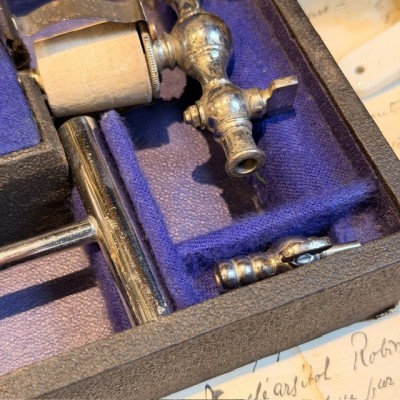
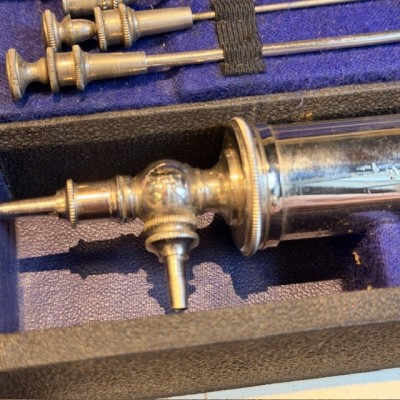
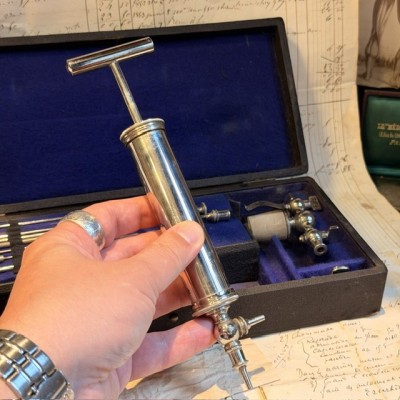
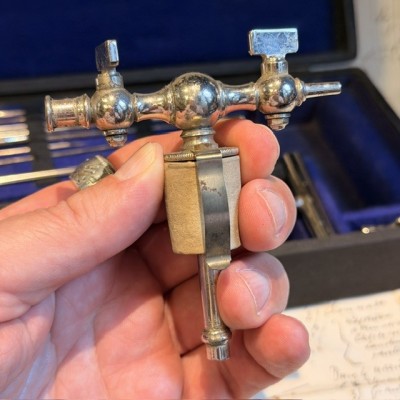
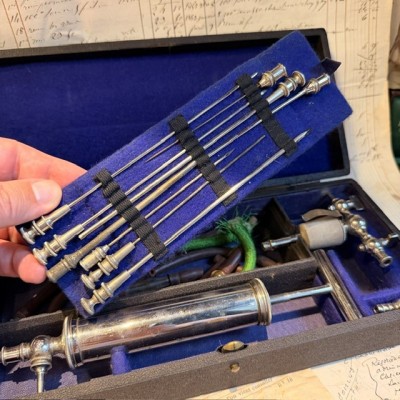
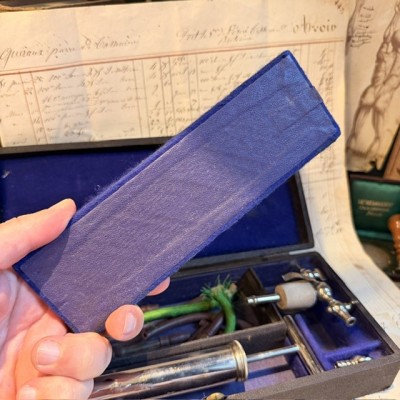
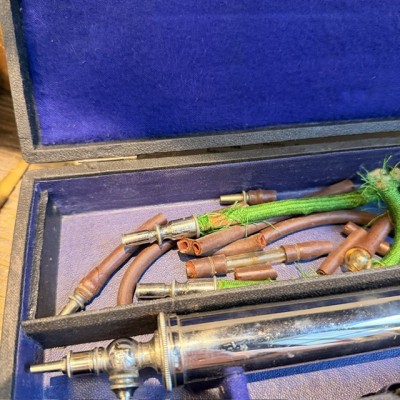
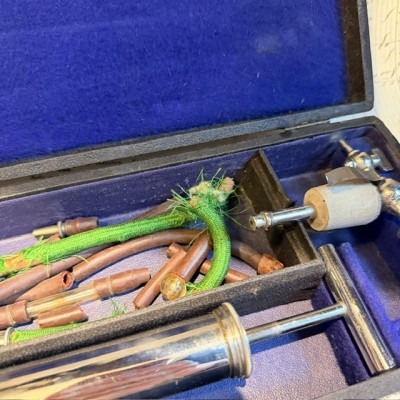
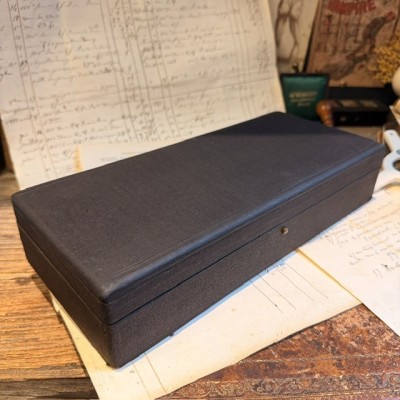
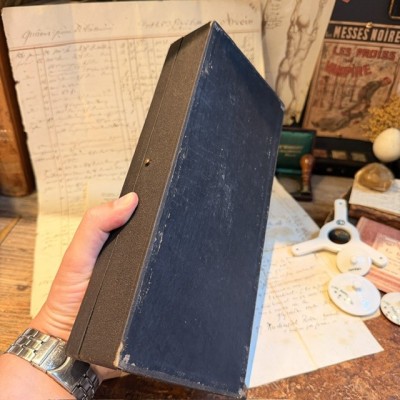
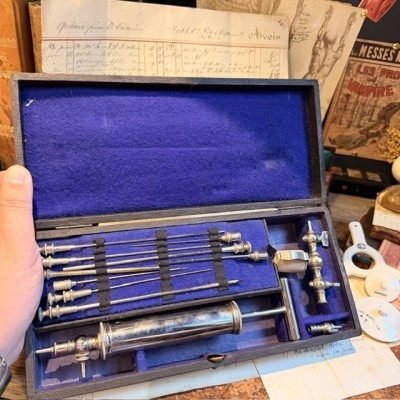
Dr. Potain’s aspirator set in its felt-lined box
Late 19th century, circa 1880
Antique medical instrument maker without manufacturer marking
non-functional
Dr. Potain’s aspirator set in its felt-lined box
Late 19th century, circa 1880
Antique medical instrument maker without manufacturer marking
This instrument was used to evacuate fluids, particularly for pleurisy — an inflammation of the pleura, the membrane surrounding the lungs, which often causes fluid build-up in the pleural cavity.
It could also be used to drain urine from a retained bladder or release gas from an intestinal strangulation caused by a hernia. Additionally, it could be used to inject fluids.
(Source: Conservatoire du Patrimoine Hospitalier de Rennes).
The set is complete, but the rubber tubing has not survived over time; the rubber has hardened and breaks into small pieces if handled.
Includes:
One steel pump equipped with two fittings at its end.
One double-conduit hollow metal rod branching into two tubes, each fitted with a stopcock.
Trocars of various gauges, junto with canulas and blunt stylets.
Case dimensions: 27.5 x 12 x 5.5 cm
Marking of Dr. Potain’s aspirator on the inner felt.
Case covered in black pebbled leather with blind-stamped borders on top. Push-button latch. Typical box manufacturing from the 1870–1895 period.
Non-functional.
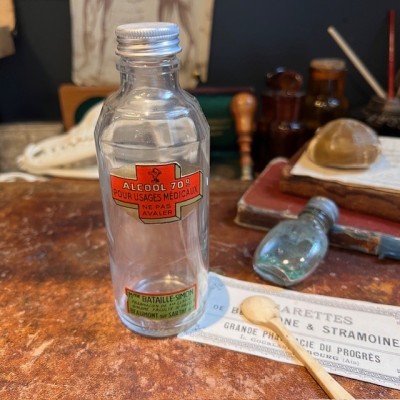
70° alcohol
Antique pharmacy bottle - Apothecary
Mrs Bataille-Simon, First Class Pharmacist in Beaumont sur Sarthe - Tel 9
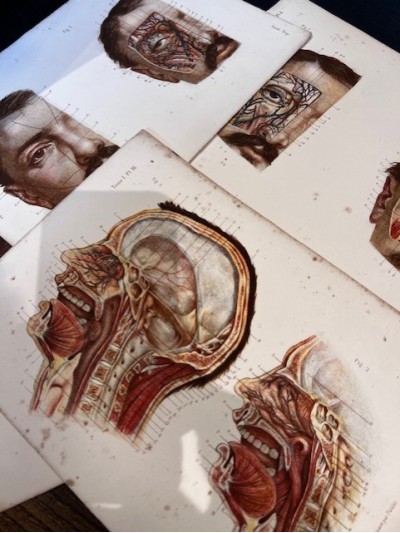
Anatomical chart by Paulet and Sarazin
From the Traité d'anatomie topographique (Treatise on topographical anatomy)
Published in 1867-1870
Chromolithography
You buy 1 plate, not the whole set

Antipyrina Knorr
Named after its German discoverer: Ludwig Knorr
Pharmacy jar - Herbalism - Apothecary bottle
Late 19th century
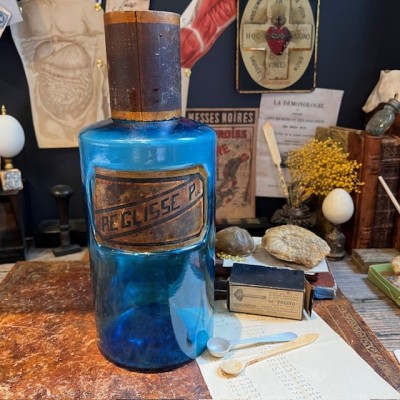
Poudre de réglisse - Licorice powder
Large cobalt blue glass pharmacy bottle - Apothecary - Shouldered - H28cm - 19th century
Shouldered apothecary bottle - Antique pharmacy bottle
Mouth-blown glass - Cobalt blue color tinted throughout
This large-capacity jar was a storage jar intended for stockpiling
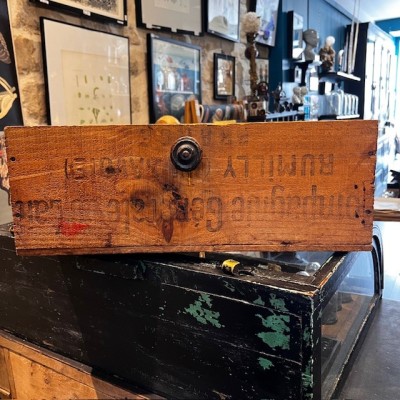
Antique wooden advertising case for Mont Blanc - Rumilly condensed milk - Drawer
Found in Parisian cellars that served as laboratories and storage rooms for pharmacists preparing their masterful concoctions from 1900 to 1950.
It was used to store products, glass bottles, etc.
This box is no longer just a transport container, it has been adopted as a piece of furniture.
Period: Circa 1920–1940
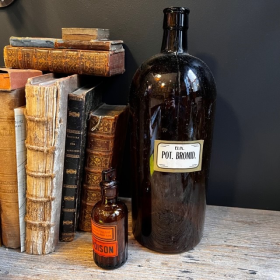
Potassium Bromide Elixir
Antique and large brown English pharmacy bottle
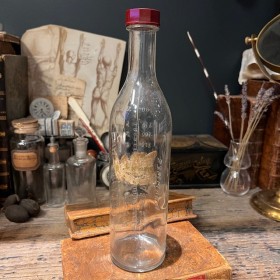
Horseradish syrup
Grams / Tablespoons - Graduated bottle
in French: Grammes / Cuillères à soupe
Antique medicine bottle
Apothecary
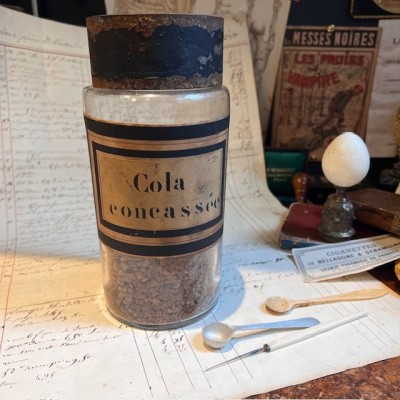
Crushed cola nuts
Antique pharmacy bottle - Wide-mouth apothecary jar.
19th-century mouth-blown glass
There is still some product left inside
A fascinating artifact from the history of pharmacology
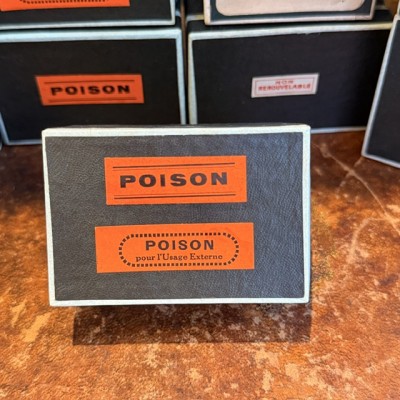
Antique labels in a pharmacy box for cures made of canvas cardboard
Poison label - Ref A
The pharmacist used his boxes of medicine to put away the labels he would then put on the bottles that he would resell to his customers.
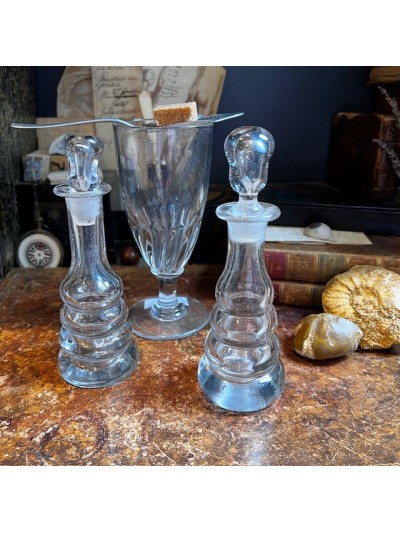
An antique absinthe topette (decanter)
4 Beaded Topette

Sparteine sulphate
Used as a tonic for nervous syndromes at the very beginning of the 20th century, sparteine was also used to facilitate morphine withdrawal.
Antique pharmacy bottle
Apothecary vial
Some product left inside
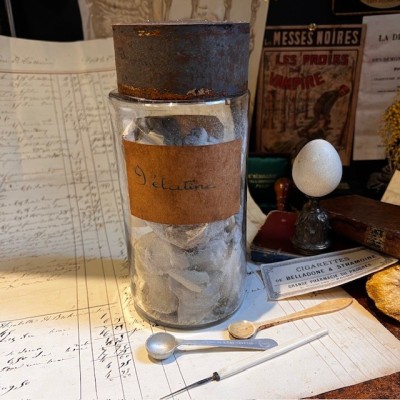
Gelatine
Antique pharmacy bottle - Wide-mouth apothecary jar.
19th-century mouth-blown glass
There is still some product left inside
A fascinating artifact from the history of pharmacology

Aqua Piris - Pear water
Antique pharmacy jar
Apothecary
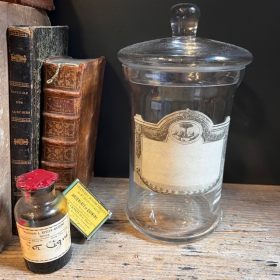
Herbalist's or Pharmacist's jar
Antique blank label of the XVIIIth century
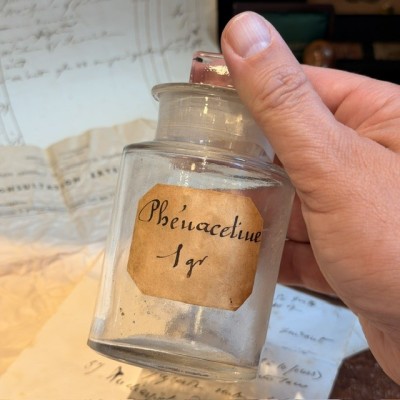
Phenacetin
Antique pharmacy bottle
Phenacetin is one of the first synthetic antalgic and antipyretic (anti-fever) from the chemical industry, very widespread in pharmacies from the end of the 19th century until the second half of the 20th century.
EMPTY - The cap is blocked and does not open
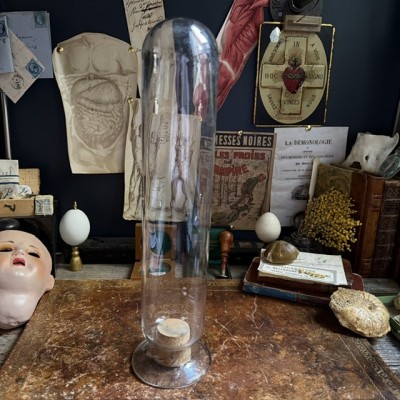
Specimen jar in blown glass - Inverted apothecary jar - Seed vase
Size L
A vintage laboratory or conservatory container designed for the display and preservation of biological or botanical specimens
Dr. Potain’s aspirator set in its felt-lined box
Late 19th century, circa 1880
Antique medical instrument maker without manufacturer marking
non-functional