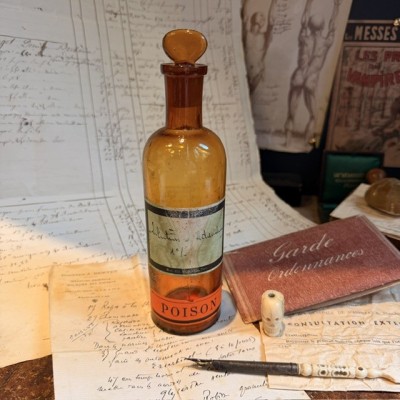
Quinium - Antique pharmacy bottle - Apothecary - EMPTY
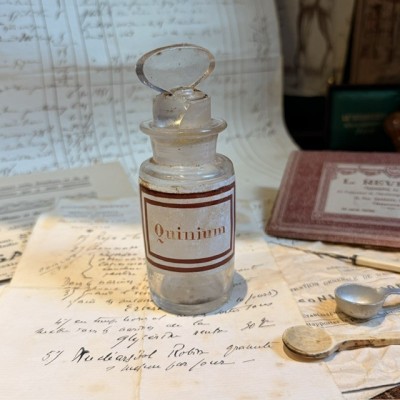
Quinium
Antique pharmacy blown-glass bottle - XIXth century
EMPTY - Blocked cap
Adrenaline Solution at 1‰
Antique pharmacy bottle
Label leftovers: TO BE SEPARATED and POISON label
This means that this bottle had to be kept separate from the others because it was dangerous - POISON
EMPTY
Adrenaline Solution at 1‰
Antique pharmacy bottle
Label leftovers: TO BE SEPARATED and POISON label
Which means that this bottle had to be kept apart from the others because it was very dangerous and deadly - POISON
Pure adrenaline in concentrated solution is a substance of formidable power.
At this dose, the slightest error in administration caused a paroxysmal hypertensive crisis, severe cardiac arrhythmias and sudden cardiac arrest.
Here, the bottle is accompanied by a POISON label: this substance had to be stored separately in the Poisons Cupboard, whose key was held only by the pharmacist.
It comes from the old basement laboratory of a Parisian pharmacy. The bottles had not been moved from the shelves since the late 1950s!
Bottle height: 19.5 cm including cap
EMPTY
Quinium
Antique pharmacy blown-glass bottle - XIXth century
EMPTY - Blocked cap
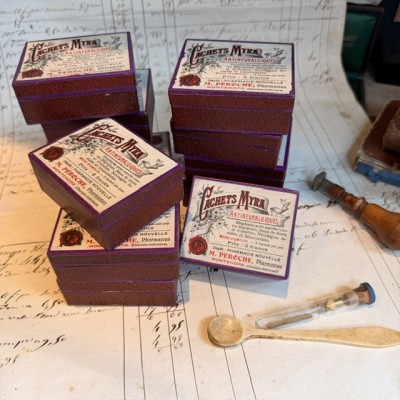
Antique pharmacy box for remedy made of canvas cardboard
Myra pills
Covering in sumptuous red maroquiné/chagrin paper, with edges and slices enhanced with a deep violet/purple very characteristic of the creations of the late nineteenth and early twentieth century: 1890/1910.
You buy 1 box but not the lot
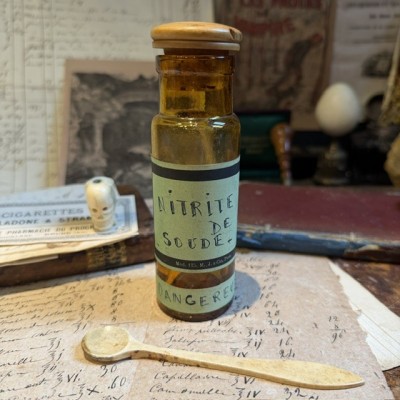
Sodium Nitrite
Antique amber glass bottle, with a boxwood and cork stopper.
Label: DANGEROUS
Indicating to the pharmacist that it must be stored separately from other substances in the cabinet for toxic substances, the famous ‘poison cabinet’.
It comes from the former cellar-laboratory of a Parisian pharmacy. The bottles had not been moved from the shelves since the late 1950s. The cellar had served as a medical analysis laboratory and a laboratory for the pharmacy’s compounded preparations from 1900 until around 1950.
EMPTY
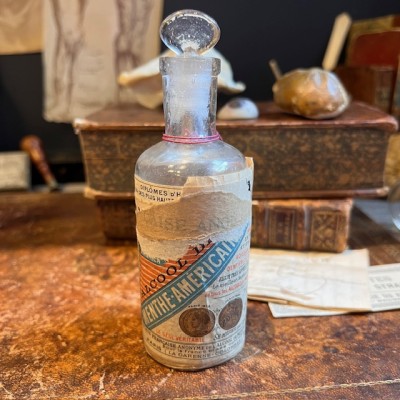
American mint alcohol
Antique pharmacy bottle
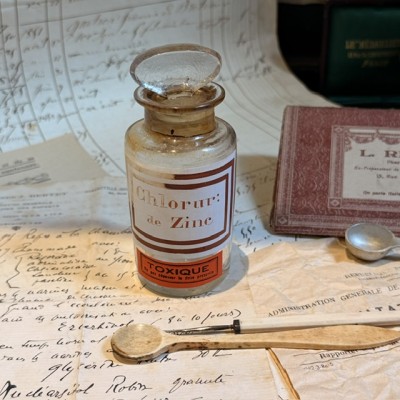
Zinc chloride
Antique pharmacy bottle made of blown glass and enameled painted label.
Red TOXIC label
Signaling to the pharmacist that it is imperative to keep apart the other substances in the cabinet of toxic substances, the famous poison cabinet.
Dating: 19th century
EMPTY
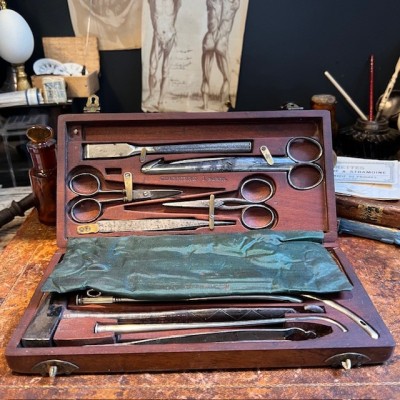
Portable autopsy kit from the mid-19th century
Maison Charrière in Paris, circa 1845–1870
Mahogany case for autopsy and dissection
Small portable mahogany case containing a set of autopsy instruments: hook hammer, bone chisel, enterotome scissors, probes, hooks and suture needles. Used by forensic scientists and anatomists for opening and examining bodies.
Charrière, a major 19th-century Parisian manufacturer, was a pioneer in the design of high-precision surgical and anatomical instruments.
Mahogany and polished steel: 23 × 11 cm
Please note: crack in the wood under the case
A beautiful object, very rare to find

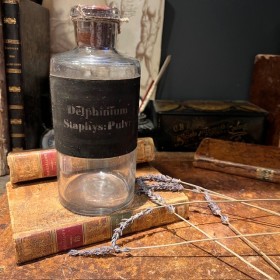
Delphinium staphisagria - Stavesacre
Pharmacy jar - Herbalism - Apothecary bottle
Late 19th century, early 20th century.
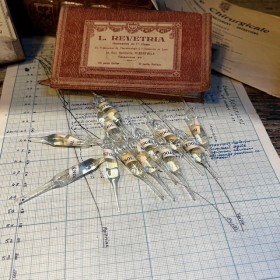
Antique ampoule for hypodermic injection
Histogénol - (circa 1900)
Dropper No. xx05
Antique pharmacy bottle
He's lost his rubber duck
EMPTY
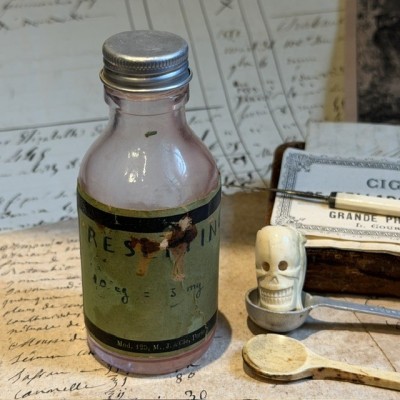
Reseptine
Antique pharmacy bottle
EMPTY
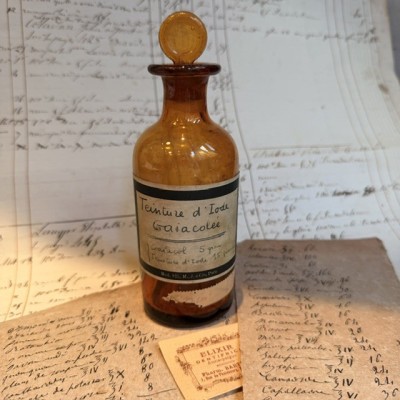
Gaiacolated Tincture of Iodine
Antique pharmacy bottle
EMPTY
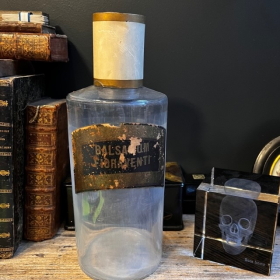
Antique pharmacy bottle from the 19th century
Balsamum Fioravanti - Balm of Fioravanti
Bibliothèque Choisie de Médecine - Volume 8
Selected Library of Medicine
By François PLANQUE - 1750
Complete original edition with 10 fold-out plates
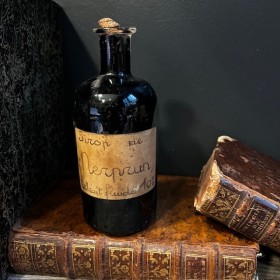
Buckthorns syrup
Antique pharmacy bottle
Apothecary vial
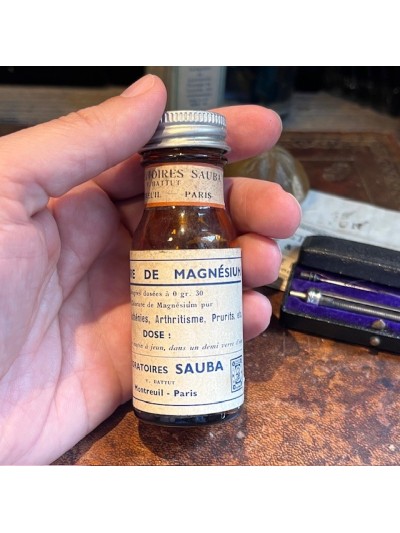
Chlorure de magnésium
Antique pharmacy bottle
Apothecary vial
EMPTY
Adrenaline Solution at 1‰
Antique pharmacy bottle
Label leftovers: TO BE SEPARATED and POISON label
This means that this bottle had to be kept separate from the others because it was dangerous - POISON
EMPTY