
- New
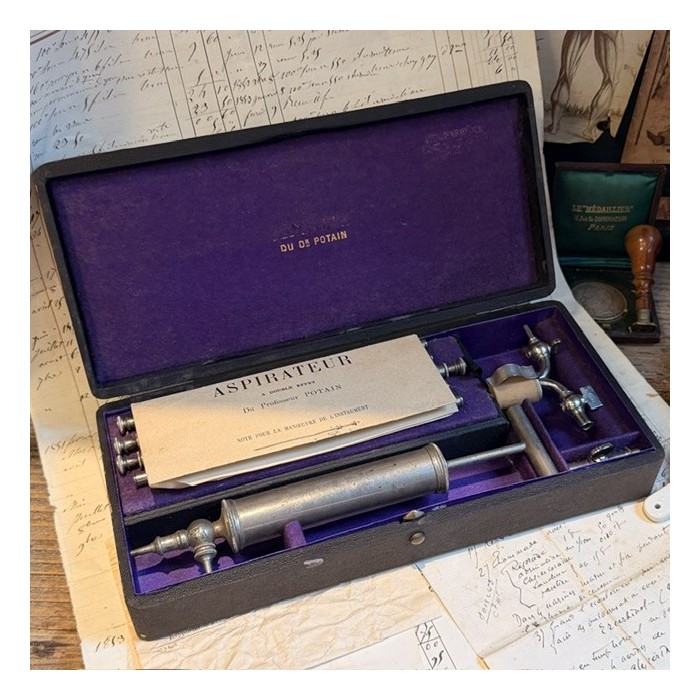
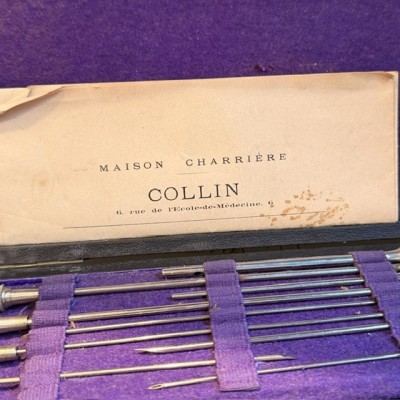
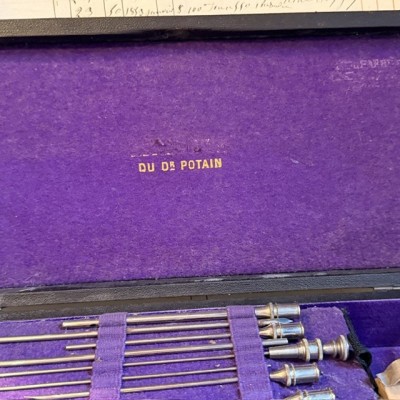
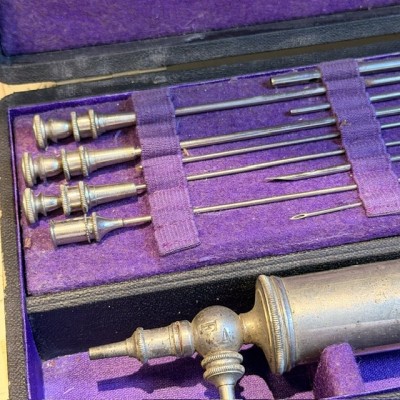
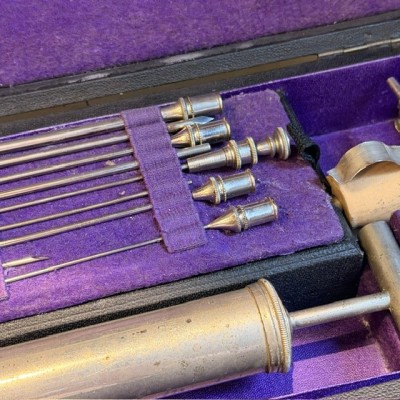
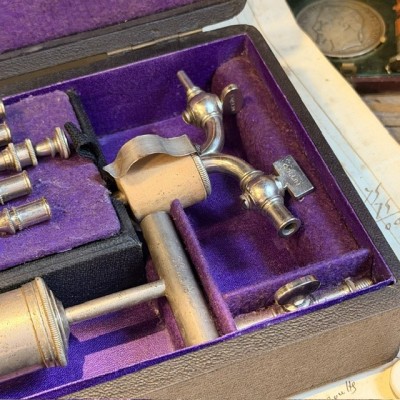
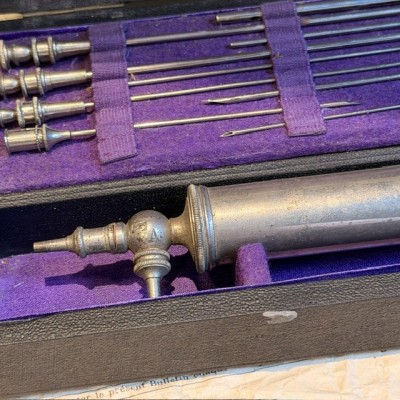
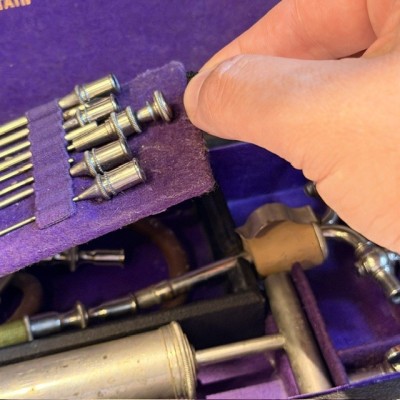
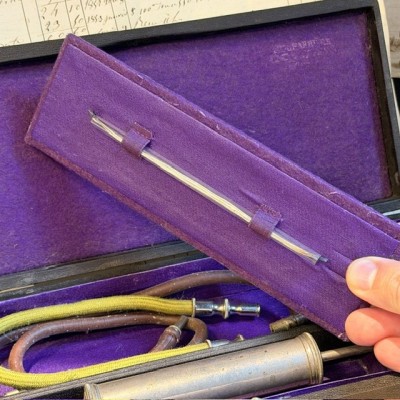
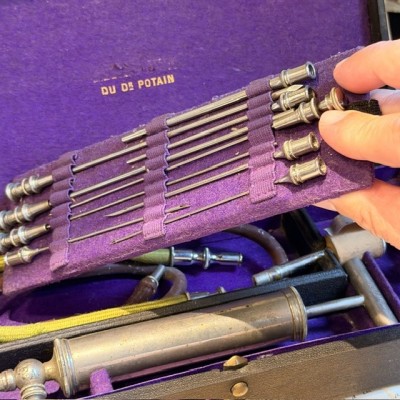
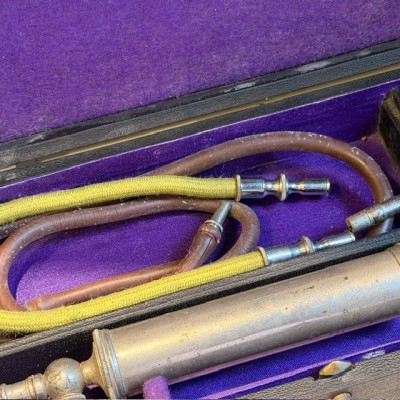
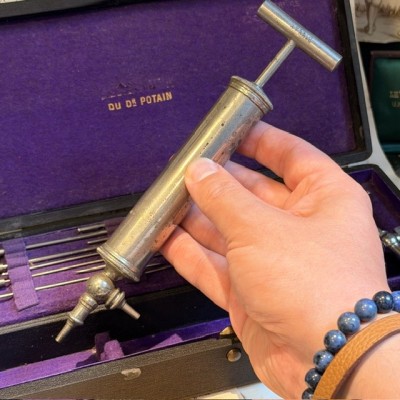
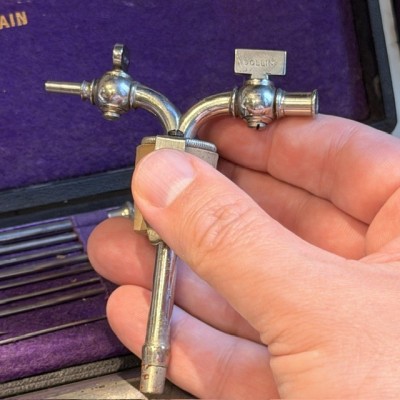
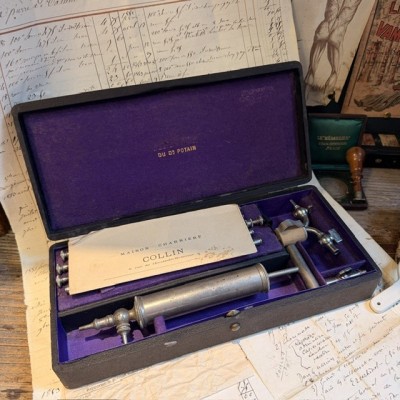
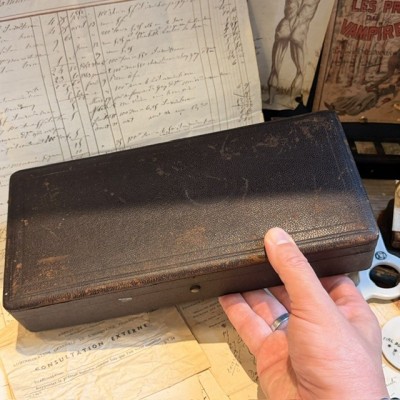
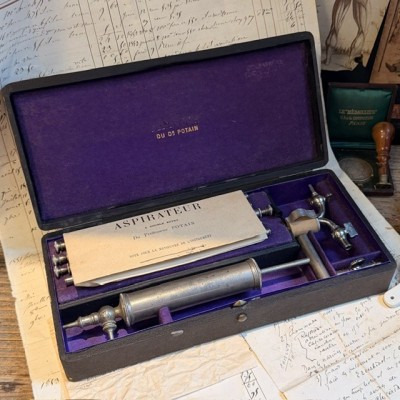
Dr. Potain’s aspirator set in its felt-lined box
Late 19th century, circa 1880
Antique medical instrument maker Maison Charrière in Paris, becoming Charrière - Collin et Cie.
non-functional
Dr. Potain’s aspirator set in its felt-lined box
Late 19th century, circa 1880
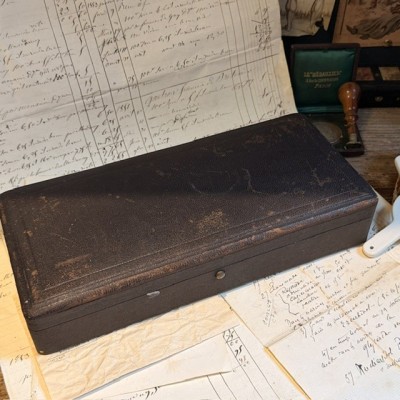
Box from the medical instrument maker Maison Charrière, which existed on its own until the mid-19th century. Collin bought the company in 1866, becoming Charrière - Collin et Cie.
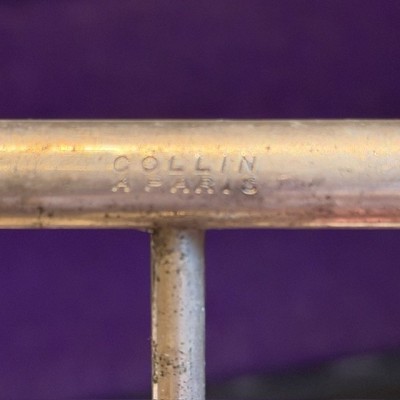
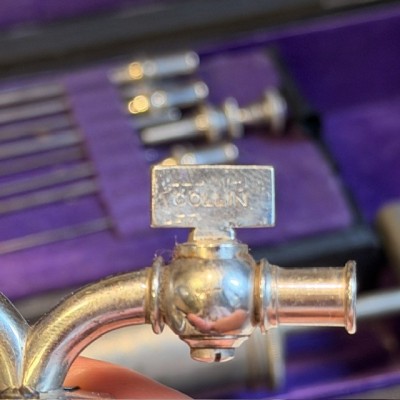
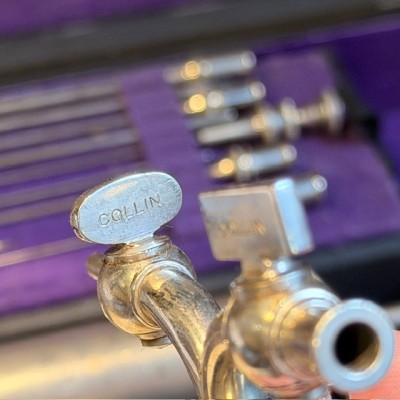
The name of Maison Collin also appears on the pump and valves.
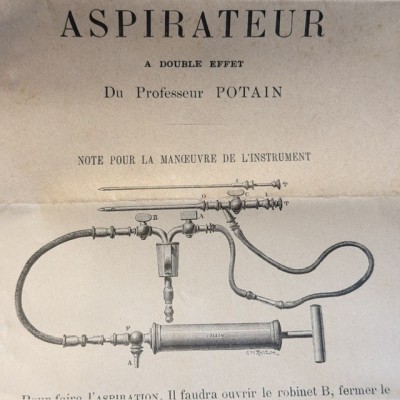
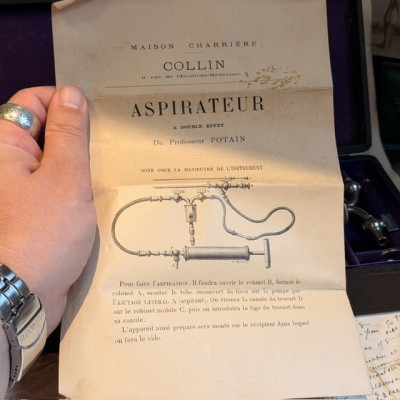
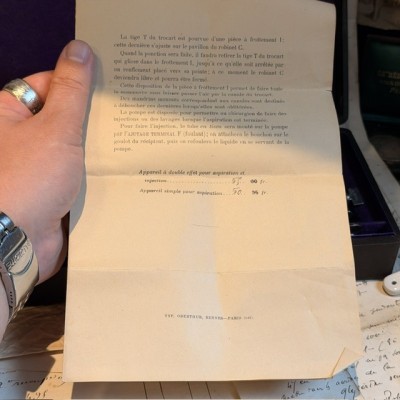
The original instruction leaflet bears the letterhead “MAISON CHARRIÈRE - COLLIN - 6, rue de l'École-de-Médecine” in Paris. This places its production during the transition period when the famous surgical instrument maker Charrière was taken over by its successor Collin, around the 1870s–1880s. The manual specifies “Aspirateur du Professeur Potain” rather than simply “Dr. Potain”, indicating that the set dates from after his appointment as a professor in 1876.
This instrument was used to evacuate fluids, particularly for pleurisy — an inflammation of the pleura, the membrane surrounding the lungs, which often causes fluid build-up in the pleural cavity.
It could also be used to drain urine from a retained bladder or release gas from an intestinal strangulation caused by a hernia. Additionally, it could be used to inject fluids.
(Source: Conservatoire du Patrimoine Hospitalier de Rennes).
The set is complete, but the rubber tubing has not survived over time; the rubber has hardened and breaks into small pieces if handled.
Includes:
One steel pump equipped with two fittings at its end.
One double-conduit hollow metal rod branching into two tubes, each fitted with a stopcock.
Trocars of various gauges, junto with canulas and blunt stylets.
1 glass tube containing metallic wires for cleaning the needles, located in the compartment underneath the trocars.
The original instruction leaflet.
Case dimensions: 27.5 x 12 x 5.5 cm
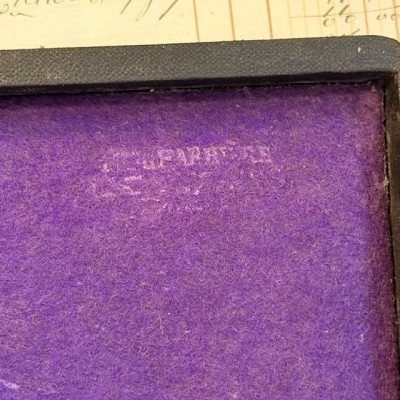
The interior felt lining retains the markings for Maison Charrière and Dr Potain; the lettering for the word Aspirateur has worn away.
Case covered in black pebbled leather with blind-stamped borders on top. Push-button latch. Typical box manufacturing from the 1870–1895 period.
Non-functional.
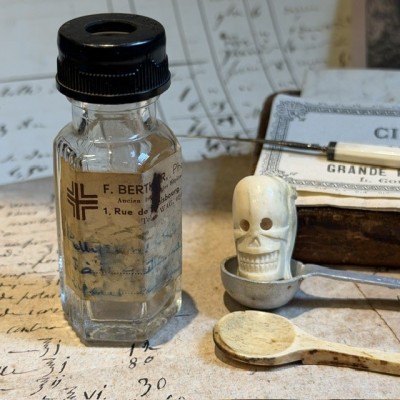
Dropper No. xx05
Antique pharmacy bottle
He's lost his rubber duck
EMPTY
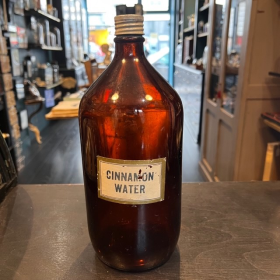
Cinnamon Water
Antique and large brown English pharmacy bottle
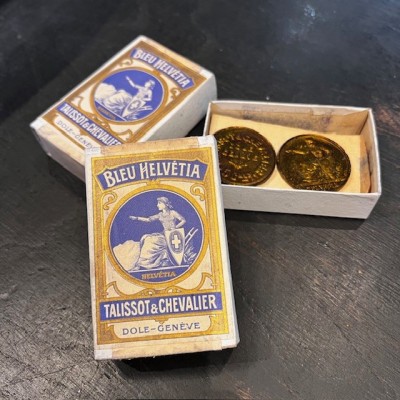
Antique Laundry blue box - Helvetia Blue from Talissot & Chevalier in Dôle and Geneva
Period: 1890-1905
Box containing 6 gold-plated “coins” made of blue wash, resembling the iconography of Swiss coins and medals from the late 19th and early 20th centuries.
Beautiful blue and gold illustration on the box.
Your box will be sealed: never opened in 120 years
UNOBTAINABLE
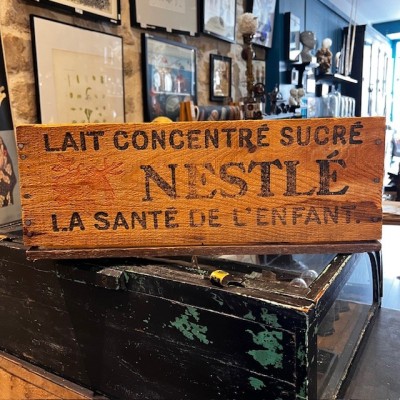
Antique wooden advertising case for Nestlé concentrated infant milk
Found in Parisian cellars that served as laboratories and storage rooms for pharmacists preparing their masterful concoctions from 1900 to 1950.
It was used to store products, glass bottles, etc.
Period: Circa 1910–1930
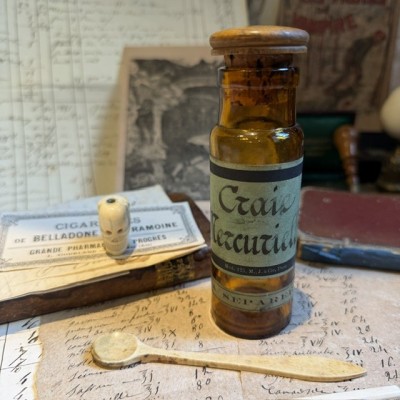
Mercury Chalk – Treatment for Syphilis
Antique amber glass bottle, with a boxwood and cork stopper.
Handwritten label, pen inscription ‘Mercurial Chalk’, neat calligraphy with its thick and thin strokes.
Bottom band ‘TO BE SEPARATED’, instructing the pharmacist to store it in the cabinet for toxic substances, the famous poison cabinet.
It comes from the former cellar-laboratory of a Parisian pharmacy. The bottles had not been moved from the shelves since the late 1950s. The cellar had served as a medical analysis laboratory and a laboratory for the pharmacy’s compounded preparations from 1900 until around 1950.
Period: Judging by the handwriting, late 19th century
EMPTY
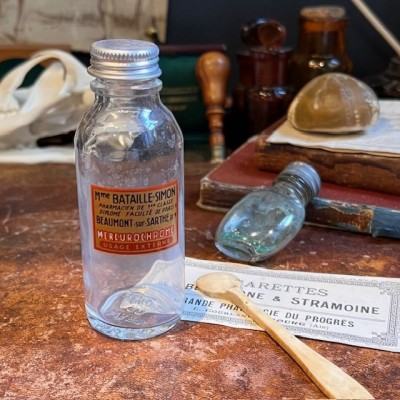
Mercurochrome
Antique pharmacy bottle - Apothecary
Mrs Bataille-Simon, First Class Pharmacist in Beaumont sur Sarthe - Tel 9
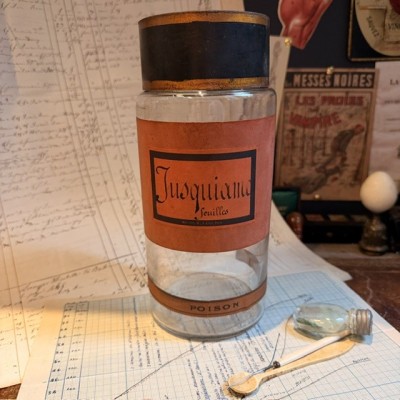
Jusquiame leaves - POISON
Antique pharmacy bottle - Wide-mouth apothecary jar.
19th-century mouth-blown glass
Red POISON label
Signaling to the pharmacist that it is imperative to keep apart the other substances in the cabinet of toxic substances, the famous poison cabinet.
A fascinating testimony to pharmacology
It comes from an old cellar-laboratory in a Parisian pharmacy. The bottles had not moved since the late 1950s on the shelves. The cellar had served as a laboratory for medical analyses and a laboratory for magistral preparations of the pharmacy from 1900 until around 1950.
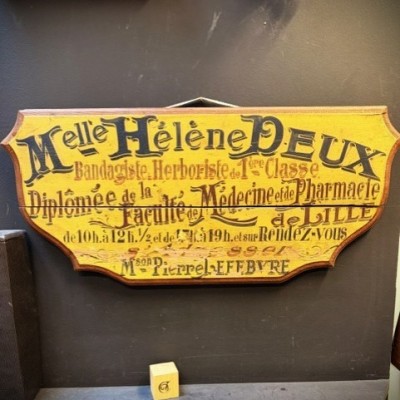
Rare and authentic wall sign panel
Pharmacy and fitting brand - Miss Hélène Deux, Bandagiste & 1st class Herbalist
Officine sign panel in painted wood from the 19th-20th century hinge: 1890-1920.
The sign is made of 2 reinforced wood panels at the back. There is a space between the 2 panels.
The sign features a superb art lettering entirely made freehand by a letter painter (superb contrasts of blue and brown, neat full and loose)
Witness to the history of pharmacy and ancient orthopaedics: the bandagist shaping leather and frames for corsets and restraints, and the herbalist 1st class, a profession that has disappeared since the abolition of the diploma in 1941.
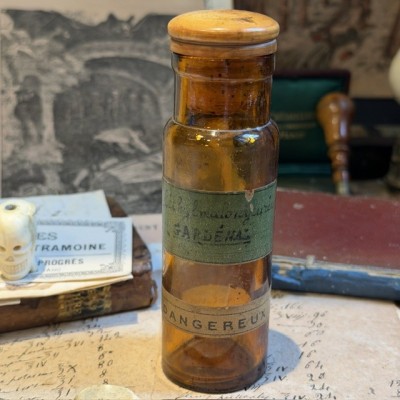
Gardénal - Phenobarbital - Barbiturates
Phényléthylmalonylurée
Antique amber glass bottle, with a boxwood and cork stopper.
Label: DANGEROUS
Indicating to the pharmacist that it must be stored separately from other substances in the cabinet for toxic substances, the famous ‘poison cabinet’.
It comes from the former cellar-laboratory of a Parisian pharmacy. The bottles had not been moved from the shelves since the late 1950s. The cellar had served as a medical analysis laboratory and a laboratory for the pharmacy’s compounded preparations from 1900 until around 1950.
EMPTY
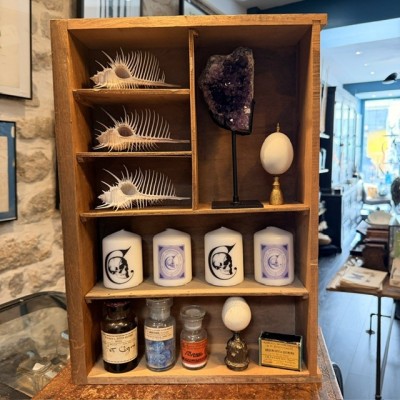
Large antique wooden pharmacy drawer with compartments
6 compartments
Curiosity shelf
Ref C - 48x34.5cm - Thickness 9.5cm
Can be used as a presentation furniture
SOLD EMPTY WITHOUT ACCESSORIES
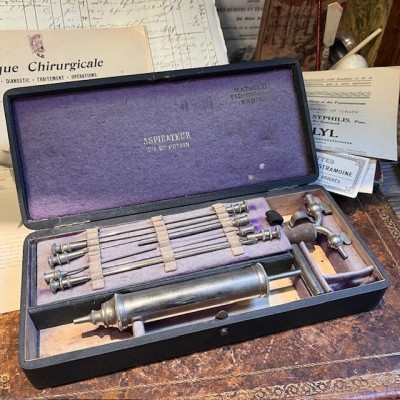
Dr Potain vacuum cleaner in its case
Late 19th century - 1885-1894
Antique medical instrument from manufacturer MATHIEU in Paris
non-functional
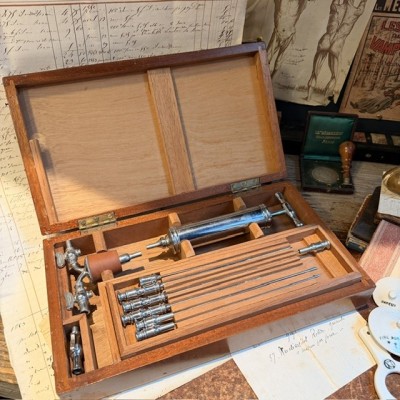
Potain’s Aspirator in its Light Wood Case
Beginning of 20th century
English maker: THACKRAY LEEDS ENGLAND
non-functional
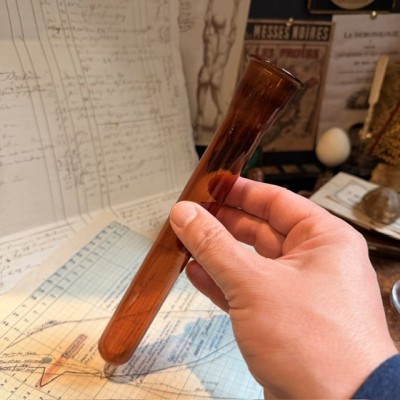
Large antique laboratory test tube made of actinic glass (brown glass) - Pharmacy
Its unusual dimensions make it a model with a beautiful presence
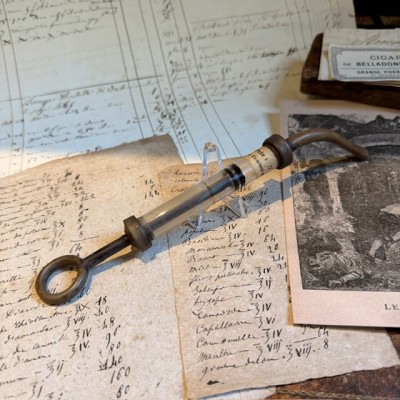
Ebonite and glass laryngeal syringe
For intra-laryngeal injections.
Marketed between May 1939 and sometime in 1940

Bibliothèque Choisie de Médecine - Volume 8
Selected Library of Medicine
By François PLANQUE - 1750
Complete original edition with 10 fold-out plates

Collodion
Used as a liquid dressing
Antique pharmacy bottle
EMPTY
Dr. Potain’s aspirator set in its felt-lined box
Late 19th century, circa 1880
Antique medical instrument maker Maison Charrière in Paris, becoming Charrière - Collin et Cie.
non-functional