

Grindelia Tincture - Antique medicine bottle - Apothecary
Grindelia Tincture
Antique medicine bottle
Apothecary
Price
€18.00
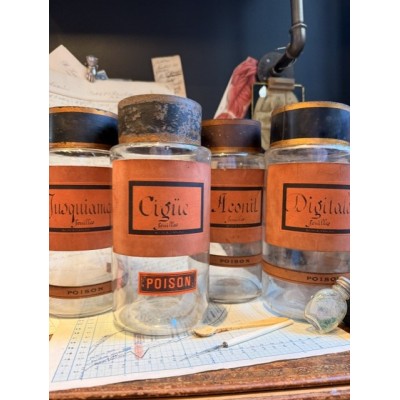
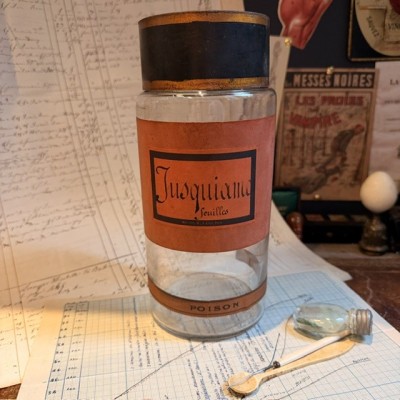
Jusquiame leaves - POISON
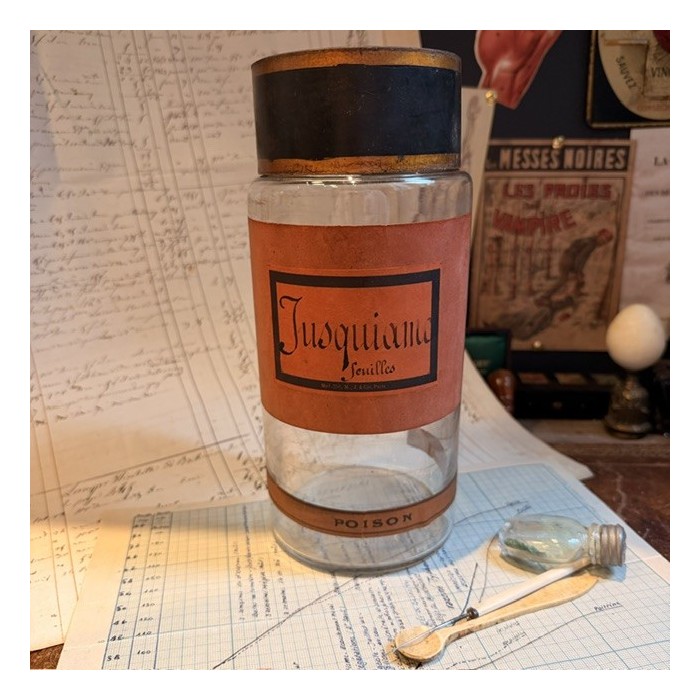
Antique pharmacy bottle - Wide-mouth apothecary jar.
19th-century mouth-blown glass
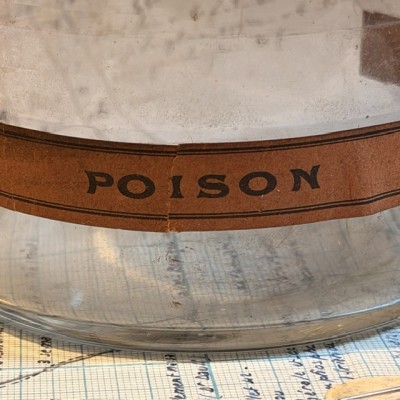
Red POISON label
Signaling to the pharmacist that it is imperative to keep apart the other substances in the cabinet of toxic substances, the famous poison cabinet.
A fascinating testimony to pharmacology
It comes from an old cellar-laboratory in a Parisian pharmacy. The bottles had not moved since the late 1950s on the shelves. The cellar had served as a laboratory for medical analyses and a laboratory for magistral preparations of the pharmacy from 1900 until around 1950.
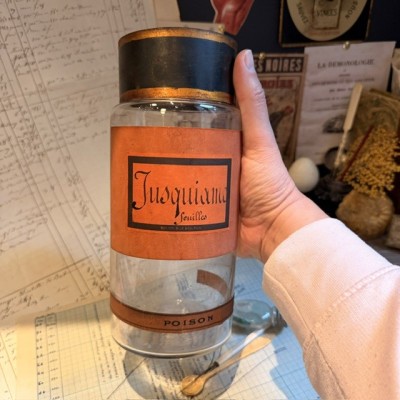
Jusquiame leaves - POISON
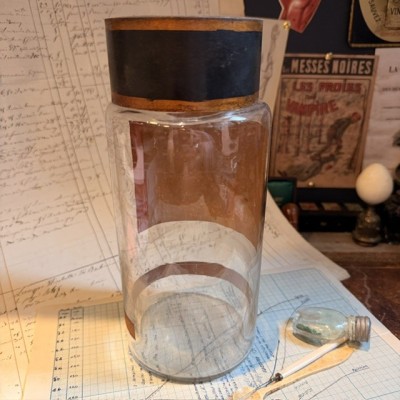
Antique pharmacy jar - Wide-mouthed apothecary jar. 19th-century mouth-blown glass.
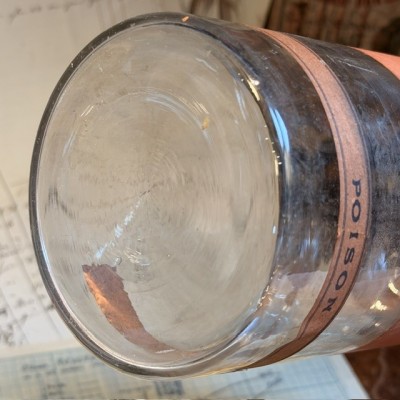
The glass displays the typical irregularities – air bubbles and slight ripples – characteristic of semi-industrial production from the early 20th century or end of 19th. The base shows a mark from the blowing rod.
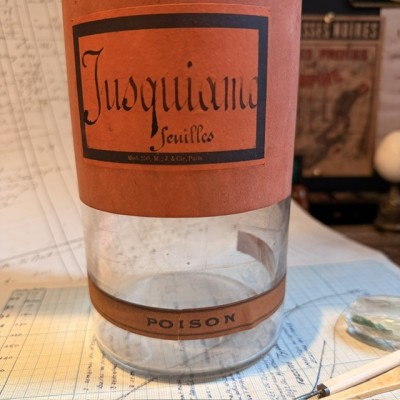
Red POISON label
Signaling to the pharmacist that it is imperative to keep apart the other substances in the cabinet of toxic substances, the famous poison cabinet.
It comes from an old cellar-laboratory in a Parisian pharmacy. The bottles had not moved since the late 1950s on the shelves. The cellar had served as a laboratory for medical analyses and a laboratory for magistral preparations of the pharmacy from 1900 until around 1950.
This large-capacity jar was a reserve jar intended for the storage of raw materials to be processed into powders, tinctures or infusions in the pharmacy laboratory.
It was used to store the dried leaves of Jusquiame (Hyoscyamus niger). Also called Witches' Grass.
A plant known for its sedative properties, but extremely toxic due to its alkaloid content (hyoscyamine and scopolamine). It is one of the emblematic herbs of ancient pharmacopoeia and traditional witchcraft that produces strong hallucinations.
This large-capacity jar was a storage jar intended for raw materials to be processed into powders, tinctures or infusions in the pharmacy’s laboratory.
The ‘POISON’ label at the bottom of the jar is not decorative. Foxglove has a very narrow therapeutic window: the curative dose is very close to the toxic dose. Handling the dried leaves required extreme precision and was strictly regulated due to its high toxicity.
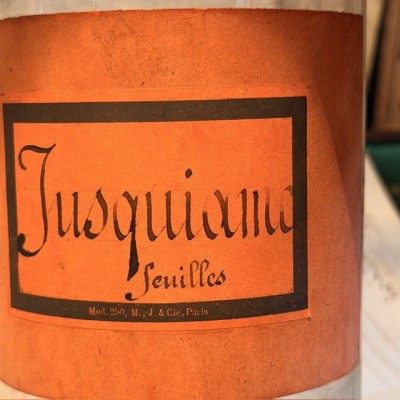
Beautiful handwritten cursive script in pen on the label.
The red paper used for the label was intended for toxic substances, so that the chemist could immediately distinguish them from non-toxic substances. The label also bears the supplier’s details: “Mod. 250, M., J. & Cie, Paris”.
Height: 23.5 cm – Diameter: 10 cm
Grindelia Tincture
Antique medicine bottle
Apothecary
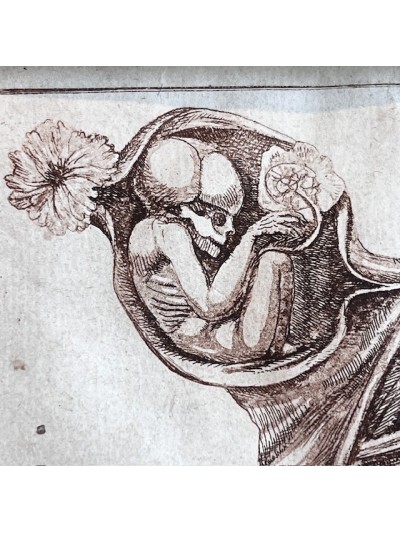
L'art de procréer les sexes à volonté - The art of procreating sexes at will
By Millot - With illustrated plates
Antique book from 1802 (Year X of the Republic) - Third edition
The author explains how to procreate boys and girls, and gives his recipes for treating sterility and malformations...
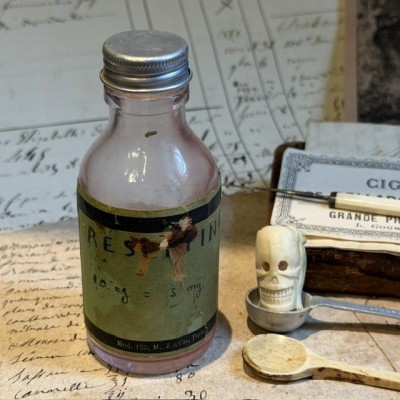
Reseptine
Antique pharmacy bottle
EMPTY
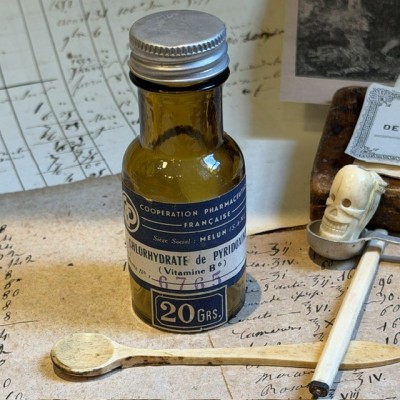
Pyridoxine hydrochloride - Vitamin B6
Antique pharmacy bottle
EMPTY
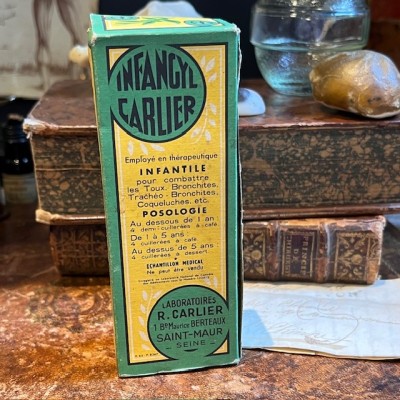
Infangyl Carlier
Antique pharmacy bottle - Apothecary
The box still contains its full, sealed bottle and instructions
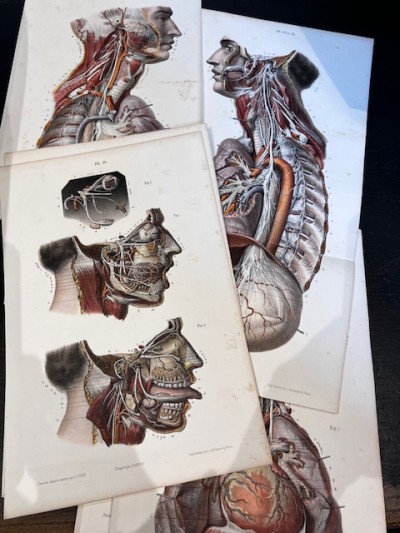
Anatomical chart by Ludovic Hirschfeld drawn by Léveillé
From Traité et iconographie du système nerveux et des organes des sens de l'homme avec leur mode de préparation
Published in 1866
Lithography
You buy 1 plate, not the whole set
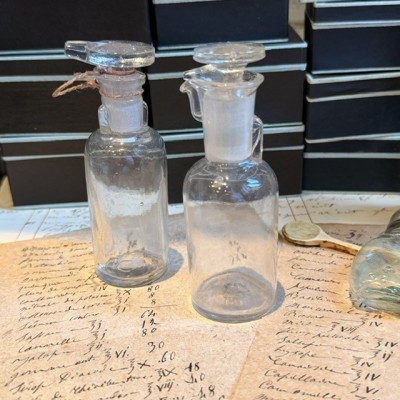
Dropper Bottle
Antique pharmacy bottle - 1920-30's
EMPTY
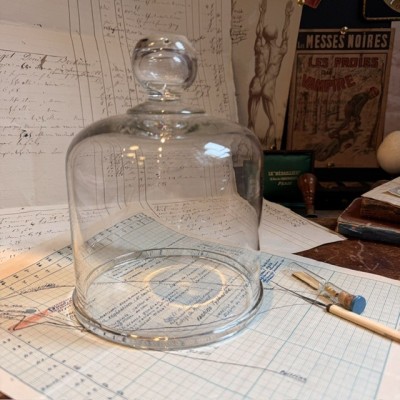
Protective laboratory bell jar - Low form with knob in blown glass
Period: 1900 - Pharmacy - Apothecary
Used by the pharmacist to cover precision instruments or isolate preparations undergoing analysis
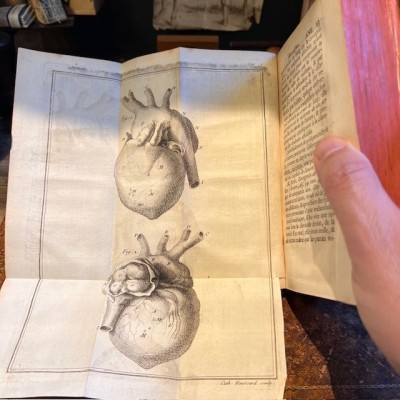
Bibliothèque Choisie de Médecine - Volume 6
Selected Library of Medicine
By François PLANQUE - 1749
Complete original edition with 5 fold-out plates
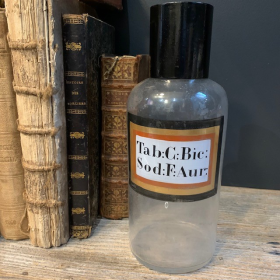
Antique pharmacy jar: Sodium bicarbonate and Gold Flower tablets
Glass pharmacy bottle - XIXth century
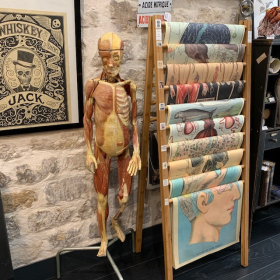
Clastic Mannequin - Dr. Auzoux's anatomical skinned
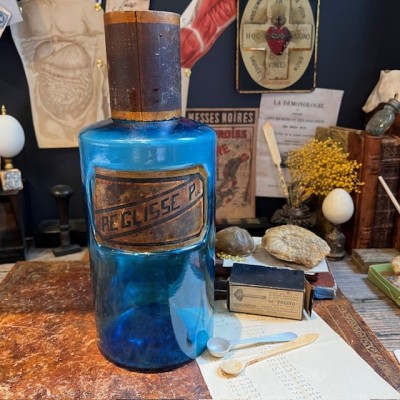
Poudre de réglisse - Licorice powder
Large cobalt blue glass pharmacy bottle - Apothecary - Shouldered - H28cm - 19th century
Shouldered apothecary bottle - Antique pharmacy bottle
Mouth-blown glass - Cobalt blue color tinted throughout
This large-capacity jar was a storage jar intended for stockpiling

Human jaws in porcelain mounted on a blackened wooden base
Anatomical dental model for dentists
19th century
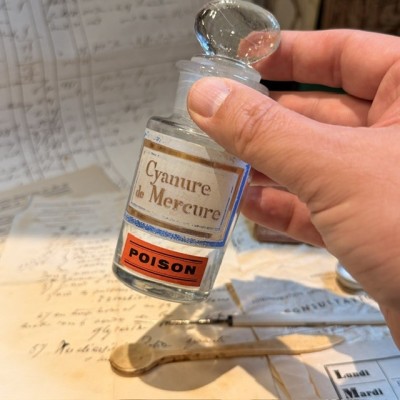
Mercuric cyanide
Antique pharmacy bottle made of blown glass and enameled painted label with golden blue threads
Red POISON label
Signaling to the pharmacist that it is imperative to keep apart the other substances in the cabinet of toxic substances, the famous poison cabinet.
Dating: 19th century
EMPTY
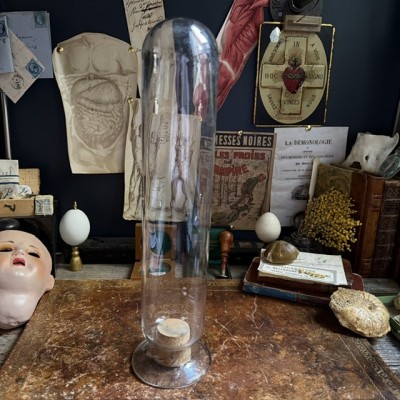
Specimen jar in blown glass - Inverted apothecary jar - Seed vase
Size L
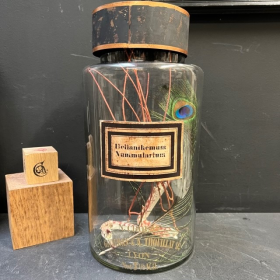
A vintage laboratory or conservatory container designed for the display and preservation of biological or botanical specimens
Jusquiame leaves - POISON
Antique pharmacy bottle - Wide-mouth apothecary jar.
19th-century mouth-blown glass
Red POISON label
Signaling to the pharmacist that it is imperative to keep apart the other substances in the cabinet of toxic substances, the famous poison cabinet.
A fascinating testimony to pharmacology
It comes from an old cellar-laboratory in a Parisian pharmacy. The bottles had not moved since the late 1950s on the shelves. The cellar had served as a laboratory for medical analyses and a laboratory for magistral preparations of the pharmacy from 1900 until around 1950.