
Herbalist's or Pharmacist's jar - XVIIIth century label
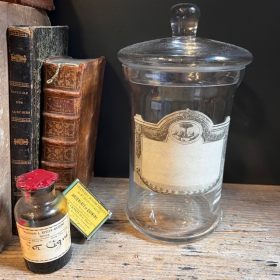
Herbalist's or Pharmacist's jar
Antique blank label of the XVIIIth century
Price
€110.00
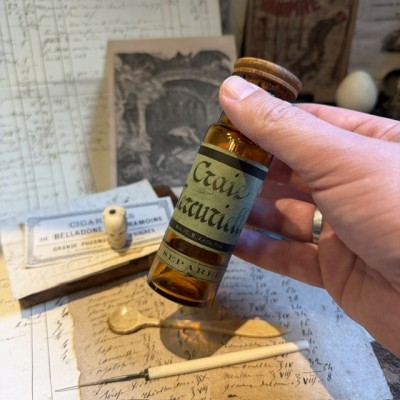
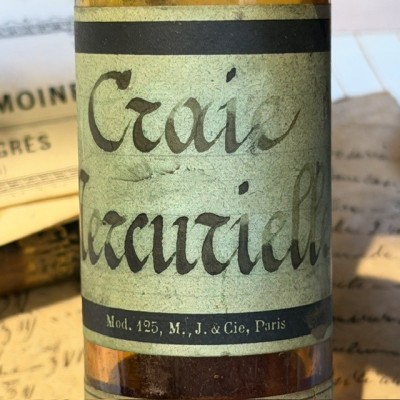
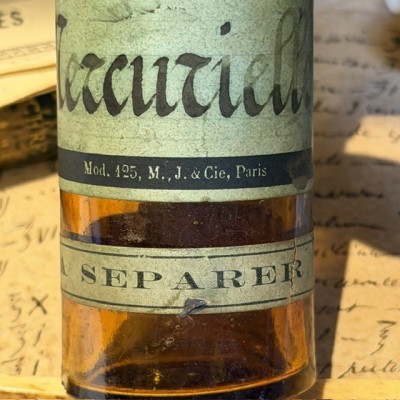
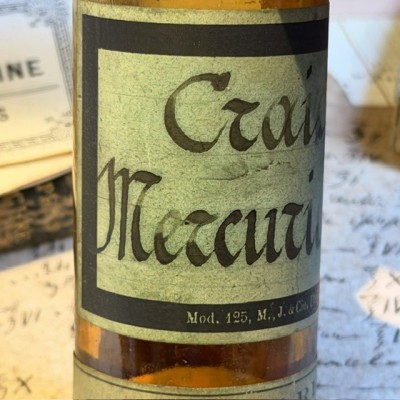
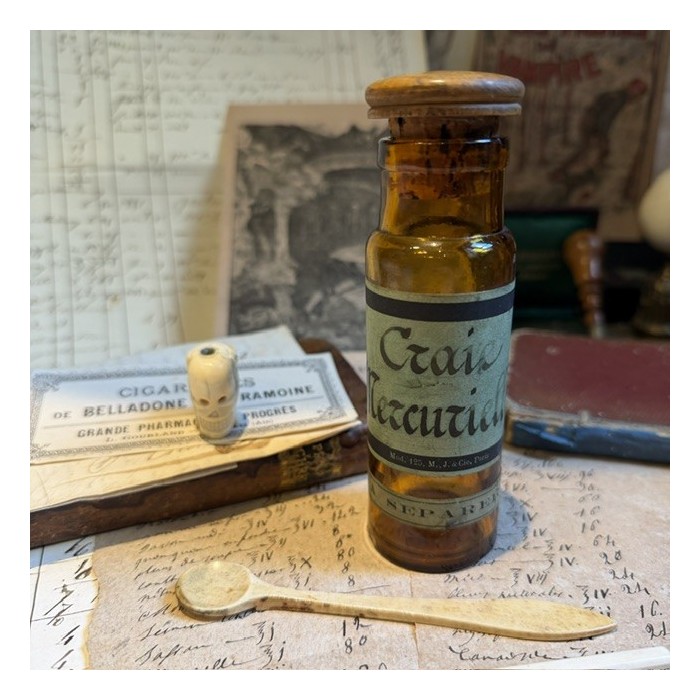
Mercury Chalk – Treatment for Syphilis
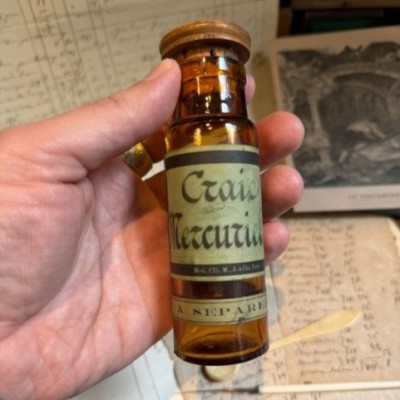
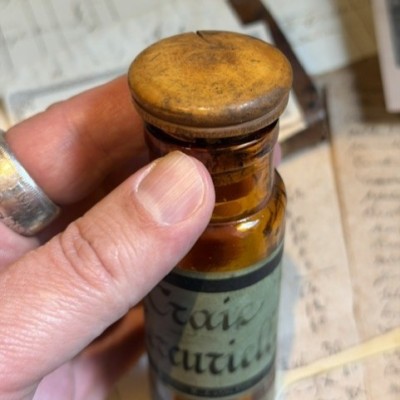
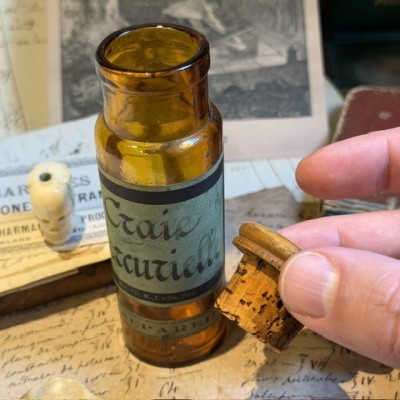
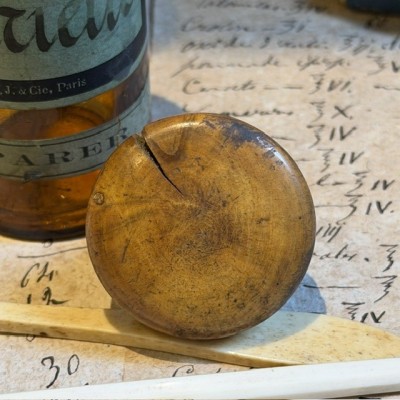
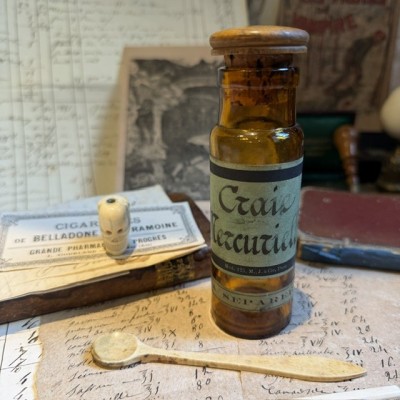
Antique amber glass bottle, with a boxwood and cork stopper.
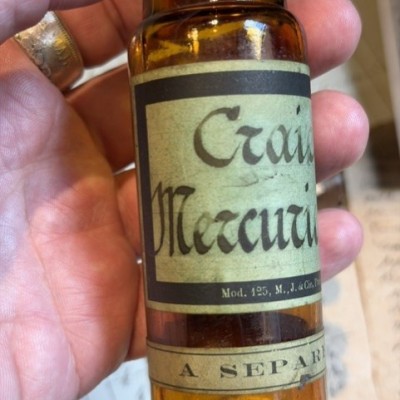
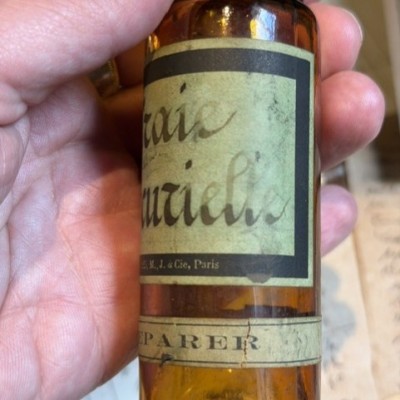
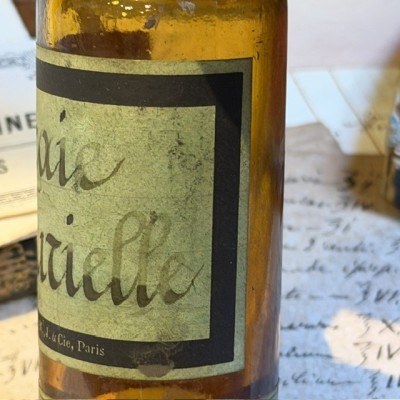
Handwritten label, pen inscription ‘Mercurial Chalk’, neat calligraphy with its thick and thin strokes.
Bottom band ‘TO BE SEPARATED’, instructing the pharmacist to store it in the cabinet for toxic substances, the famous poison cabinet.
It comes from the former cellar-laboratory of a Parisian pharmacy. The bottles had not been moved from the shelves since the late 1950s. The cellar had served as a medical analysis laboratory and a laboratory for the pharmacy’s compounded preparations from 1900 until around 1950.
Period: Judging by the handwriting, late 19th century
EMPTY
Mercury Chalk – Treatment for Syphilis
Antique amber glass bottle, with a boxwood and cork stopper.
Handwritten label, inscribed in pen with ‘Mercury Chalk’, in neat calligraphy, with its thick and thin strokes.
Lower band reading ‘TO BE SEPARATED’, instructing the pharmacist to store it exclusively in the cabinet for toxic substances, the infamous poison cabinet.
Mercury, and therefore mercurial chalk, was for a very long time the primary treatment for syphilis; there were no other alternatives. Yet it was completely ineffective... . And it caused the patient untold suffering.
The protocol aimed to reach the toxicity threshold; patients then suffered excruciating side effects: profuse salivation of several litres a day, severe mouth ulcers, tooth loss and necrosis of the jaws. The medical profession at the time interpreted these signs of poisoning as proof that the remedy was ‘expelling’ the disease.
Mercury was still in use by some doctors as late as the 1930s.
It comes from the former cellar-laboratory of a Parisian pharmacy. The bottles had not been moved from the shelves since the late 1950s. The cellar had served as a medical analysis laboratory and a laboratory for the pharmacy’s compounded preparations from 1900 until around 1950.
Height of the bottle: 12cm with stopper
Period: Judging by the handwriting, late 19th century
EMPTY
Herbalist's or Pharmacist's jar
Antique blank label of the XVIIIth century
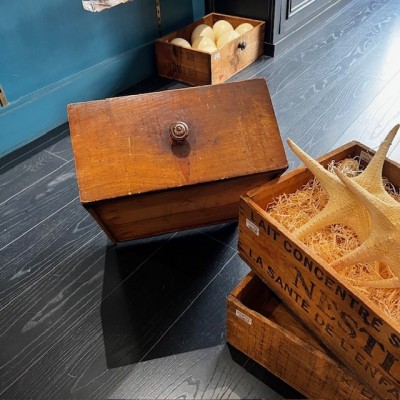
Large antique wooden pharmacy drawer with compartments - From a pharmacy or herbalist's cabinet
4 compartments
Ref A - 39.5x50cm
Can be used as a storage box
Weight: 4.1kg !
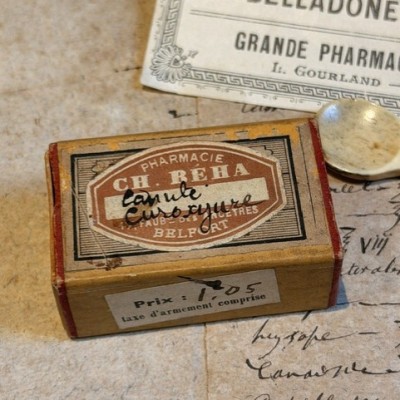
Polished bone cannula - New vintage stock - In its reusable box
Vintage medical device designed to remove pinworms
Marketed between May 1939 and sometime in 1940
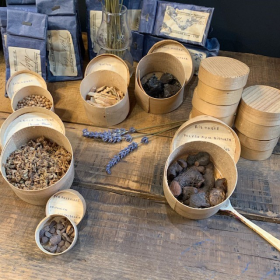
Antique wooden box for herbal medicine - Samples of plants, seeds, bark etc.
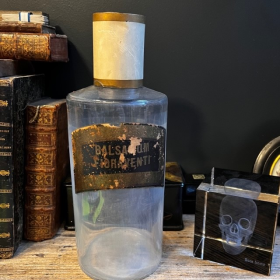
Antique pharmacy bottle from the 19th century
Balsamum Fioravanti - Balm of Fioravanti
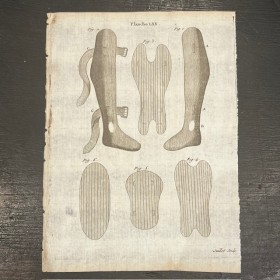
Antique surgical board
From Benjamin Bell's Complete Course in Surgery, published in 1796
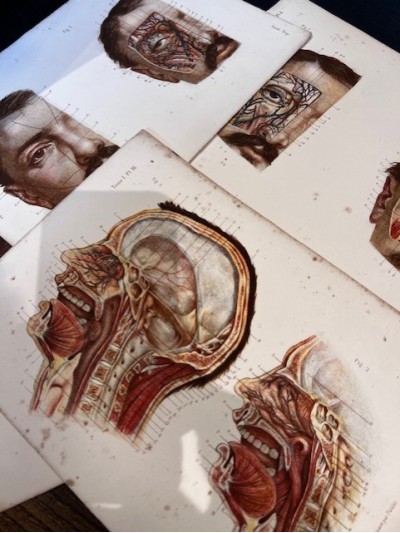
Anatomical chart by Paulet and Sarazin
From the Traité d'anatomie topographique (Treatise on topographical anatomy)
Published in 1867-1870
Chromolithography
You buy 1 plate, not the whole set
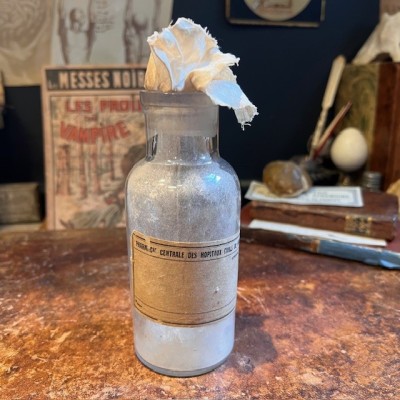
Central Pharmacy of the Civil Hospitals of Paris
Antique pharmacy bottle
Apothecary
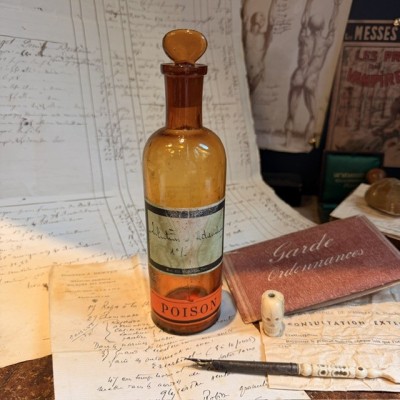
Adrenaline Solution at 1‰
Antique pharmacy bottle
Label leftovers: TO BE SEPARATED and POISON label
This means that this bottle had to be kept separate from the others because it was dangerous - POISON
EMPTY
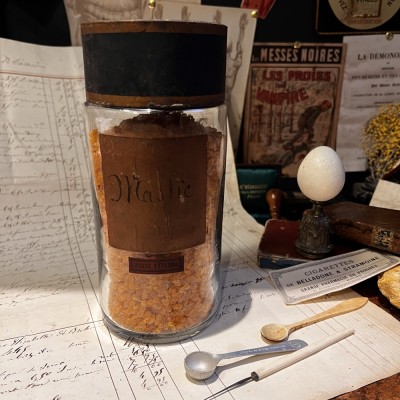
Mastic of Chios
Antique pharmacy bottle - Wide-mouth apothecary jar.
19th-century mouth-blown glass
There is still some product left inside
A fascinating artifact from the history of pharmacology
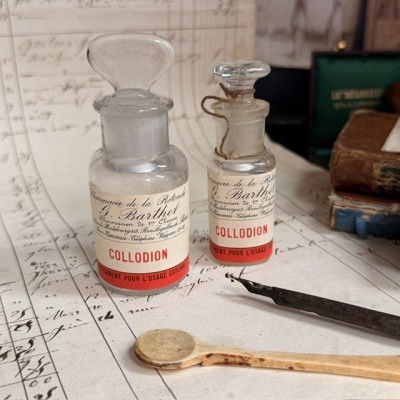
Collodion
Used as a liquid dressing
Antique pharmacy bottle
EMPTY
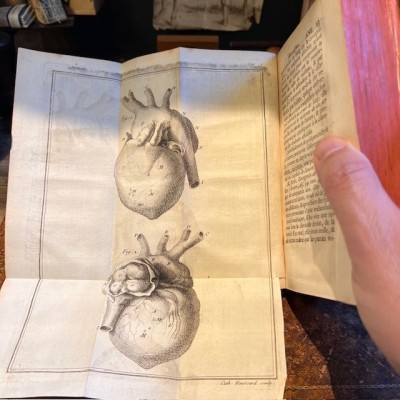
Bibliothèque Choisie de Médecine - Volume 6
Selected Library of Medicine
By François PLANQUE - 1749
Complete original edition with 5 fold-out plates
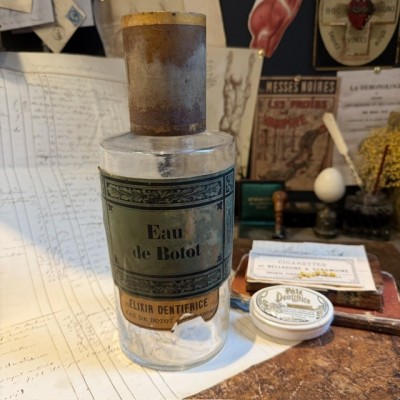
Eau de Botot - Tooth-cleansing Elixir
CODEX 1884
Antique 19th-century pharmacy bottle
EMPTY
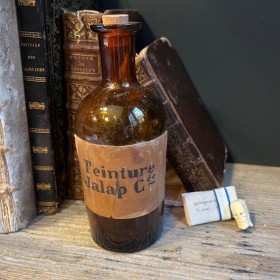
Tincture of Jalap Compound also known as German brandy
A purgative powder is extracted from the Jalap plant.
Antique pharmacy bottle
Apothecary vial
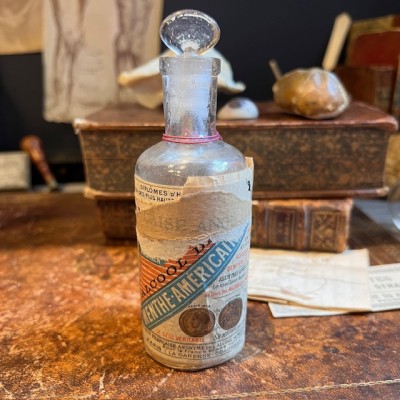
American mint alcohol
Antique pharmacy bottle
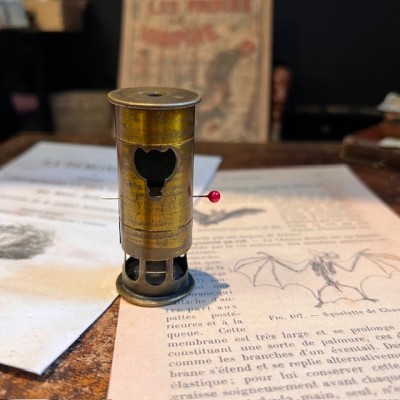
Pocket microscope
Floroscope - Insectoscope in brass
1850's - 1930's
Mercury Chalk – Treatment for Syphilis
Antique amber glass bottle, with a boxwood and cork stopper.
Handwritten label, pen inscription ‘Mercurial Chalk’, neat calligraphy with its thick and thin strokes.
Bottom band ‘TO BE SEPARATED’, instructing the pharmacist to store it in the cabinet for toxic substances, the famous poison cabinet.
It comes from the former cellar-laboratory of a Parisian pharmacy. The bottles had not been moved from the shelves since the late 1950s. The cellar had served as a medical analysis laboratory and a laboratory for the pharmacy’s compounded preparations from 1900 until around 1950.
Period: Judging by the handwriting, late 19th century
EMPTY