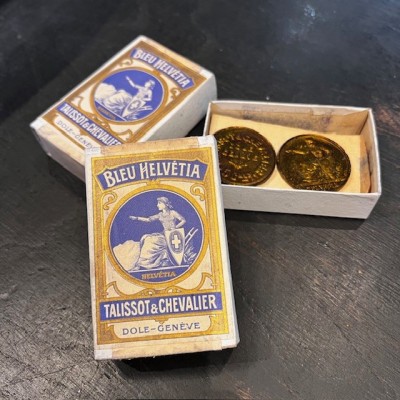

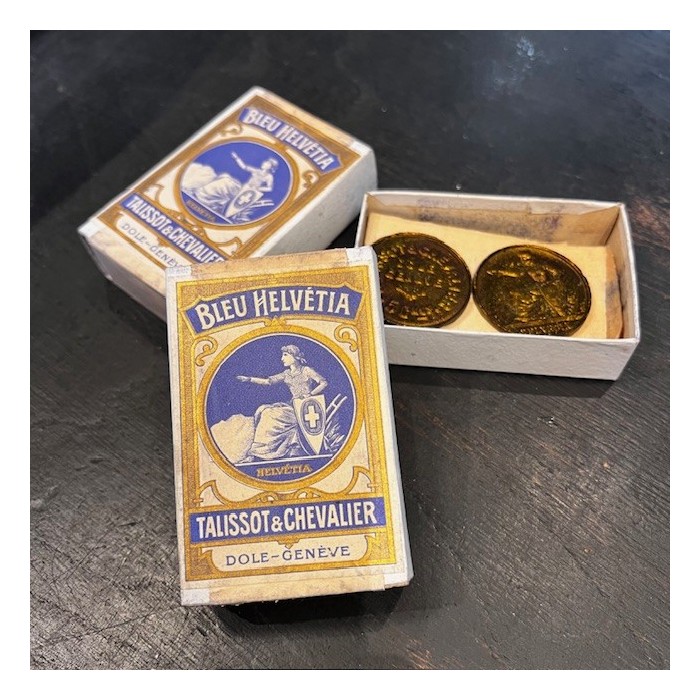
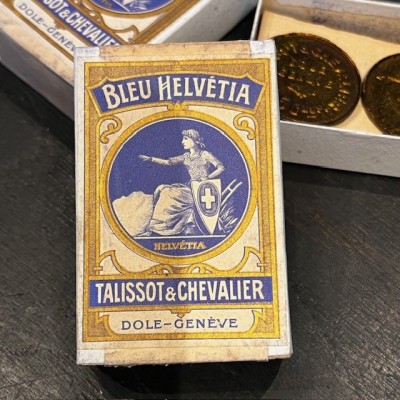
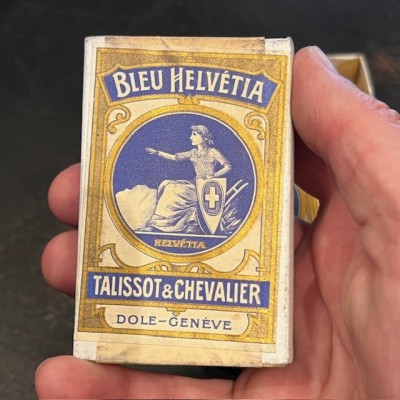
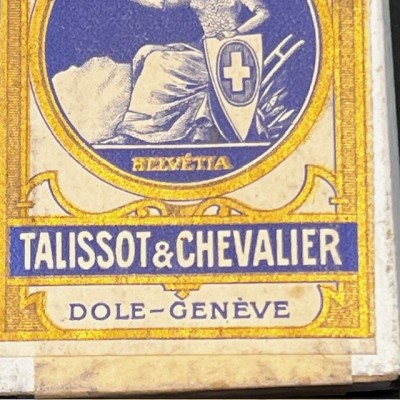
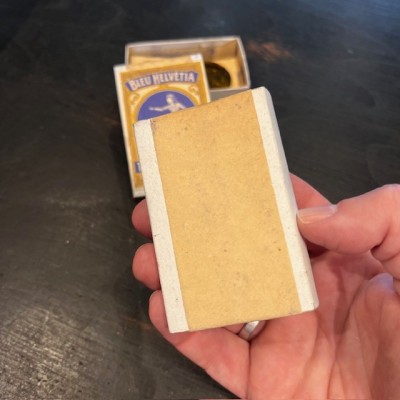
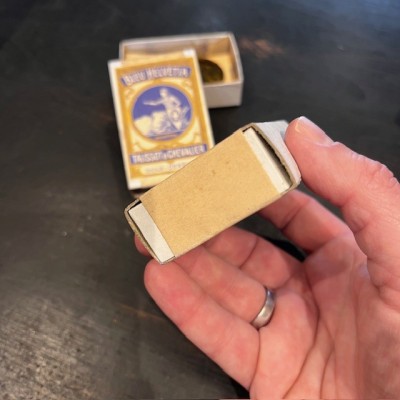
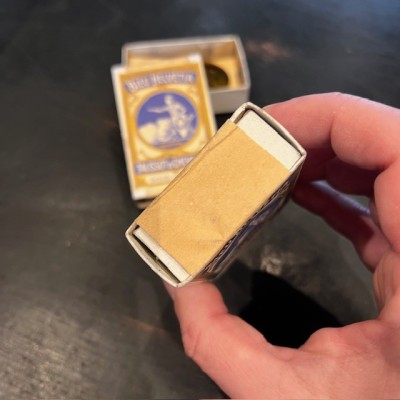
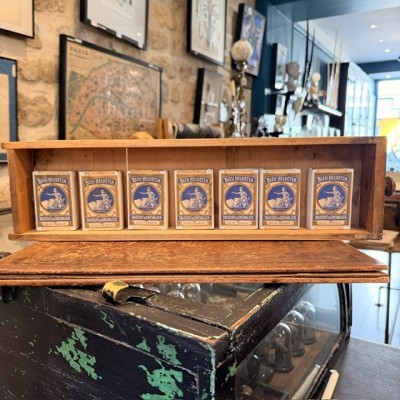
Antique Laundry blue box - Helvetia Blue from Talissot & Chevalier in Dôle and Geneva
Period: 1890-1905
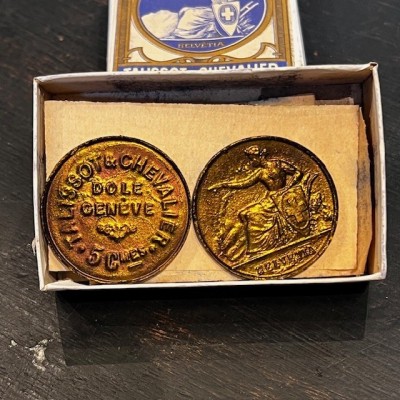
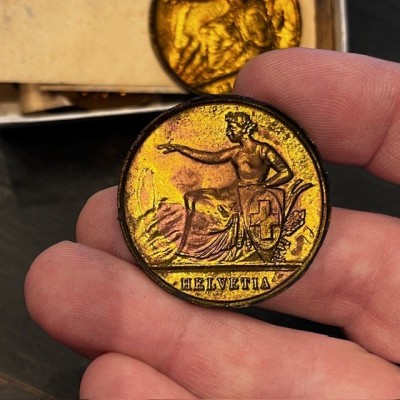
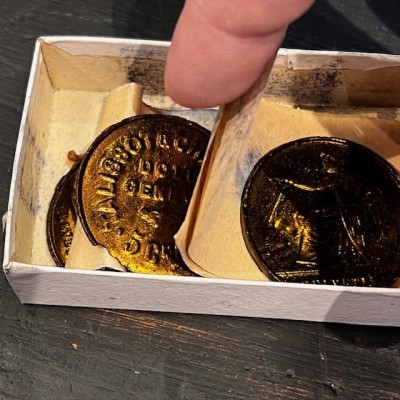
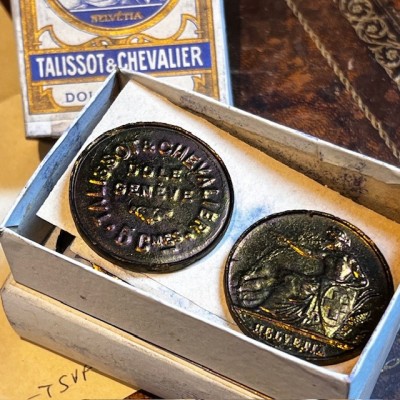
Box containing 6 gold-plated “coins” made of blue wash, resembling the iconography of Swiss coins and medals from the late 19th and early 20th centuries.
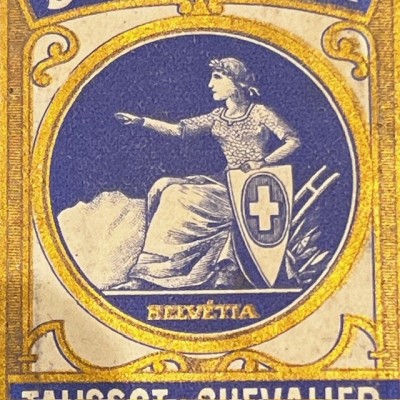
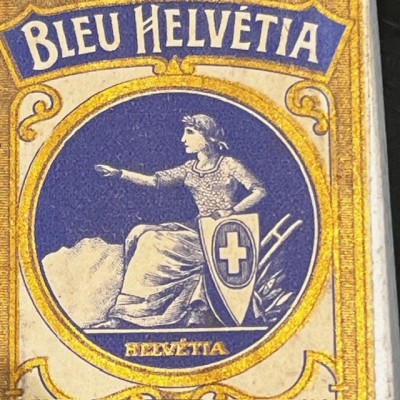
Beautiful blue and gold illustration on the box.
Your box will be sealed: never opened in 120 years
UNOBTAINABLE
Antique Laundry blue box - Helvetia Blue from Talissot & Chevalier in Dôle and Geneva
Period: 1890-1905
Also known as Guimet Blue (its inventor, or washing blue, azur blue, etc.)
Box containing six gold-colored pieces of blue dye for bleaching laundry, resembling the iconography of Swiss coins and medals from the late 19th and early 20th centuries.
Your box will be sealed: never opened in 120 years
At a time when laundry was done by hand and then in a washing machine, it was sometimes difficult to achieve perfect whiteness. It was noticed that a very light blue dye could revive the whiteness of the laundry.
This is how azure blue or laundry blue was born.
In 1828, a chemist from Lyon, Jean-Baptiste Guimet, invented artificial ultramarine blue. This invention reduced the manufacturing cost tenfold, allowing for widespread use in France and also for export. This made Guimet a fortune, and he left us the superb Guimet Museum of Asian Art in Paris! The English also called it “Paris blue,” for example.
It was often sold in the form of blue balls in a box.
But here we are dealing with a true work of art, if I may say so.
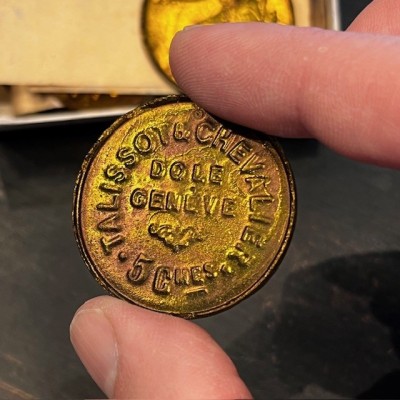
The blue was compressed into the shape of a 5-centime coin and bronzed: the manufacturer compressed it with bronze or brass powder to give the illusion of a real coin! The blue color shows through the gilding.
At the end of the 19th century, there was a desire to ennoble industrial products by giving them the appearance of precious objects, hence the imitation of coins here.
Very aesthetic but also practical, as it prevents the blue powder from staining your fingers when you pick it up.
The product was extremely well designed and crafted for a simple blue washing tablet!
These coins are impossible to find today.
Beautiful blue and gold illustration on the box
Box dimensions: 8x5cm Coin diameter: 3.5cm
UNOBTAINABLE
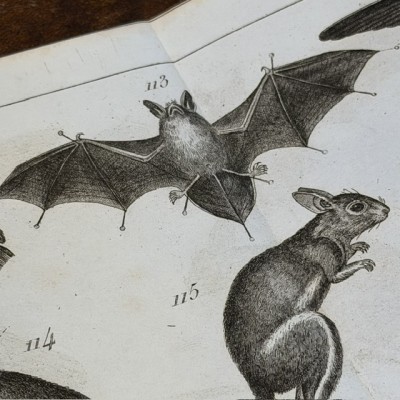
Manual of the Naturalist Preparer followed by a Treaty of Embalmings
by BOITARD - Book of 1853
5 fold-out plates at the end of the volume with beautiful engravings
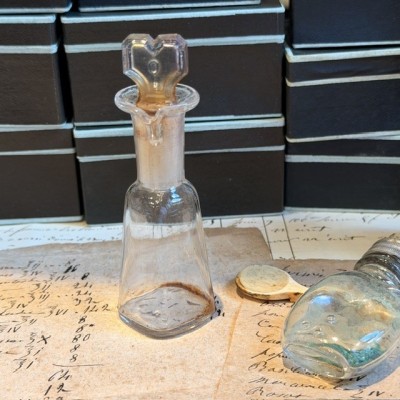
Square Section Dropper Bottle
Antique pharmacy bottle - 1920-30's
Glass stopper honed in the shape of a heart for better grip
EMPTY
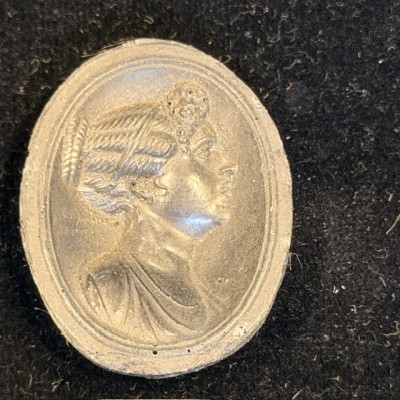
Antique intaglio and cameo print from the Grand Tour of the 19th century
In Gray Sulfur
True testimony of the Grand Tour carried out by the aristocrats in the 19th century
Profiles in the antique style, mythological scenes or Greco-Roman deities
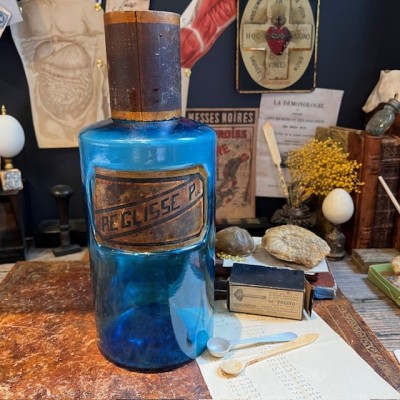
Poudre de réglisse - Licorice powder
Large cobalt blue glass pharmacy bottle - Apothecary - Shouldered - H28cm - 19th century
Shouldered apothecary bottle - Antique pharmacy bottle
Mouth-blown glass - Cobalt blue color tinted throughout
This large-capacity jar was a storage jar intended for stockpiling
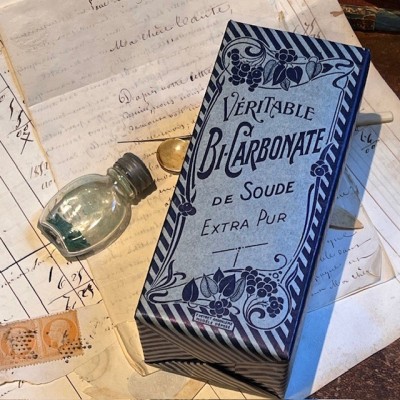
Bi-Carbonate de Soude - Sodium bicarbonate
Antique cardboard pharmacy box
Beautiful typography typical of the Belle Époque: circa 1910-1920
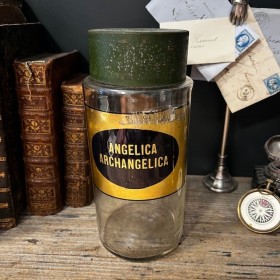
Angelica Archangelica
Pharmacy jar - Herbalism - Apothecary bottle
Late 19th century, early 20th century
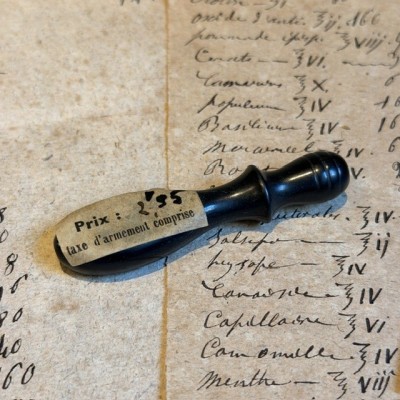
Ebonite cannula tip
Tips for enema or medical irrigation cannulas. New Old Stock
Marketed between May 1939 and sometime in 1940
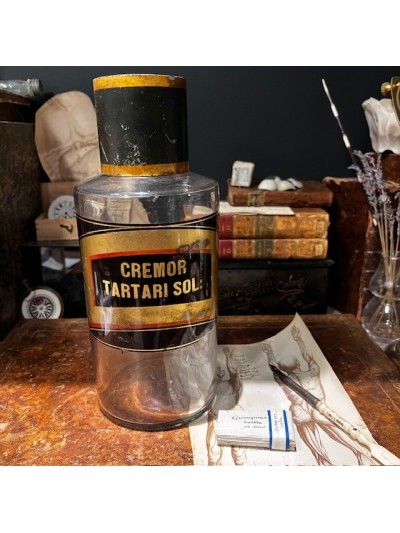
Cremor tartari sol - Cream of tartar
Potassium bitartrate
Pharmacy jar - Herbalism - Apothecary bottle
Late 19th century
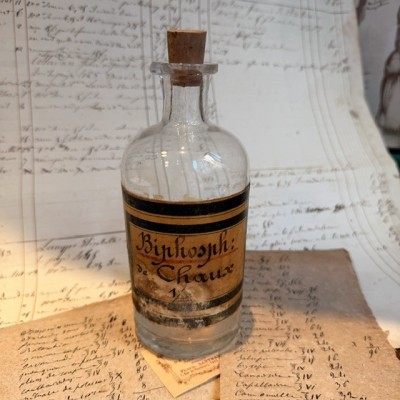
Biphosphate de Chaux
Antique pharmacy bottle
EMPTY
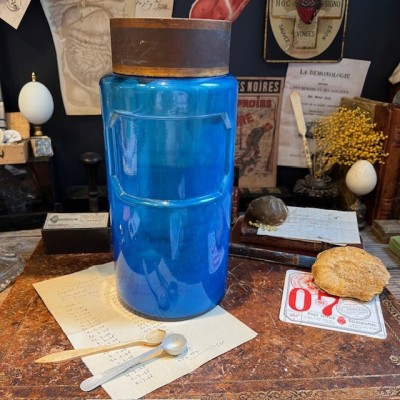
Cobalt blue glass pharmacy jar - Apothecary - Wide neck - H26cm - 19th
Apothecary jar with wide opening. Antique pharmacy bottle
Mouth-blown glass - Cobalt blue color tinted throughout
This large-capacity jar was a storage jar intended for stockpiling
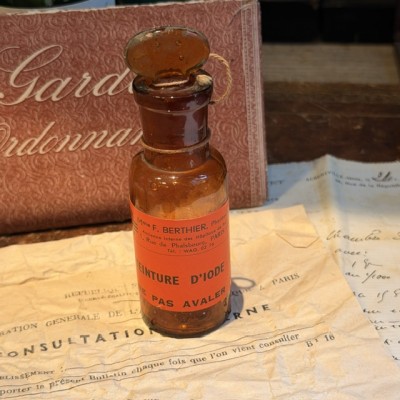
Iodine dye
Antique pharmacy bottle
With the inscription Teinture d'Iode molded in glass
EMPTY
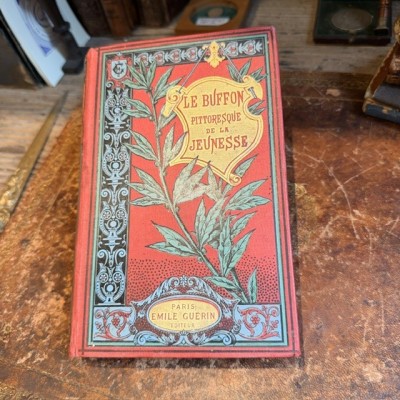
Le Buffon Pittoresque de la Jeunesse ou Tableaux Instructifs et Amusants de l'Histoire des Animaux
Publisher's red, green, and gold polychrome cloth binding by Lefèvre & Guérin - 1885/1895
Illustrated with in-text vignettes and full-page plates featuring animal combats, hunting, and expeditions.
Archival document: Includes the original manuscript school prize certificate dated August 9, 1900.
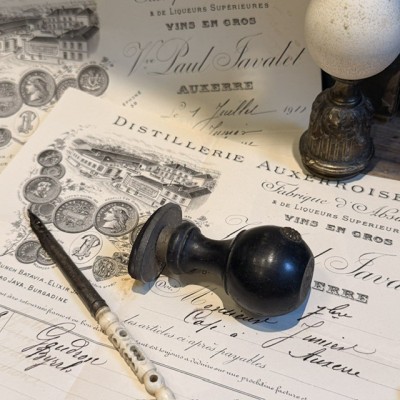
Antique manual commercial stamp
The rubber sole engraved in relief indicates: "Buirette-Gaulard Fils - Roubaix".
Sturdy metal frame and ergonomic handle made from turned blackened wood
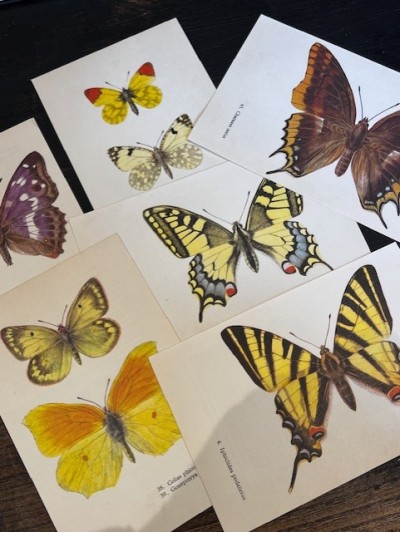
Butterfly - Natural History color plate
Entomology
You buy 1 plate, not the whole set
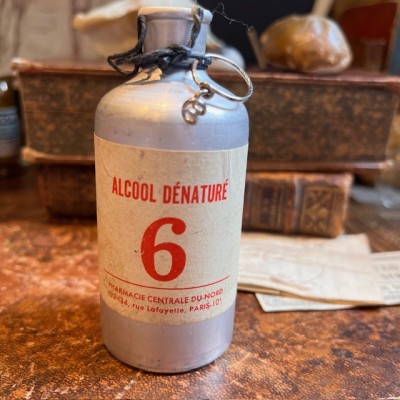
Alcool dénaturé - Alcool à brûler
Denatured alcohol - Methylated spirits
Antique pharmacy bottle - Apothecary
Empty
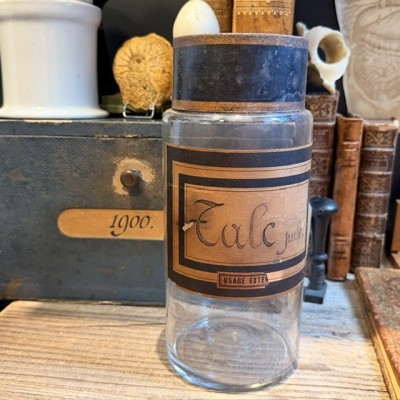
Talc powder
Pharmacy jar - Herbalism - Apothecary Mouth-blown glass bottle
Late 19th century - Beginning of the 20th
Antique Laundry blue box - Helvetia Blue from Talissot & Chevalier in Dôle and Geneva
Period: 1890-1905
Box containing 6 gold-plated “coins” made of blue wash, resembling the iconography of Swiss coins and medals from the late 19th and early 20th centuries.
Beautiful blue and gold illustration on the box.
Your box will be sealed: never opened in 120 years
UNOBTAINABLE