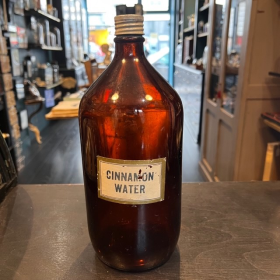

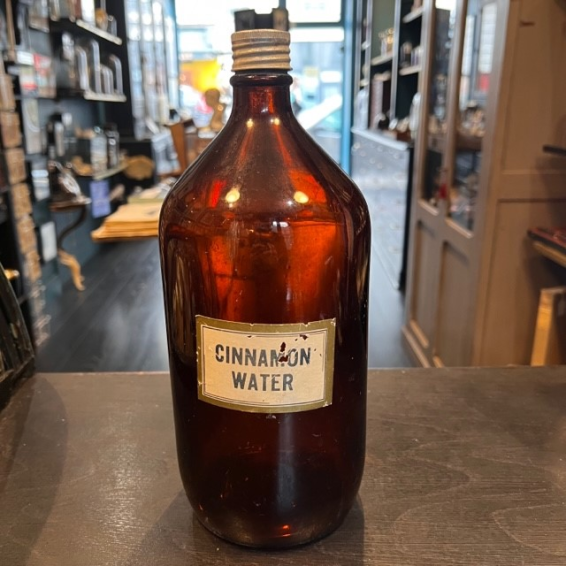
Cinnamon Water
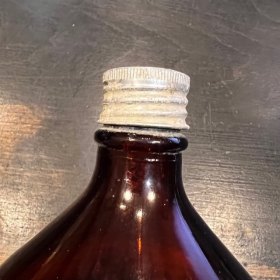
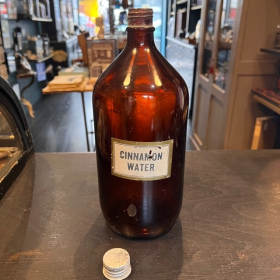
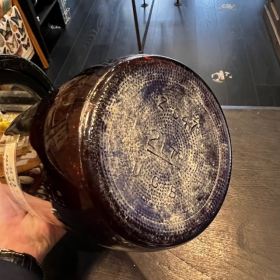
Antique and large brown English pharmacy bottle
Antique English pharmacy bottle - Large bottle
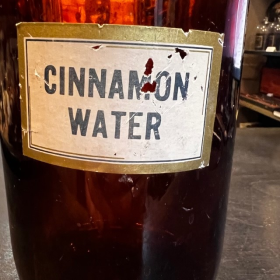
Antique label: Cinnamon Water
Total height with stopper: 28.5cm Diameter: 10.5cm
Broken cork in the neck
EMPTY
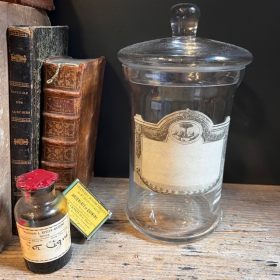
Herbalist's or Pharmacist's jar
Antique blank label of the XVIIIth century
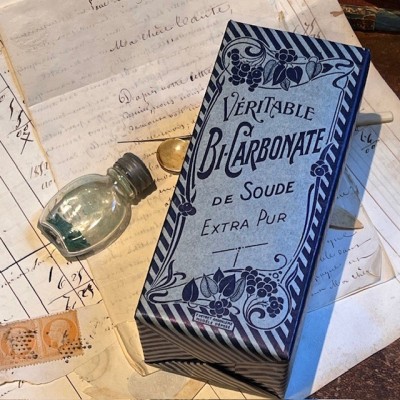
Bi-Carbonate de Soude - Sodium bicarbonate
Antique cardboard pharmacy box
Beautiful typography typical of the Belle Époque: circa 1910-1920
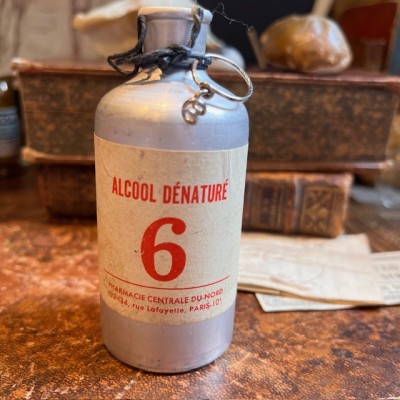
Alcool dénaturé - Alcool à brûler
Denatured alcohol - Methylated spirits
Antique pharmacy bottle - Apothecary
Empty
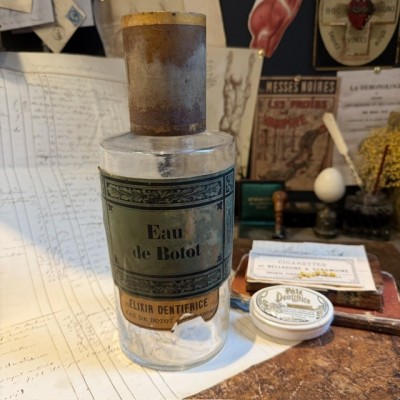
Eau de Botot - Tooth-cleansing Elixir
CODEX 1884
Antique 19th-century pharmacy bottle
EMPTY
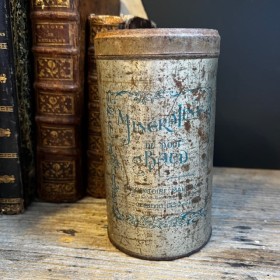
Mineraline by Dr C. Baud
Antique tin pharmacy box
Powder or talcum powder for children's toiletries
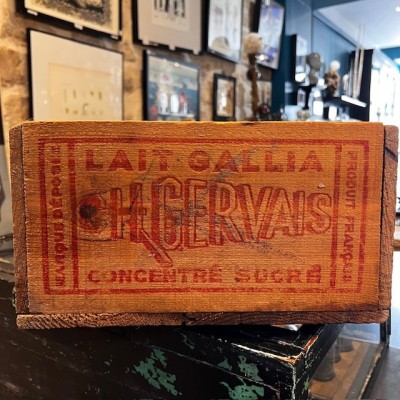
Antique wooden advertising crate for Gallia / Ch. Gervais infant milk concentrate
Found in Parisian cellars that served as laboratories and storage rooms for pharmacists preparing their masterful concoctions from 1900 to 1950.
It was used to store products, glass bottles, etc.
Period: Circa 1947–1955
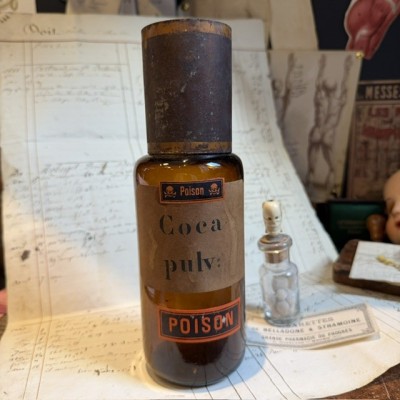
Antique apothecary bottle – Coca powder – Late 19th century/Early 20th century
POISON
Coca powder is the source of cocaine, which was the first effective local anaesthetic used in surgery and dentistry.
SOLD EMPTY
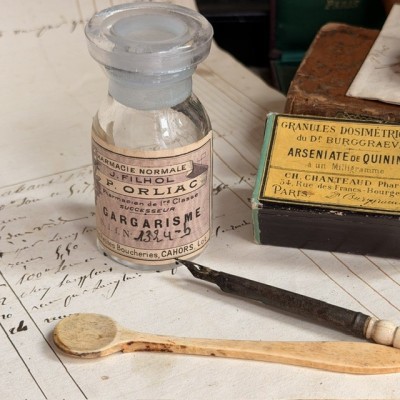
Gargle
Antique pharmacy bottle
EMPTY
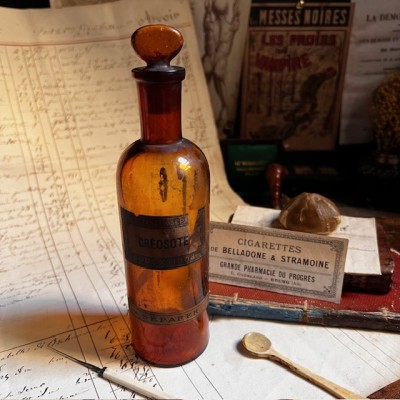
Créosote
Antique pharmacy bottle
Green label: SUBSTANCE TO BE SEPARATED - CODEX 1908
This means that this bottle had to be kept separate from the others because it was dangerous in high doses
EMPTY

Racine de Ratanhia - Para Rhatany
Pharmacy jar - Herbalism - Apothecary bottle
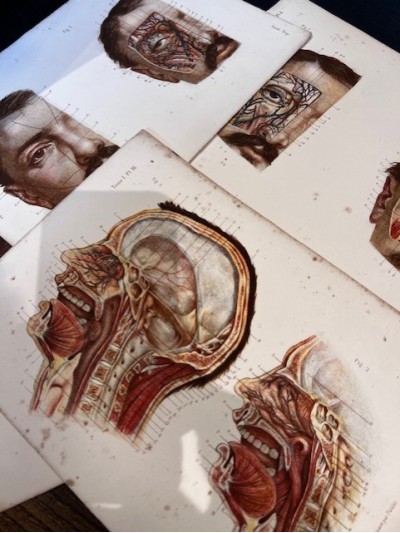
Anatomical chart by Paulet and Sarazin
From the Traité d'anatomie topographique (Treatise on topographical anatomy)
Published in 1867-1870
Chromolithography
You buy 1 plate, not the whole set
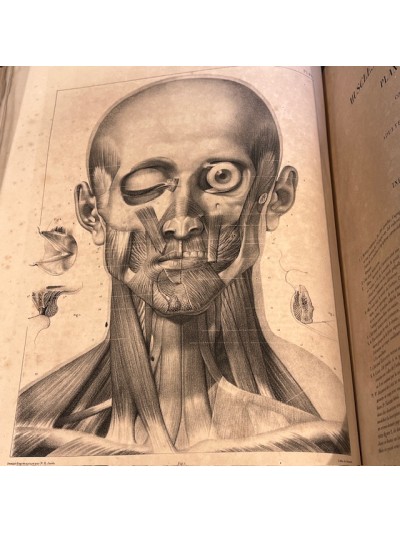
Anatomie de L'Homme - 1831
Anatomy of Man
Volume 2 with its black and white Atlas - 99 lithography
By Dr Bourgery and the illustrator Jacob
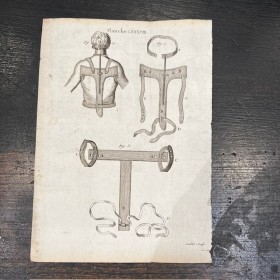
Antique surgical board
From Benjamin Bell's Complete Course in Surgery, published in 1796

Sparteine sulphate
Used as a tonic for nervous syndromes at the very beginning of the 20th century, sparteine was also used to facilitate morphine withdrawal.
Antique pharmacy bottle
Apothecary vial
Some product left inside
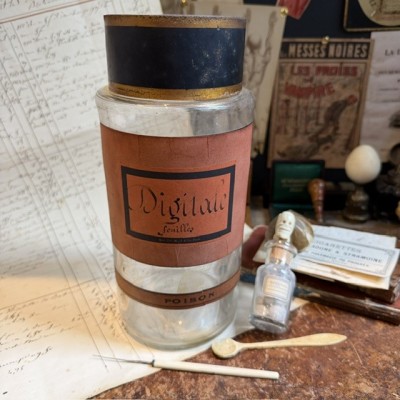
Foxglove leaves - POISON
Antique pharmacy bottle - 19th-century mouth-blown glass
Red POISON label
Signaling to the pharmacist that it is imperative to keep apart the other substances in the cabinet of toxic substances, the famous poison cabinet.
A fascinating testimony to pharmacology
It comes from an old cellar-laboratory in a Parisian pharmacy. The bottles had not moved since the late 1950s on the shelves. The cellar had served as a laboratory for medical analyses and a laboratory for magistral preparations of the pharmacy from 1900 until around 1950.
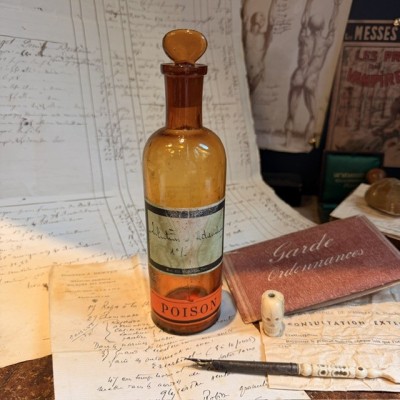
Adrenaline Solution at 1‰
Antique pharmacy bottle
Label leftovers: TO BE SEPARATED and POISON label
This means that this bottle had to be kept separate from the others because it was dangerous - POISON
EMPTY
Cinnamon Water
Antique and large brown English pharmacy bottle