
- New
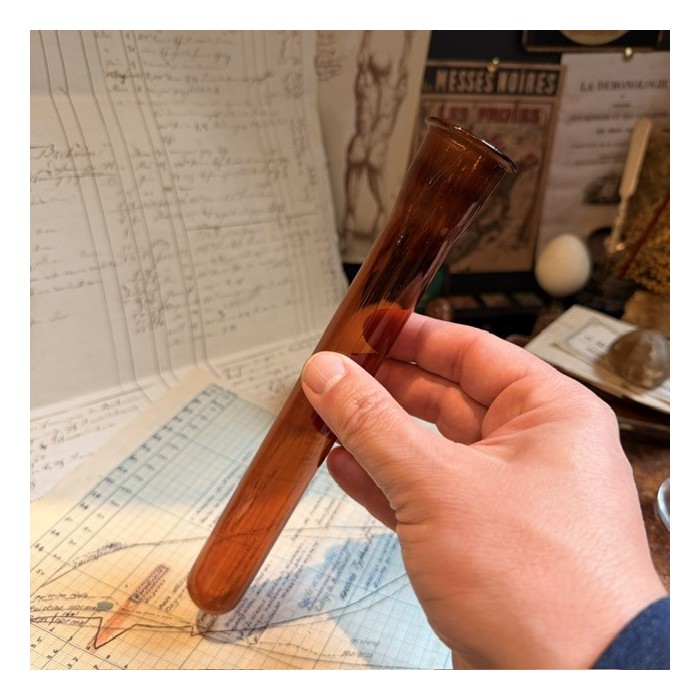
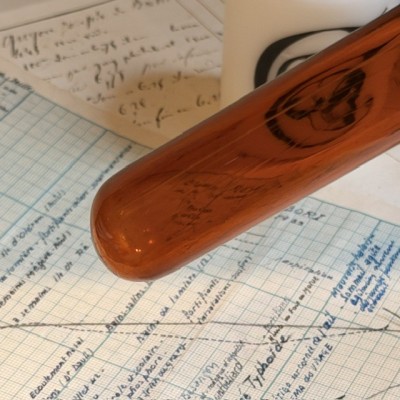
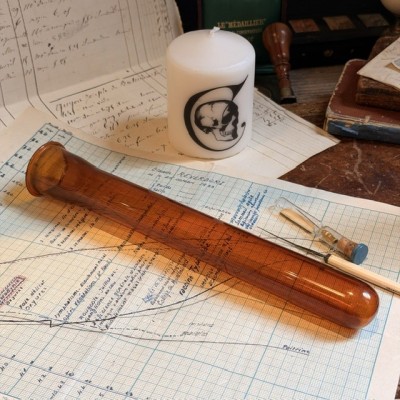
Large antique laboratory test tube made of actinic glass (brown glass) - Pharmacy
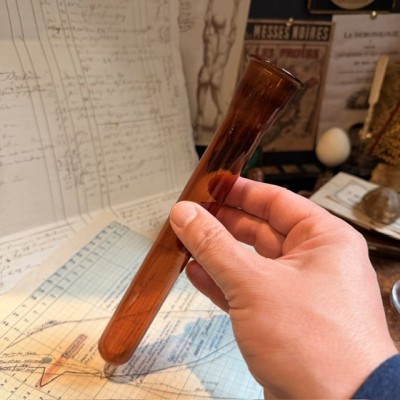
Its unusual dimensions make it a model with a beautiful presence
Large antique laboratory test tube made of actinic glass (brown glass) - Pharmacy
Period: Early 20th century
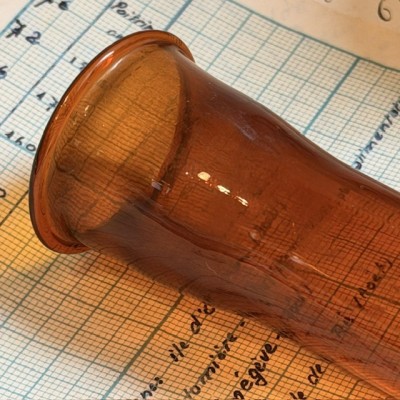
Large laboratory test tube made of brown blown glass, called actinic glass.
This actinic glassware was specifically tinted brown throughout to absorb ultraviolet rays and allow the pharmacist to protect and preserve highly photosensitive substances that would degrade in direct light.
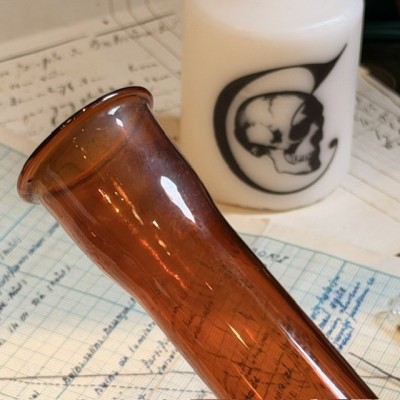
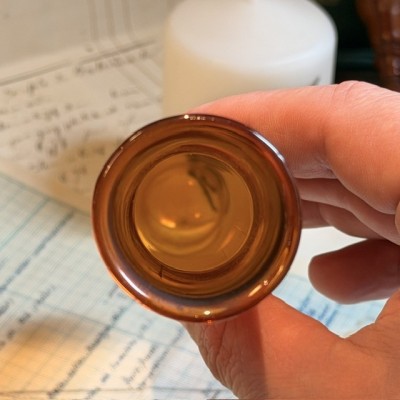
The tube has a well-marked flared lip and ends with a round hemispherical bottom.
Its unusual dimensions make it a model of a beautiful presence.
Length: 21cm - Diameter at the entrance: 3.5cm
Comes from a former basement-laboratory of a Parisian pharmacy. The bottles and other utensils had not moved from the shelves since the late 1950s. The basement had served as a medical analysis laboratory and a laboratory for the pharmacy's magisterial preparations from 1900 until around 1950.
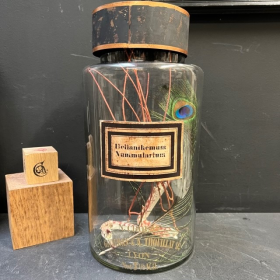
Specimen jar in blown glass - Inverted apothecary jar - Seed vase
Size S
A vintage laboratory or conservatory container designed for the display and preservation of biological or botanical specimens
Dropper bottle
Antique pharmacy bottle - 1920-30's
Remains of a label from the Parc du Monceau Pharmacy
Is there any bluish residue left inside, and the bottle may have served as an inkwell at one time?
EMPTY
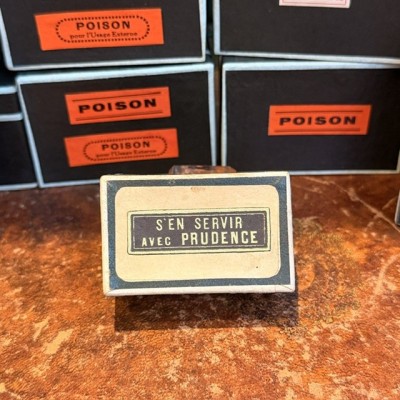
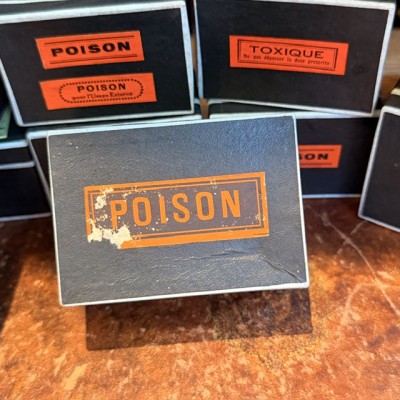
Antique labels in a pharmacy box for cures made of canvas cardboard
Poison label - Ref B
The pharmacist used his boxes of medicine to put away the labels he would then put on the bottles that he would resell to his customers.
Calcium hypophosphite
Antique amber glass bottle, with a boxwood and cork stopper.
Green label: SUBSTANCE TO BE STORED SEPARATELY – CODEX 1908
Handwritten label, pen inscription, neat calligraphy, with its thick and thin strokes.
Indicating to the pharmacist that it must be stored separately from other substances in the cabinet for toxic substances, the famous ‘poison cabinet’.
It comes from the former cellar-laboratory of a Parisian pharmacy. The bottles had not been moved from the shelves since the late 1950s. The cellar had served as a medical analysis laboratory and a laboratory for the pharmacy’s compounded preparations from 1900 until around 1950.
EMPTY
Bibliothèque Choisie de Médecine - Volume 16
Selected Library of Medicine
By François PLANQUE - 1761
Complete original edition with 10 fold-out plates
Cremor tartari sol - Cream of tartar
Potassium bitartrate
Pharmacy jar - Herbalism - Apothecary bottle
Late 19th century
Dropper bottle
Antique pharmacy bottle - 1920-30's
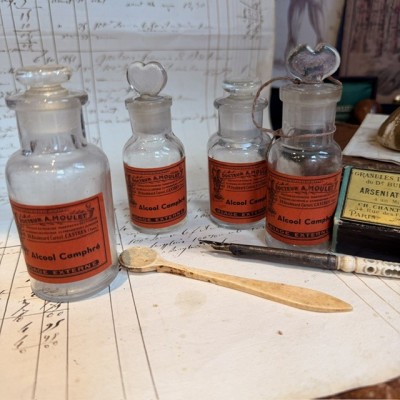
Glass stopper honed in the shape of a heart for better grip
EMPTY
Hypophosphite de Manganèse
Antique pharmacy bottle
Apothecary vial
Catillon Granules – Strophanthin – Containing Ouabain
POISON
Antique tube of pharmaceutical granules – Apothecary
EMPTY
Large antique wooden pharmacy drawer with compartments
6 compartments
Curiosity shelf
Ref C - 48x34.5cm - Thickness 9.5cm
Can be used as a presentation furniture
SOLD EMPTY WITHOUT ACCESSORIES
Lower part of the lower mandible of a horse jaw
Antique model from Maison Auzoux in Paris
Paper-mâché pedagogical model
Model A - 9 months
Poudre de réglisse - Licorice powder
Large cobalt blue glass pharmacy bottle - Apothecary - Shouldered - H28cm - 19th century
Shouldered apothecary bottle - Antique pharmacy bottle
Mouth-blown glass - Cobalt blue color tinted throughout
This large-capacity jar was a storage jar intended for stockpiling
Ebonite cannula tip
Tips for enema or medical irrigation cannulas. New Old Stock
Marketed between May 1939 and sometime in 1940
Bi-Carbonate de Soude - Sodium bicarbonate
Antique cardboard pharmacy box
Beautiful typography typical of the Belle Époque: circa 1910-1920
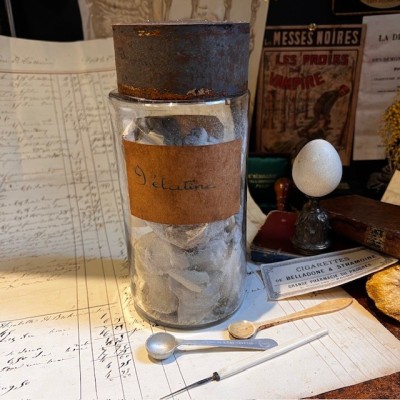
Datura powder
Antique earthenware pot
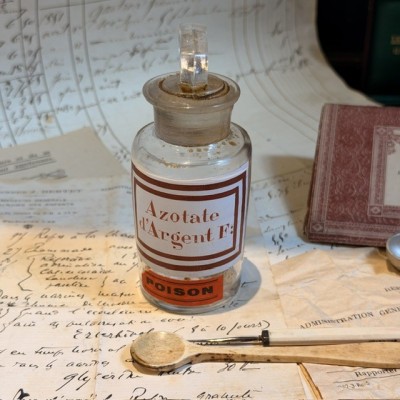
Intended for the exclusive use of pharmacists for making magistral preparations, the jar displays the regulatory labels "TOXIC" and the red banner "POISON".
Indicating to the pharmacist that it must be stored separately from other substances in the cabinet for toxic substances, the famous ‘poison cabinet’.
It comes from the former cellar-laboratory of a Parisian pharmacy. The bottles had not been moved from the shelves since the late 1950s. The cellar had served as a medical analysis laboratory and a laboratory for the pharmacy’s compounded preparations from 1900 until around 1950.
EMPTY
Large antique laboratory test tube made of actinic glass (brown glass) - Pharmacy
Its unusual dimensions make it a model with a beautiful presence