

- New
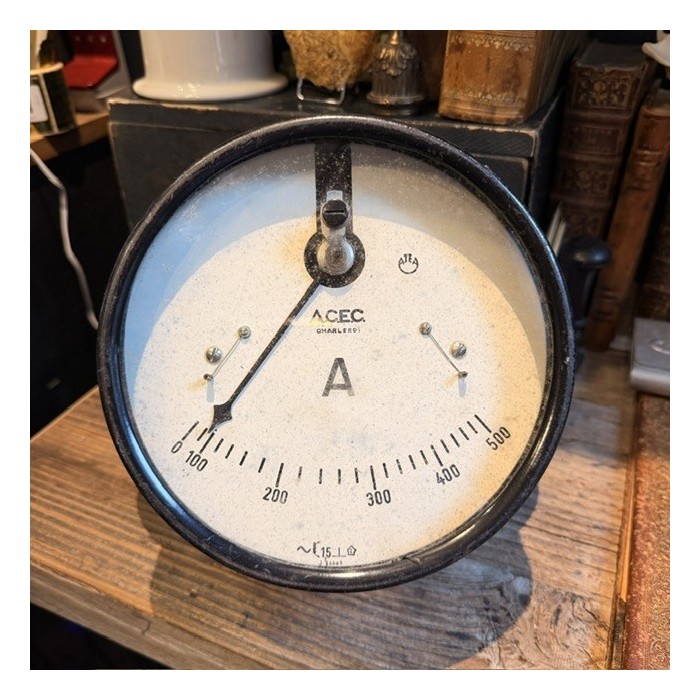
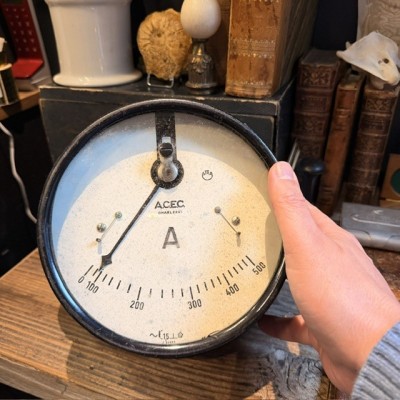
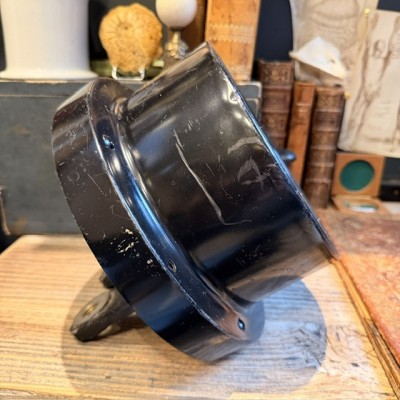
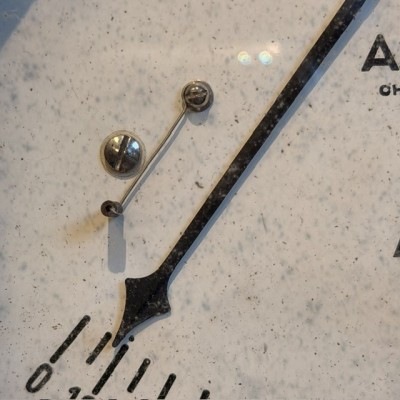
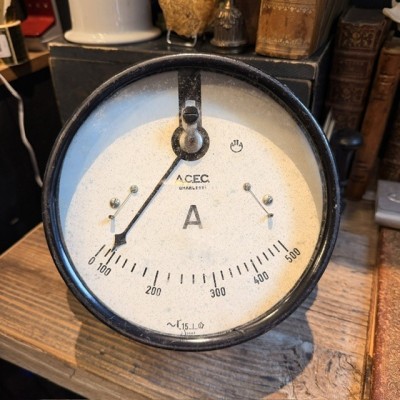
Large ACEC Industrial Ammeter (0–500 A)
Industrial Dial for Vintage Industrial Electrical Panel, circa 1920/1950
Function: Ferromagnetic ammeter with a circular dial that measures high-current alternating current (up to 500 A). It was used to monitor the load drawn by very large power lines or electrical machinery.
Large ACEC Industrial Ammeter (0–500 A)
Industrial dial for vintage industrial electrical panels
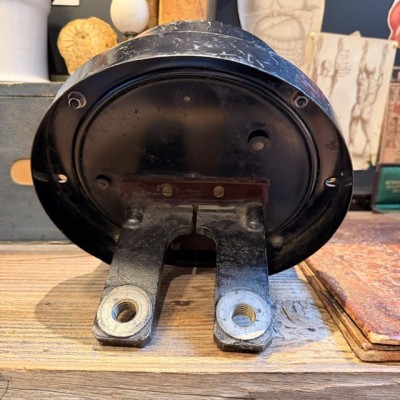
Manufactured in Belgium by Ateliers de Charleroi, it was used in distribution panels at power plants, railway and tram traction substations, blast furnaces, and large metallurgical and textile factories in the first half of the 20th century. Its heavy rear terminals allowed for direct connection to copper busbars.
Function: Ferromagnetic ammeter with a circular dial measuring the current of high-amperage alternating current (up to 500 A). It was used to monitor the load drawn by very large power lines or electrical machinery.
Date: Circa 1920–1950
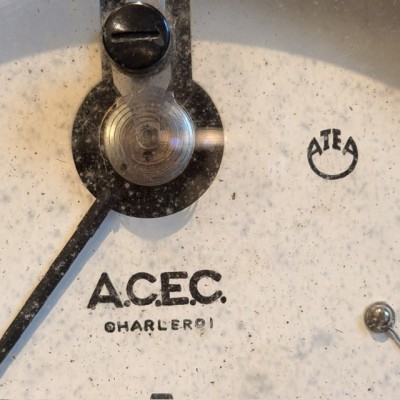
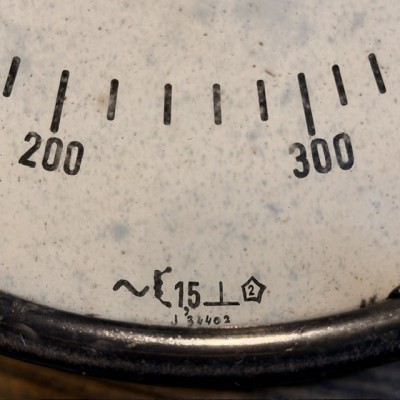
Dial markings: A.C.E.C. CHARLEROI, A (Ampere), ATEA logo, alternating current symbol ~, graduated scale from 0 to 500
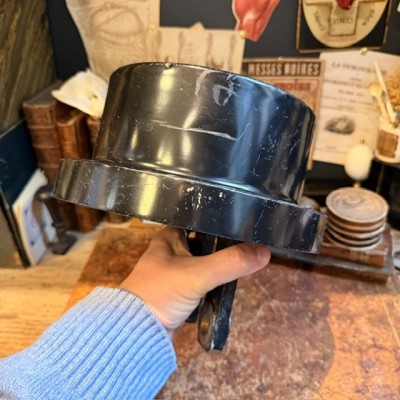
Dimensions & Weight: Dial diameter: 18 cm - Base diameter: 22.5 cm Weight: 4.00 kg
Case Materials: Black-painted cast steel (solid one-piece construction, thick walls, original patina). Imposing rear connection terminals.
Condition: The glass is scratched and shows signs of wear and impact marks on the bezel.

Lower part of the lower mandible of a horse jaw
Antique model from Maison Auzoux in Paris
Paper-mâché pedagogical model
Model A - 9 months
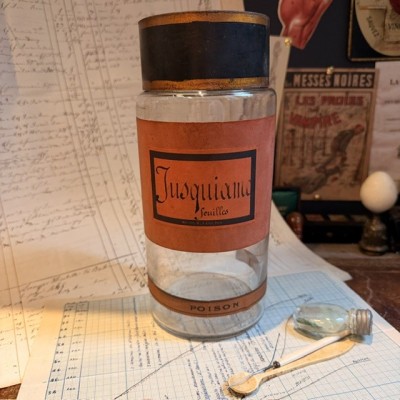
Jusquiame leaves - POISON
Antique pharmacy bottle - Wide-mouth apothecary jar.
19th-century mouth-blown glass
Red POISON label
Signaling to the pharmacist that it is imperative to keep apart the other substances in the cabinet of toxic substances, the famous poison cabinet.
A fascinating testimony to pharmacology
It comes from an old cellar-laboratory in a Parisian pharmacy. The bottles had not moved since the late 1950s on the shelves. The cellar had served as a laboratory for medical analyses and a laboratory for magistral preparations of the pharmacy from 1900 until around 1950.
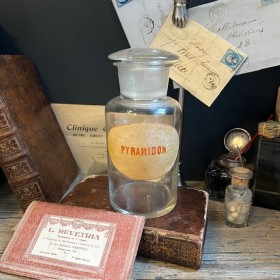
Pyramidon
Antique pharmacy bottle
Apothecary vial
Color pigments have been added to the inside of the jar
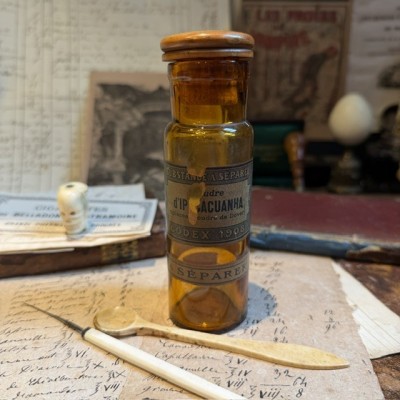
Ipecacuanha Opiate Powder - Dover's Powder
Antique amber glass bottle, with a boxwood and cork stopper.
Green label: SUBSTANCE TO BE STORED SEPARATELY – CODEX 1908
Indicating to the pharmacist that it must be stored separately from other substances in the cabinet for toxic substances, the famous ‘poison cabinet’.
It comes from the former cellar-laboratory of a Parisian pharmacy. The bottles had not been moved from the shelves since the late 1950s. The cellar had served as a medical analysis laboratory and a laboratory for the pharmacy’s compounded preparations from 1900 until around 1950.
EMPTY
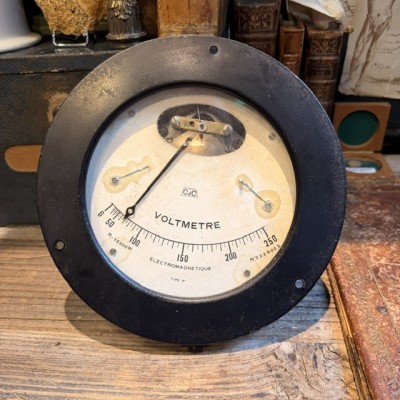
Table CdC voltmeter with apparent mechanism
Dial for vintage industrial electrical panel, circa 1920/1950
Function: Electromagnetic panel voltmeter measuring electrical voltage up to 250 Volts. Manufactured by the Compagnie des Compteurs de Montrouge, it was built into factory control cabinets, municipal transformer stations, public building machinery rooms or onto vintage railway rolling stock. The upper brass skylight reveals the pivot and the return spring of the mechanism.
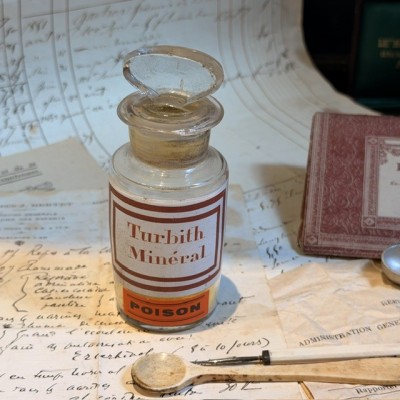
Turbith Minéral - Mercury
Antique pharmacy bottle made of blown glass and enameled painted label.
Red POISON label
Signaling to the pharmacist that it is imperative to keep apart the other substances in the cabinet of toxic substances, the famous poison cabinet.
Dating: 19th century
There is still some product inside but the cap is blocked and does not open.
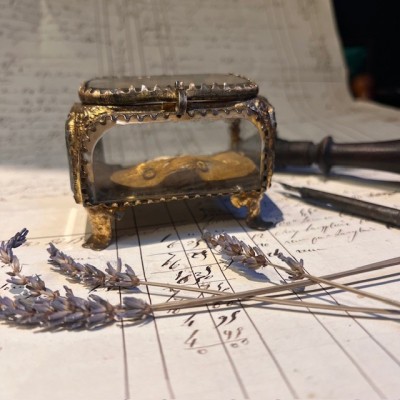
Reliquary box - 19th century
Jewelry box
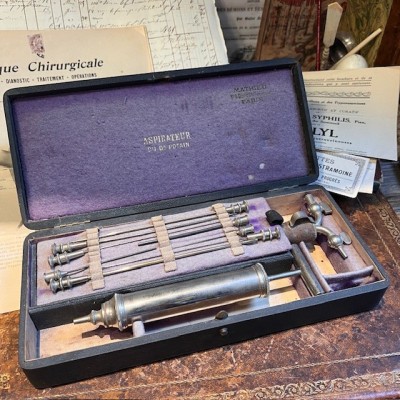
Dr Potain vacuum cleaner in its case
Late 19th century - 1885-1894
Antique medical instrument from manufacturer MATHIEU in Paris
non-functional
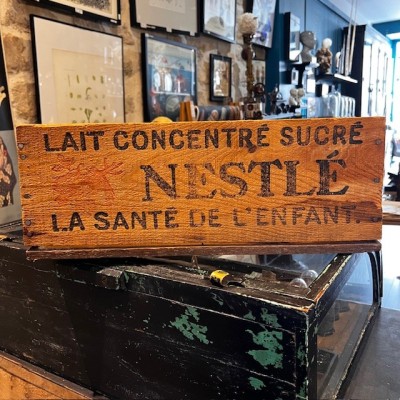
Antique wooden advertising case for Nestlé concentrated infant milk
Found in Parisian cellars that served as laboratories and storage rooms for pharmacists preparing their masterful concoctions from 1900 to 1950.
It was used to store products, glass bottles, etc.
Period: Circa 1910–1930
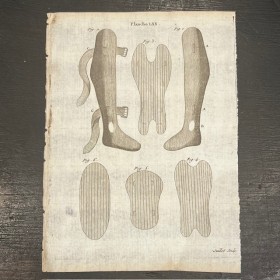
Antique surgical board
From Benjamin Bell's Complete Course in Surgery, published in 1796
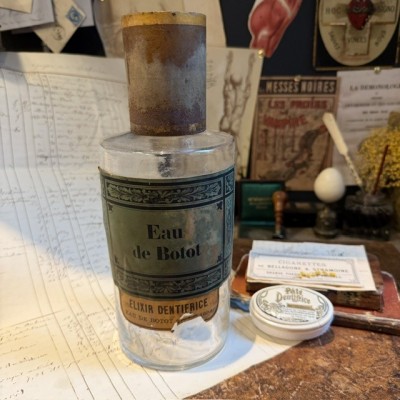
Eau de Botot - Tooth-cleansing Elixir
CODEX 1884
Antique 19th-century pharmacy bottle
EMPTY
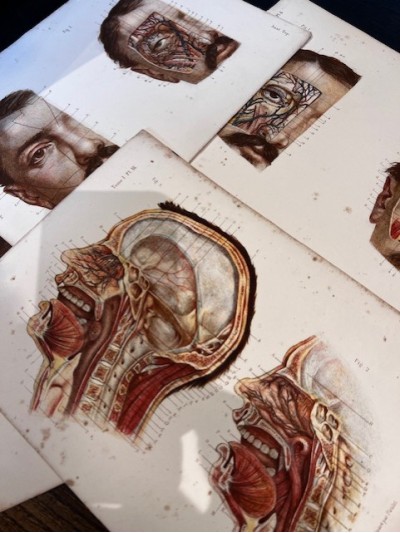
Anatomical chart by Paulet and Sarazin
From the Traité d'anatomie topographique (Treatise on topographical anatomy)
Published in 1867-1870
Chromolithography
You buy 1 plate, not the whole set
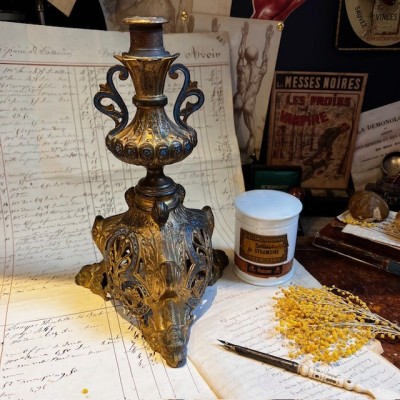
Tripod Torch Holder with Coat of Arms - Napoleon III-era Troubadour style in brass
This style, known as ‘Troubadour style’, reintroduced fantastical animals and medieval imagery into the decorative arts.
19th century
Sold without candle
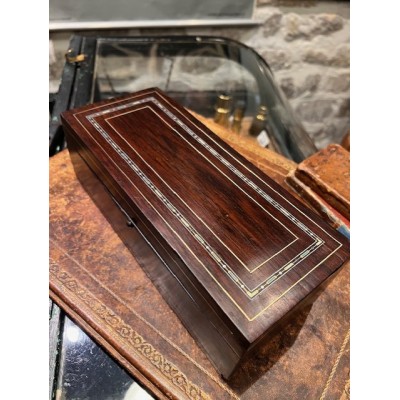
Napoleon III box in rosewood and polychrome marquetry
These boxes were used to store gloves, letters or accessories. This one was probably used to store dominoes, judging by the interior compartments.
A refined decorative piece, typical of 19th-century Parisian lifestyle.
19th century - Period: Napoleon III, circa 1850–1875
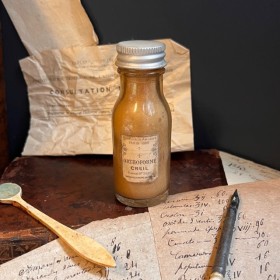
Orthoforme
Antique pharmacy bottle - Droguerie - Apothicaire
Silver medal at Paris 1889
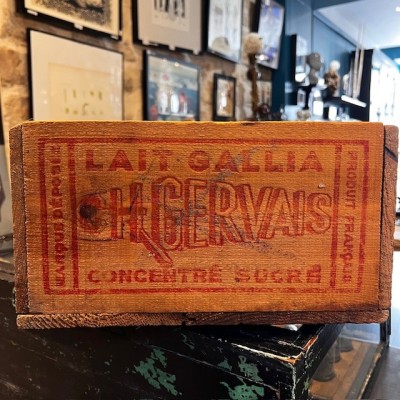
Antique wooden advertising crate for Gallia / Ch. Gervais infant milk concentrate
Found in Parisian cellars that served as laboratories and storage rooms for pharmacists preparing their masterful concoctions from 1900 to 1950.
It was used to store products, glass bottles, etc.
Period: Circa 1947–1955
Large ACEC Industrial Ammeter (0–500 A)
Industrial Dial for Vintage Industrial Electrical Panel, circa 1920/1950
Function: Ferromagnetic ammeter with a circular dial that measures high-current alternating current (up to 500 A). It was used to monitor the load drawn by very large power lines or electrical machinery.