

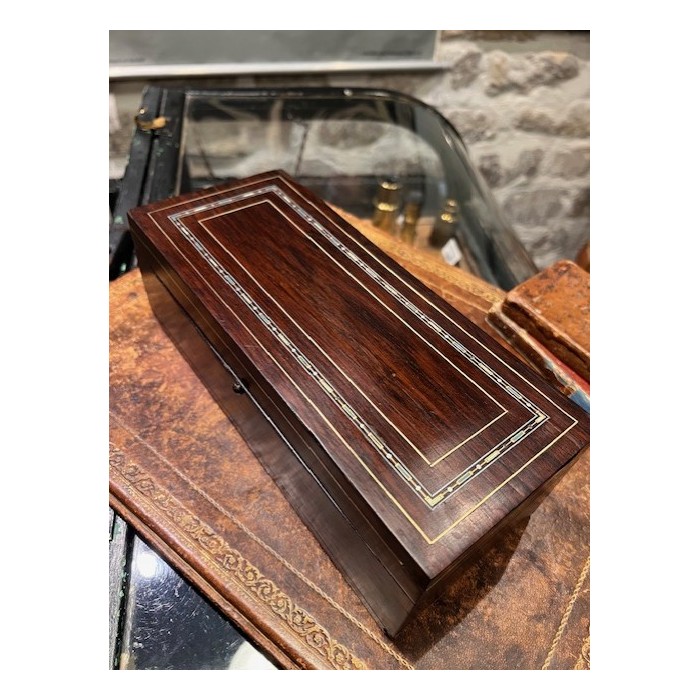
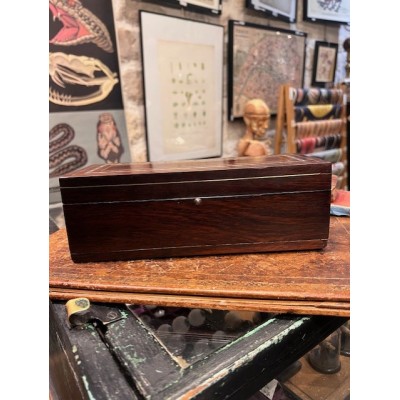
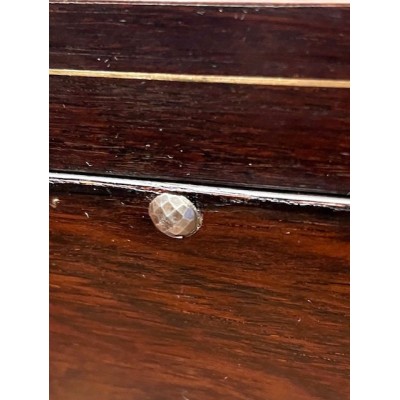
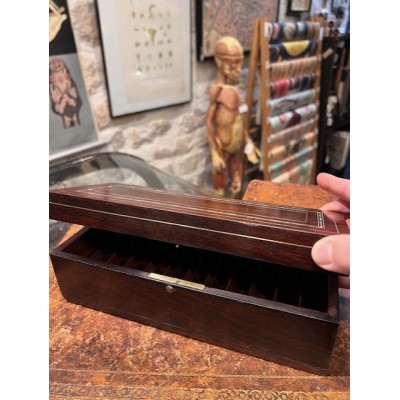
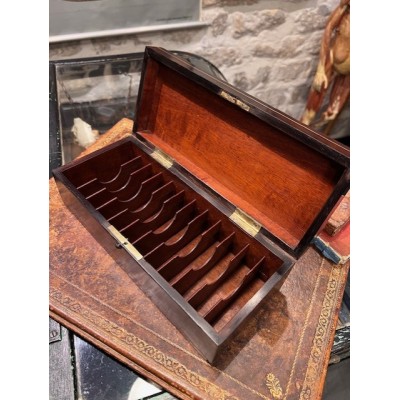
Napoleon III box in rosewood and polychrome marquetry
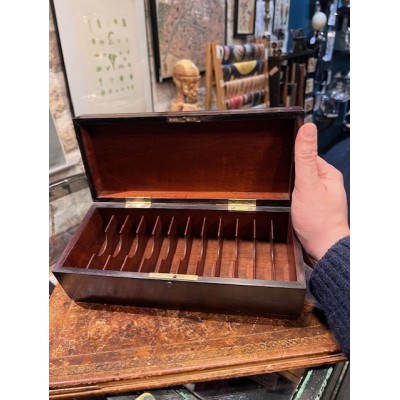
These boxes were used to store gloves, letters or accessories. This one was probably used to store dominoes, judging by the interior compartments.
A refined decorative piece, typical of 19th-century Parisian lifestyle.
19th century - Period: Napoleon III, circa 1850–1875
Napoleon III parquetry and polychrome marquetry salon box
This elegant box dates from the Napoleon III period, circa 1850–1875, the golden age of French decorative arts.
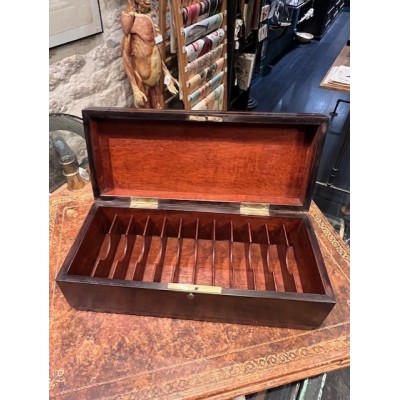
These boxes were used to store gloves, letters or accessories. This box has compartments and could therefore have been used as a domino box.
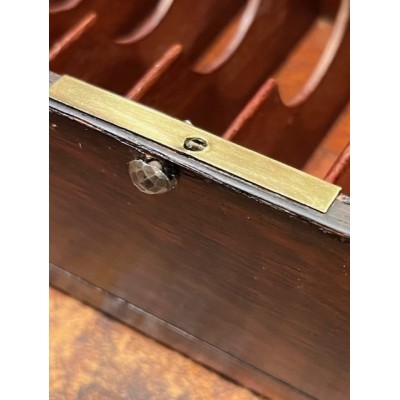
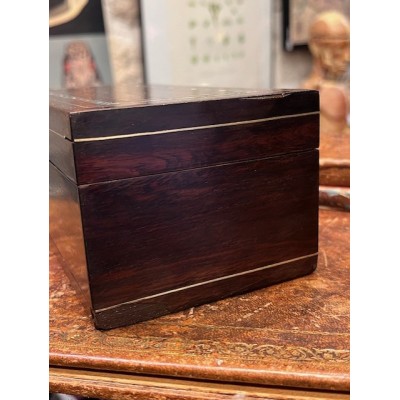
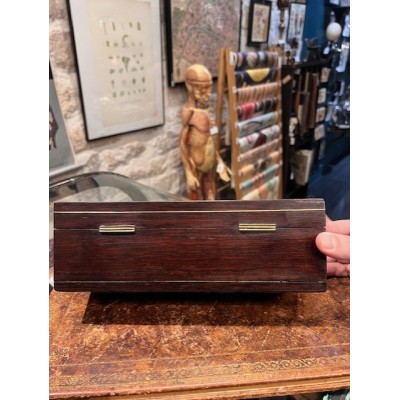
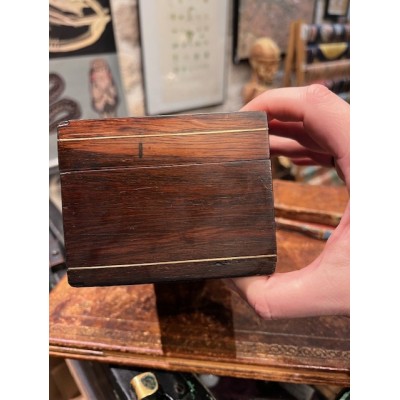
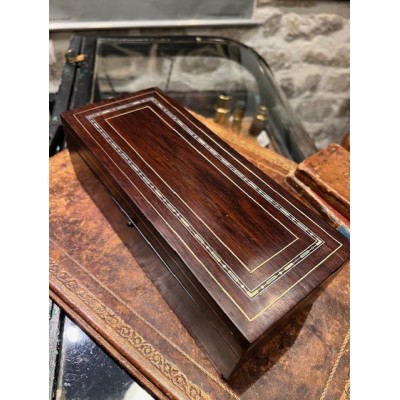
The exterior is made of rosewood, a precious wood prized in the 19th century for its deep colour and refined grain.
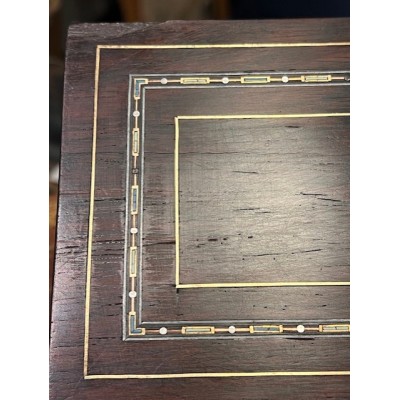
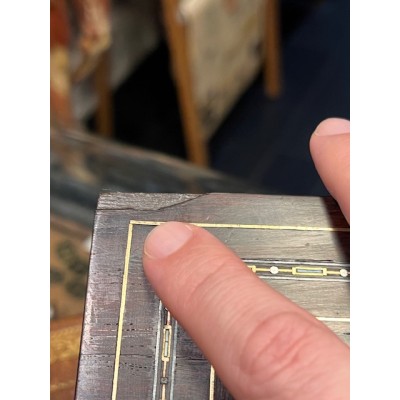
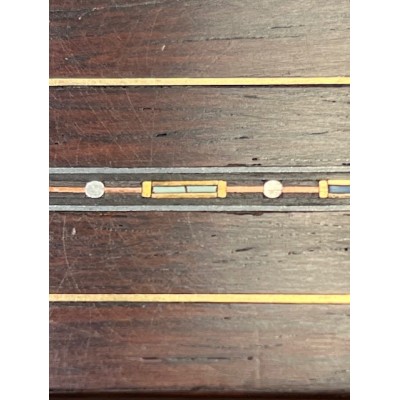
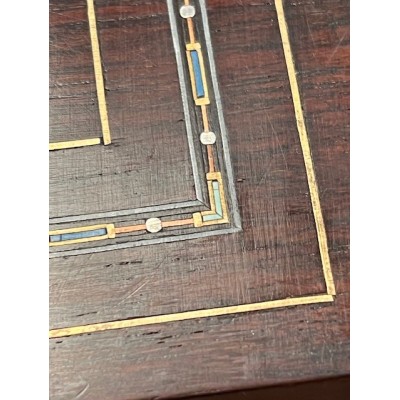
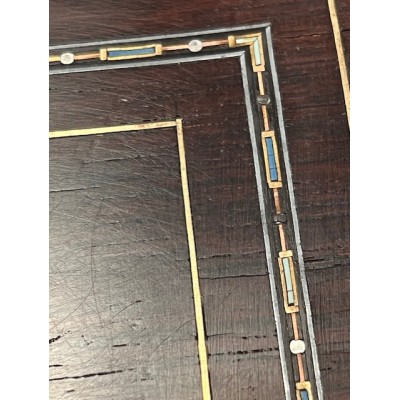
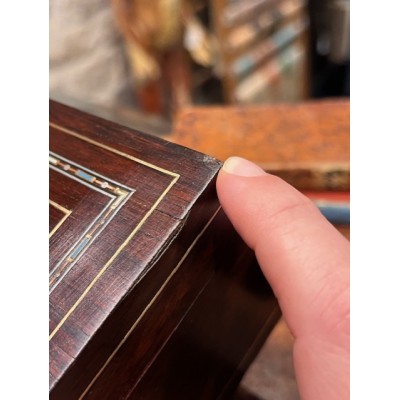
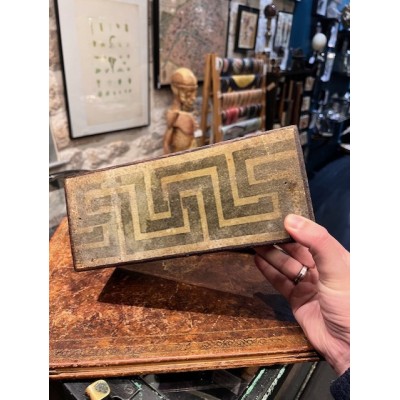
The lid is decorated with particularly refined geometric marquetry, composed of a delicate copper filet framing alternating inlays of blue glass, polished bone rectangles, and small round dots of white mother-of-pearl, whose iridescent reflections subtly enliven the surface depending on the light.
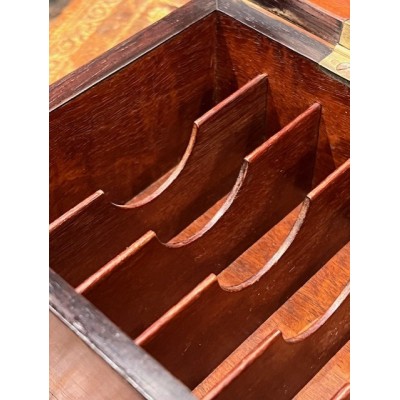
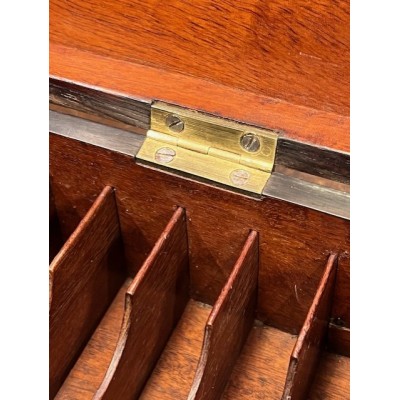
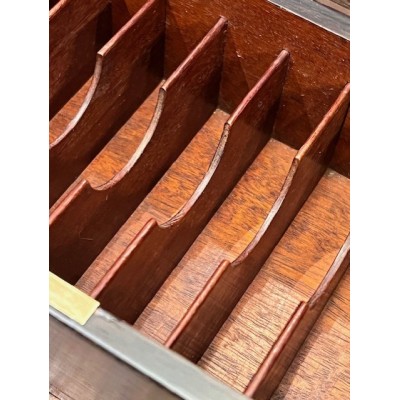
The interior, in mahogany veneer, is divided into regular compartments. This type of layout most likely evokes a domino box or a box intended for parlour games, emblematic objects of bourgeois interiors during the Second Empire, where people liked to combine everyday use with decorative refinement.
A refined decorative piece, typical of 19th-century Parisian lifestyle.
19th century - Period: Napoleon III, circa 1850–1875
The 19th century was a golden age that saw the flourishing of a wide variety of specialised boxes and cases, from glove boxes and liquor cabinets to toiletries cases, boa boxes, handkerchief boxes, visiting card boxes, stamp boxes, etc.
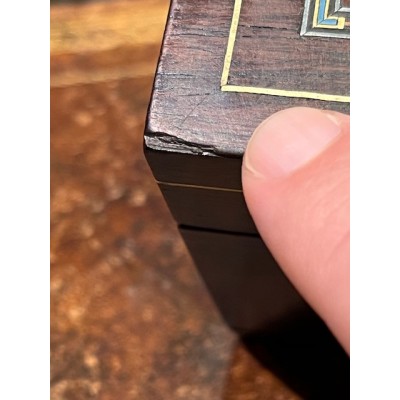
A small piece of veneer is missing from the upper left and right corners.
Dimensions: 26x11cm Height: 8.5cm
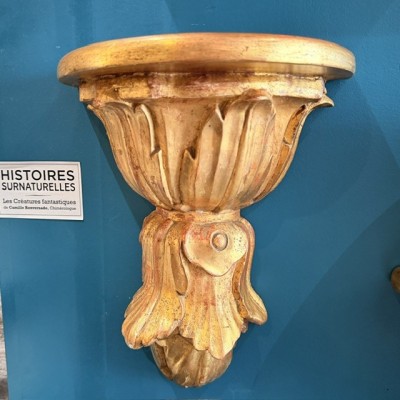
Cul-de-lampe Wall Bracket Console - Stuccoed and Gilded Wood - Italy (Tuscany), 19th Century
Early 19th-century wall console
Gilded wood and stucco with painted faux antique green marble
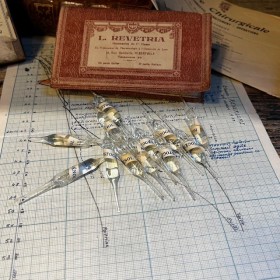
Antique ampoule for hypodermic injection
Histogénol - (circa 1900)
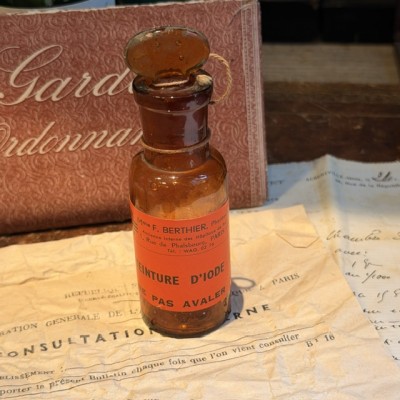
Iodine dye
Antique pharmacy bottle
With the inscription Teinture d'Iode molded in glass
EMPTY
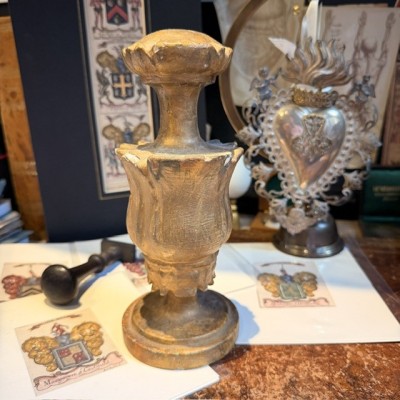
Stem - Baroque base in turned wood and gilded stucco - Italy (Tuscany), 19th century
Italian Giltwood Altar Floral Stand
Antique religious altar bouquet stem made of turned and carved wood, covered with a stucco undercoating (gesso) and gilded.
Lack of gesso and gilding in some places, which is precisely why the white gesso appears under the gilding.
Traces of use and visible gaps in stucco

Crin de Florence - Antique suture thread
Catgut
Natural suture thread obtained from the caterpillar of the Bombyx mori butterfly.
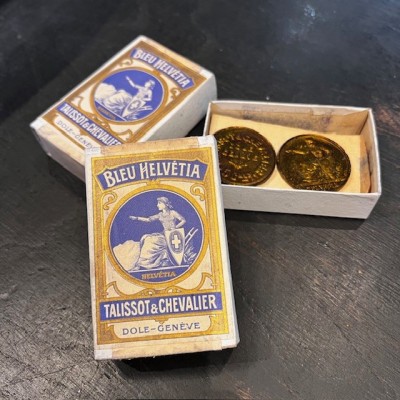
Antique Laundry blue box - Helvetia Blue from Talissot & Chevalier in Dôle and Geneva
Period: 1890-1905
Box containing 6 gold-plated “coins” made of blue wash, resembling the iconography of Swiss coins and medals from the late 19th and early 20th centuries.
Beautiful blue and gold illustration on the box.
Your box will be sealed: never opened in 120 years
UNOBTAINABLE
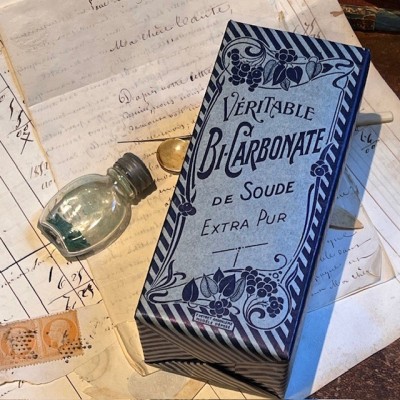
Bi-Carbonate de Soude - Sodium bicarbonate
Antique cardboard pharmacy box
Beautiful typography typical of the Belle Époque: circa 1910-1920
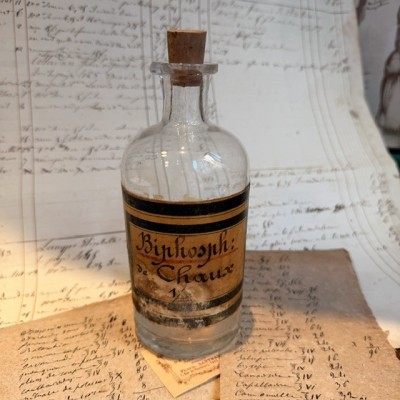
Biphosphate de Chaux
Antique pharmacy bottle
EMPTY
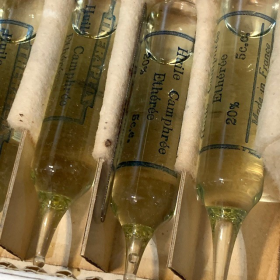
Bulb for hypodermic injection - Camphorated ethereal oil (circa 1920)
THERAPLIX
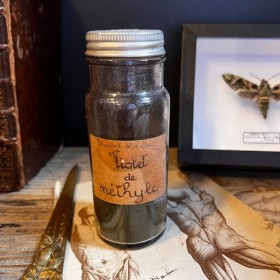
Violet de Méthyle
Antique pharmacy bottle - Droguerie - Apothicaire
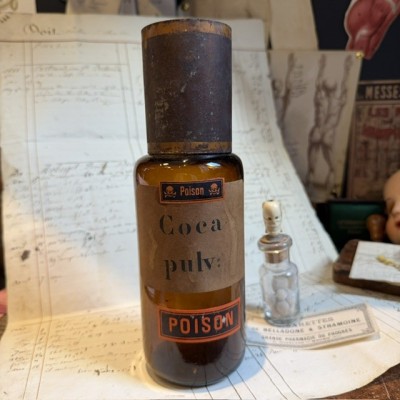
Antique apothecary bottle – Coca powder – Late 19th century/Early 20th century
POISON
Coca powder is the source of cocaine, which was the first effective local anaesthetic used in surgery and dentistry.
SOLD EMPTY
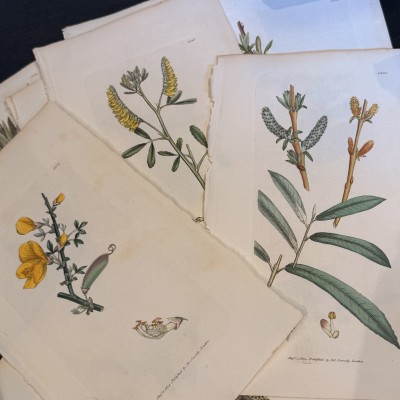
Botanical Plank - English Botany
Published in 1804
Original copper engraving, enhanced with a hand-made watercolor coloration
Painted watercolor engraving from the 19th century
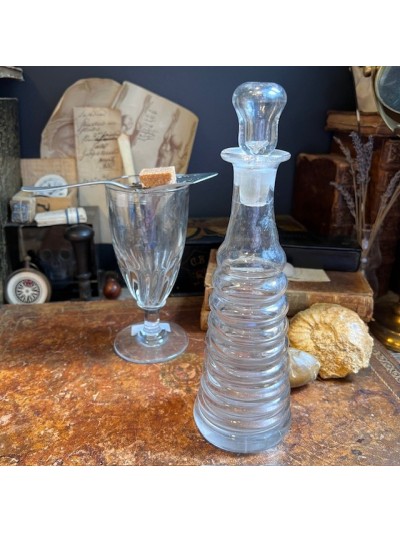
An antique absinthe topette (decanter)
10 Beaded Topette
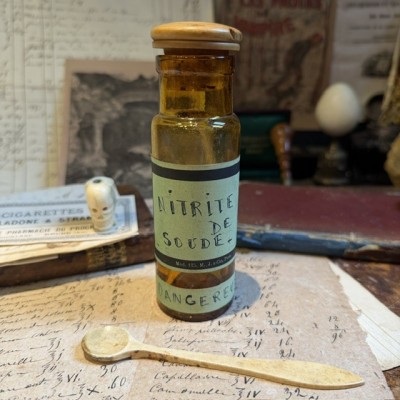
Sodium Nitrite
Antique amber glass bottle, with a boxwood and cork stopper.
Label: DANGEROUS
Indicating to the pharmacist that it must be stored separately from other substances in the cabinet for toxic substances, the famous ‘poison cabinet’.
It comes from the former cellar-laboratory of a Parisian pharmacy. The bottles had not been moved from the shelves since the late 1950s. The cellar had served as a medical analysis laboratory and a laboratory for the pharmacy’s compounded preparations from 1900 until around 1950.
EMPTY
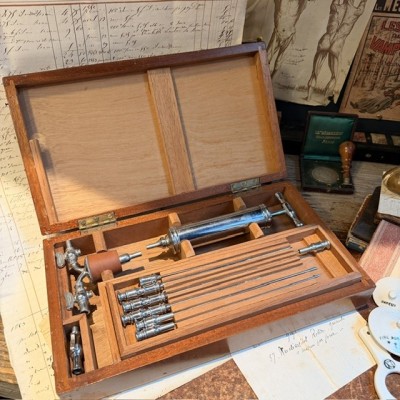
Potain’s Aspirator in its Light Wood Case
Beginning of 20th century
English maker: THACKRAY LEEDS ENGLAND
non-functional
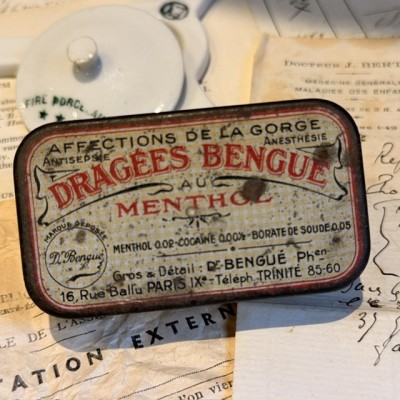
Metal box of breath mints with cocaine
Box of Dr BENGUE Dragees
1920's
It is recommended to suck 8 to 10 lozenges per day, allowing them to melt in the mouth...
EMPTY
Napoleon III box in rosewood and polychrome marquetry
These boxes were used to store gloves, letters or accessories. This one was probably used to store dominoes, judging by the interior compartments.
A refined decorative piece, typical of 19th-century Parisian lifestyle.
19th century - Period: Napoleon III, circa 1850–1875