

- New
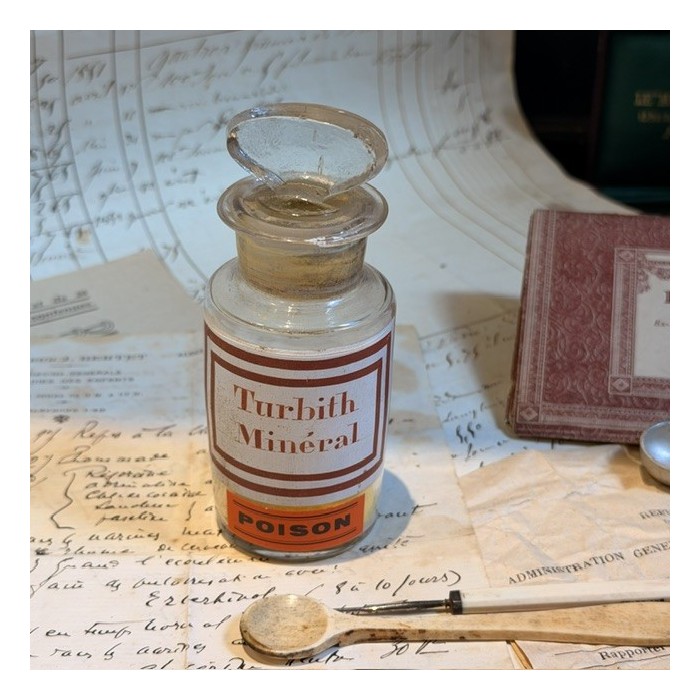
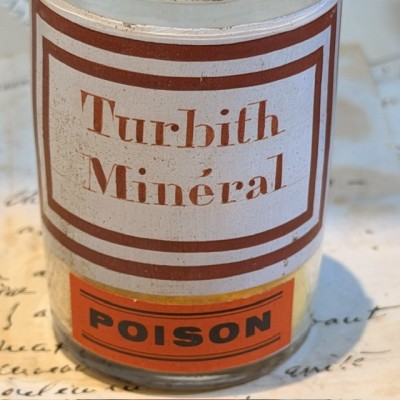
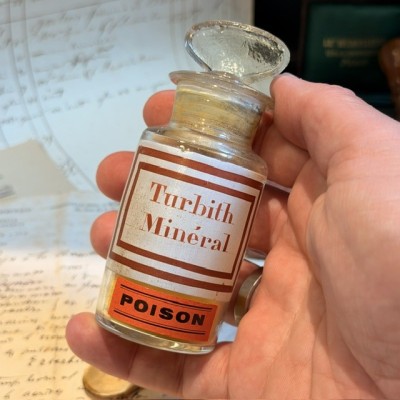
Turbith Minéral - Mercury
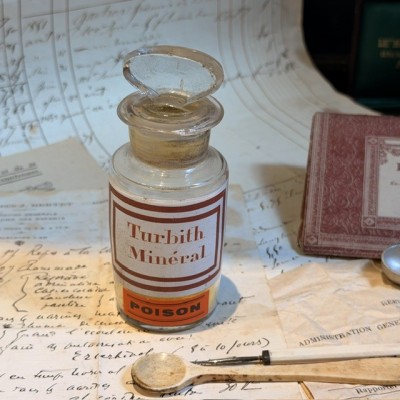
Antique pharmacy bottle made of blown glass and enameled painted label.
Red POISON label
Signaling to the pharmacist that it is imperative to keep apart the other substances in the cabinet of toxic substances, the famous poison cabinet.
Dating: 19th century
There is still some product inside but the cap is blocked and does not open.
Turbith Minéral - Mercury
Antique pharmacy bottle made of blown glass and enameled painted label.
Red POISON label
Signaling to the pharmacist that it is imperative to keep apart the other substances in the cabinet of toxic substances, the famous poison cabinet.
Laboratory or pharmaceutical dispensary bottle, typical of the late nineteenth or early twentieth century.
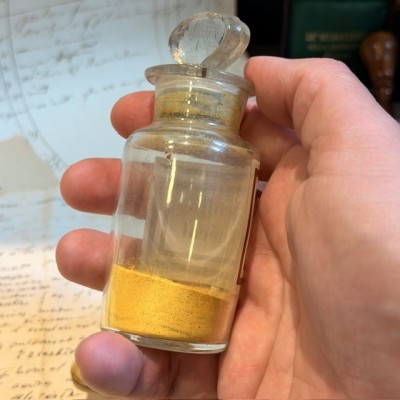
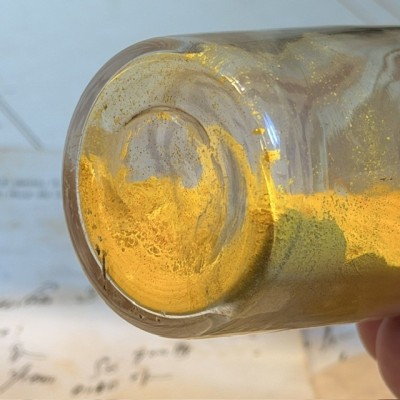
Made of blown transparent glass, it has a trace of pontil visible on the bottom, reflecting traditional artisanal manufacturing. It has its original cap honed with emery BUT the bottle is blocked and does not open, sealed by time.
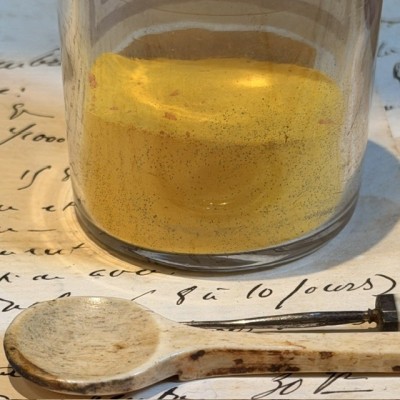
Beautiful enamelled label stenciled surrounded by a brown/red border. The bottle still contains its original powder of a brilliant yellow. This baked enamel technique guaranteed great resistance to handling and chemicals in the pharmacy. A red regulatory label marked "POISON" is applied at the bottom, indicating the poisonous nature of the substance.
From the mercurials pharmacopoeia of yesteryear, Turbith Mineral (basic mercury sulfate) was one of the most violent and feared emetics (vomitives) of the 19th century.
Administered in infinitesimal doses to purge the body, cure syphilis or try to save children choked by croup, this product was of a devastating toxicity. An overdose caused rapid destruction of the digestive mucosa and kidneys, resulting in death by massive dehydration and cardiovascular shock or blood poisoning.
A product illustrating the sometimes terrifying role of the remedies of the time.
Height of the bottle: 11cm with blown glass cap - Diameter at the base: 4cm
Dating: 19th century
There is still some product inside but the cap is blocked and does not open.
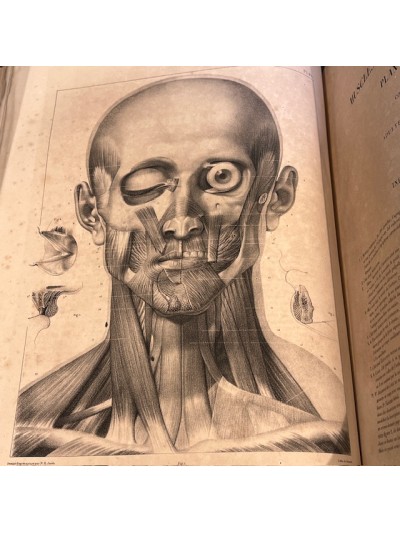
Anatomie de L'Homme - 1831
Anatomy of Man
Volume 2 with its black and white Atlas - 99 lithography
By Dr Bourgery and the illustrator Jacob
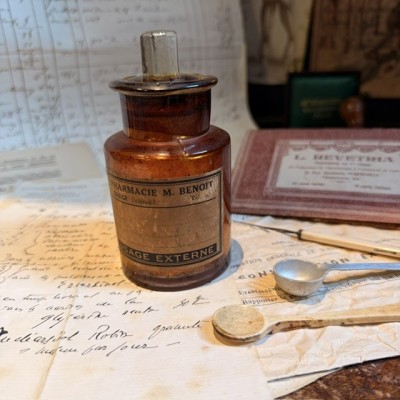
M. BENOIT Pharmacy
Antique pharmacy bottle
EMPTY - Blocked cap
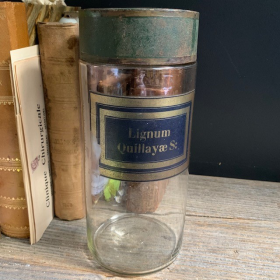
Antique pharmacy jar: Lignum Quillayae Saponaria
Panama wood - 19th century jar
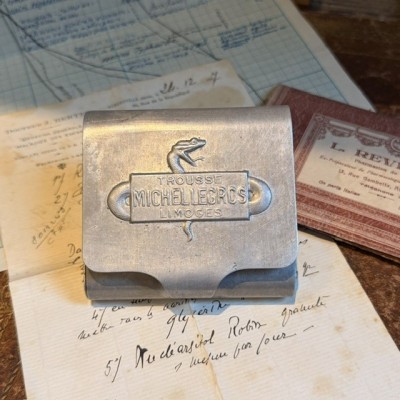
Antique First aid kit for the healing of snake bites
Glass syringe and 2 vintage doses of vaccine
Vintage quack remedy!
Beautiful snake illustration on the aluminium box
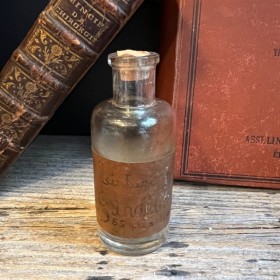
Grindelia Tincture
Antique medicine bottle
Apothecary
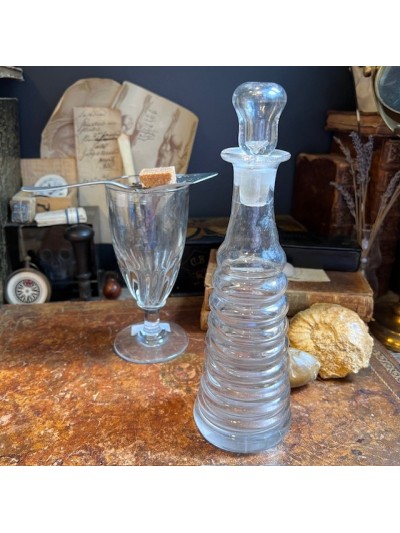
An antique absinthe topette (decanter)
10 Beaded Topette
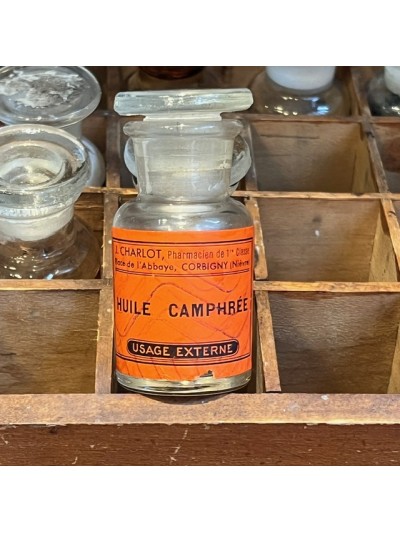
Camphorated oil
Antique pharmacy bottle
Apothecary vial
EMPTY but cap is blocked and bottle will not open
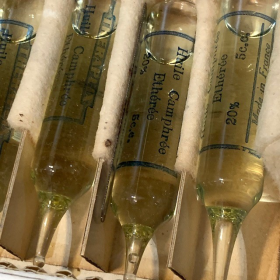
Bulb for hypodermic injection - Camphorated ethereal oil (circa 1920)
THERAPLIX
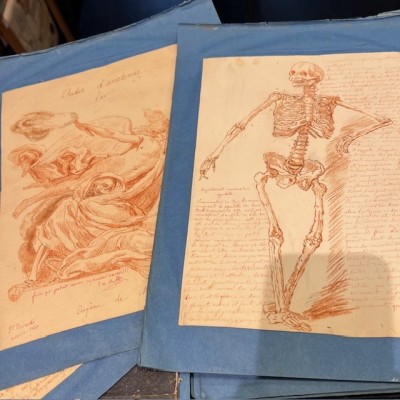
Red chalk drawing- Anatomical drawing
Anatomical study
Drawn by Eugène de Montchoisy in Saint-Brieuc in November 1840
These are not reproductions but original period drawings in red chalk.
You are purchasing one plate, not the entire set of plates
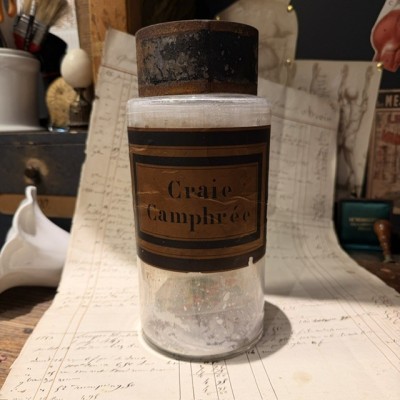
Camphor Chalk
Pharmacy jar - Herbalism - Apothecary Mouth-blown glass bottle
Late 19th century - Beginning of the 20th
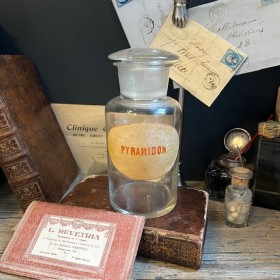
Pyramidon
Antique pharmacy bottle
Apothecary vial
Color pigments have been added to the inside of the jar
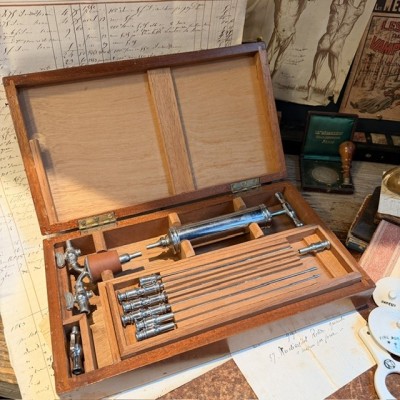
Potain’s Aspirator in its Light Wood Case
Beginning of 20th century
English maker: THACKRAY LEEDS ENGLAND
non-functional
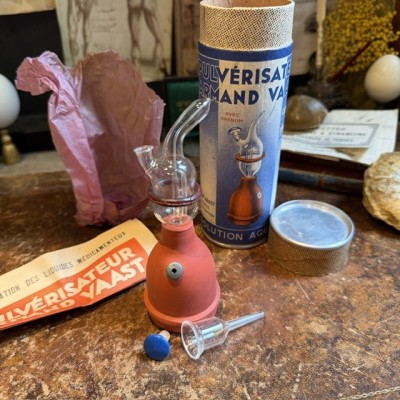
Armand Vaast nasal spray - Oil vaporizer - Antique remedy
In its box
Used in otolaryngology, it was intended for nasal or oral sprays in the treatment of colds and antiseptic treatment of the respiratory tract.

Grams / Tablespoons - Graduated bottle
in French: Grammes / Cuillères à soupe
Antique medicine bottle
Apothecary
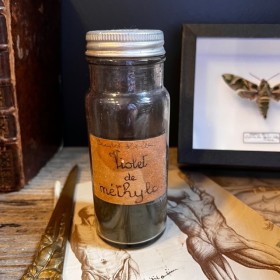
Violet de Méthyle
Antique pharmacy bottle - Droguerie - Apothicaire
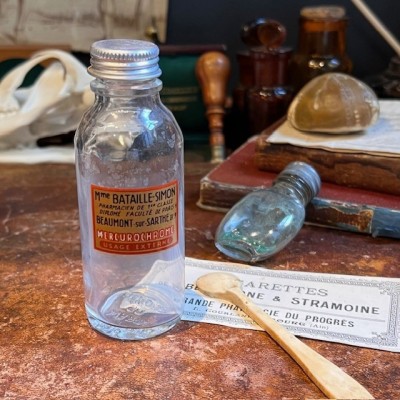
Mercurochrome
Antique pharmacy bottle - Apothecary
Mrs Bataille-Simon, First Class Pharmacist in Beaumont sur Sarthe - Tel 9
Turbith Minéral - Mercury
Antique pharmacy bottle made of blown glass and enameled painted label.
Red POISON label
Signaling to the pharmacist that it is imperative to keep apart the other substances in the cabinet of toxic substances, the famous poison cabinet.
Dating: 19th century
There is still some product inside but the cap is blocked and does not open.