
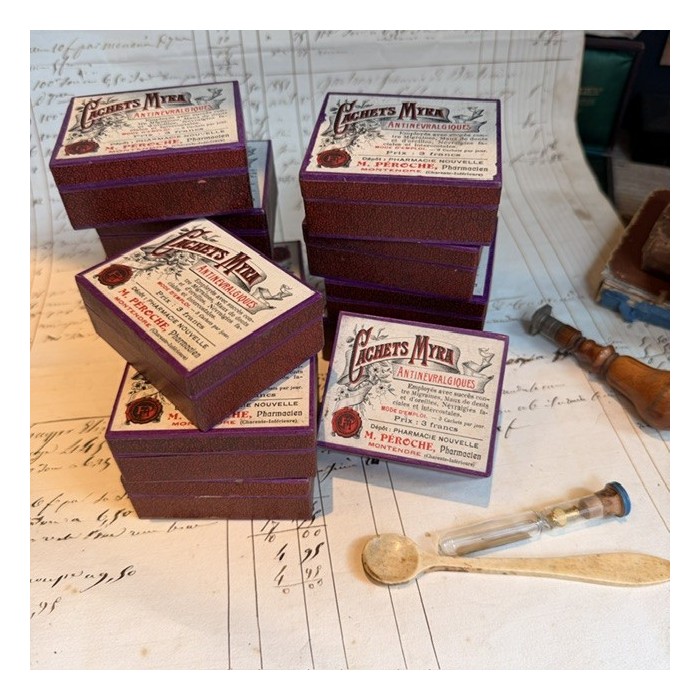
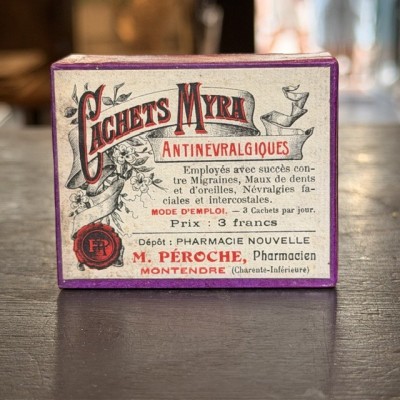
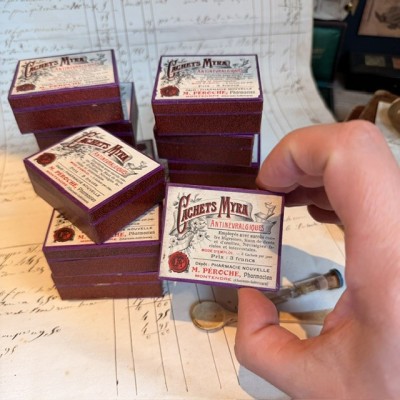
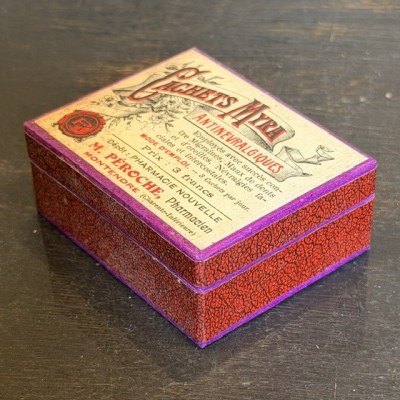
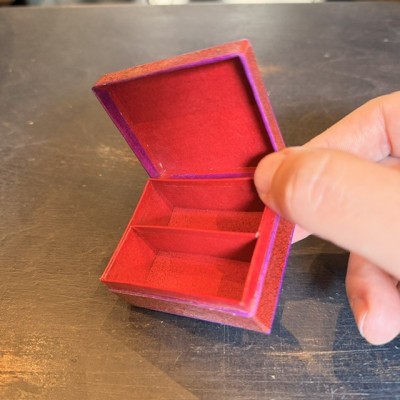
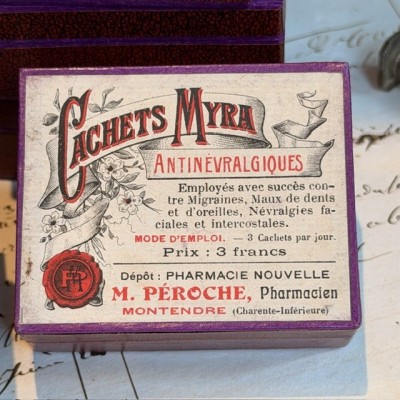
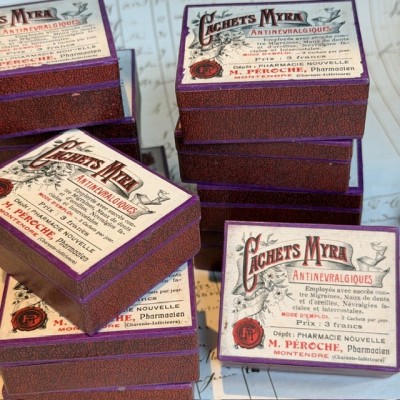
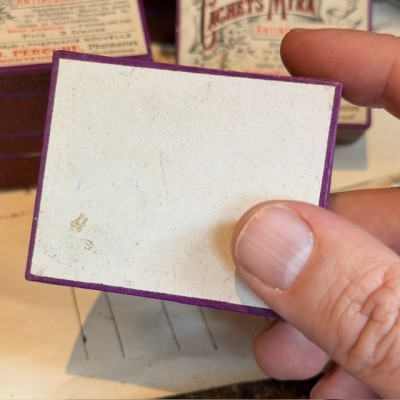
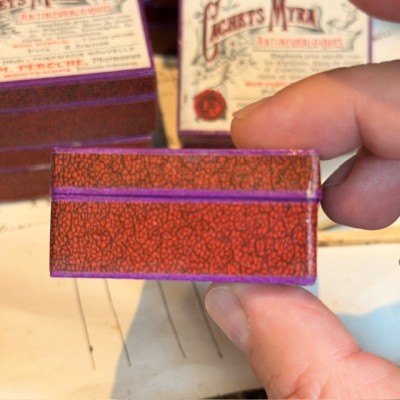
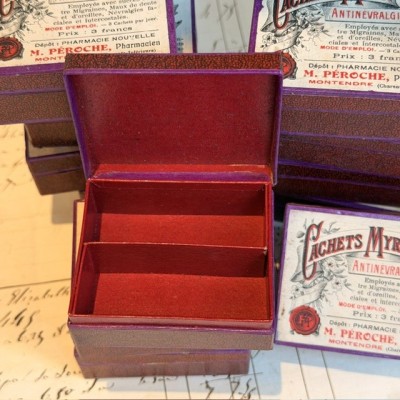
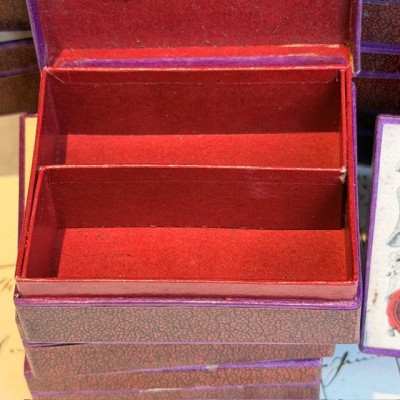
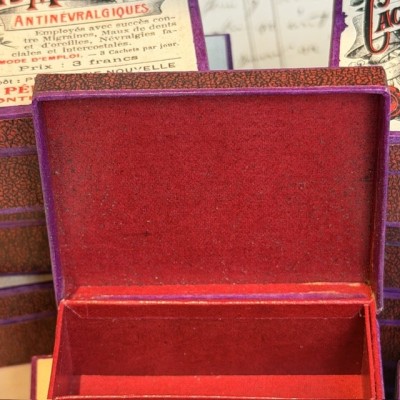
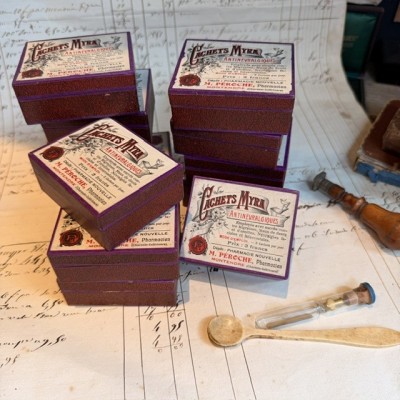
Antique pharmacy box for remedy made of canvas cardboard
Myra pills
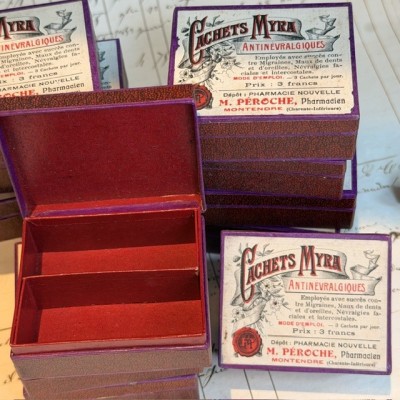
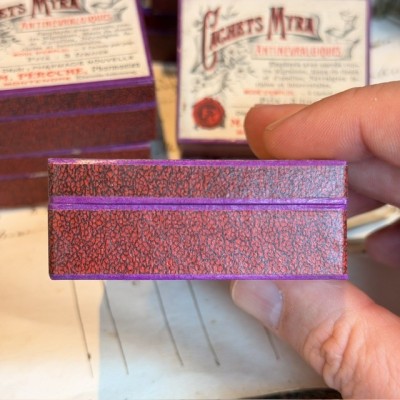
Covering in sumptuous red maroquiné/chagrin paper, with edges and slices enhanced with a deep violet/purple very characteristic of the creations of the late nineteenth and early twentieth century: 1890/1910.
You buy 1 box but not the lot
Antique pharmacy box for remedy made of canvas cardboard
Myra pills
Covering in sumptuous red maroquiné/chagrin paper, with edges and slices enhanced with a deep violet/purple very characteristic of the creations of the late nineteenth and early twentieth century: 1890/1910.
From the Nouvelle Pharmacie to Montendre in Charente-Inférieure
Period: 1890/1910
The medicated tablets in hostie bread that contained the active powder, invented by Paul Limousin in 1872, were the most important method of administration for bitter or irritating powders before the widespread use of industrial tablets and capsules in the 1930s.
Box dimensions: 6x5cm Height: 2.5cm
You buy 1 box but not the lot
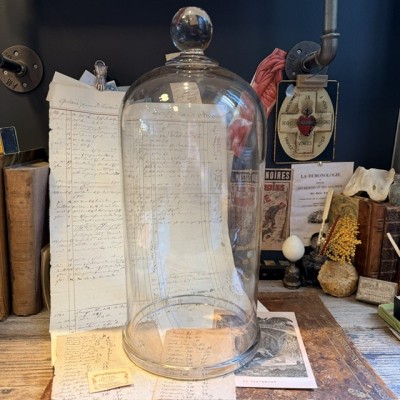
Protective laboratory bell jar - High form with knob in blown glass
Period: 1900 - Pharmacy - Apothecary
Used by the pharmacist to cover precision instruments or isolate preparations undergoing analysis
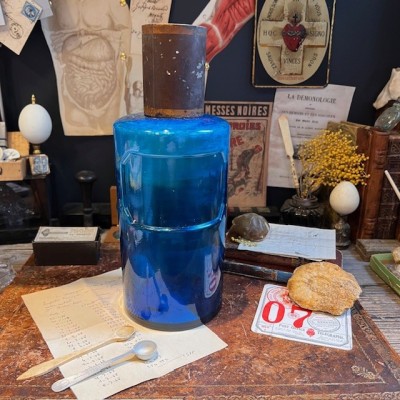
Very Large cobalt blue glass pharmacy bottle - Apothecary - Shouldered - H27.5cm - 19th century
Shouldered apothecary bottle - Antique pharmacy bottle
Mouth-blown glass - Cobalt blue color tinted throughout
This large-capacity jar was a storage jar intended for stockpiling
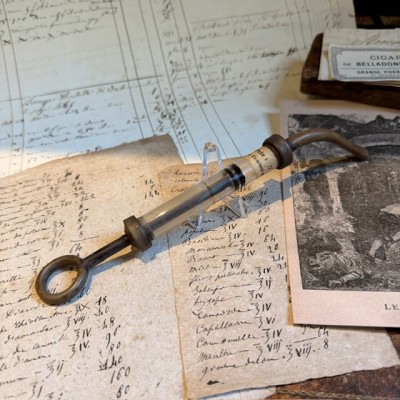
Ebonite and glass laryngeal syringe
For intra-laryngeal injections.
Marketed between May 1939 and sometime in 1940
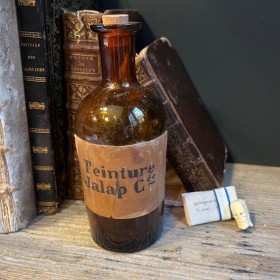
Tincture of Jalap Compound also known as German brandy
A purgative powder is extracted from the Jalap plant.
Antique pharmacy bottle
Apothecary vial

Carbonate de Potasse
Antique pharmacy bottle
Early 20th century (circa 1910 - 1920)
EMPTY
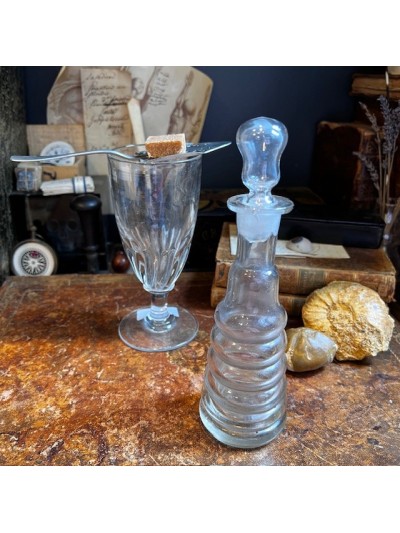
An antique absinthe topette (decanter)
6 Beaded Topette
Residue in the bottom of the carafe
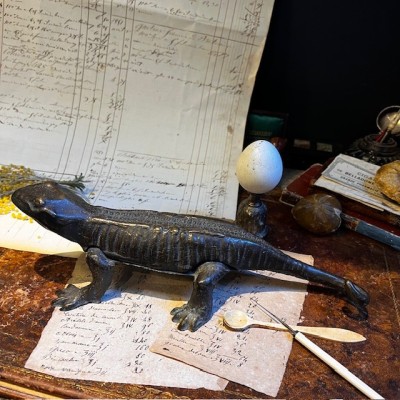
Salamander - Pharmacy corkscrew in bronze
XIXth century
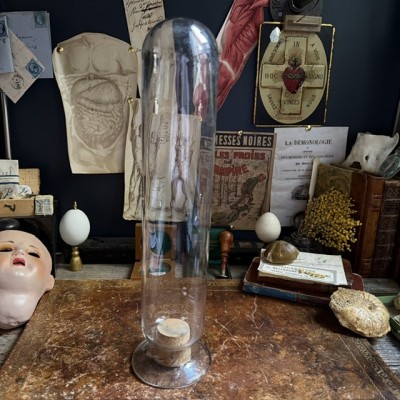
Specimen jar in blown glass - Inverted apothecary jar - Seed vase
Size L
A vintage laboratory or conservatory container designed for the display and preservation of biological or botanical specimens
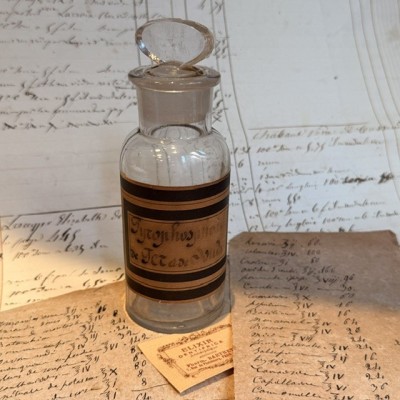
Iron & Soda Pyrophosphate
Antique pharmacy bottle
EMPTY
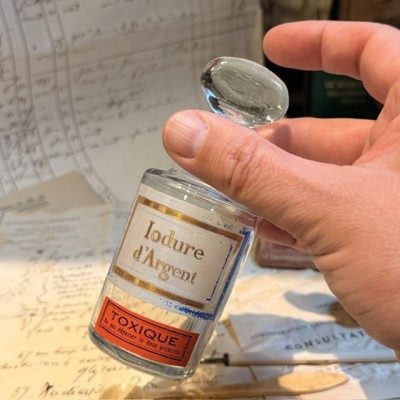
Silver iodide
Antique pharmacy bottle made of blown glass and enameled painted label with golden blue threads
Red TOXIC label
Signaling to the pharmacist that it is imperative to keep apart the other substances in the cabinet of toxic substances, the famous poison cabinet.
Dating: 19th century
EMPTY
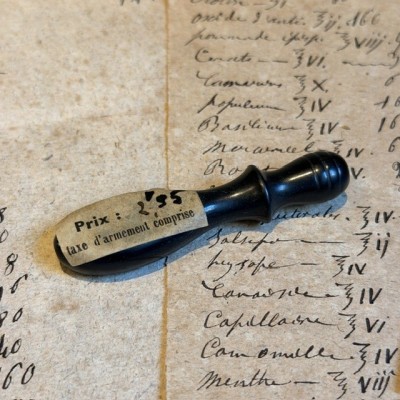
Ebonite cannula tip
Tips for enema or medical irrigation cannulas. New Old Stock
Marketed between May 1939 and sometime in 1940
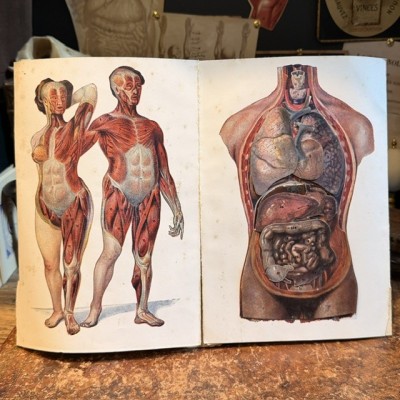
Man and Woman
Anatomy booklet with removable boards
Around 1930's
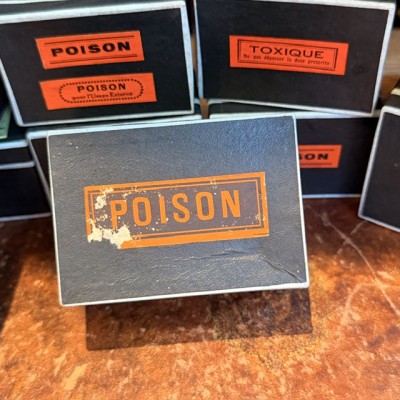
Antique labels in a pharmacy box for cures made of canvas cardboard
Poison label - Ref A
The pharmacist used his boxes of medicine to put away the labels he would then put on the bottles that he would resell to his customers.
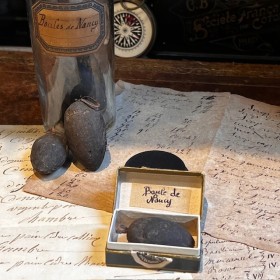
Boule de Nancy - Genuine Mars Vulnerary Ball - Steel Ball
This iron-containing ball was once considered a miracle cure for many ailments and injuries.
The Boule de Nancy is sold individually in a small antique drugstore box
Unavailable today
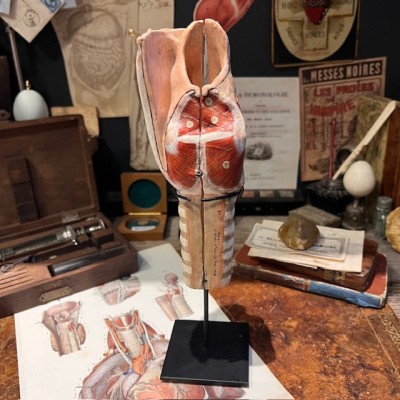
Antique anatomical model of the larynx and trachea made of painted papier-mâché.
Produced by Établissements Auzoux and manually dated 1938.
Model can be dismantled lengthwise, numbered, used for medical teaching.
Please note: one removable side piece is missing. The model remains stable and highly decorative. Authentic piece.
Handwritten inscription from the period: Larynx - Auzoux à St-Aubin-d’Écrosville Eure 1938
Placed in a metal base, it can be easily removed to hold it in your hand.
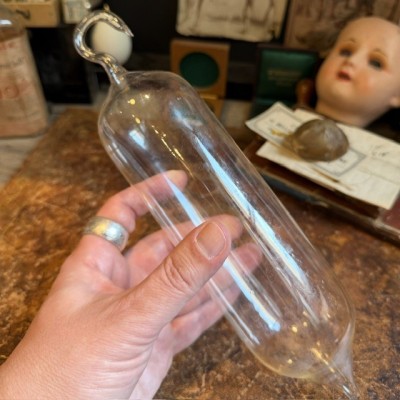
Antique sodium chloride infusion bulb
500cm3
in its original box - Still full
Antique pharmacy box for remedy made of canvas cardboard
Myra pills
Covering in sumptuous red maroquiné/chagrin paper, with edges and slices enhanced with a deep violet/purple very characteristic of the creations of the late nineteenth and early twentieth century: 1890/1910.
You buy 1 box but not the lot