

- New
Silver iodide
Antique pharmacy bottle made of blown glass and enameled painted label with golden blue threads
Red TOXIC label
Signaling to the pharmacist that it is imperative to keep apart the other substances in the cabinet of toxic substances, the famous poison cabinet.
Dating: 19th century
EMPTY
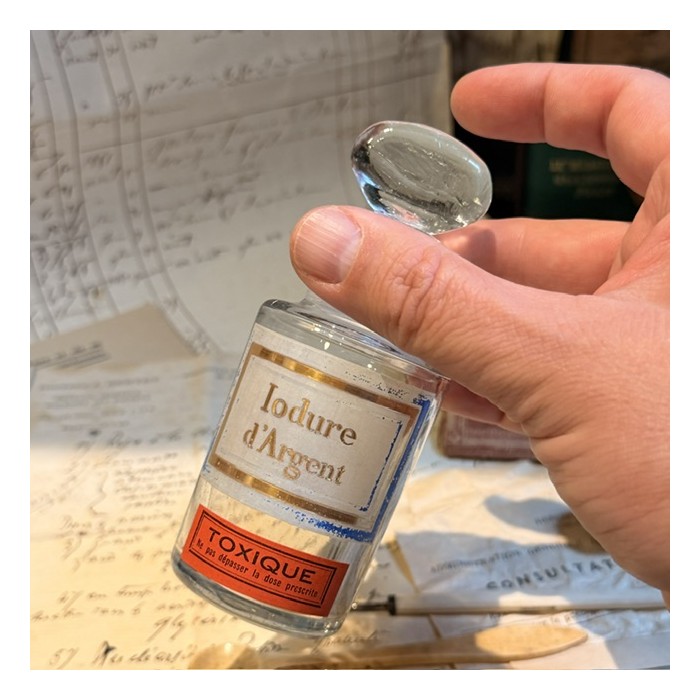
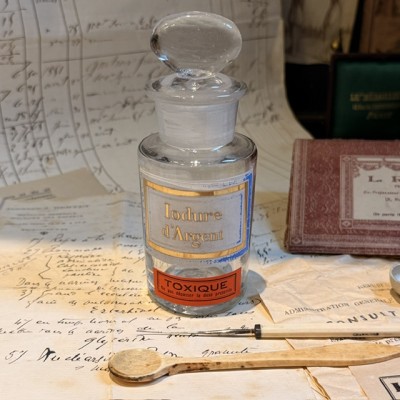
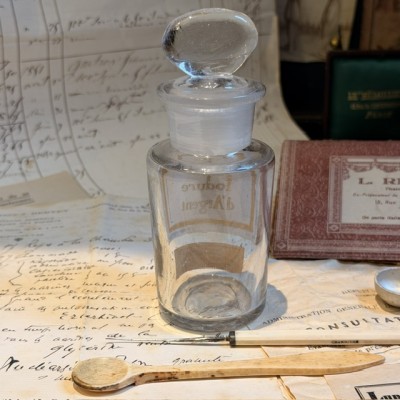
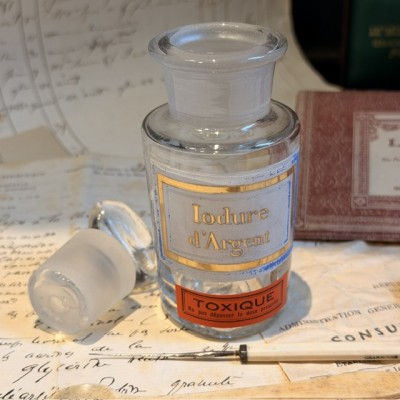
Silver iodide
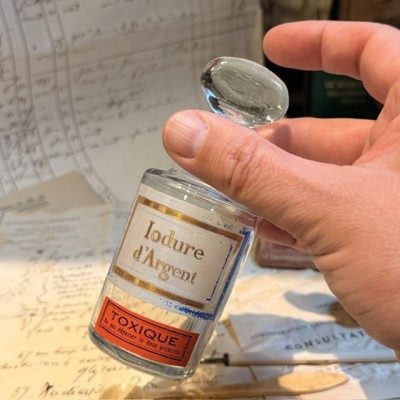
Antique pharmacy bottle made of blown glass and enameled painted label with golden blue threads
Red TOXIC label
Signaling to the pharmacist that it is imperative to keep apart the other substances in the cabinet of toxic substances, the famous poison cabinet.
Laboratory or pharmaceutical dispensary bottle, typical of the late nineteenth or early twentieth century.
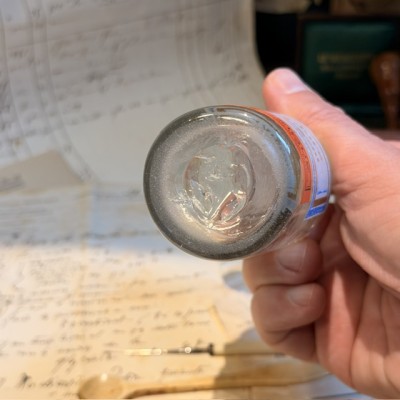
Made of blown transparent glass, it has a trace of pontil visible on the bottom, reflecting traditional artisanal manufacturing. It is equipped with its original cap honed with emery, ensuring a perfect fit with the neck of the bottle.
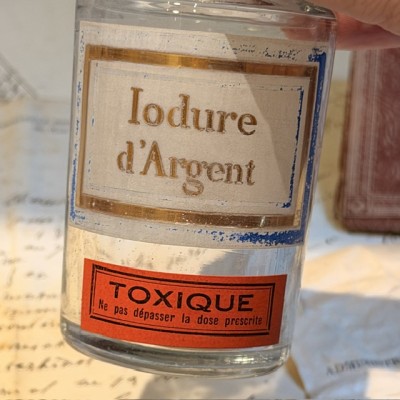
Beautiful enamelled label stenciled with golden highlights, framed by a blue and gold net. This baked enamel technique guaranteed great resistance to handling and chemicals in the pharmacy. A red regulatory label marked "TOXIC" is applied at the bottom, indicating the poisonous nature of the substance.
Silver iodide had quite specific therapeutic uses in the 19th century. It was notably used in ophthalmology in the form of diluted eye drops for eye conditions or chronic inflammations, and in dermatology to treat various skin lesions.
This silver salt exposed patients to the formidable risk of argyria: a chronic poisoning that resulted in definitive skin and tissue pigmentation, irrevocably transforming the skin into a grey-blue or slate-blue shade, similar to metallic oxidation embedded beneath the epidermis, affected individuals were called the blue men.
Height of the bottle: 12cm with blown glass cap - Diameter at the base: 4cm
Dating: 19th century
EMPTY
Please note, the cap has been reattached.
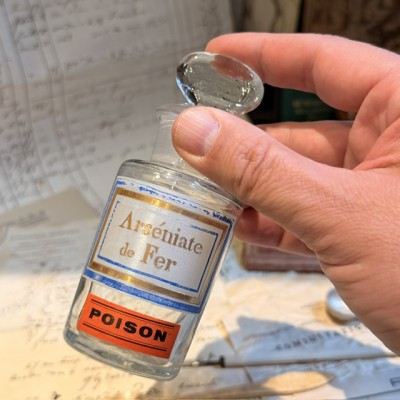
Arsenic - Iron arsenate
Antique pharmacy bottle made of blown glass and enameled painted label with golden blue threads
Red POISON label
Signaling to the pharmacist that it is imperative to keep apart the other substances in the cabinet of toxic substances, the famous poison cabinet.
Dating: 19th century
EMPTY
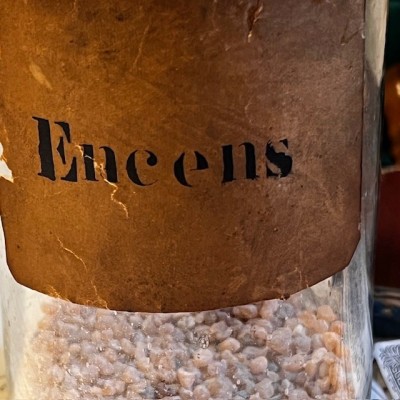
Incense
Antique pharmacy bottle - Wide-mouth apothecary jar.
19th-century mouth-blown glass
There are still some product inside.
A fascinating artifact from the history of pharmacology
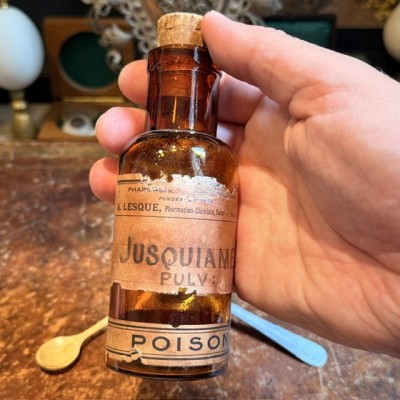
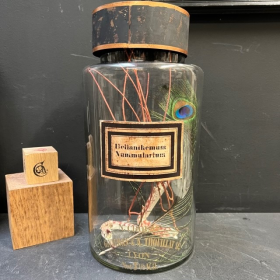
Jusquiame - Henbane
Antique pharmacy bottle.
Red ‘POISON’ label
Indicating to the pharmacist that it must be stored separately from other substances in the cabinet for toxic substances, the famous ‘poison cabinet’.
It comes from the former cellar-laboratory of a Parisian pharmacy. The bottles had not been moved from the shelves since the late 1950s. The cellar had served as a medical analysis laboratory and a laboratory for the pharmacy’s compounded preparations from 1900 until around 1950.
Date: Begining of 20th century
EMPTY
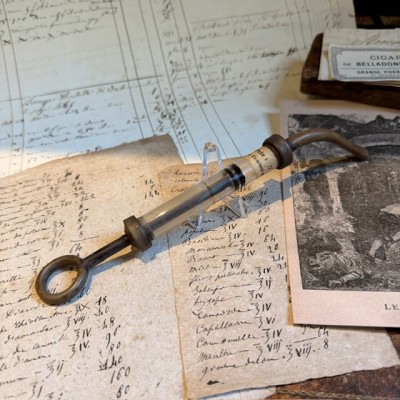
Ebonite and glass laryngeal syringe
For intra-laryngeal injections.
Marketed between May 1939 and sometime in 1940
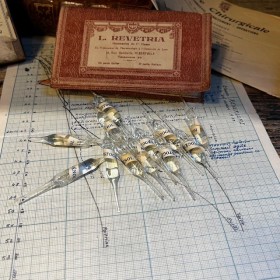
Antique ampoule for hypodermic injection
Histogénol - (circa 1900)
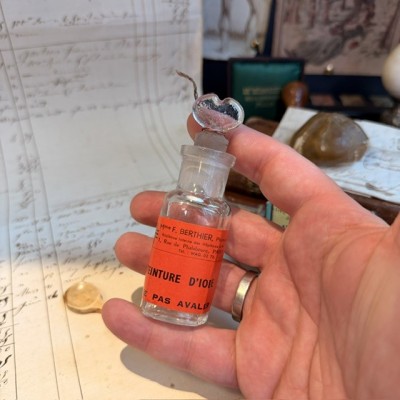
Iodine dye
Antique pharmacy bottle
With the inscription Teinture d'Iode molded in glass
EMPTY
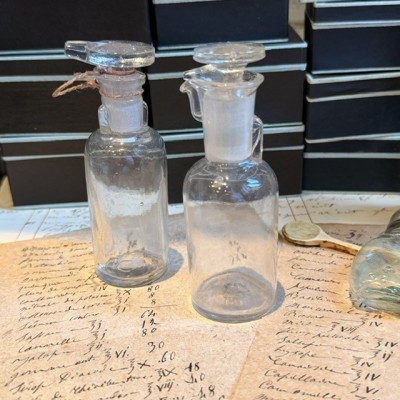
Dropper Bottle
Antique pharmacy bottle - 1920-30's
EMPTY
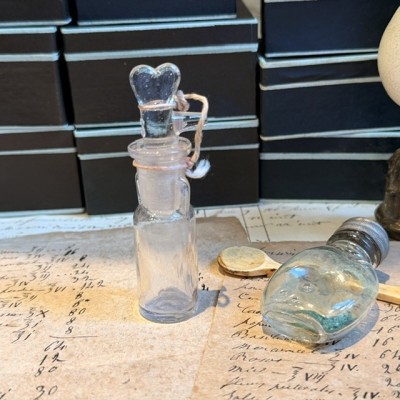
Dropper bottle
Antique pharmacy bottle - 1920-30's
Glass stopper honed in the shape of a heart for better grip
EMPTY
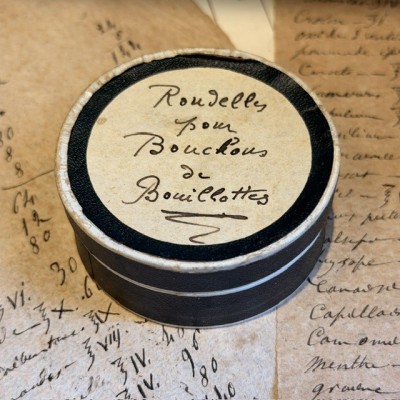
Box of rubber washers for hot water bottles
In its original cardboard box
1939/1940
New Old Stock
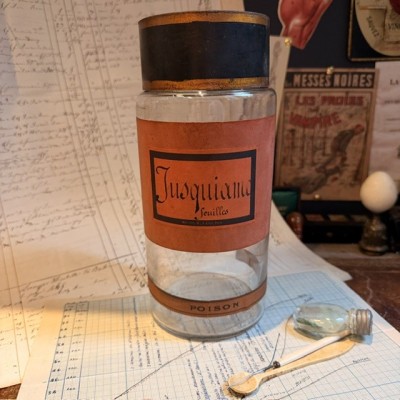
Jusquiame leaves - POISON
Antique pharmacy bottle - Wide-mouth apothecary jar.
19th-century mouth-blown glass
Red POISON label
Signaling to the pharmacist that it is imperative to keep apart the other substances in the cabinet of toxic substances, the famous poison cabinet.
A fascinating testimony to pharmacology
It comes from an old cellar-laboratory in a Parisian pharmacy. The bottles had not moved since the late 1950s on the shelves. The cellar had served as a laboratory for medical analyses and a laboratory for magistral preparations of the pharmacy from 1900 until around 1950.
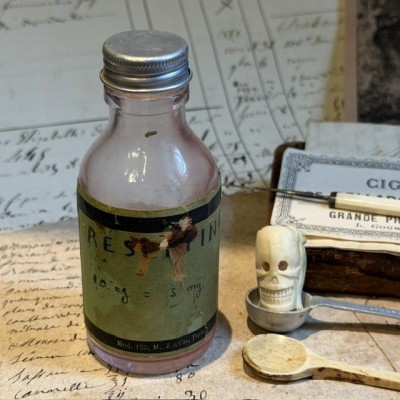
Reseptine
Antique pharmacy bottle
EMPTY
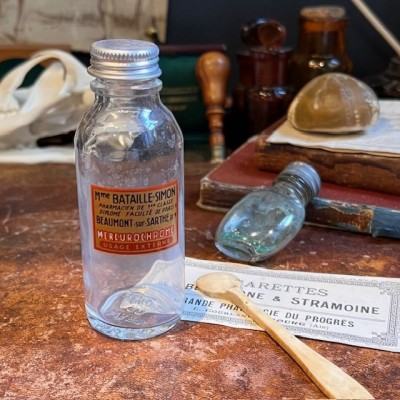
Mercurochrome
Antique pharmacy bottle - Apothecary
Mrs Bataille-Simon, First Class Pharmacist in Beaumont sur Sarthe - Tel 9
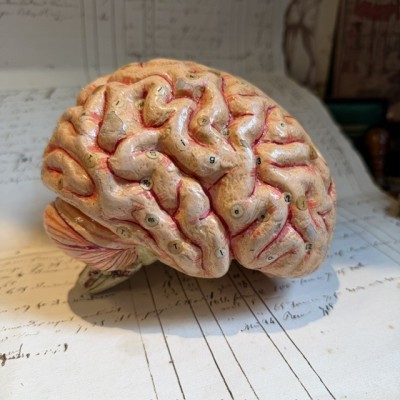
Painted papier-mâché anatomical model of the brain
Produced by Établissements Auzoux
Model No. 12 from the 1874 catalogue
Dismantlable, numbered model, used for medical teaching.
A rare item in excellent working condition
This is a 1:1 scale model of the brain, sold separately at the time as a demonstration model; it is not a brain that was found inside anatomical manikins.
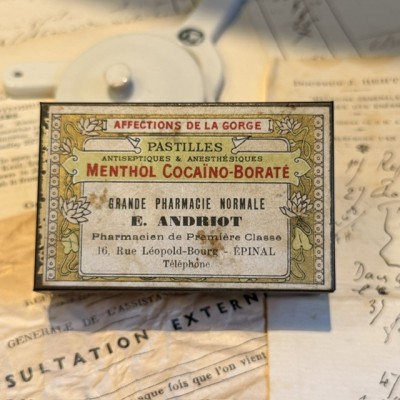
Box of cocaine lozenges
Menthol - Cocaïno - Boraté by the Pharmacist Holler in Maubeuge
Magnificent lid typical of Art Nouveau: 1900-1910
EMPTY
Silver iodide
Antique pharmacy bottle made of blown glass and enameled painted label with golden blue threads
Red TOXIC label
Signaling to the pharmacist that it is imperative to keep apart the other substances in the cabinet of toxic substances, the famous poison cabinet.
Dating: 19th century
EMPTY