
- New
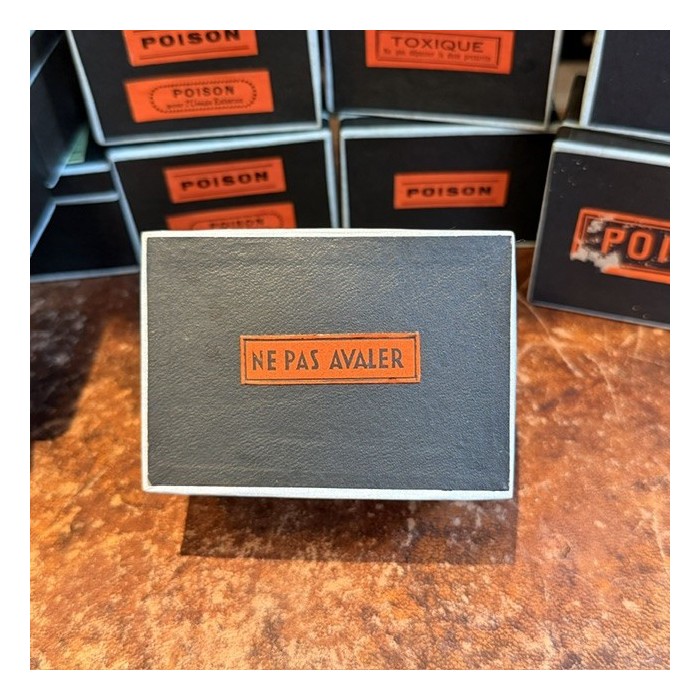
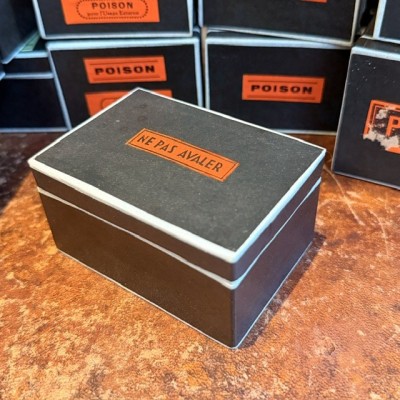
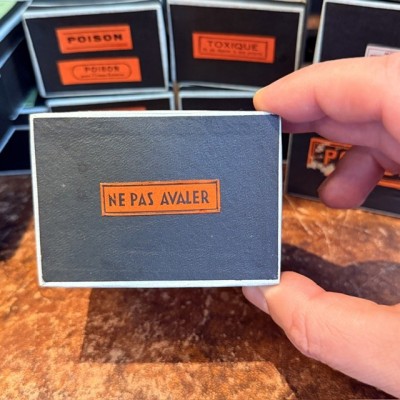
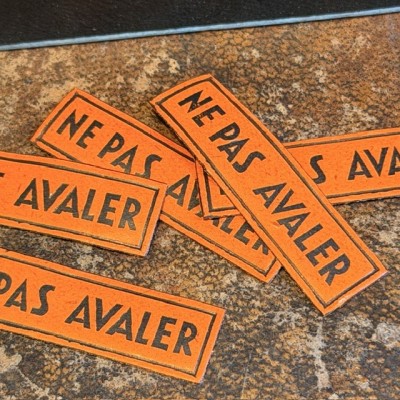
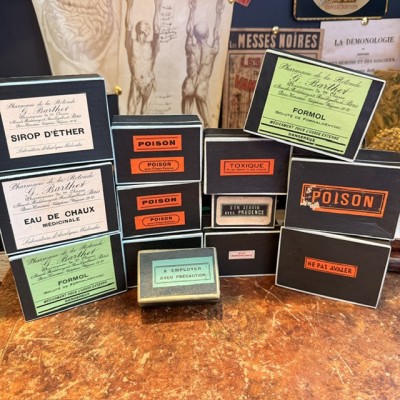
Antique labels in a pharmacy box for cures made of canvas cardboard
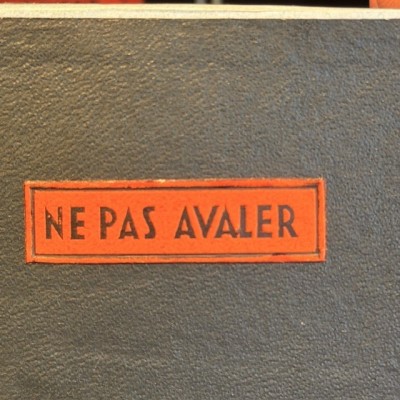
Do not swallow label
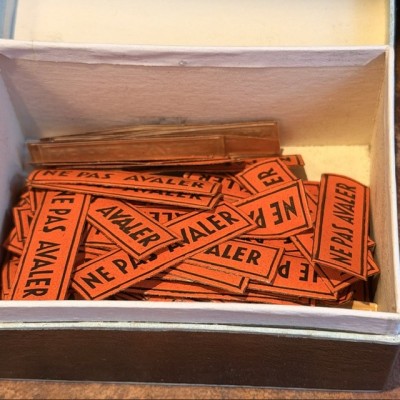
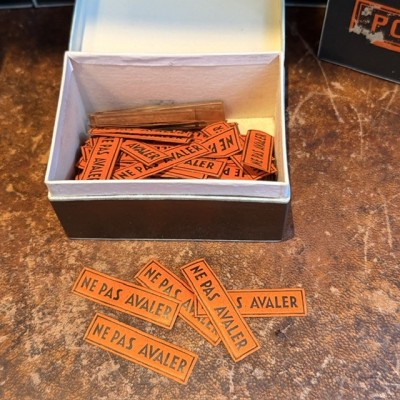
The pharmacist used his boxes of medicine to put away the labels he would then put on the bottles that he would resell to his customers.
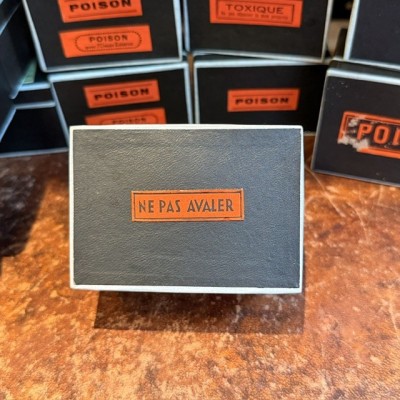
Antique labels in a pharmacy box for cures made of canvas cardboard
Do not swallow label
The pharmacist used his boxes of medicine to put away the labels he would then put on the bottles that he would resell to his customers.
Comes from an old cellar-laboratory of a Parisian pharmacy. The bottles and other products had not moved since the late 1950s on the shelves. The cellar had served as a laboratory for medical analyses and a laboratory for magistral preparations of the pharmacy from 1900 until around 1950.
Box dimensions: 8x6cm Height: 4cm
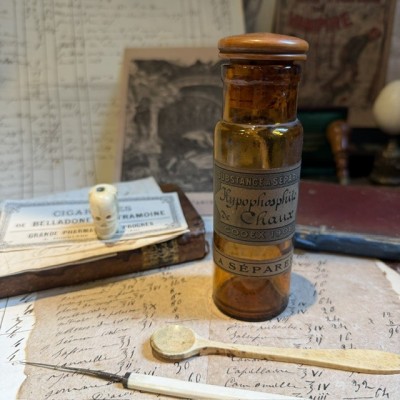
Calcium hypophosphite
Antique amber glass bottle, with a boxwood and cork stopper.
Green label: SUBSTANCE TO BE STORED SEPARATELY – CODEX 1908
Handwritten label, pen inscription, neat calligraphy, with its thick and thin strokes.
Indicating to the pharmacist that it must be stored separately from other substances in the cabinet for toxic substances, the famous ‘poison cabinet’.
It comes from the former cellar-laboratory of a Parisian pharmacy. The bottles had not been moved from the shelves since the late 1950s. The cellar had served as a medical analysis laboratory and a laboratory for the pharmacy’s compounded preparations from 1900 until around 1950.
EMPTY
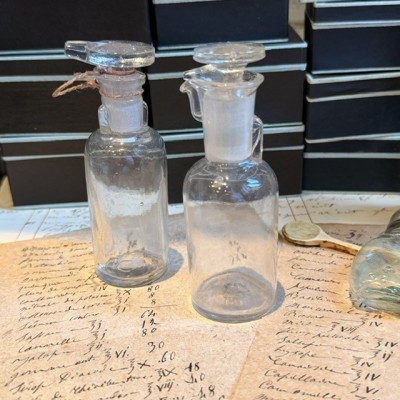
Dropper Bottle
Antique pharmacy bottle - 1920-30's
EMPTY
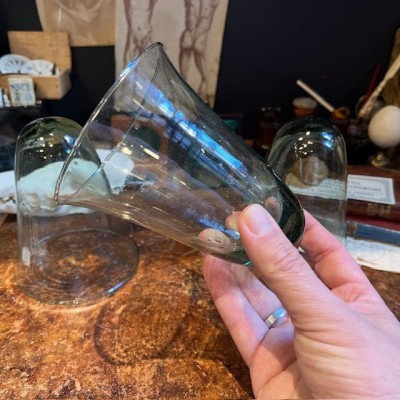
Antique glass bell jar
Apothecary / Laboratory
Thin glass, light green in color and darker at the top, with bubbles
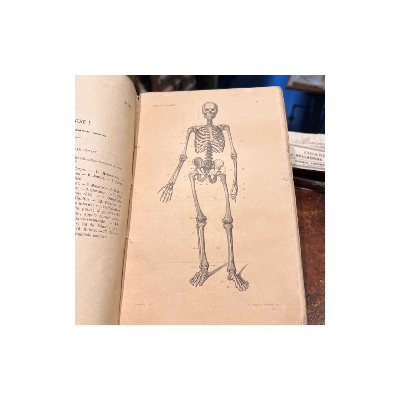
Anatomical Atlas by A. Bossu
Anthropology - End of the XIXth century
20 engravings of Anatomy by Léveillé
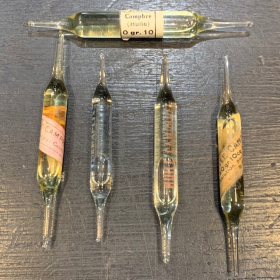
Bulb for hypodermic injection - Camphor (circa 1920)
various manufacturers
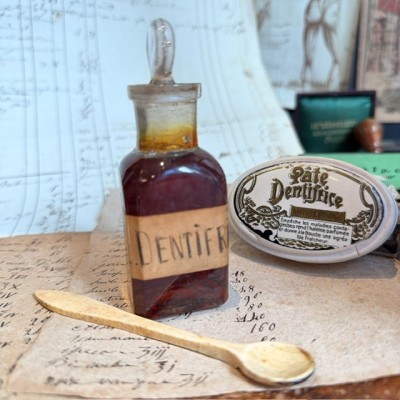
Toothpaste elixir
Antique pharmacy bottle
Handwritten label with pen
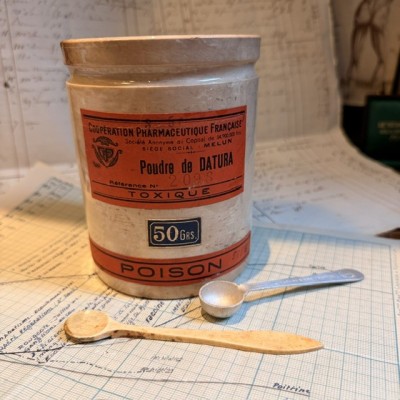
Datura powder
Antique earthenware pot
Intended for the exclusive use of pharmacists for making magistral preparations, the jar displays the regulatory labels "TOXIC" and the red banner "POISON".
Indicating to the pharmacist that it must be stored separately from other substances in the cabinet for toxic substances, the famous ‘poison cabinet’.
It comes from the former cellar-laboratory of a Parisian pharmacy. The bottles had not been moved from the shelves since the late 1950s. The cellar had served as a medical analysis laboratory and a laboratory for the pharmacy’s compounded preparations from 1900 until around 1950.
EMPTY
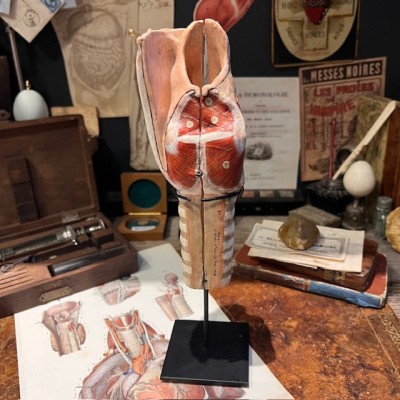
Antique anatomical model of the larynx and trachea made of painted papier-mâché.
Produced by Établissements Auzoux and manually dated 1938.
Model can be dismantled lengthwise, numbered, used for medical teaching.
Please note: one removable side piece is missing. The model remains stable and highly decorative. Authentic piece.
Handwritten inscription from the period: Larynx - Auzoux à St-Aubin-d’Écrosville Eure 1938
Placed in a metal base, it can be easily removed to hold it in your hand.
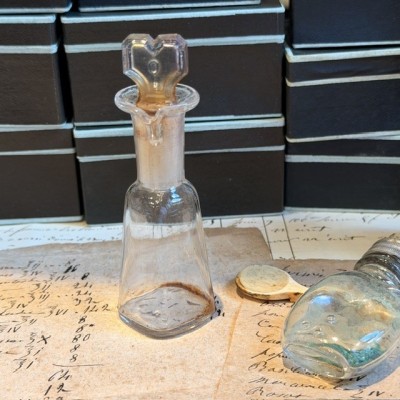
Square Section Dropper Bottle
Antique pharmacy bottle - 1920-30's
Glass stopper honed in the shape of a heart for better grip
EMPTY
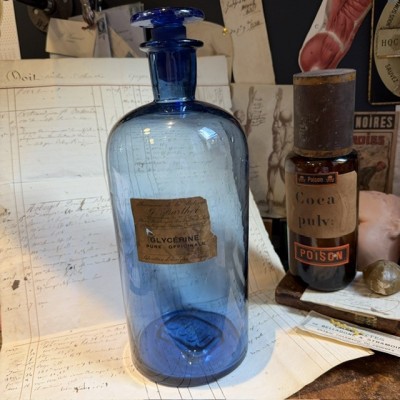
Glycérine pure officinale
Pure pharmaceutical-grade glycerine
Antique BLUE glass pharmacy bottle
EMPTY
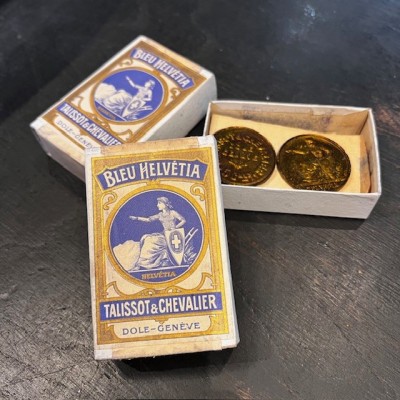
Antique Laundry blue box - Helvetia Blue from Talissot & Chevalier in Dôle and Geneva
Period: 1890-1905
Box containing 6 gold-plated “coins” made of blue wash, resembling the iconography of Swiss coins and medals from the late 19th and early 20th centuries.
Beautiful blue and gold illustration on the box.
Your box will be sealed: never opened in 120 years
UNOBTAINABLE
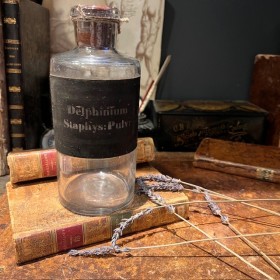
Delphinium staphisagria - Stavesacre
Pharmacy jar - Herbalism - Apothecary bottle
Late 19th century, early 20th century.
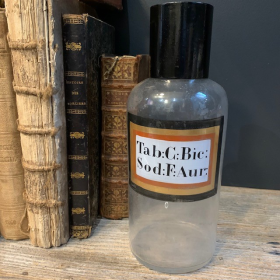
Antique pharmacy jar: Sodium bicarbonate and Gold Flower tablets
Glass pharmacy bottle - XIXth century
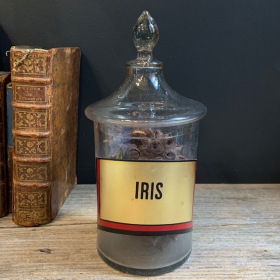
19th century Herbalist's or Pharmacy crystal jar
Iris
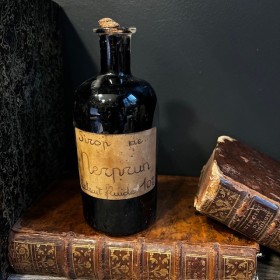
Buckthorns syrup
Antique pharmacy bottle
Apothecary vial
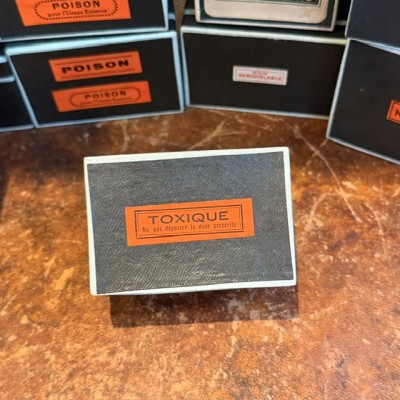
Antique labels in a pharmacy box for cures made of canvas cardboard
TOXIC label - Do not exceed the prescribed dose
The pharmacist used his boxes of medicine to put away the labels he would then put on the bottles that he would resell to his customers.
Antique labels in a pharmacy box for cures made of canvas cardboard
Do not swallow label
The pharmacist used his boxes of medicine to put away the labels he would then put on the bottles that he would resell to his customers.