- New
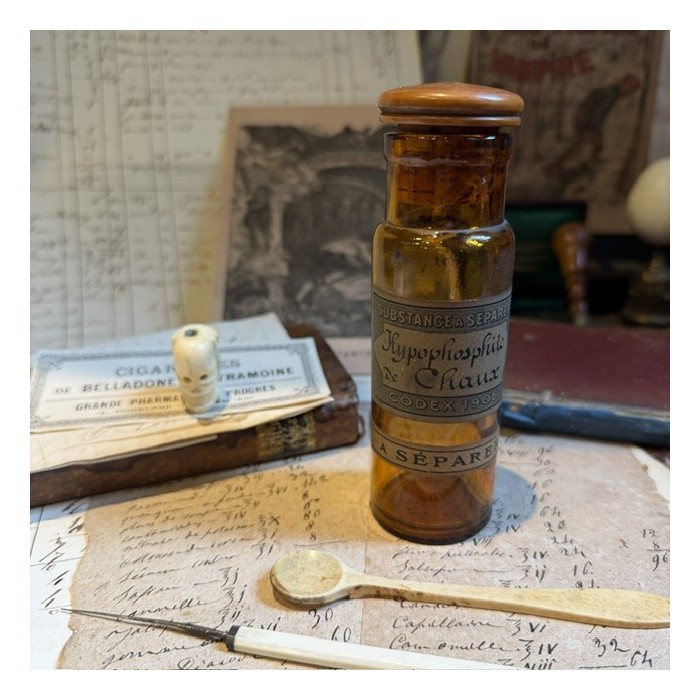
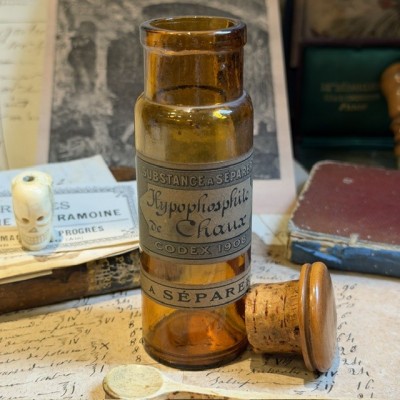
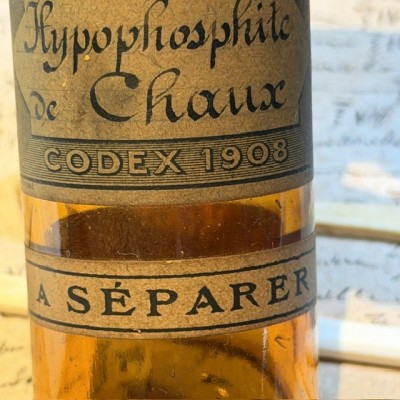
Calcium hypophosphite
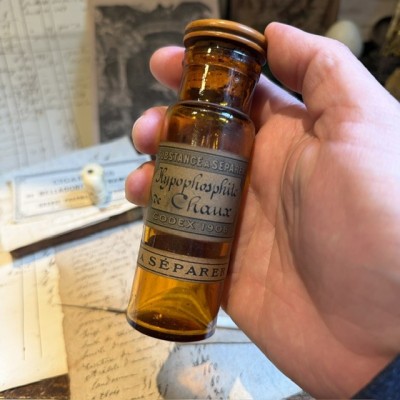
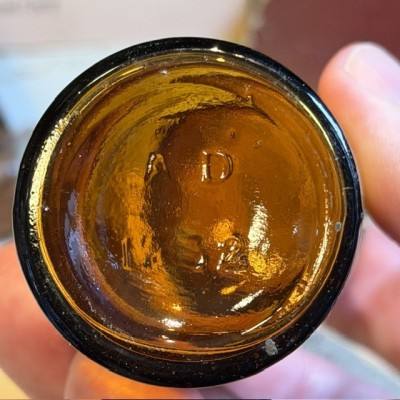
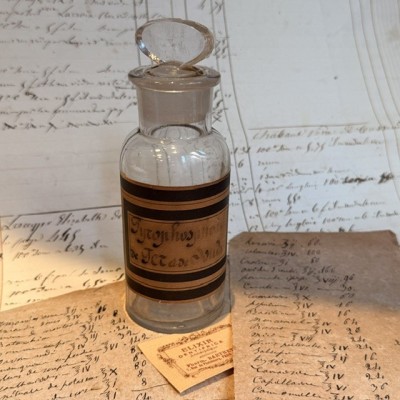
Antique amber glass bottle, with a boxwood and cork stopper.
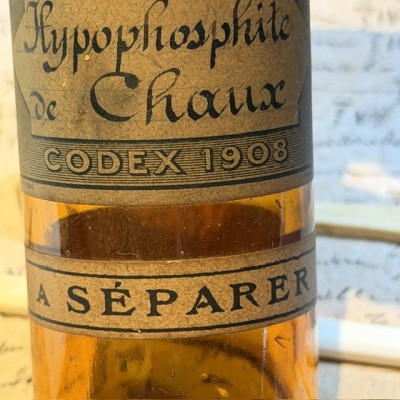
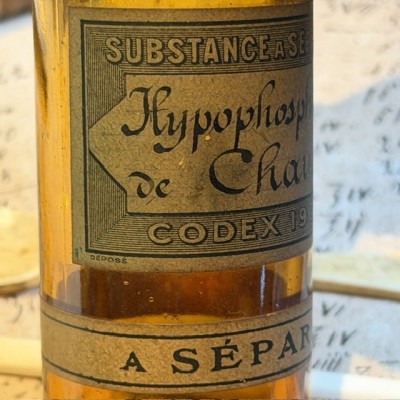
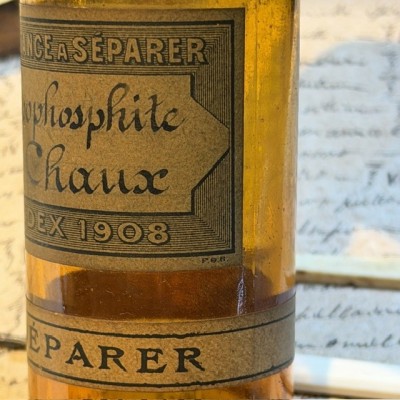
Green label: SUBSTANCE TO BE STORED SEPARATELY – CODEX 1908
Handwritten label, pen inscription, neat calligraphy, with its thick and thin strokes.
Indicating to the pharmacist that it must be stored separately from other substances in the cabinet for toxic substances, the famous ‘poison cabinet’.
It comes from the former cellar-laboratory of a Parisian pharmacy. The bottles had not been moved from the shelves since the late 1950s. The cellar had served as a medical analysis laboratory and a laboratory for the pharmacy’s compounded preparations from 1900 until around 1950.
EMPTY
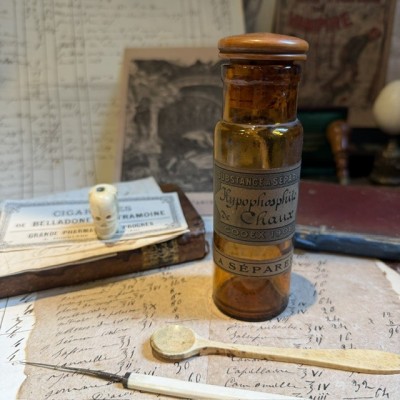
Calcium hypophosphite
Antique amber glass bottle, with a boxwood and cork stopper.
Green label: SUBSTANCE TO BE STORED SEPARATELY – CODEX 1908
Handwritten label, pen inscription, neat calligraphy, with its thick and thin strokes.
Indicating to the pharmacist that it must be stored separately from other substances in the cabinet for toxic substances, the famous ‘poison cabinet’.
At the time, this substance was mainly used to treat tuberculosis (known as consumption in those days), rickets, or as a general tonic.
Although not a deadly poison, ingesting large quantities of calcium hypophosphite can cause digestive problems or calcium imbalances.
But above all, hypophosphite is also a chemically unstable substance. It is susceptible to oxidation and, under certain extreme conditions such as high temperatures, it can release flammable phosphorus vapours. Storing it ‘separately’ was therefore also a physical safety measure for the dispensary.
It comes from the former cellar-laboratory of a Parisian pharmacy. The bottles had not been moved from the shelves since the late 1950s. The cellar had served as a medical analysis laboratory and a laboratory for the pharmacy’s compounded preparations from 1900 until around 1950.
Height of the bottle: 12cm with stopper
EMPTY

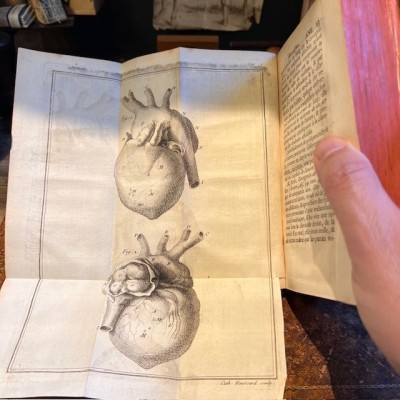
De l'Homme et de la Femme (Of Man and Woman)
By M. de Lignac - Volume 3
Anatomy of procreation - 1779
Butterfly - Natural History color plate
Entomology
You buy 1 plate, not the whole set
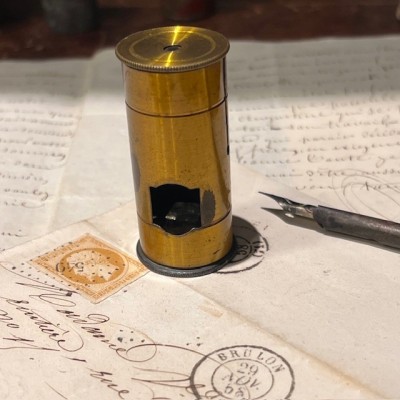
Antique and large drum microscope
In it's mahogany wooden box
For botanist, entomologist - XIXth century
This is a larger model than those usually found on the market
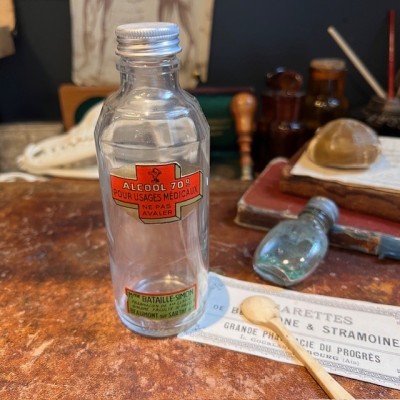
70° alcohol
Antique pharmacy bottle - Apothecary
Mrs Bataille-Simon, First Class Pharmacist in Beaumont sur Sarthe - Tel 9
Antique surgical board
From Benjamin Bell's Complete Course in Surgery, published in 1796
Dry sodium iodide
Antique pharmacy bottle - drugstore - apothecary
Large antique laboratory test tube made of actinic glass (brown glass) - Pharmacy
Its unusual dimensions make it a model with a beautiful presence
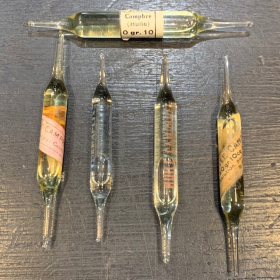
Antique ampoule for hypodermic injection
Histogénol - (circa 1900)
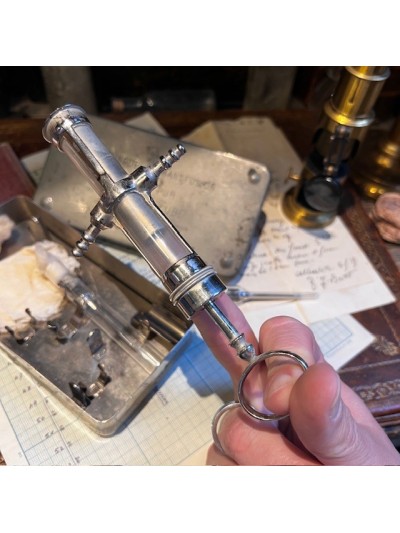
Hypodermic Pravaz syringe - 19th century
Syringe in it's case
not functional
Impalpable Nux Vomica powder
White earthenware pot
Red POISON and TOXIC label
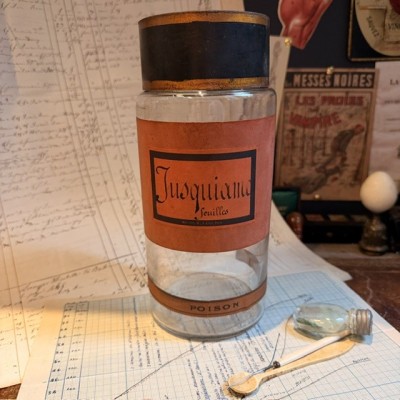
Signaling to the pharmacist that it is imperative to keep apart the other substances in the cabinet of toxic substances, the famous poison cabinet.
It comes from an old cellar-laboratory in a Parisian pharmacy. The bottles had not moved since the late 1950s on the shelves. The cellar had served as a laboratory for medical analyses and a laboratory for magistral preparations of the pharmacy from 1900 until around 1950.
EMPTY
Lower part of the lower mandible of a horse jaw
Antique model from Maison Auzoux in Paris
Paper-mâché pedagogical model
Model B - 1 year
Anatomical chart by Ludovic Hirschfeld drawn by Léveillé
From Traité et iconographie du système nerveux et des organes des sens de l'homme avec leur mode de préparation
Published in 1866
Lithography
You buy 1 plate, not the whole set
Antique brown glass bottle with integrated pipette - Ref B
Apothecary - Pharmacy
The pipettes have either been broken or shortened because they are too short
Hypophosphite de Manganèse
Antique pharmacy bottle
Apothecary vial
Horseradish syrup
Grams / Tablespoons - Graduated bottle
in French: Grammes / Cuillères à soupe
Antique medicine bottle
Apothecary
Poudre de réglisse - Licorice powder
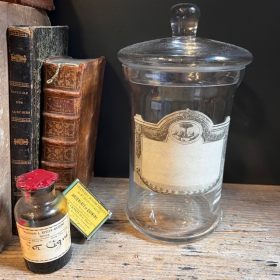
Large cobalt blue glass pharmacy bottle - Apothecary - Shouldered - H28cm - 19th century
Shouldered apothecary bottle - Antique pharmacy bottle
Mouth-blown glass - Cobalt blue color tinted throughout
This large-capacity jar was a storage jar intended for stockpiling
Calcium hypophosphite
Antique amber glass bottle, with a boxwood and cork stopper.
Green label: SUBSTANCE TO BE STORED SEPARATELY – CODEX 1908
Handwritten label, pen inscription, neat calligraphy, with its thick and thin strokes.
Indicating to the pharmacist that it must be stored separately from other substances in the cabinet for toxic substances, the famous ‘poison cabinet’.
It comes from the former cellar-laboratory of a Parisian pharmacy. The bottles had not been moved from the shelves since the late 1950s. The cellar had served as a medical analysis laboratory and a laboratory for the pharmacy’s compounded preparations from 1900 until around 1950.
EMPTY