
Antique glass dropper in white glass - Apothecary -...
Antique glass dropper in white glass
Apothecary - Pharmacy
Price
€15.00
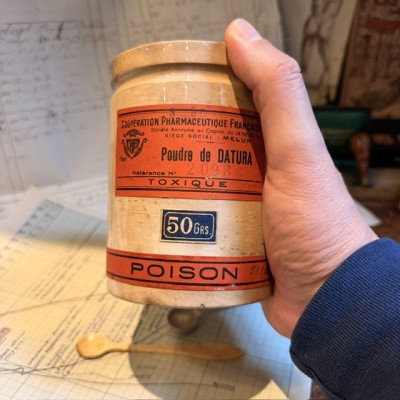
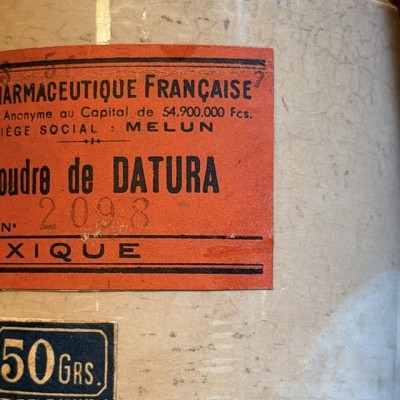
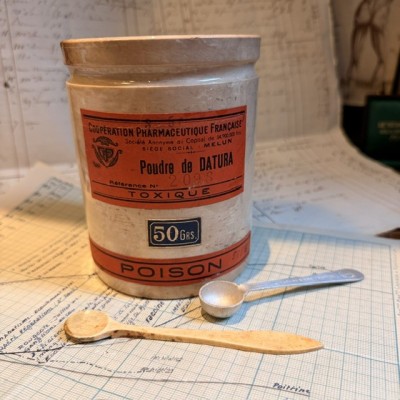
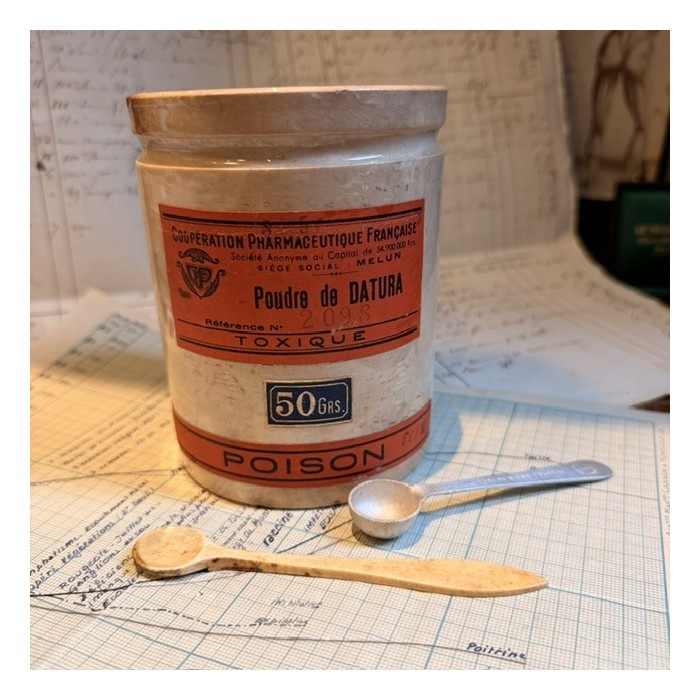
Datura powder
Antique earthenware pot
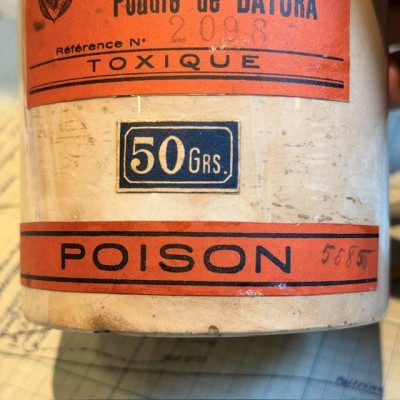
Intended for the exclusive use of pharmacists for making magistral preparations, the jar displays the regulatory labels "TOXIC" and the red banner "POISON".
Indicating to the pharmacist that it must be stored separately from other substances in the cabinet for toxic substances, the famous ‘poison cabinet’.
It comes from the former cellar-laboratory of a Parisian pharmacy. The bottles had not been moved from the shelves since the late 1950s. The cellar had served as a medical analysis laboratory and a laboratory for the pharmacy’s compounded preparations from 1900 until around 1950.
EMPTY
Datura powder
Large vintage laboratory pot from the beginning to the middle of the 20th century in beige enameled earthenware.
Intended for the exclusive use of pharmacists for making magistral preparations, the jar displays the regulatory labels "TOXIC" and the red banner "POISON".
Signaling to the pharmacist that it is imperative to keep apart the other substances in the cabinet of toxic substances, the famous poison cabinet.
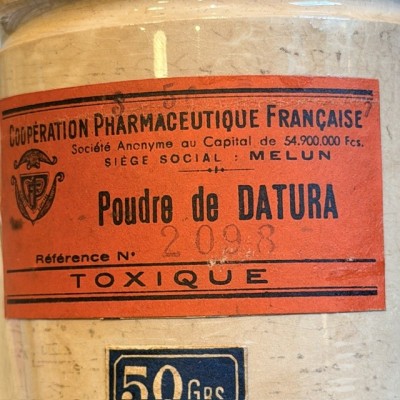
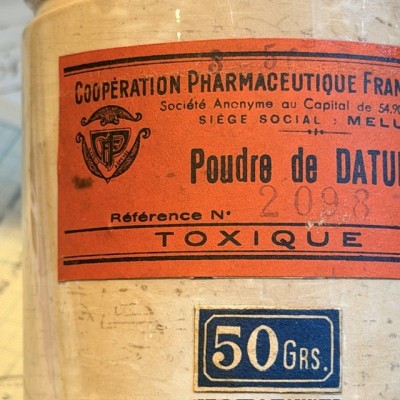
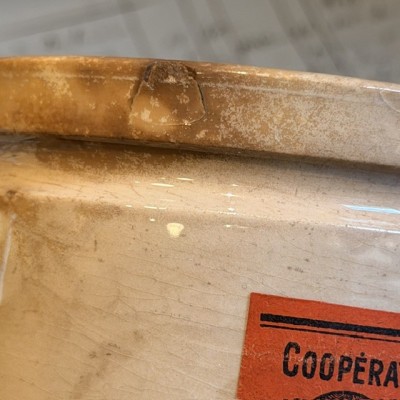
Label of the French Pharmaceutical Cooperation (Melun).
Formerly containing "Datura powder", a plant of the Solanaceae family known for its very high content of alkaloids (atropine and scopolamine).
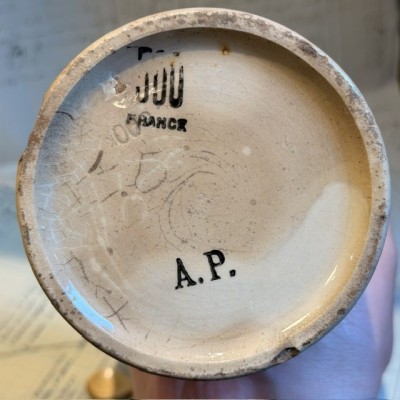
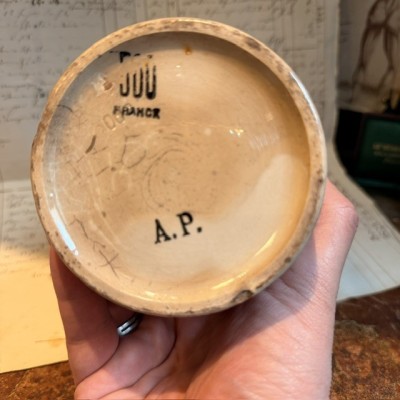
The bottom of the jar has its original factory markings: the "500" (500 ml) capacity, the "FRANCE" mention, and the in-house stamp "A.P."
In ancient pharmacy, Datura was used as an antispasmodic and a major sedative, especially in the form of smoking powders or cigarettes to dilate the bronchial tubes of asthmatics.
But the handling of this witches' plant was a perilous exercise because the border between the therapeutic effect and the fatal intoxication was thin.
Its absorption (ingestion or inhalation) is a source of hallucinations, abnormal behaviors, mental confusion, amnesia, delusions leading to coma and then cardiac and respiratory arrest.
It comes from an old cellar-laboratory in a Parisian pharmacy. The bottles had not moved since the late 1950s on the shelves. The cellar had served as a laboratory for medical analyses and a laboratory for magistral preparations of the pharmacy from 1900 until around 1950.
Material: Glazed earthenware
Dimensions: Height: 12 cm - Diameter: 9 cm
Period: Beginning - Middle 20th
EMPTY
Antique glass dropper in white glass
Apothecary - Pharmacy
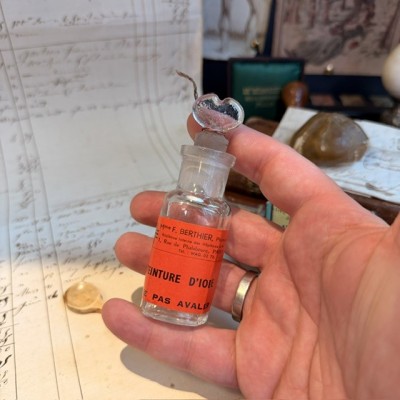
Iodine dye
Antique pharmacy bottle
With the inscription Teinture d'Iode molded in glass
EMPTY
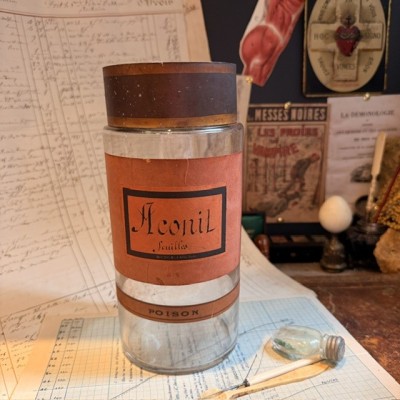
Aconit leaves - POISON
Antique pharmacy bottle - Wide-mouth apothecary jar.
19th-century mouth-blown glass
Red POISON label
Signaling to the pharmacist that it is imperative to keep apart the other substances in the cabinet of toxic substances, the famous poison cabinet.
A fascinating testimony to pharmacology
It comes from an old cellar-laboratory in a Parisian pharmacy. The bottles had not moved since the late 1950s on the shelves. The cellar had served as a laboratory for medical analyses and a laboratory for magistral preparations of the pharmacy from 1900 until around 1950.
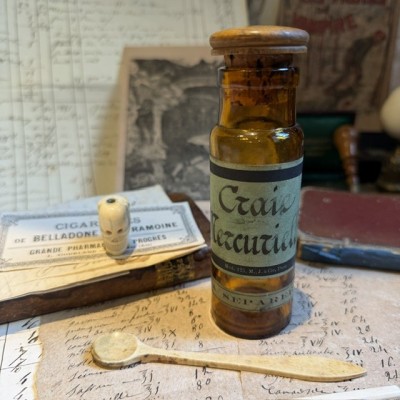
Mercury Chalk – Treatment for Syphilis
Antique amber glass bottle, with a boxwood and cork stopper.
Handwritten label, pen inscription ‘Mercurial Chalk’, neat calligraphy with its thick and thin strokes.
Bottom band ‘TO BE SEPARATED’, instructing the pharmacist to store it in the cabinet for toxic substances, the famous poison cabinet.
It comes from the former cellar-laboratory of a Parisian pharmacy. The bottles had not been moved from the shelves since the late 1950s. The cellar had served as a medical analysis laboratory and a laboratory for the pharmacy’s compounded preparations from 1900 until around 1950.
Period: Judging by the handwriting, late 19th century
EMPTY
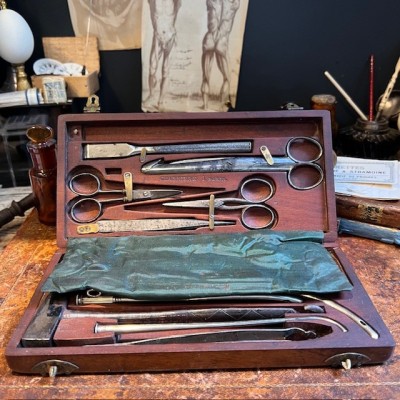
Portable autopsy kit from the mid-19th century
Maison Charrière in Paris, circa 1845–1870
Mahogany case for autopsy and dissection
Small portable mahogany case containing a set of autopsy instruments: hook hammer, bone chisel, enterotome scissors, probes, hooks and suture needles. Used by forensic scientists and anatomists for opening and examining bodies.
Charrière, a major 19th-century Parisian manufacturer, was a pioneer in the design of high-precision surgical and anatomical instruments.
Mahogany and polished steel: 23 × 11 cm
Please note: crack in the wood under the case
A beautiful object, very rare to find
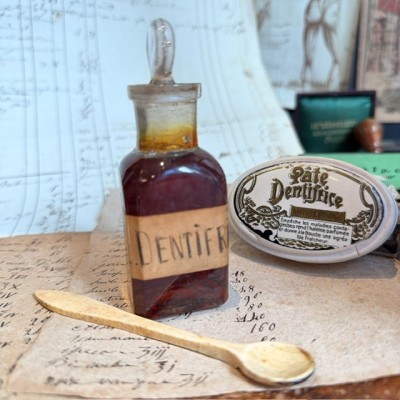
Toothpaste elixir
Antique pharmacy bottle
Handwritten label with pen
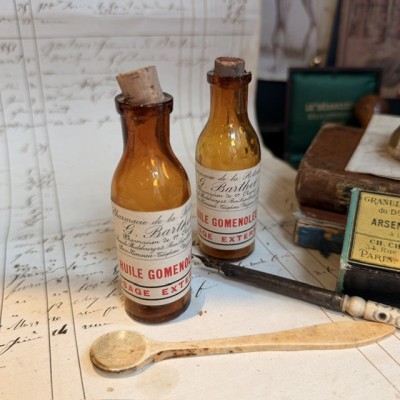
Huile goménolée
Antique pharmacy bottle
EMPTY
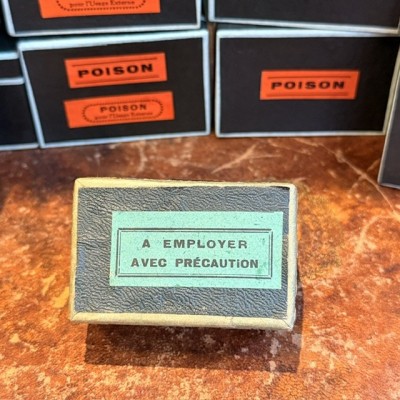
Antique labels in a pharmacy box for cures made of canvas cardboard
To be used with care label
The pharmacist used his boxes of medicine to put away the labels he would then put on the bottles that he would resell to his customers.
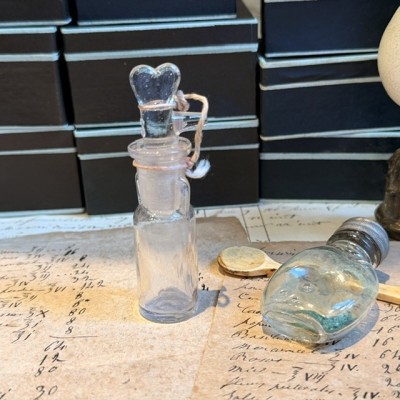
Dropper bottle
Antique pharmacy bottle - 1920-30's
Glass stopper honed in the shape of a heart for better grip
EMPTY
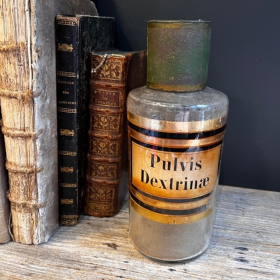
Dextrin powder - Starch - Pulvis Dextrinae
Antique pharmacy bottle
Blown glass
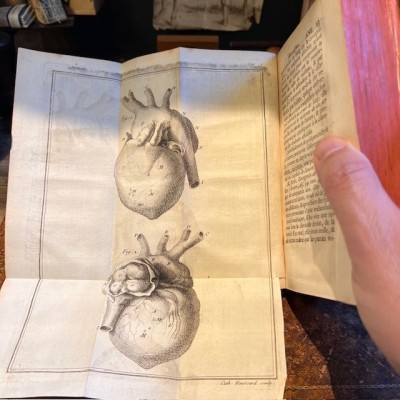
Bibliothèque Choisie de Médecine - Volume 6
Selected Library of Medicine
By François PLANQUE - 1749
Complete original edition with 5 fold-out plates
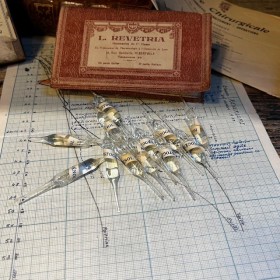
Antique ampoule for hypodermic injection
Histogénol - (circa 1900)
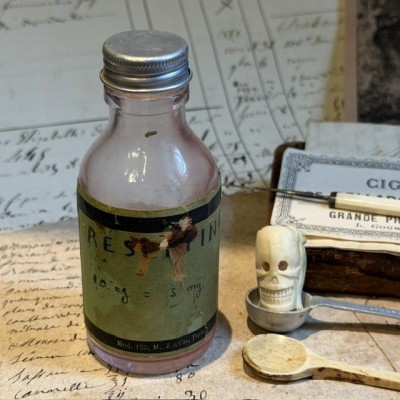
Reseptine
Antique pharmacy bottle
EMPTY
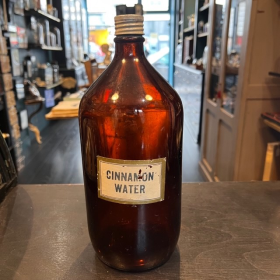
Cinnamon Water
Antique and large brown English pharmacy bottle
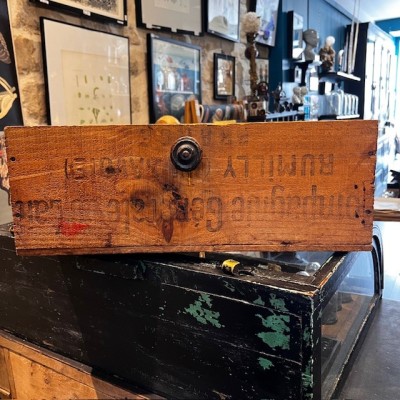
Antique wooden advertising case for Mont Blanc - Rumilly condensed milk - Drawer
Found in Parisian cellars that served as laboratories and storage rooms for pharmacists preparing their masterful concoctions from 1900 to 1950.
It was used to store products, glass bottles, etc.
This box is no longer just a transport container, it has been adopted as a piece of furniture.
Period: Circa 1920–1940

Antique Guyon bladder syringe in bakelite
Beginning of XXth century
Datura powder
Antique earthenware pot
Intended for the exclusive use of pharmacists for making magistral preparations, the jar displays the regulatory labels "TOXIC" and the red banner "POISON".
Indicating to the pharmacist that it must be stored separately from other substances in the cabinet for toxic substances, the famous ‘poison cabinet’.
It comes from the former cellar-laboratory of a Parisian pharmacy. The bottles had not been moved from the shelves since the late 1950s. The cellar had served as a medical analysis laboratory and a laboratory for the pharmacy’s compounded preparations from 1900 until around 1950.
EMPTY