
- New

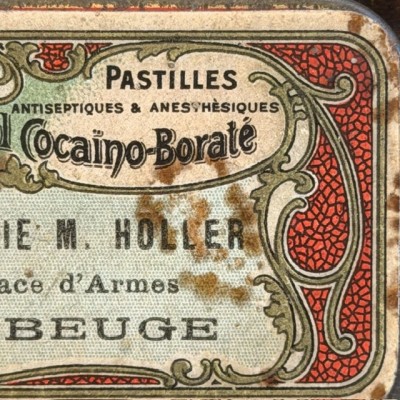
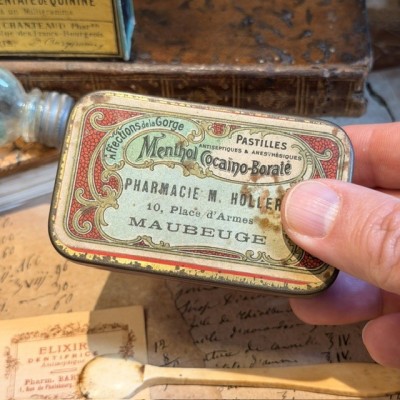
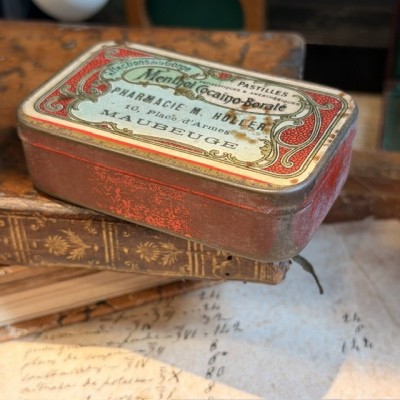
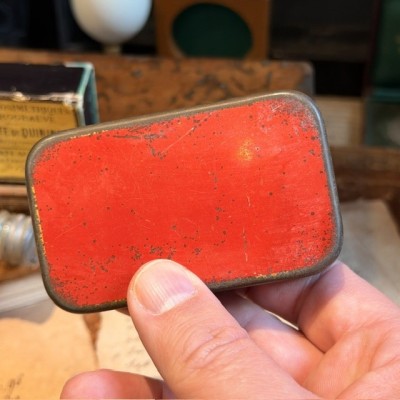
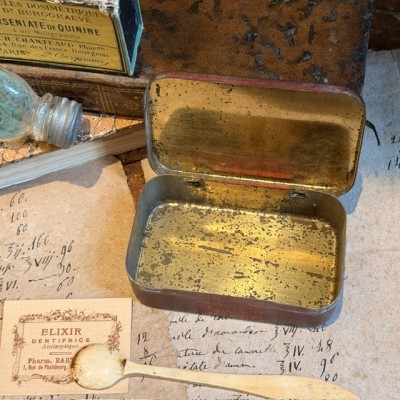
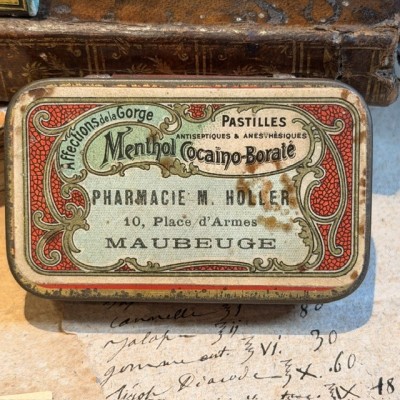
Box of cocaine lozenges
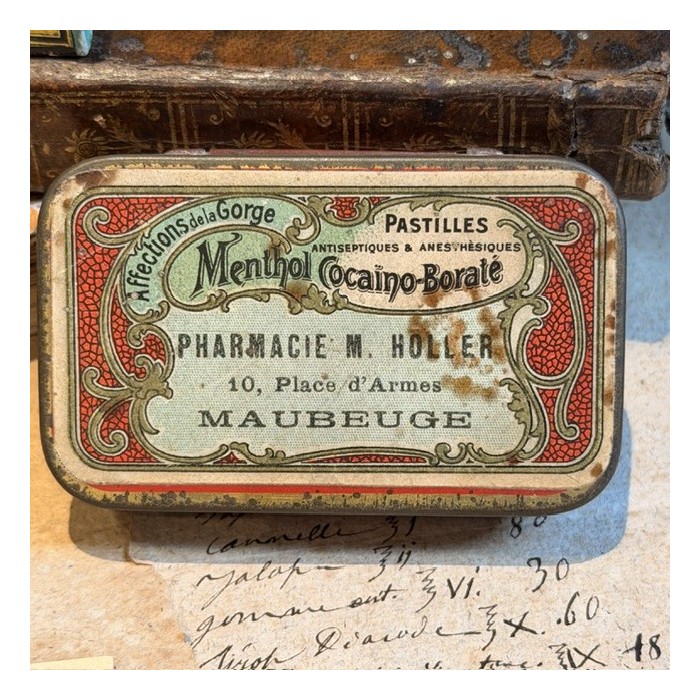
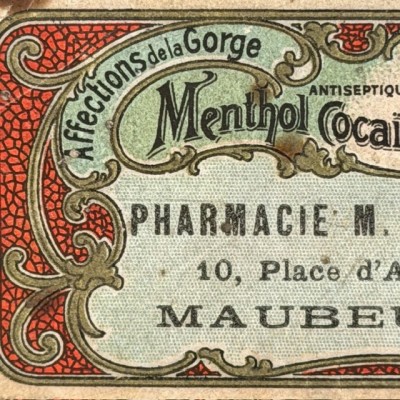
Menthol - Cocaïno - Boraté by the Pharmacist Holler in Maubeuge
Magnificent lid typical of Art Nouveau: 1900-1910
EMPTY
Box of cocaine lozenges
Menthol - Cocaïno - Borate
Rare and superb antique pharmacy box made of lithographed sheet metal.
This box comes from the pharmacy of Dr. M. Holler, formerly located at 10, Place d'Armes in Maubeuge (Nord).
Its lid features a magnificent graphic design typical of Art Nouveau (period 1900-1910) with organic lines and asymmetrical vegetal volutes.
The richness of its chromatic palette combining a vermilion red background with a mosaic effect, a water-green cartridge and a golden decor makes it a witness of remarkable printing quality for the time.
From 1900 to 1950 it was not uncommon to see cocaine as an ingredient in certain pastilles, notably for throat ailments.
This box is a precious memorial witness of the Place d'Armes in Maubeuge, which suffered heavy destruction during the two World Wars and has now disappeared.
Very beautiful decor
Dimensions: 8x5cm
EMPTY
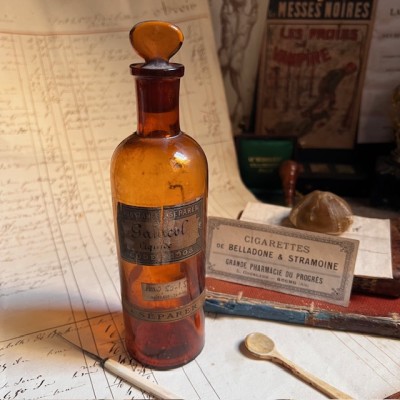
Gaïacol liquide
Antique pharmacy bottle
Green label: SUBSTANCE TO BE SEPARATED - CODEX 1908
This means that this bottle had to be kept separate from the others because it was dangerous in high doses
EMPTY
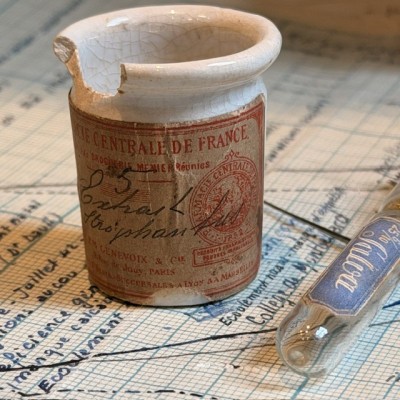
Excerpt from Strophanthus MENIER - TINY pot
Early/ mid-20th century pharmacy jar in white earthenware
Beautiful labels: Red POISON label with the famous skull and crossbones and the Poisonous Substances label
Signaling to the pharmacist that it is imperative to keep apart the other substances in the cabinet of toxic substances, the famous poison cabinet.
It comes from an old cellar-laboratory in a Parisian pharmacy. The bottles had not moved since the late 1950s on the shelves. The cellar had served as a laboratory for medical analyses and a laboratory for magistral preparations of the pharmacy from 1900 until around 1950.
EMPTY
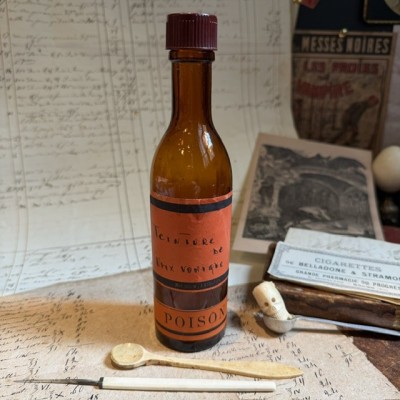
Nux Vomica Tincture – Strychnine
Antique amber glass bottle
Red ‘POISON’ label
Indicating to the pharmacist that it must be stored separately from other substances in the cabinet for toxic substances, the famous ‘poison cabinet’.
It comes from the former cellar-laboratory of a Parisian pharmacy. The bottles had not been moved from the shelves since the late 1950s. The cellar had served as a medical analysis laboratory and a laboratory for the pharmacy’s compounded preparations from 1900 until around 1950.
EMPTY
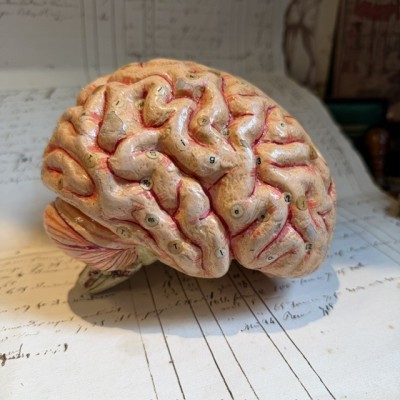
Painted papier-mâché anatomical model of the brain
Produced by Établissements Auzoux
Model No. 12 from the 1874 catalogue
Dismantlable, numbered model, used for medical teaching.
A rare item in excellent working condition
This is a 1:1 scale model of the brain, sold separately at the time as a demonstration model; it is not a brain that was found inside anatomical manikins.

Antique Guyon bladder syringe in bakelite
Beginning of XXth century
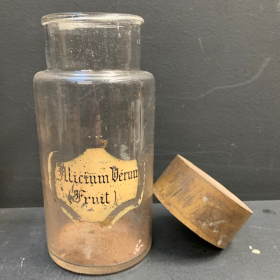
Antique pharmacy jar: Illicium verum (Fruit) / Star anise
Glass pharmacy bottle - XIXth century
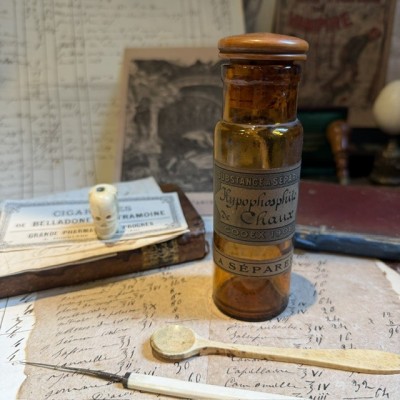
Calcium hypophosphite
Antique amber glass bottle, with a boxwood and cork stopper.
Green label: SUBSTANCE TO BE STORED SEPARATELY – CODEX 1908
Handwritten label, pen inscription, neat calligraphy, with its thick and thin strokes.
Indicating to the pharmacist that it must be stored separately from other substances in the cabinet for toxic substances, the famous ‘poison cabinet’.
It comes from the former cellar-laboratory of a Parisian pharmacy. The bottles had not been moved from the shelves since the late 1950s. The cellar had served as a medical analysis laboratory and a laboratory for the pharmacy’s compounded preparations from 1900 until around 1950.
EMPTY
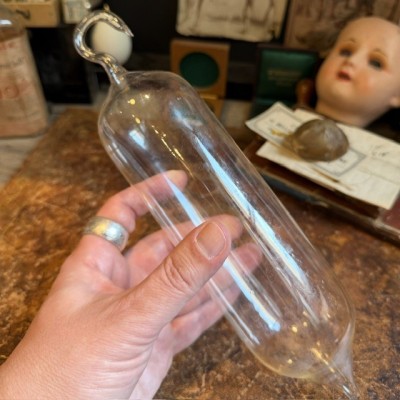
Antique sodium chloride infusion bulb
500cm3
in its original box - Still full
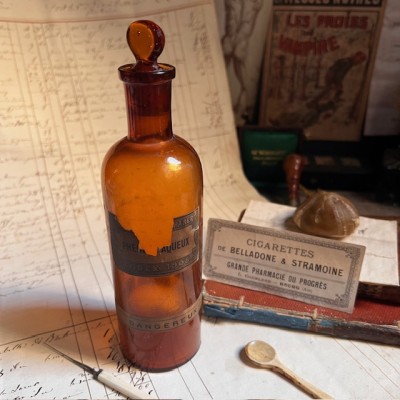
Phénol Aqueux
Antique pharmacy bottle
Green label: SUBSTANCE TO BE SEPARATED - CODEX 1908
This means that this bottle had to be kept separate from the others because it was dangerous - POISON
EMPTY
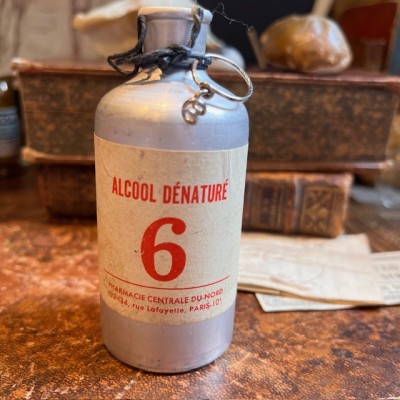
Alcool dénaturé - Alcool à brûler
Denatured alcohol - Methylated spirits
Antique pharmacy bottle - Apothecary
Empty
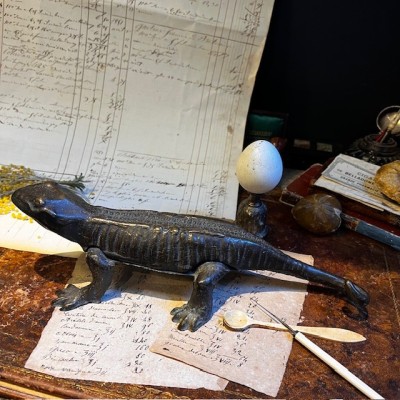
Salamander - Pharmacy corkscrew in bronze
XIXth century
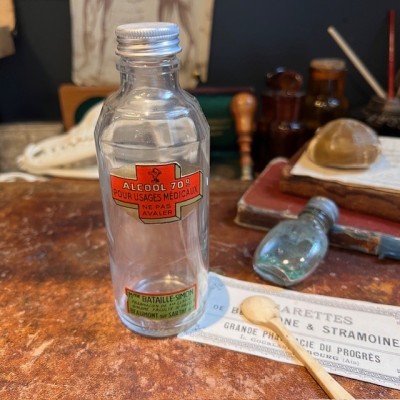
70° alcohol
Antique pharmacy bottle - Apothecary
Mrs Bataille-Simon, First Class Pharmacist in Beaumont sur Sarthe - Tel 9
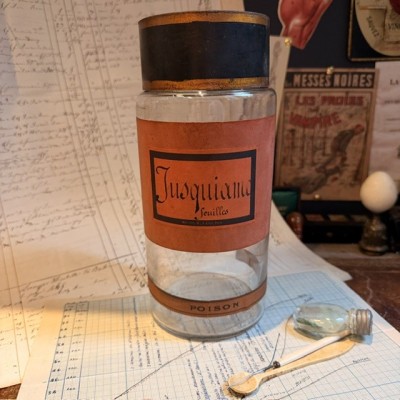
Jusquiame leaves - POISON
Antique pharmacy bottle - Wide-mouth apothecary jar.
19th-century mouth-blown glass
Red POISON label
Signaling to the pharmacist that it is imperative to keep apart the other substances in the cabinet of toxic substances, the famous poison cabinet.
A fascinating testimony to pharmacology
It comes from an old cellar-laboratory in a Parisian pharmacy. The bottles had not moved since the late 1950s on the shelves. The cellar had served as a laboratory for medical analyses and a laboratory for magistral preparations of the pharmacy from 1900 until around 1950.
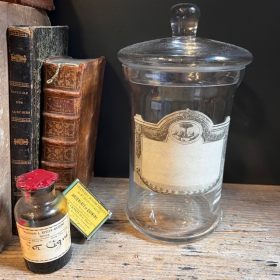
Herbalist's or Pharmacist's jar
Antique blank label of the XVIIIth century
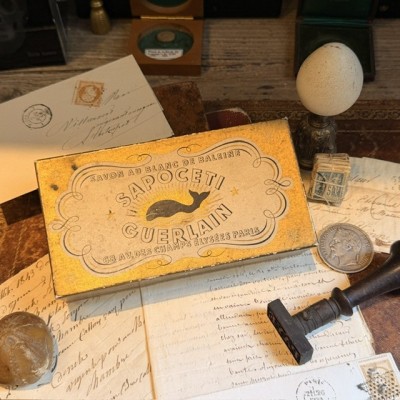
Soap box SAPOCETI GUERLAIN
Whale white soap
Decor 1920-130 with the stylized whale - Art Deco
Sold empty, without the soaps
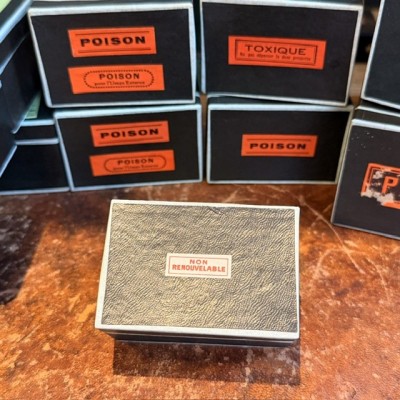
Antique labels in a pharmacy box for cures made of canvas cardboard
Non-renewable label
The pharmacist used his boxes of medicine to put away the labels he would then put on the bottles that he would resell to his customers.
Box of cocaine lozenges
Menthol - Cocaïno - Boraté by the Pharmacist Holler in Maubeuge
Magnificent lid typical of Art Nouveau: 1900-1910
EMPTY