- New
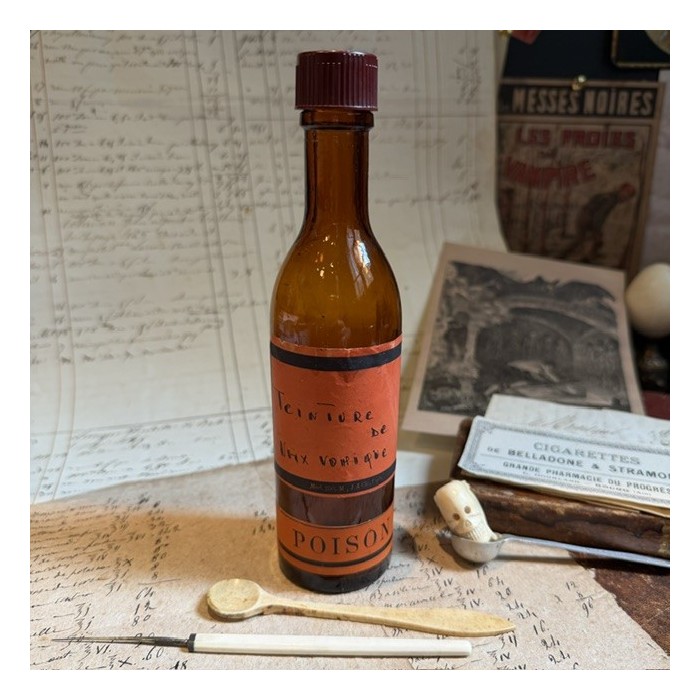
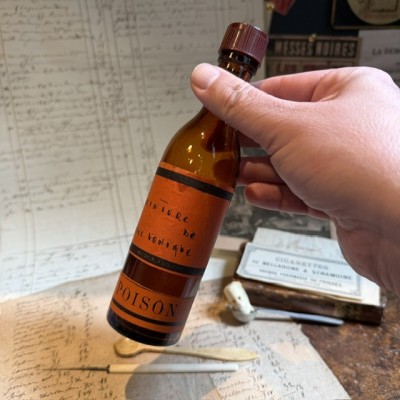
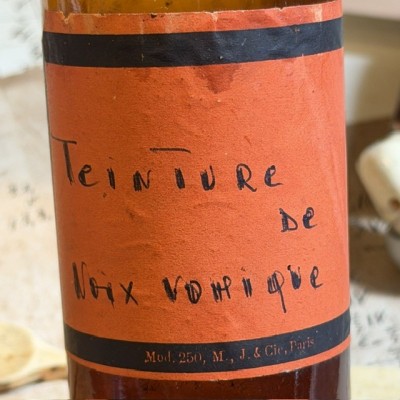
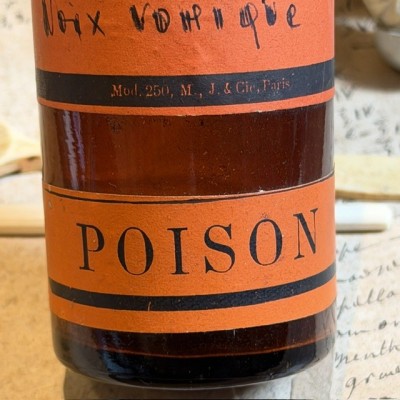
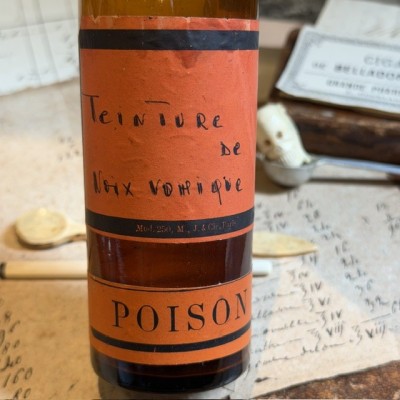
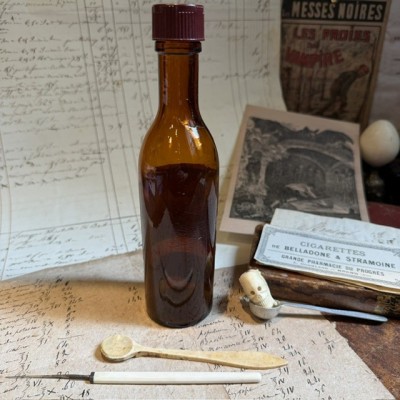
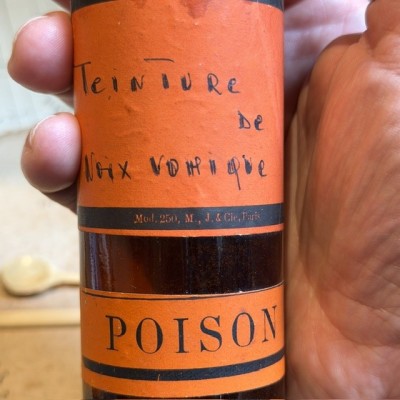
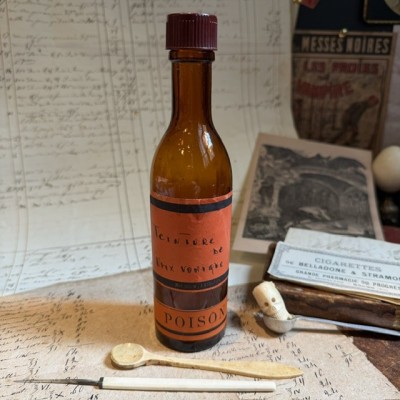
Nux Vomica Tincture – Strychnine
Antique amber glass bottle
Red ‘POISON’ label
Indicating to the pharmacist that it must be stored separately from other substances in the cabinet for toxic substances, the famous ‘poison cabinet’.
It comes from the former cellar-laboratory of a Parisian pharmacy. The bottles had not been moved from the shelves since the late 1950s. The cellar had served as a medical analysis laboratory and a laboratory for the pharmacy’s compounded preparations from 1900 until around 1950.
EMPTY
Nux Vomica Tincture – Strychnine
Antique amber glass bottle
Red ‘POISON’ label
Indicating to the pharmacist that it must be stored separately from other substances in the toxic substances cabinet, the infamous ‘poison cabinet’.
The vomit nut is the seed of the Strychnos nux-vomica tree, native to South-East Asia.
This tincture (the maceration of the seeds in alcohol) is extremely rich in highly toxic alkaloids, primarily strychnine and brucine.
In pharmacy, in infinitesimal doses (in drops), it was used as a central nervous system stimulant and a cardiac stimulant.
But it is a potent poison. At toxic doses, strychnine causes generalised tetanic convulsions followed by death by asphyxiation.
It comes from the former cellar-laboratory of a Parisian pharmacy. The bottles had not been moved from the shelves since the late 1950s. The cellar had served as a medical analysis laboratory and a laboratory for the pharmacy’s compounded preparations from 1900 until around 1950.
Height of the bottle: 18.5cm with stopper
EMPTY

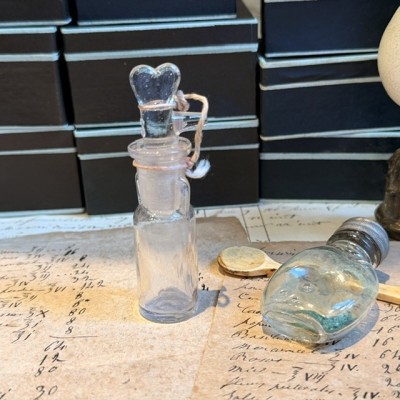
Alum
Antique pharmacy bottle
Apothecary vial
Color pigments have been added to the inside of the jar
Sparteine sulphate
Used as a tonic for nervous syndromes at the very beginning of the 20th century, sparteine was also used to facilitate morphine withdrawal.
Antique pharmacy bottle
Apothecary vial
Some product left inside
Antique storage box for glass eyes in blue felt
50 compartments
Interior in blue felt and silk
Tincture of Jalap Compound also known as German brandy
A purgative powder is extracted from the Jalap plant.
Antique pharmacy bottle
Apothecary vial
Rue Powder
Rue was an abortive plant
Antique pharmacy bottle - Poison - Toxic
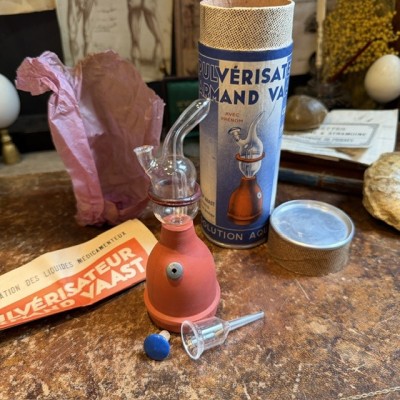
Dr Potain vacuum cleaner in its case
Late 19th century - 1885-1894
Antique medical instrument from manufacturer MATHIEU in Paris
non-functional
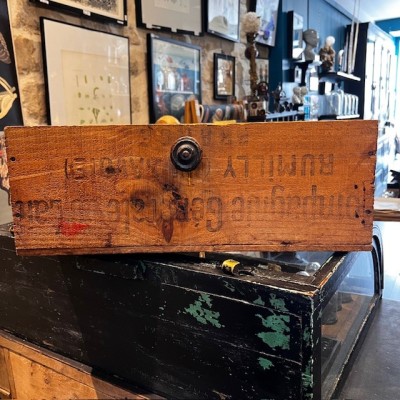
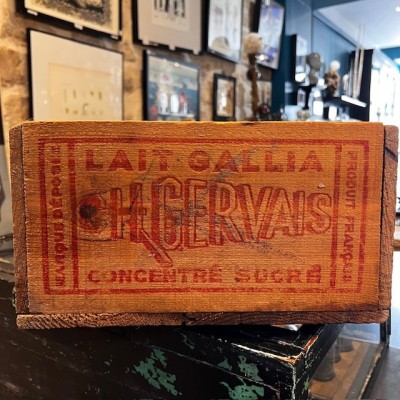
Antique wooden advertising crate for Gallia / Ch. Gervais infant milk concentrate
Found in Parisian cellars that served as laboratories and storage rooms for pharmacists preparing their masterful concoctions from 1900 to 1950.
It was used to store products, glass bottles, etc.
Period: Circa 1947–1955
Doctor Louis Jubé pure blood transfusion syringe
For arm-to-arm transfusions
In its metal box
Around 1925/1930
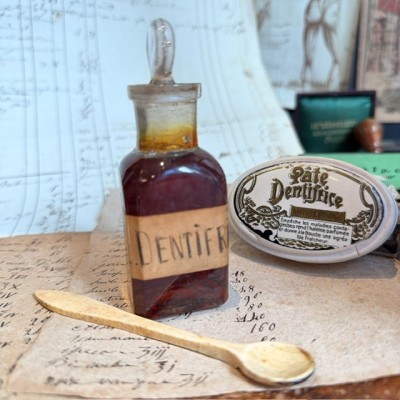
Eau de Botot - Tooth-cleansing Elixir
CODEX 1884
Antique 19th-century pharmacy bottle
EMPTY
Fluorure de sodium - sodium fluoride
Antique pharmacy bottle
EMPTY
Antique pharmacy jar: Sodium bicarbonate and Gold Flower tablets
Glass pharmacy bottle - XIXth century
Berthet - Pharmacie de la Rotonde
Antique pharmacy bottle
EMPTY
Bi-Carbonate de Soude - Sodium bicarbonate
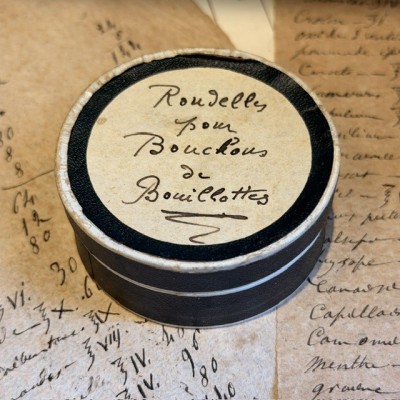
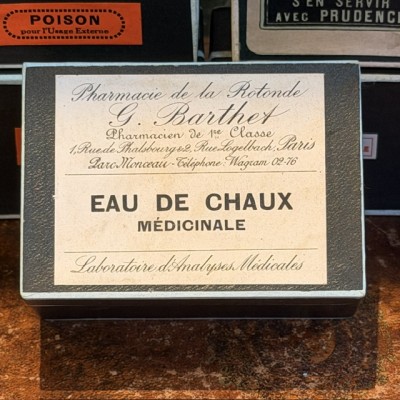
Antique cardboard pharmacy box
Beautiful typography typical of the Belle Époque: circa 1910-1920
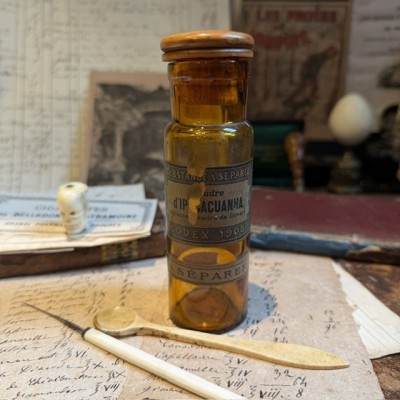
Ipecacuanha Opiate Powder - Dover's Powder
Antique amber glass bottle, with a boxwood and cork stopper.
Green label: SUBSTANCE TO BE STORED SEPARATELY – CODEX 1908
Indicating to the pharmacist that it must be stored separately from other substances in the cabinet for toxic substances, the famous ‘poison cabinet’.
It comes from the former cellar-laboratory of a Parisian pharmacy. The bottles had not been moved from the shelves since the late 1950s. The cellar had served as a medical analysis laboratory and a laboratory for the pharmacy’s compounded preparations from 1900 until around 1950.
EMPTY
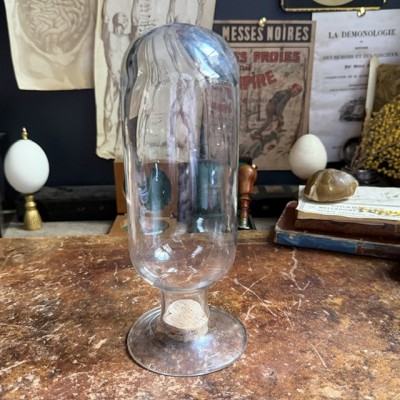
Specimen jar in blown glass – Inverted apothecary jar
Size S
A vintage laboratory or conservatory container designed for the display and preservation of biological or botanical specimens
Gardénal - Phenobarbital - Barbiturates
Phényléthylmalonylurée
Antique amber glass bottle, with a boxwood and cork stopper.
Label: DANGEROUS
Indicating to the pharmacist that it must be stored separately from other substances in the cabinet for toxic substances, the famous ‘poison cabinet’.
It comes from the former cellar-laboratory of a Parisian pharmacy. The bottles had not been moved from the shelves since the late 1950s. The cellar had served as a medical analysis laboratory and a laboratory for the pharmacy’s compounded preparations from 1900 until around 1950.
EMPTY
Nux Vomica Tincture – Strychnine
Antique amber glass bottle
Red ‘POISON’ label
Indicating to the pharmacist that it must be stored separately from other substances in the cabinet for toxic substances, the famous ‘poison cabinet’.
It comes from the former cellar-laboratory of a Parisian pharmacy. The bottles had not been moved from the shelves since the late 1950s. The cellar had served as a medical analysis laboratory and a laboratory for the pharmacy’s compounded preparations from 1900 until around 1950.
EMPTY