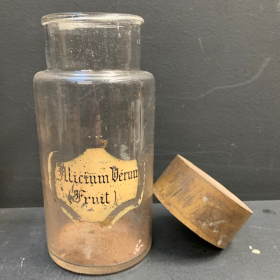

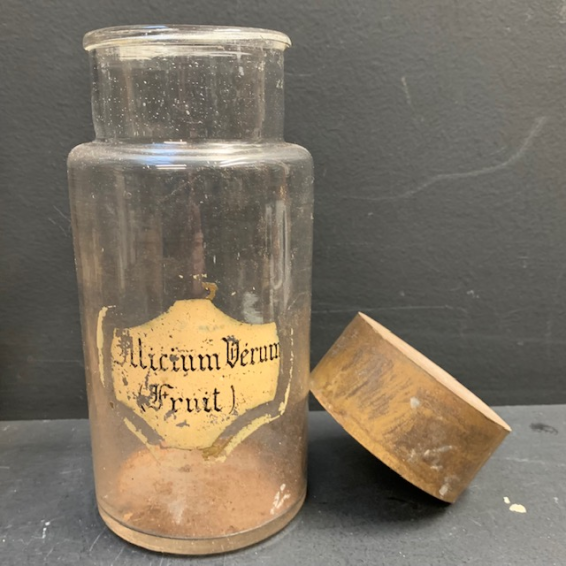
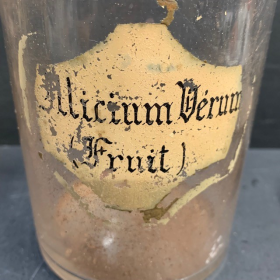
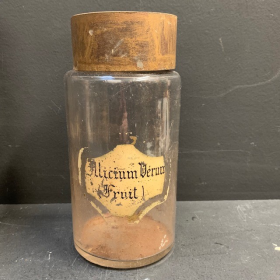
Antique pharmacy jar: Illicium verum (Fruit) / Star anise
Glass pharmacy bottle - XIXth century
Illicium verum (Fruit) / Star anise
Antique pharmacy or herbalist jar in blown glass from the XIXth century
Beautiful painted label with frame
Glass blown with the mouth, it remains the trace of the pontil of the cane below.
Gilded stopper in sheet metal - Very faded label
Height 20cm approximately with stopper Diameter: 9cm
Plant of the digestion - Soothing of the respiratory tracts.
EMPTY
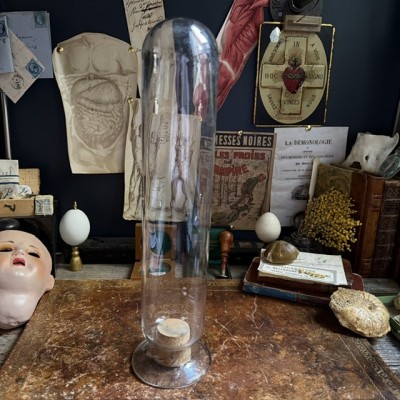
Specimen jar in blown glass - Inverted apothecary jar - Seed vase
Size L
A vintage laboratory or conservatory container designed for the display and preservation of biological or botanical specimens
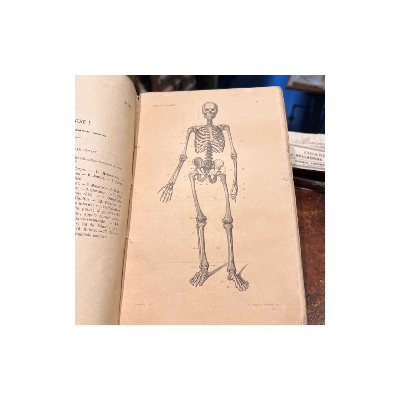
Anatomical Atlas by A. Bossu
Anthropology - End of the XIXth century
20 engravings of Anatomy by Léveillé

Carbonate de Potasse
Antique pharmacy bottle
Early 20th century (circa 1910 - 1920)
EMPTY
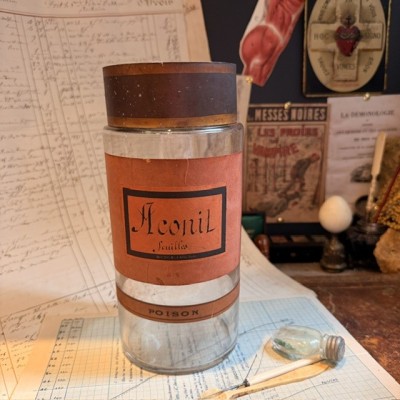
Aconit leaves - POISON
Antique pharmacy bottle - Wide-mouth apothecary jar.
19th-century mouth-blown glass
Red POISON label
Signaling to the pharmacist that it is imperative to keep apart the other substances in the cabinet of toxic substances, the famous poison cabinet.
A fascinating testimony to pharmacology
It comes from an old cellar-laboratory in a Parisian pharmacy. The bottles had not moved since the late 1950s on the shelves. The cellar had served as a laboratory for medical analyses and a laboratory for magistral preparations of the pharmacy from 1900 until around 1950.
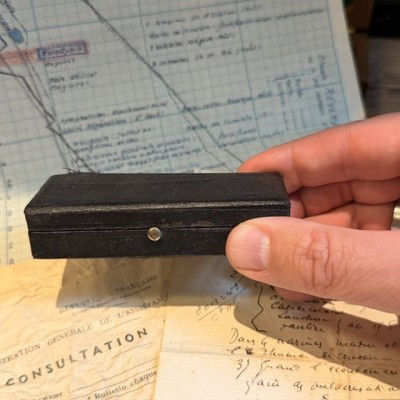
Antique Pravaz hypodermic injection syringe - 19th century
Syringe in it's case
not functional
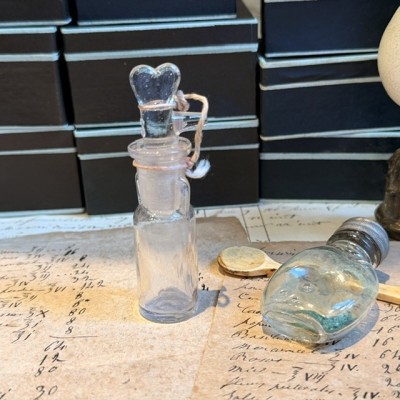
Dropper bottle
Antique pharmacy bottle - 1920-30's
Glass stopper honed in the shape of a heart for better grip
EMPTY
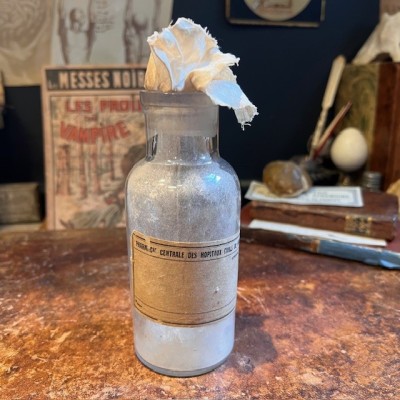
Central Pharmacy of the Civil Hospitals of Paris
Antique pharmacy bottle
Apothecary
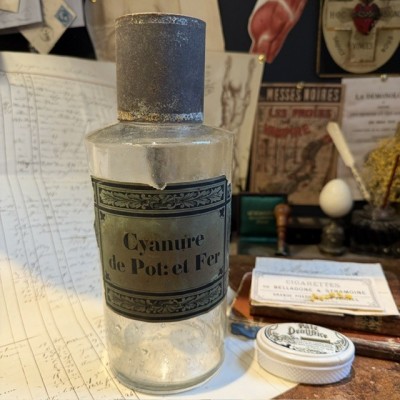
Potassium Cyanide and Iron
Also known as yellow potassium prussiate
Antique 19th-century pharmacy bottle
EMPTY
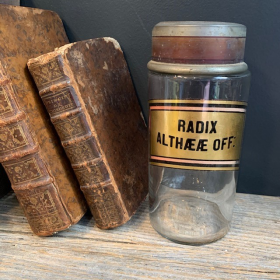
Antique 19th century pharmacy bottle
Radix althaeae Off - Marshmallow
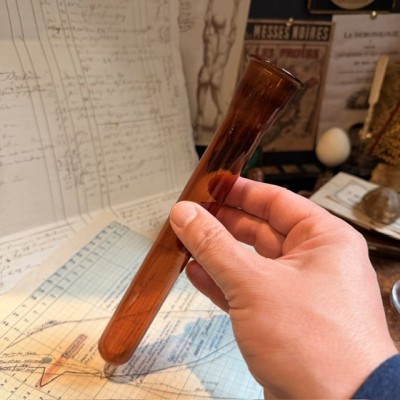
Large antique laboratory test tube made of actinic glass (brown glass) - Pharmacy
Its unusual dimensions make it a model with a beautiful presence
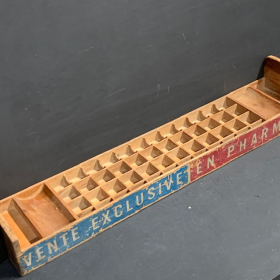
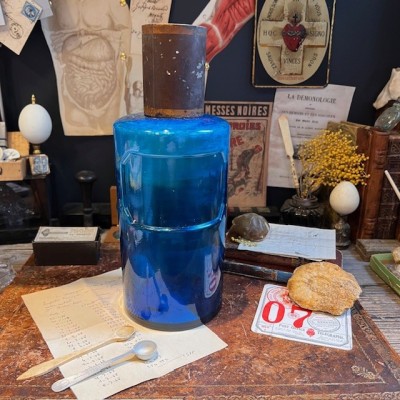
Very Large cobalt blue glass pharmacy bottle - Apothecary - Shouldered - H27.5cm - 19th century
Shouldered apothecary bottle - Antique pharmacy bottle
Mouth-blown glass - Cobalt blue color tinted throughout
This large-capacity jar was a storage jar intended for stockpiling
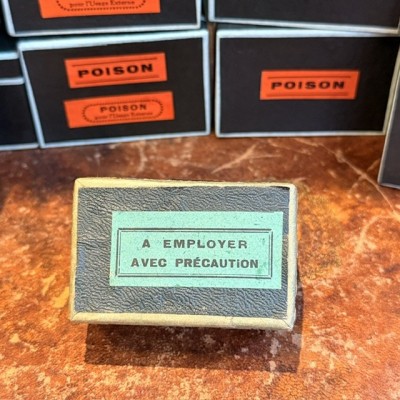
Antique labels in a pharmacy box for cures made of canvas cardboard
To be used with care label
The pharmacist used his boxes of medicine to put away the labels he would then put on the bottles that he would resell to his customers.
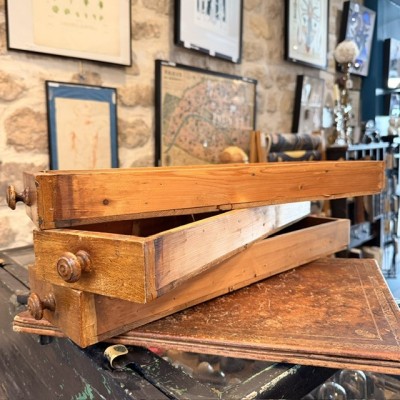
The apothecary’s Drawer - Size L
Antique wooden pharmacy drawer that can be used as a storage box - Craft Furniture Drawer
To be diverted on the shelf or niche for your curiosities
Antique hand-crafted manufacturing with dovetail joints and turned wooden pull knob
Width: 13cm - Length: 49cm - Height: 5cm
Sold empty, without accessories

Mercury Proto-Iodide - Syphilis Treatment
Antique pharmacy bottle.
Red ‘POISON’ label
Indicating to the pharmacist that it must be stored separately from other substances in the cabinet for toxic substances, the famous "poison cabinet".
It comes from the former cellar-laboratory of a Parisian pharmacy. The bottles had not been moved from the shelves since the late 1950s. The cellar had served as a medical analysis laboratory and a laboratory for the pharmacy’s compounded preparations from 1900 until around 1950.
Period: Late 19th century - Very early 20th century (circa 1890–1910)
EMPTY
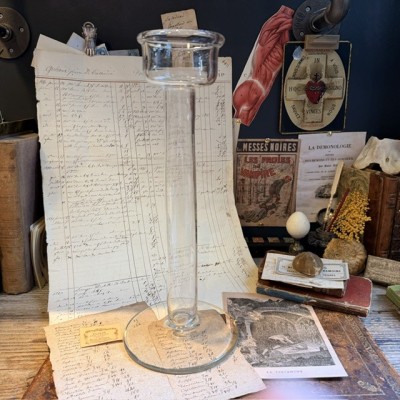
Test Tube with Special Bulb for Mercury Ureometer - 1900 - Pharmacy - Apothecary
Period: 1900 - Pharmacy - Apothecary
To be diverted into a soliflore vase
Antique pharmacy jar: Illicium verum (Fruit) / Star anise
Glass pharmacy bottle - XIXth century