

- New
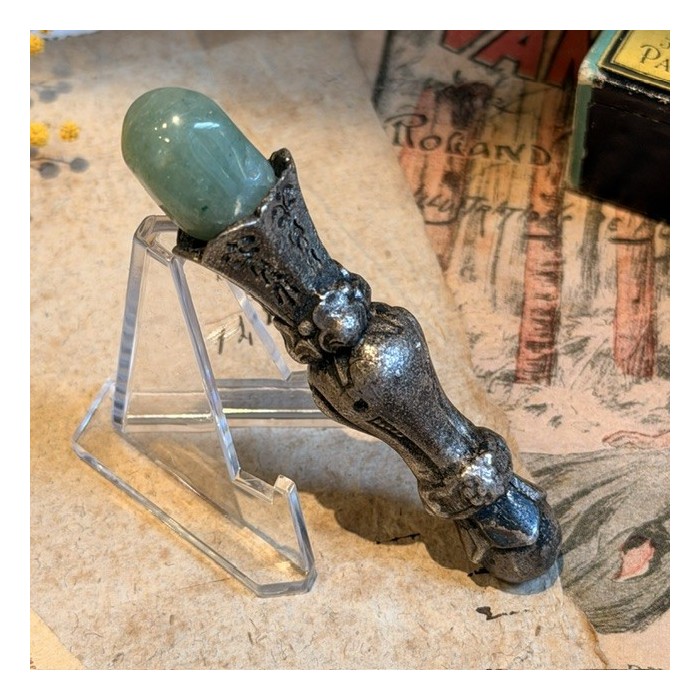
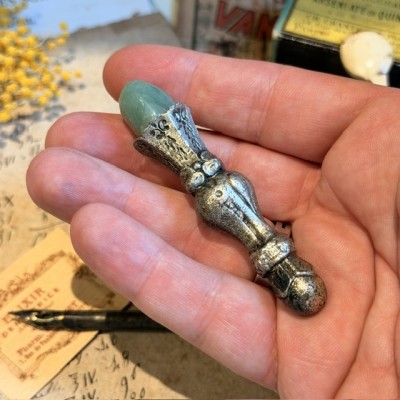
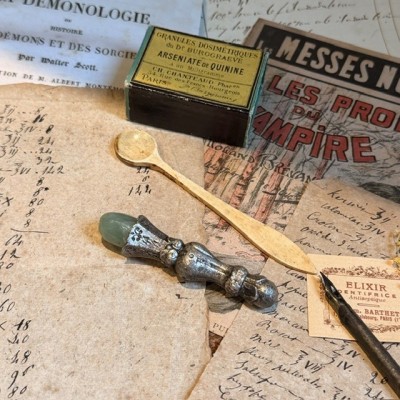
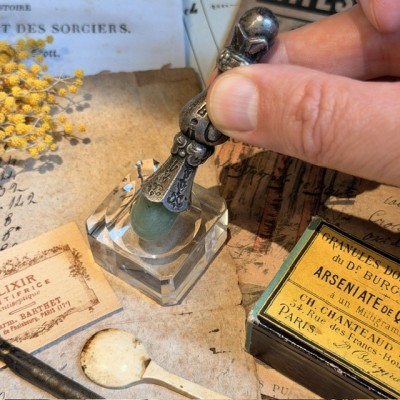
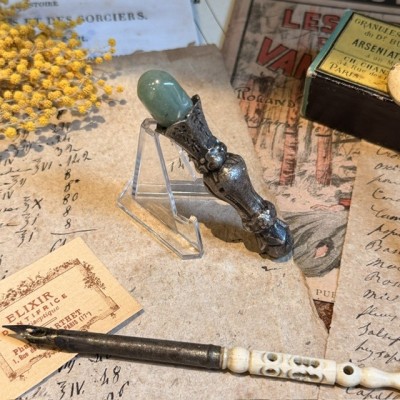
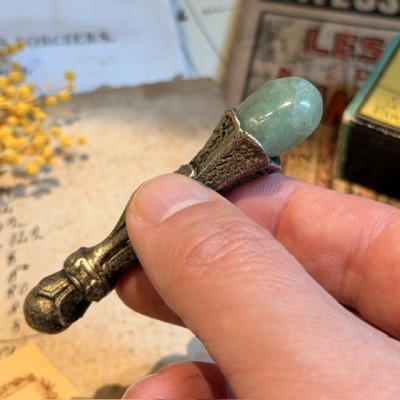
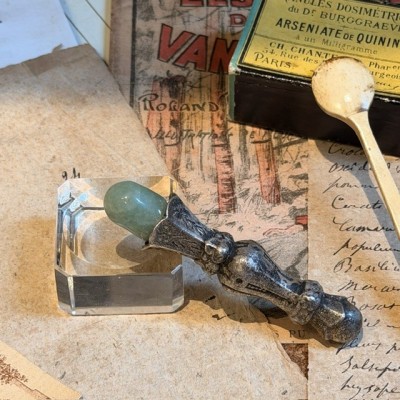
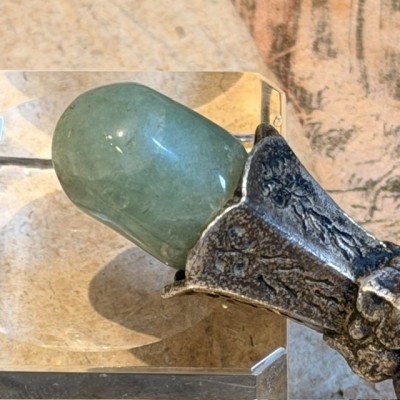
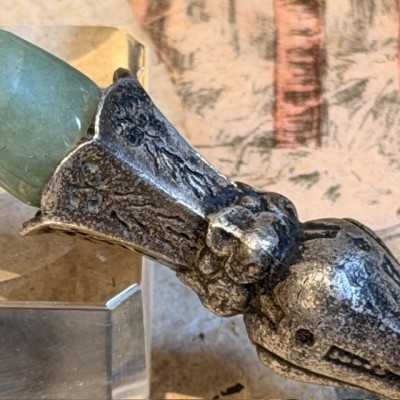
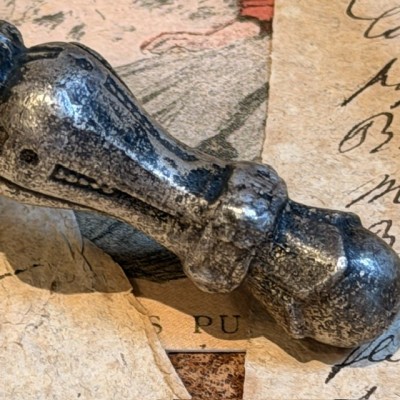
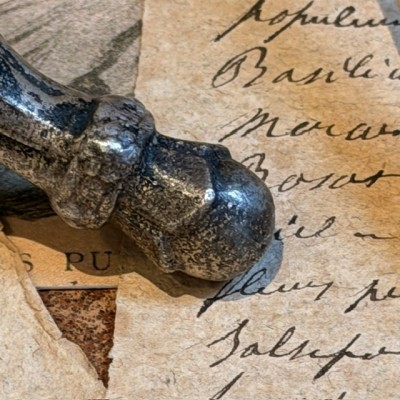
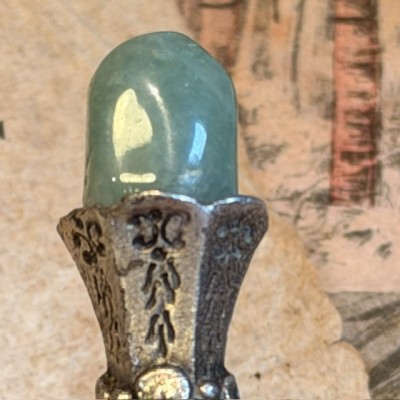
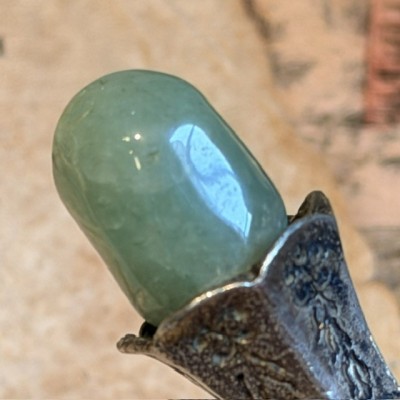
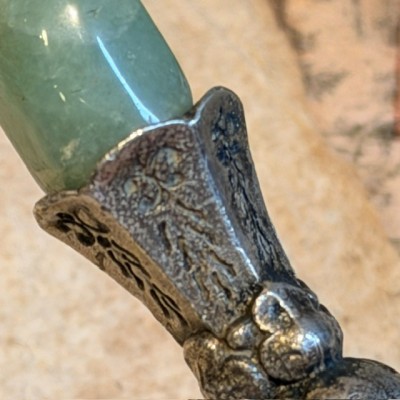
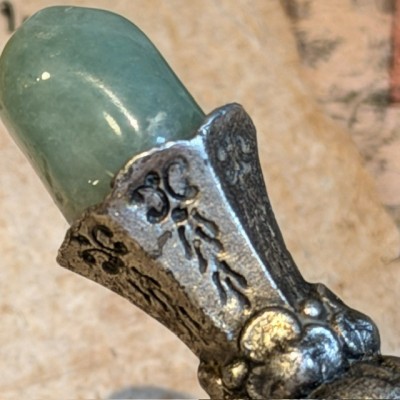
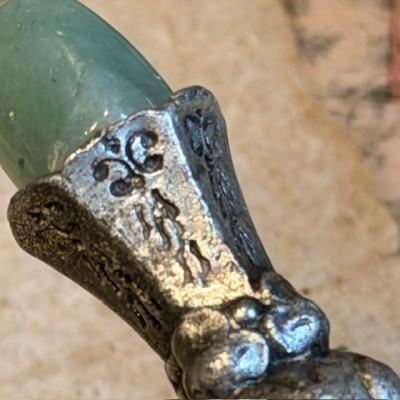
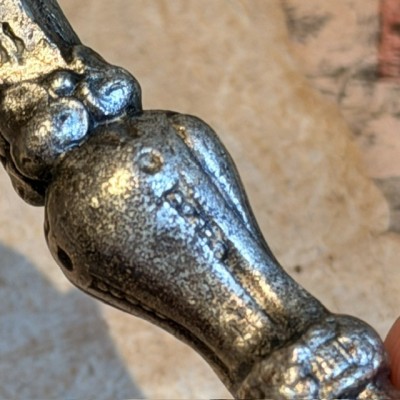
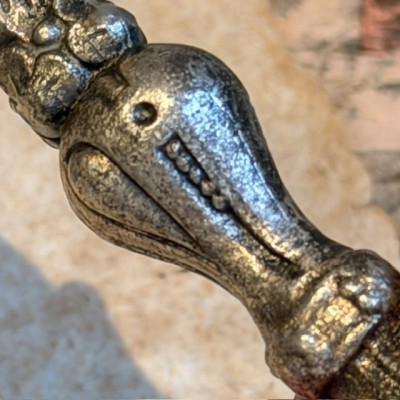
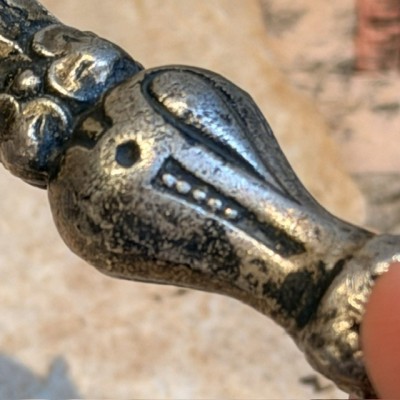
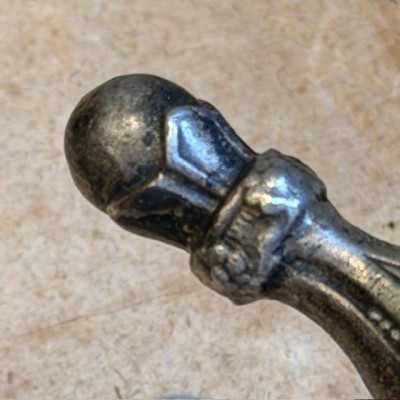
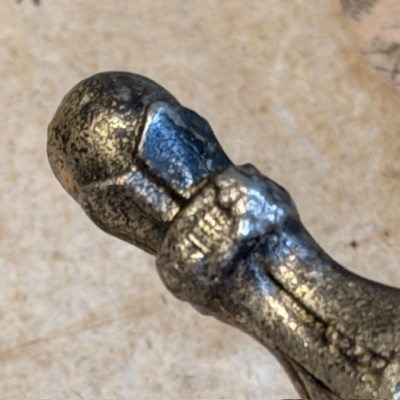
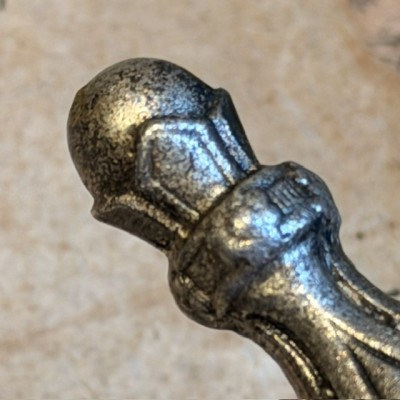
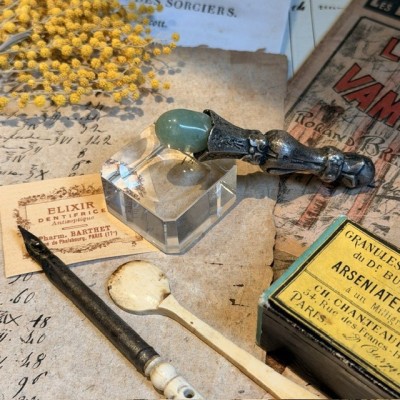
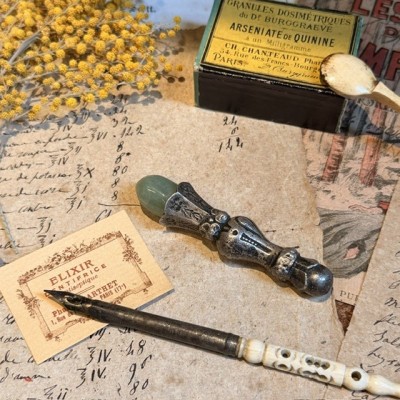
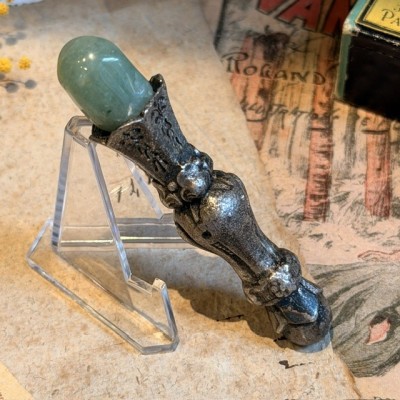
Laboratory pestle in chiseled metal and apothecary hard stone
Possibly an agate or jade
Dating: Belle Époque (Circa 1890 - 1910)
Laboratory pestle in chiseled metal and hard stone
Possibly an agate or jade.
Small pestle used by the apothecary or pharmacist.
Its ergonomic shape and rounded pommel allowed a firm grip to exert an effective rotary pressure, probably in small miniature mortars.
In herbalism, pharmacy, or chemistry, the choice of a hard stone for the end of the pestle met strict technical laboratory requirements:
Chemical inertia: Unalterable, does not react with acids or corrosive substances and does not pollute formulas.
Zero porosity: Its impermeable surface prevents the encrustation of deadly poisons (arsenic, strychnine), ensuring a perfect cleaning without risk of cross contamination.
Grinding: Its hardness allows to reduce into extra-fine powders the plants, resistant crystals and valuable resins.
Homogenization: It is ideal for smoothing and emulsifying very small volumes of ointments or ophthalmic ointments in order to eliminate any irritating grains, for example.
Dating: Belle Époque (Circa 1890 - 1910) The arabesques, foliated and floral reliefs and the flowing lines of the metal handle are typical of this pivotal period, long before the geometric simplification of Art Deco in the 1920s.
Materials: Chiseled heavy metal handle (beautiful dark old patina), green hard stone matrix (maybe jade or agate).
Dimensions: Length 7.5 cm / Maximum diameter: 1.5 cm
Weight: 70 g (very nice mass effect in hand)
A witness of the magistral preparations of the pharmacist of yesteryear: This is the golden age when the practitioner still carries out his formulations and custom analyses in his laboratory. After the First World War, the massive industrialization of medicine will make these small high-precision tools obsolete, making this object a rare witness to a bygone era.
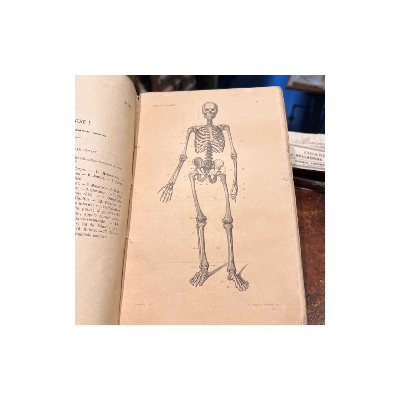
Anatomical Atlas by A. Bossu
Anthropology - End of the XIXth century
20 engravings of Anatomy by Léveillé
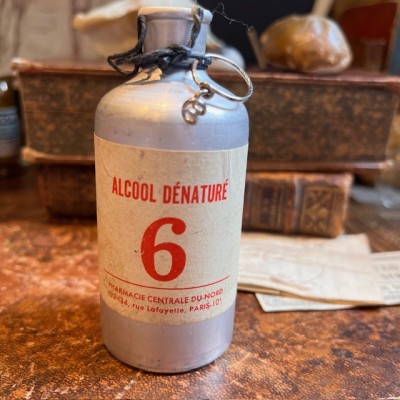
Alcool dénaturé - Alcool à brûler
Denatured alcohol - Methylated spirits
Antique pharmacy bottle - Apothecary
Empty
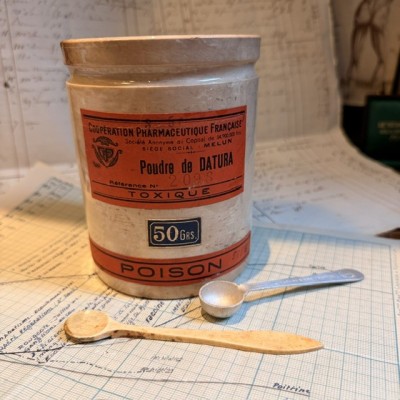
Datura powder
Antique earthenware pot
Intended for the exclusive use of pharmacists for making magistral preparations, the jar displays the regulatory labels "TOXIC" and the red banner "POISON".
Indicating to the pharmacist that it must be stored separately from other substances in the cabinet for toxic substances, the famous ‘poison cabinet’.
It comes from the former cellar-laboratory of a Parisian pharmacy. The bottles had not been moved from the shelves since the late 1950s. The cellar had served as a medical analysis laboratory and a laboratory for the pharmacy’s compounded preparations from 1900 until around 1950.
EMPTY
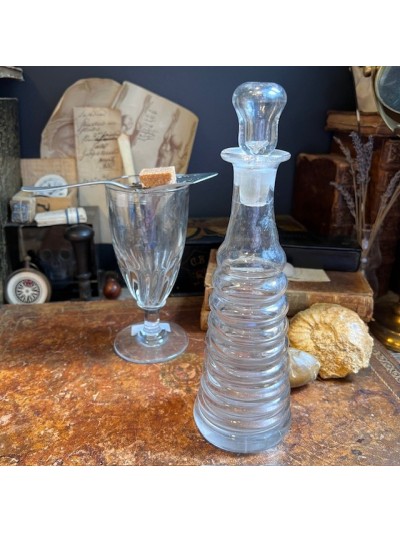
An antique absinthe topette (decanter)
10 Beaded Topette
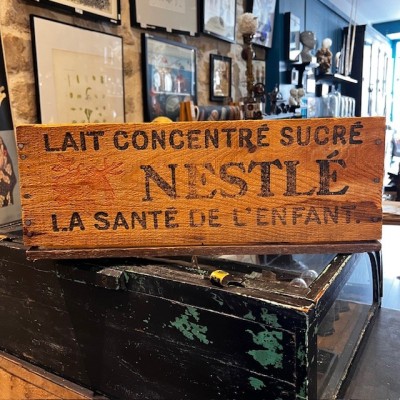
Antique wooden advertising case for Nestlé concentrated infant milk
Found in Parisian cellars that served as laboratories and storage rooms for pharmacists preparing their masterful concoctions from 1900 to 1950.
It was used to store products, glass bottles, etc.
Period: Circa 1910–1930
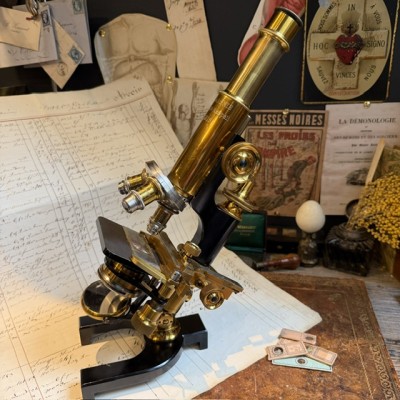
Stiassnie Microscope
Lacquered Brass Precision Microscope – M. Stiassnie, Paris, c. 1905/1908
In its mahogany case – Serial Number: 11765
Research microscope configuration with 3 objectives (including a 1/12 oil immersion objective), micrometric stage and Abbe condenser.
A rare collector’s item combining mechanical precision and Parisian scientific prestige.
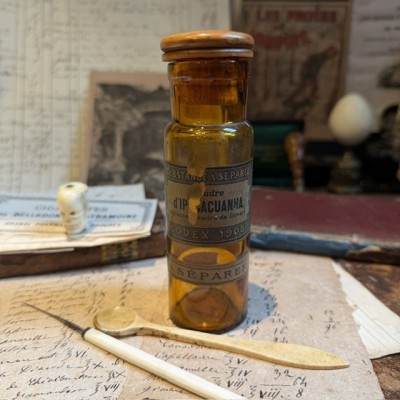
Ipecacuanha Opiate Powder - Dover's Powder
Antique amber glass bottle, with a boxwood and cork stopper.
Green label: SUBSTANCE TO BE STORED SEPARATELY – CODEX 1908
Indicating to the pharmacist that it must be stored separately from other substances in the cabinet for toxic substances, the famous ‘poison cabinet’.
It comes from the former cellar-laboratory of a Parisian pharmacy. The bottles had not been moved from the shelves since the late 1950s. The cellar had served as a medical analysis laboratory and a laboratory for the pharmacy’s compounded preparations from 1900 until around 1950.
EMPTY
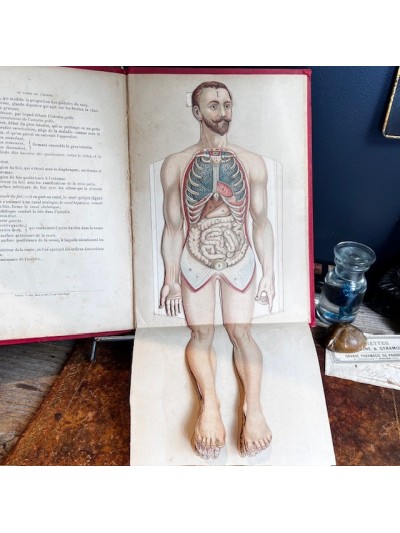
Le corps de l'Homme
Anatomical colour plates with cut-out superimposed leaves
By Edmond Perrier - Schleicher Frères & Cie Editeurs
No date, circa 1900
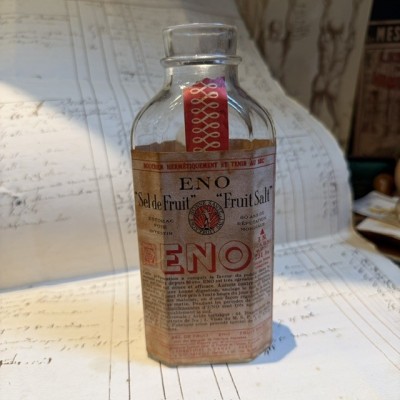
Sel de Fruit ENO - ENO Fruit Salt
Antique pharmacy bottle
EMPTY

Dry sodium iodide
Antique pharmacy bottle - drugstore - apothecary
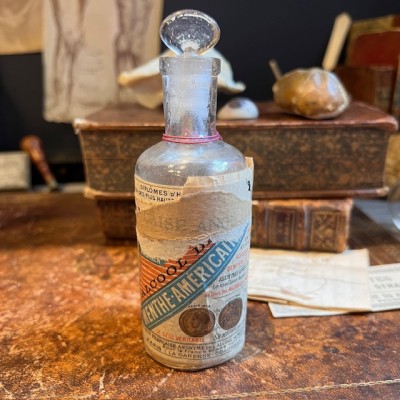
American mint alcohol
Antique pharmacy bottle
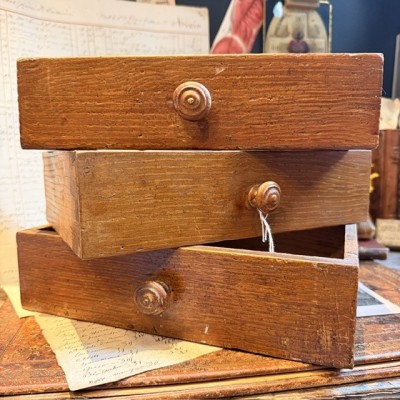
The Apothecary’s Little Drawer
Small antique wooden apothecary’s drawer that can be used as a storage box – Trade drawer
Handcrafted using traditional methods, with dovetail joints and a turned wooden handle
Width: 26cm - Length: 15.5cm - Height: 5.5cm
All the drawers are different, with stains and varying signs of age on each one
Sold empty, without accessories
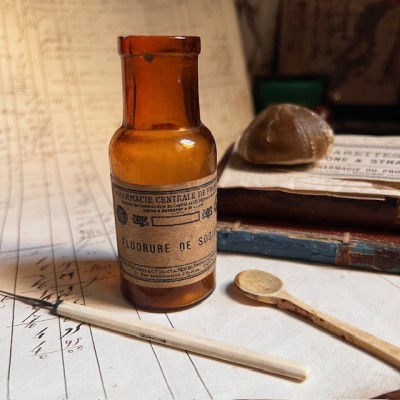
Fluorure de sodium - sodium fluoride
Antique pharmacy bottle
EMPTY
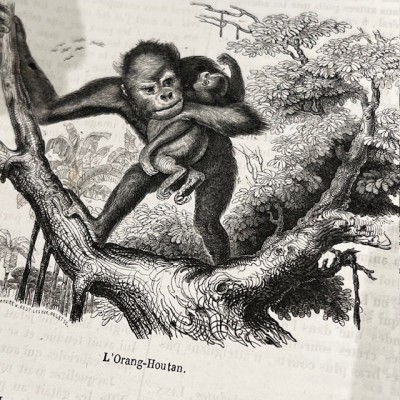
Le Jardin des Plantes
Description and habits of the mammals in the menagerie and the Natural History Museum
By Boitard - Antique book circa 1851
A beautiful snapshot of the museum and its garden in the mid-19th century, featuring interiors of the museum that no longer exist today.
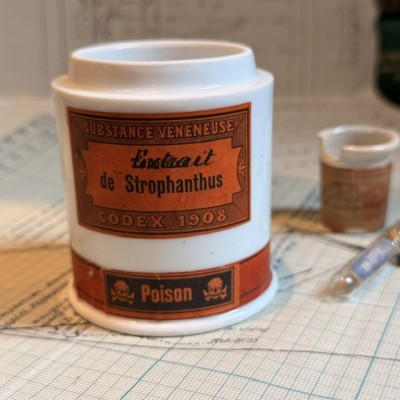
Strophanthus extract - Codex 1908
Early/ mid-20th century pharmacy jar in white earthenware
Beautiful labels: Red POISON label with the famous skull and crossbones and the Poisonous Substances label
Signaling to the pharmacist that it is imperative to keep apart the other substances in the cabinet of toxic substances, the famous poison cabinet.
It comes from an old cellar-laboratory in a Parisian pharmacy. The bottles had not moved since the late 1950s on the shelves. The cellar had served as a laboratory for medical analyses and a laboratory for magistral preparations of the pharmacy from 1900 until around 1950.
EMPTY
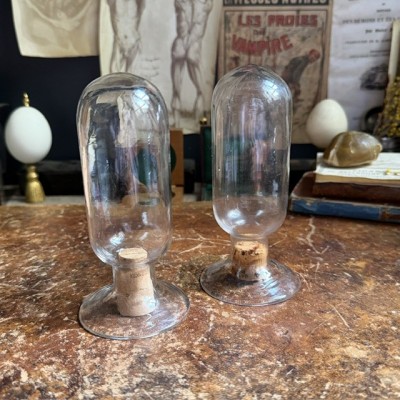
Specimen jar in blown glass - Inverted apothecary jar - Seed vase
Size S
A vintage laboratory or conservatory container designed for the display and preservation of biological or botanical specimens
Laboratory pestle in chiseled metal and apothecary hard stone
Possibly an agate or jade
Dating: Belle Époque (Circa 1890 - 1910)