

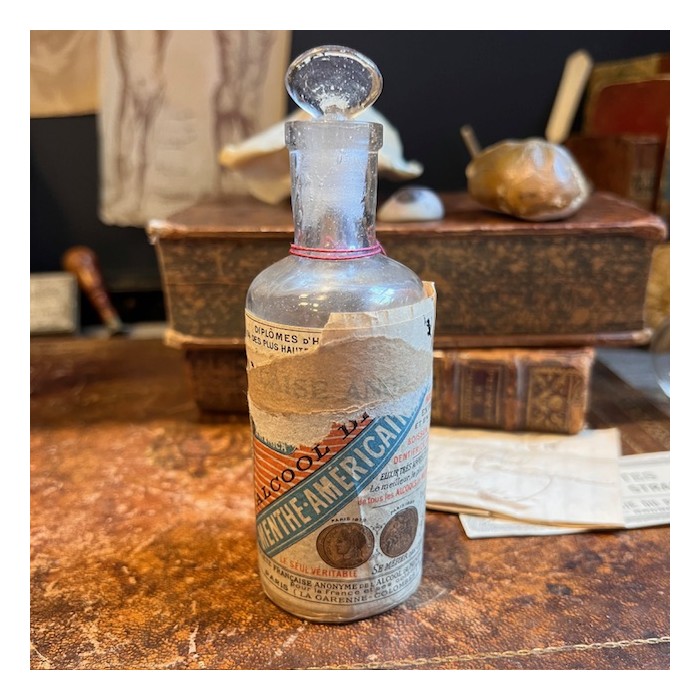
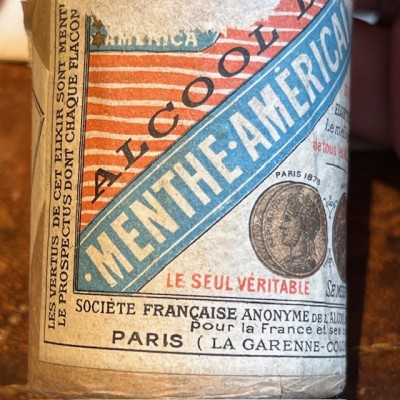
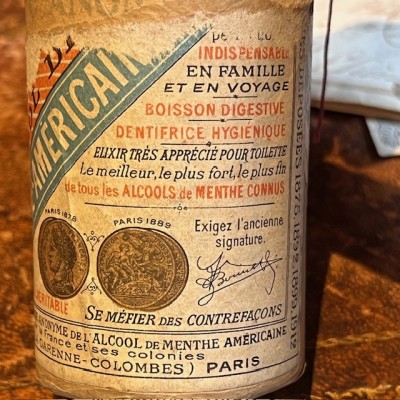
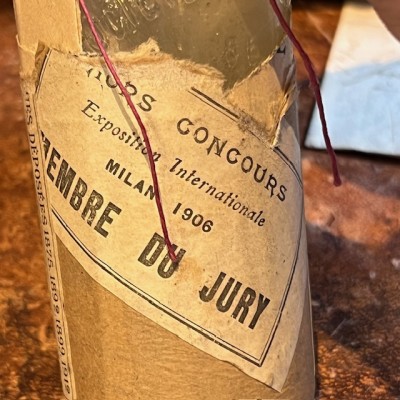
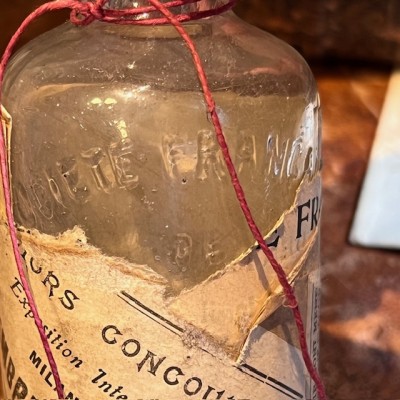
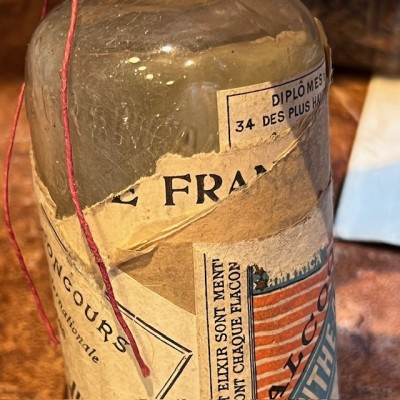
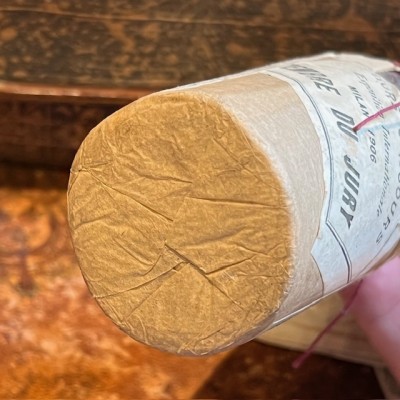
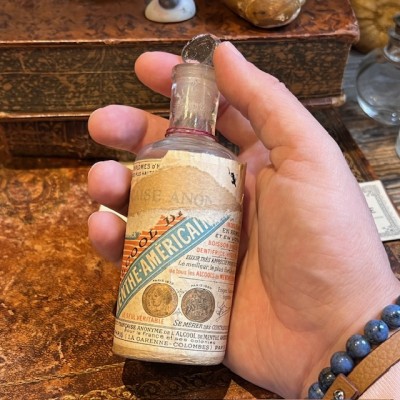
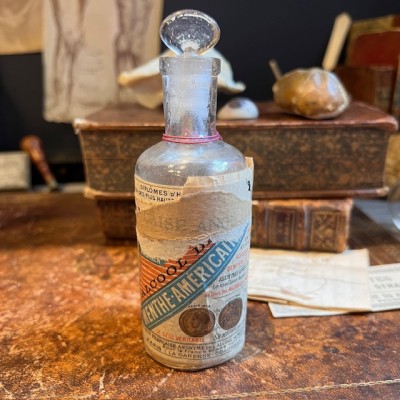
American mint alcohol
Antique pharmacy bottle
American mint alcohol
Antique pharmacy bottle
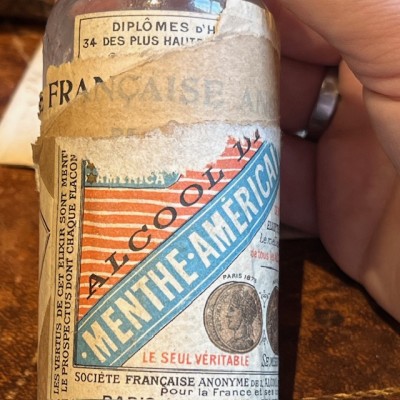
Moulded into the glass is the inscription:
société française de l'alcool de menthe américaine
Mint alcohol was widely sold in the late 19th and early 20th centuries.
It was used as a tonic to combat digestive problems, bad breath, nausea and migraines.
This hygiene product was originally sold exclusively in pharmacies.
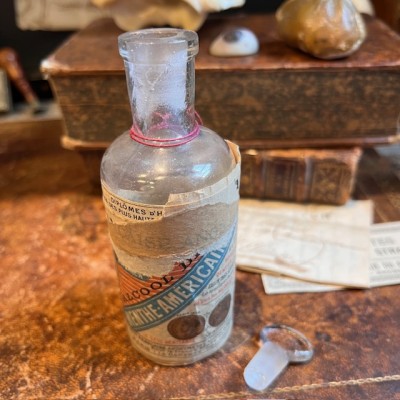
Here, the bottle is still largely wrapped in its original packaging paper covered with multiple labels.
Perfect for the bathroom!
Height: 14.5cm
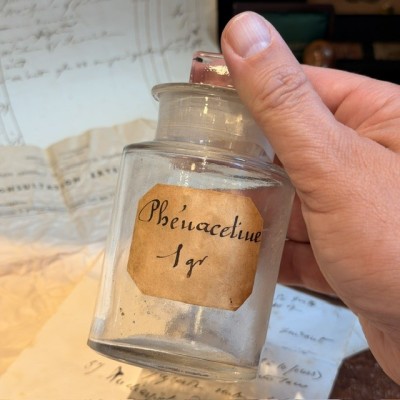
Phenacetin
Antique pharmacy bottle
Phenacetin is one of the first synthetic antalgic and antipyretic (anti-fever) from the chemical industry, very widespread in pharmacies from the end of the 19th century until the second half of the 20th century.
EMPTY - The cap is blocked and does not open

Antique Guyon bladder syringe in bakelite
Beginning of XXth century
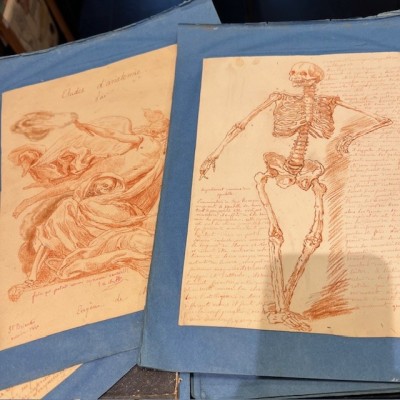
Red chalk drawing- Anatomical drawing
Anatomical study
Drawn by Eugène de Montchoisy in Saint-Brieuc in November 1840
These are not reproductions but original period drawings in red chalk.
You are purchasing one plate, not the entire set of plates
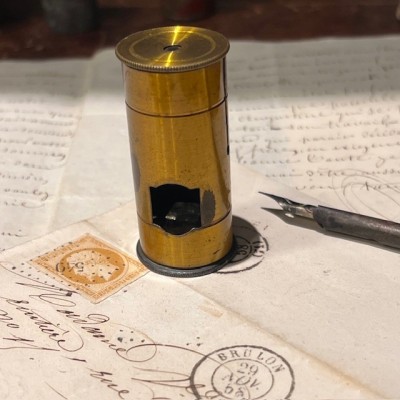
Floroscope
Botanist's microscope
Pocket microscope Late 19th - early 20th century
Warning: Here composed of 2 Stanhope lenses
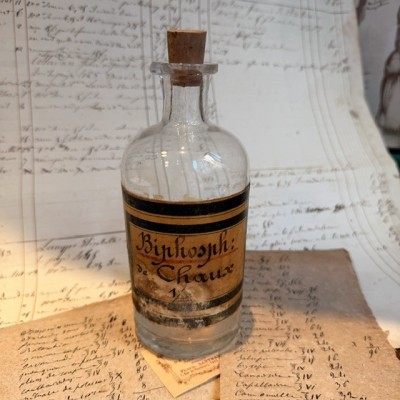
Biphosphate de Chaux
Antique pharmacy bottle
EMPTY

Iodure de Sodium
Antique pharmacy bottle
End of the 19th century—very beginning of the 20th century: circa 1890-1910
EMPTY
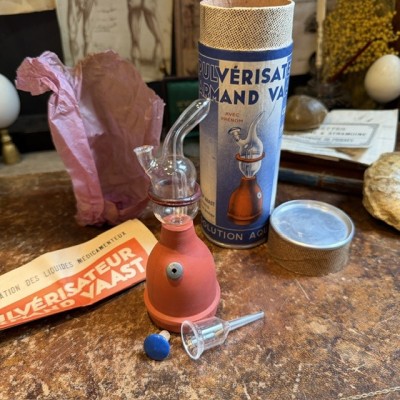
Armand Vaast nasal spray - Oil vaporizer - Antique remedy
In its box
Used in otolaryngology, it was intended for nasal or oral sprays in the treatment of colds and antiseptic treatment of the respiratory tract.
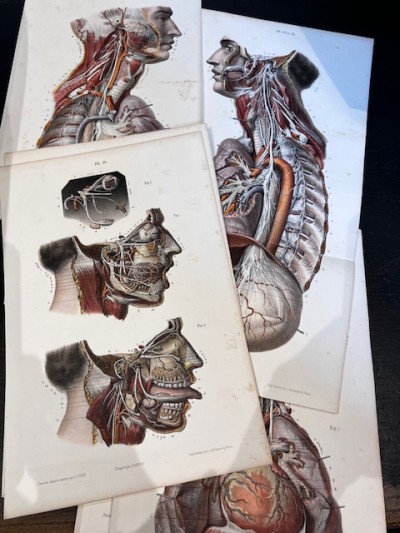
Anatomical chart by Ludovic Hirschfeld drawn by Léveillé
From Traité et iconographie du système nerveux et des organes des sens de l'homme avec leur mode de préparation
Published in 1866
Lithography
You buy 1 plate, not the whole set
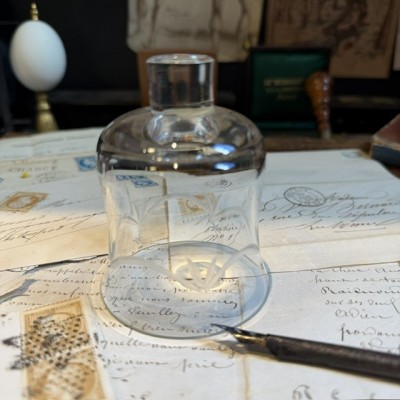
Small antique engraved glass bell
I believe these are antique glass pieces that were originally intended to be placed on a stand.
Repurpose them as small bells to showcase your small objects, such as a small skull, as shown here.
Sold individually
EMPTY

Sparteine sulphate
Used as a tonic for nervous syndromes at the very beginning of the 20th century, sparteine was also used to facilitate morphine withdrawal.
Antique pharmacy bottle
Apothecary vial
Some product left inside
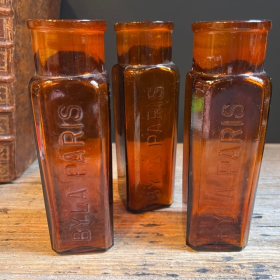
BYLA - Antique Pharmacy bottle in amber glass

Lower part of the lower mandible of a horse jaw
Antique model from Maison Auzoux in Paris
Paper-mâché pedagogical model
Model B - 1 year

Collodion
Used as a liquid dressing
Antique pharmacy bottle
EMPTY
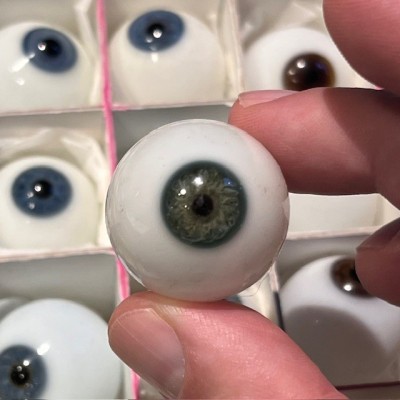
Antique glass eye - Semi-finished
Genuine antique ocular prosthesis
Color variations and irises of different sizes
The price is per unit, for one eye only
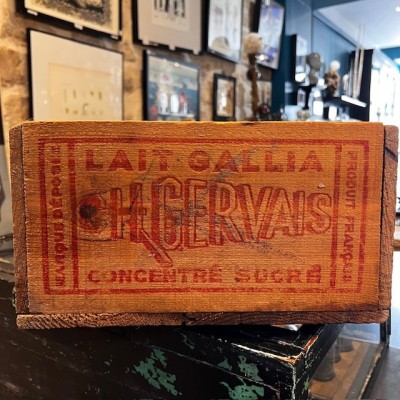
Antique wooden advertising crate for Gallia / Ch. Gervais infant milk concentrate
Found in Parisian cellars that served as laboratories and storage rooms for pharmacists preparing their masterful concoctions from 1900 to 1950.
It was used to store products, glass bottles, etc.
Period: Circa 1947–1955

Aqua Piris - Pear water
Antique pharmacy jar
Apothecary
American mint alcohol
Antique pharmacy bottle