

- New
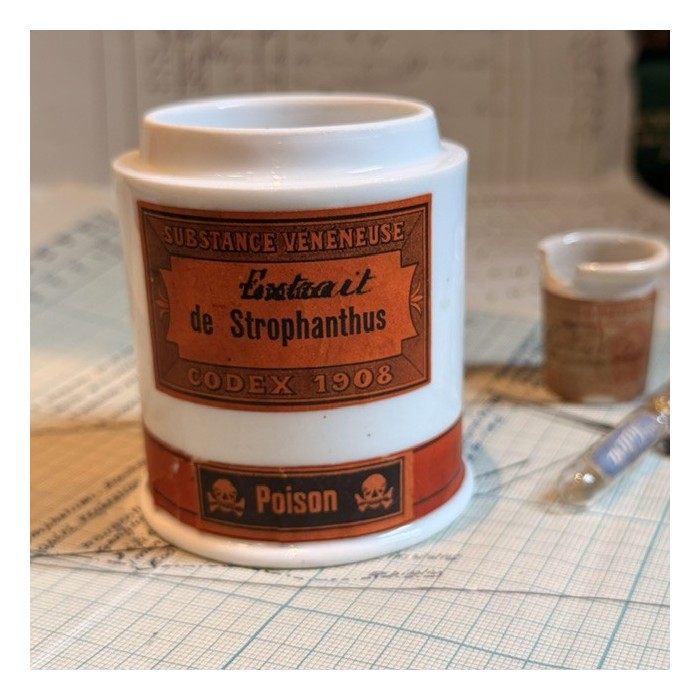
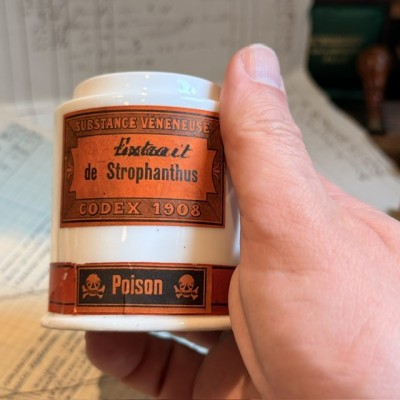
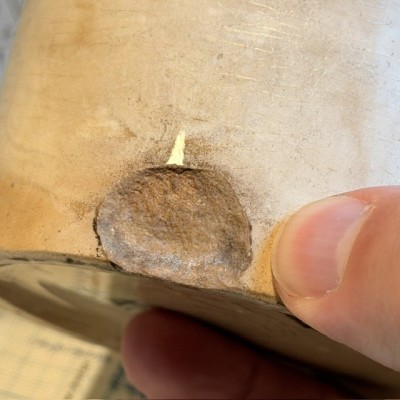
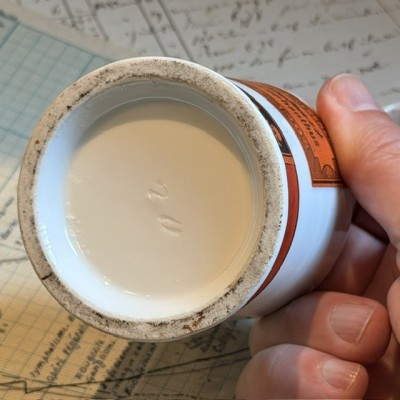
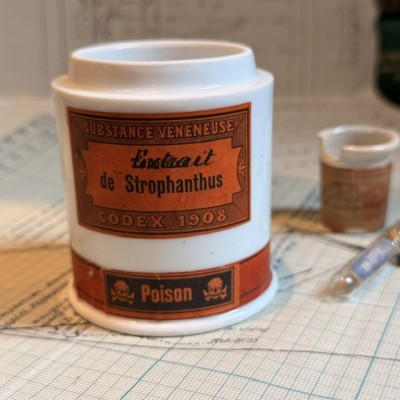
Strophanthus extract - Codex 1908
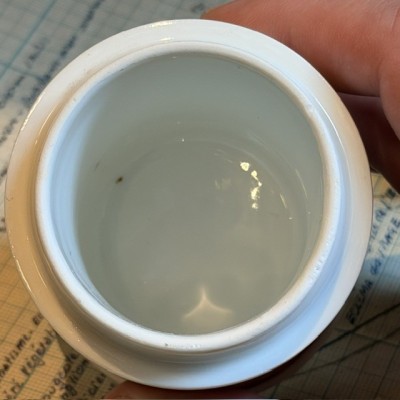
Early/ mid-20th century pharmacy jar in white earthenware
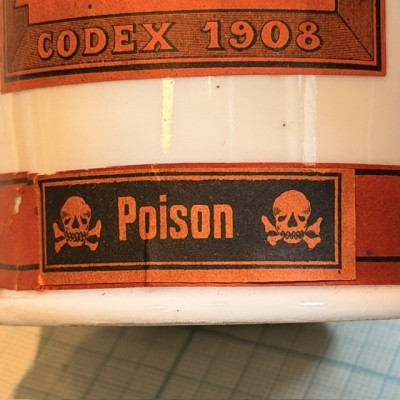
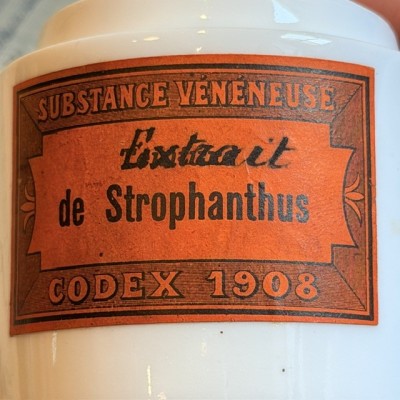
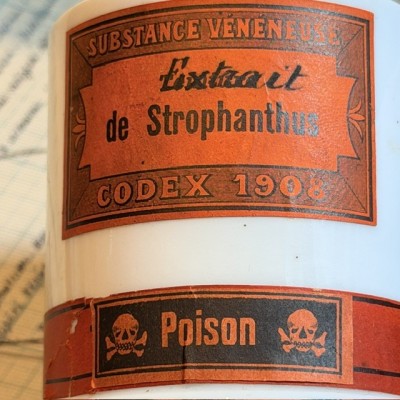
Beautiful labels: Red POISON label with the famous skull and crossbones and the Poisonous Substances label
Signaling to the pharmacist that it is imperative to keep apart the other substances in the cabinet of toxic substances, the famous poison cabinet.
It comes from an old cellar-laboratory in a Parisian pharmacy. The bottles had not moved since the late 1950s on the shelves. The cellar had served as a laboratory for medical analyses and a laboratory for magistral preparations of the pharmacy from 1900 until around 1950.
EMPTY
Strophanthus extract - Codex 1908
Early/ mid-20th century pharmacy jar in white earthenware
Beautiful labels: Red POISON label with the famous skull and crossbones and the Poisonous Substances label
Signaling to the pharmacist that it is imperative to keep apart the other substances in the cabinet of toxic substances, the famous poison cabinet.
Strophanthus is a tropical plant traditionally used as poison on poisoned arrows in Africa.
At the end of the 19th century, the chemist Léon Arnaud received from a famous traveler of the time, Bénédict-Henry Révoil, arrows coated with poison coming from Somalia.
In 1888, he isolated the element responsible for the effects of the poison, which he named ouabain, which became strophantine, a violent cardiac poison used for a time therapeutically as cardiotonic, but due to its toxicity, since abandoned in favor of more manageable synthetic molecules or digoxin.
In the late 19th century and the first half of the 20th century, this product was prescribed as a potent cardiac stimulant, mainly for treating acute heart failure and arrhythmias. It acted similar to digitalis, but with an action often considered faster.
But the strophantine tends to accumulate in the body if taken too close together. A patient who took his remedy without scrupulously following the prescription could, after a few days, reach unintentionally a total toxic dose in the blood, which led to a heart attack!
The perfect example of a product with a tiny therapeutic margin: the difference between the dose needed to save a failing heart and the toxic dose that stopped it was very (too much?) fine.
It comes from an old cellar-laboratory in a Parisian pharmacy. The bottles had not moved since the late 1950s on the shelves. The cellar had served as a laboratory for medical analyses and a laboratory for magistral preparations of the pharmacy from 1900 until around 1950.
Material: White earthenware, original metal lid
Dimensions: Height: 9.6 cm - Diameter: 7 cm
Period: Early 20th century
EMPTY
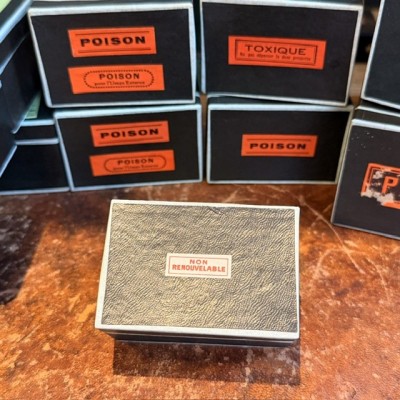
Antique labels in a pharmacy box for cures made of canvas cardboard
Non-renewable label
The pharmacist used his boxes of medicine to put away the labels he would then put on the bottles that he would resell to his customers.
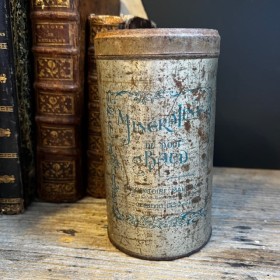
Mineraline by Dr C. Baud
Antique tin pharmacy box
Powder or talcum powder for children's toiletries
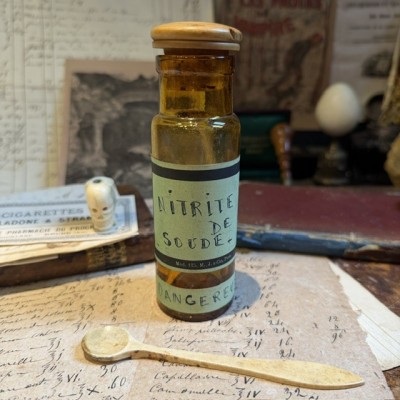
Sodium Nitrite
Antique amber glass bottle, with a boxwood and cork stopper.
Label: DANGEROUS
Indicating to the pharmacist that it must be stored separately from other substances in the cabinet for toxic substances, the famous ‘poison cabinet’.
It comes from the former cellar-laboratory of a Parisian pharmacy. The bottles had not been moved from the shelves since the late 1950s. The cellar had served as a medical analysis laboratory and a laboratory for the pharmacy’s compounded preparations from 1900 until around 1950.
EMPTY
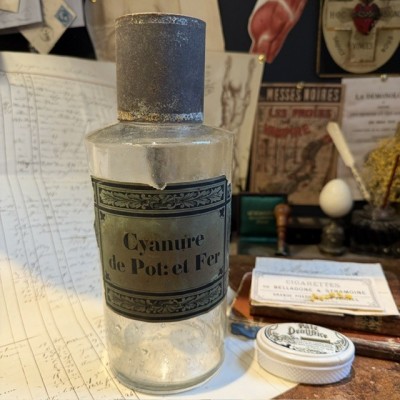
Potassium Cyanide and Iron
Also known as yellow potassium prussiate
Antique 19th-century pharmacy bottle
EMPTY
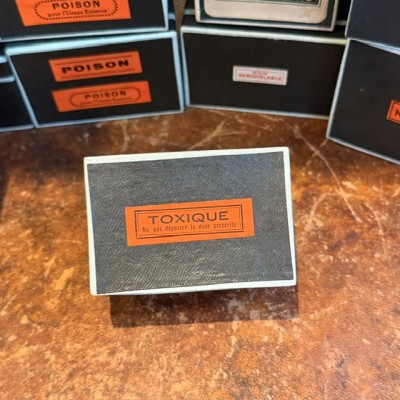
Antique labels in a pharmacy box for cures made of canvas cardboard
TOXIC label - Do not exceed the prescribed dose
The pharmacist used his boxes of medicine to put away the labels he would then put on the bottles that he would resell to his customers.
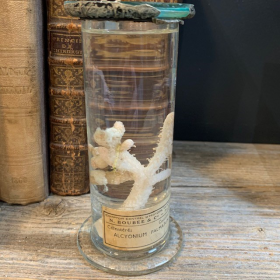
Museum jar - Wet specimen
Soft coral Alcyonium palmatum
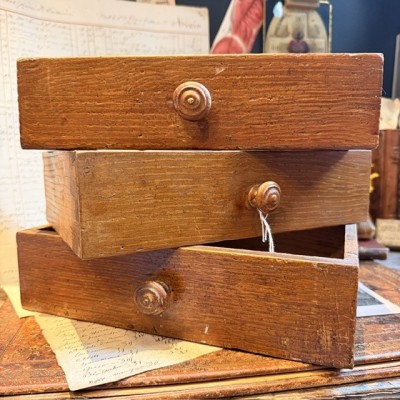
The Apothecary’s Little Drawer
Small antique wooden apothecary’s drawer that can be used as a storage box – Trade drawer
To be diverted on the shelf or niche for your curiosities
Handcrafted using traditional methods, with dovetail joints and a turned wooden handle
Width: 26cm - Length: 15.5cm - Height: 5.5cm
All the drawers are different, with stains and varying signs of age on each one
Sold empty, without accessories
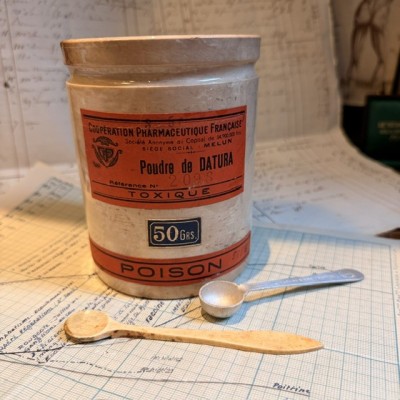
Datura powder
Antique earthenware pot
Intended for the exclusive use of pharmacists for making magistral preparations, the jar displays the regulatory labels "TOXIC" and the red banner "POISON".
Indicating to the pharmacist that it must be stored separately from other substances in the cabinet for toxic substances, the famous ‘poison cabinet’.
It comes from the former cellar-laboratory of a Parisian pharmacy. The bottles had not been moved from the shelves since the late 1950s. The cellar had served as a medical analysis laboratory and a laboratory for the pharmacy’s compounded preparations from 1900 until around 1950.
EMPTY
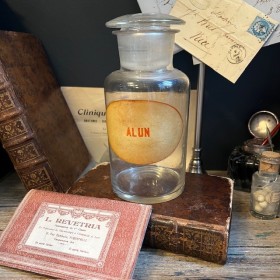
Alum
Antique pharmacy bottle
Apothecary vial
Color pigments have been added to the inside of the jar
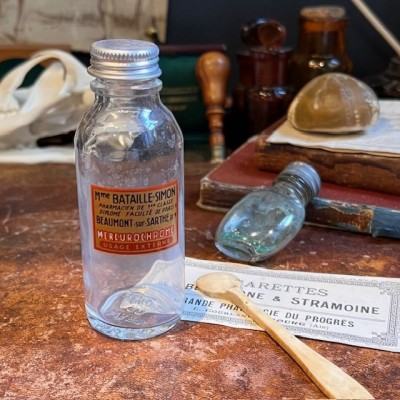
Mercurochrome
Antique pharmacy bottle - Apothecary
Mrs Bataille-Simon, First Class Pharmacist in Beaumont sur Sarthe - Tel 9
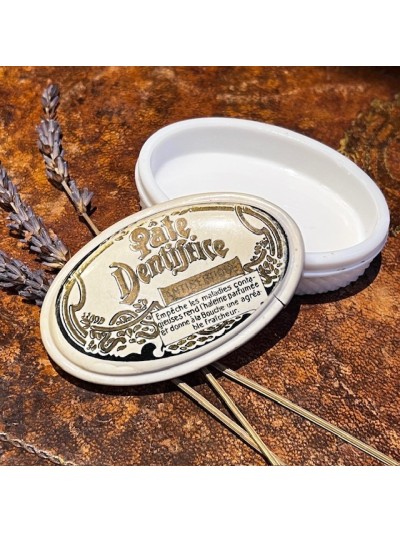
Toothpaste - Antique apothecary
Porcelain pot with illustrated plastic lid
Antiseptic
Early 20th century - Caution the lid is cracked
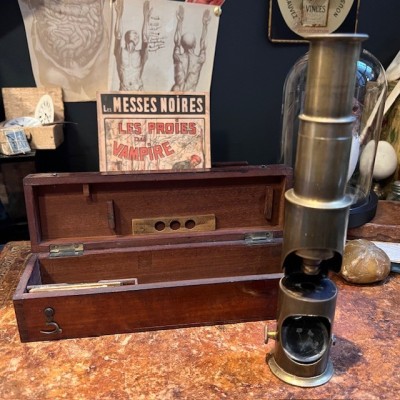
Antique and large drum microscope
In it's mahogany wooden box
For botanist, entomologist - XIXth century
This is a larger model than those usually found on the market
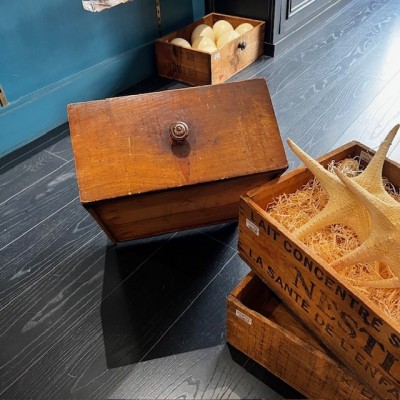
Large antique wooden pharmacy drawer with compartments - From a pharmacy or herbalist's cabinet
4 compartments
Ref A - 39.5x50cm
Can be used as a storage box
Weight: 4.1kg !

Cours d'opérations de chirurgie, démontrées au Jardin Royal
Course of surgical operations, demonstrated in the Royal Garden
Published in 1751 in Paris, by d'Houry, sole printer and bookseller to Monseigneur le Duc d'Orléans
Fourth edition
Illustrated with numerous plates and engravings in the text, including the famous plate of Poor Malabou and her scrotal elephantiasis on page 112/113, which the author mentions on page 373.
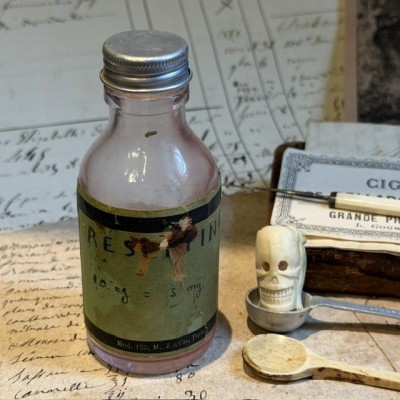
Reseptine
Antique pharmacy bottle
EMPTY
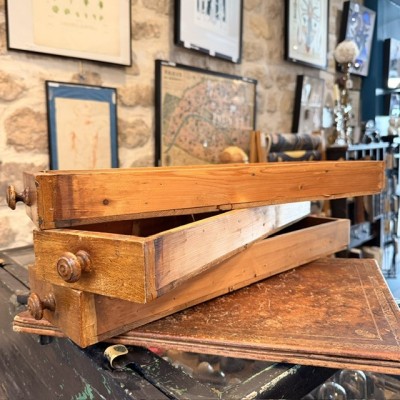
The apothecary’s Drawer - Size L
Antique wooden pharmacy drawer that can be used as a storage box - Craft Furniture Drawer
To be diverted on the shelf or niche for your curiosities
Antique hand-crafted manufacturing with dovetail joints and turned wooden pull knob
Width: 13cm - Length: 49cm - Height: 5cm
Sold empty, without accessories
Strophanthus extract - Codex 1908
Early/ mid-20th century pharmacy jar in white earthenware
Beautiful labels: Red POISON label with the famous skull and crossbones and the Poisonous Substances label
Signaling to the pharmacist that it is imperative to keep apart the other substances in the cabinet of toxic substances, the famous poison cabinet.
It comes from an old cellar-laboratory in a Parisian pharmacy. The bottles had not moved since the late 1950s on the shelves. The cellar had served as a laboratory for medical analyses and a laboratory for magistral preparations of the pharmacy from 1900 until around 1950.
EMPTY