
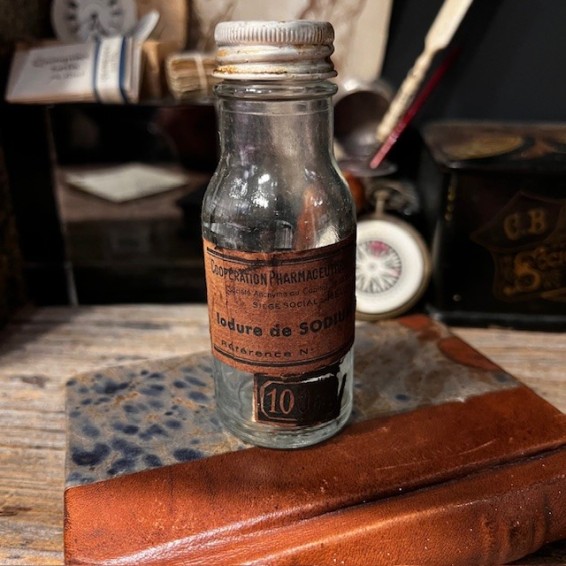
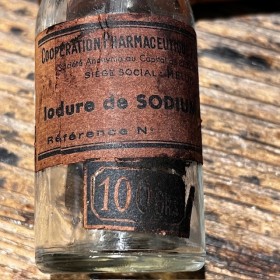
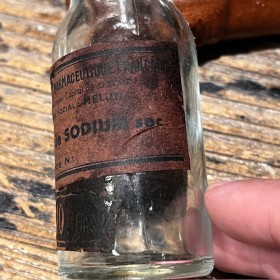
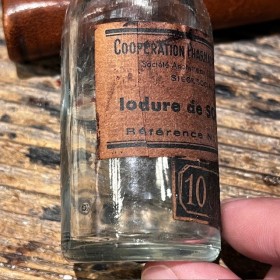
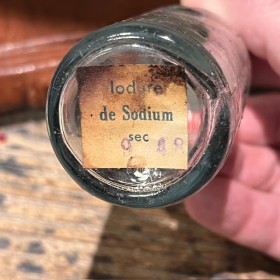
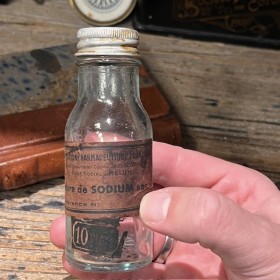
Dry sodium iodide
Antique pharmacy bottle - drugstore - apothecary
Dry sodium iodide
Antique pharmacy bottle - drugstore - apothecary
EMPTY
Height: 10.5cm Diameter: 3.5cm
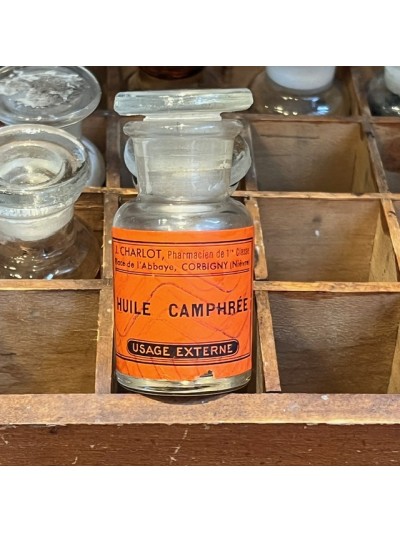
Camphorated oil
Antique pharmacy bottle
Apothecary vial
EMPTY but cap is blocked and bottle will not open
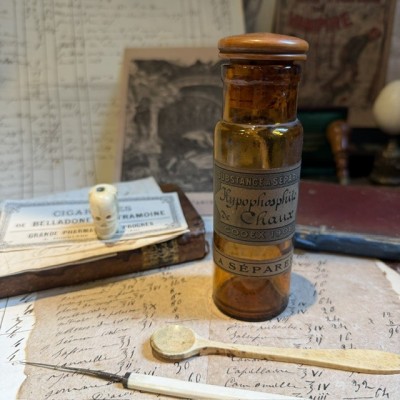
Calcium hypophosphite
Antique amber glass bottle, with a boxwood and cork stopper.
Green label: SUBSTANCE TO BE STORED SEPARATELY – CODEX 1908
Handwritten label, pen inscription, neat calligraphy, with its thick and thin strokes.
Indicating to the pharmacist that it must be stored separately from other substances in the cabinet for toxic substances, the famous ‘poison cabinet’.
It comes from the former cellar-laboratory of a Parisian pharmacy. The bottles had not been moved from the shelves since the late 1950s. The cellar had served as a medical analysis laboratory and a laboratory for the pharmacy’s compounded preparations from 1900 until around 1950.
EMPTY

Grams / Tablespoons - Graduated bottle
in French: Grammes / Cuillères à soupe
Antique medicine bottle
Apothecary
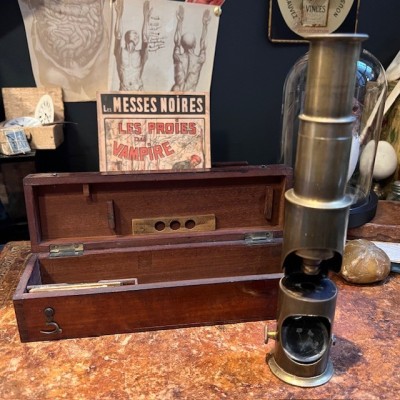
Antique and large drum microscope
In it's mahogany wooden box
For botanist, entomologist - XIXth century
This is a larger model than those usually found on the market
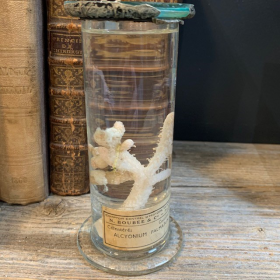
Museum jar - Wet specimen
Soft coral Alcyonium palmatum

Human jaws in porcelain mounted on a blackened wooden base
Anatomical dental model for dentists
19th century
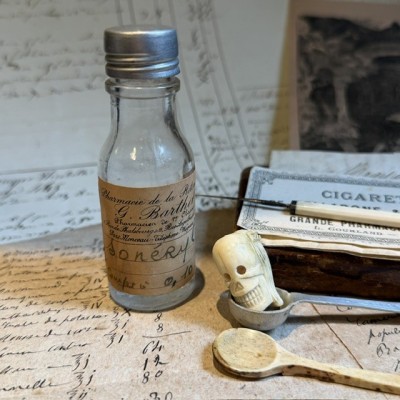
Sonéryl - Butobarbital - Barbiturates
Antique pharmacy bottle
EMPTY
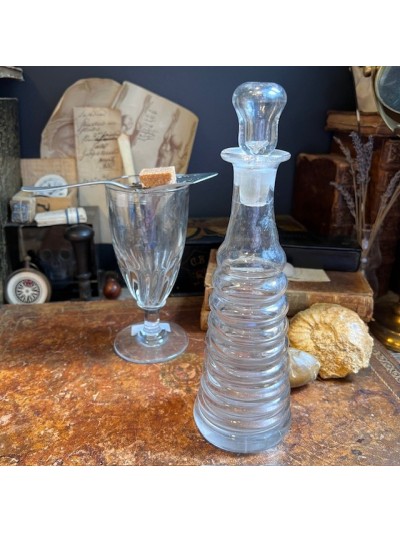
An antique absinthe topette (decanter)
10 Beaded Topette
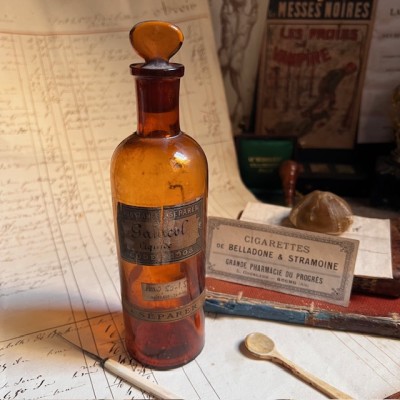
Gaïacol liquide
Antique pharmacy bottle
Green label: SUBSTANCE TO BE SEPARATED - CODEX 1908
This means that this bottle had to be kept separate from the others because it was dangerous in high doses
EMPTY
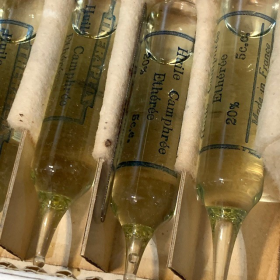
Bulb for hypodermic injection - Camphor (circa 1920)
THERAPLIX
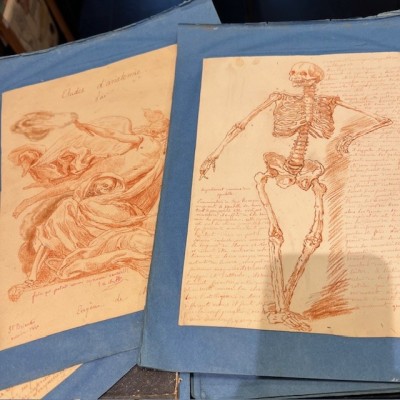
Red chalk drawing- Anatomical drawing
Anatomical study
Drawn by Eugène de Montchoisy in Saint-Brieuc in November 1840
These are not reproductions but original period drawings in red chalk.
You are purchasing one plate, not the entire set of plates
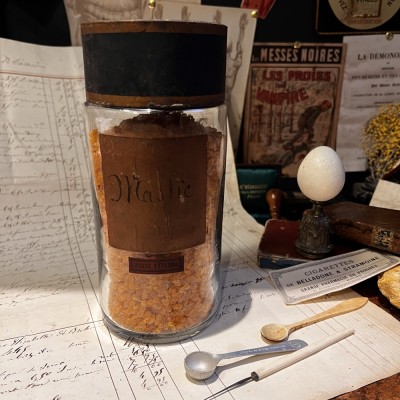
Mastic of Chios
Antique pharmacy bottle - Wide-mouth apothecary jar.
19th-century mouth-blown glass
There is still some product left inside
A fascinating artifact from the history of pharmacology
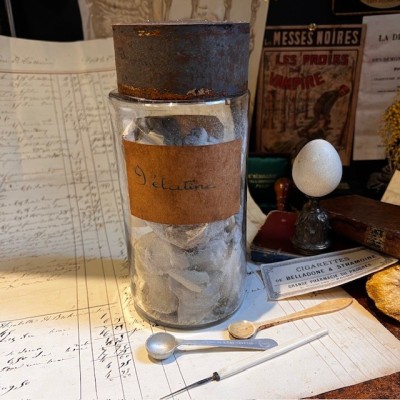
Gelatine
Antique pharmacy bottle - Wide-mouth apothecary jar.
19th-century mouth-blown glass
There is still some product left inside
A fascinating artifact from the history of pharmacology
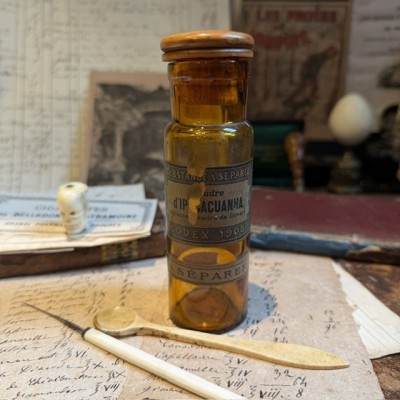
Ipecacuanha Opiate Powder - Dover's Powder
Antique amber glass bottle, with a boxwood and cork stopper.
Green label: SUBSTANCE TO BE STORED SEPARATELY – CODEX 1908
Indicating to the pharmacist that it must be stored separately from other substances in the cabinet for toxic substances, the famous ‘poison cabinet’.
It comes from the former cellar-laboratory of a Parisian pharmacy. The bottles had not been moved from the shelves since the late 1950s. The cellar had served as a medical analysis laboratory and a laboratory for the pharmacy’s compounded preparations from 1900 until around 1950.
EMPTY
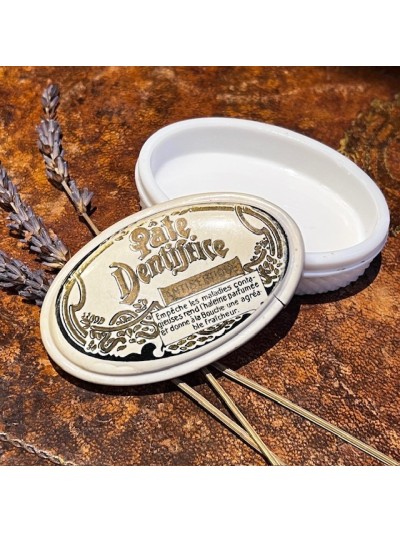
Toothpaste - Antique apothecary
Porcelain pot with illustrated plastic lid
Antiseptic
Early 20th century - Caution the lid is cracked
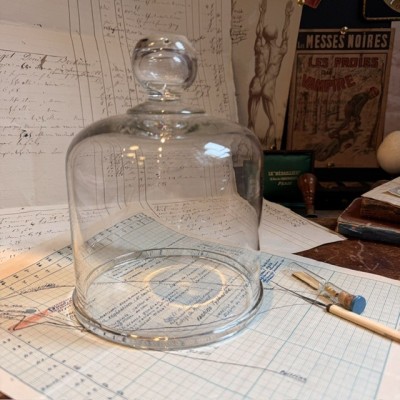
Protective laboratory bell jar - Low form with knob in blown glass
Period: 1900 - Pharmacy - Apothecary
Used by the pharmacist to cover precision instruments or isolate preparations undergoing analysis
Dry sodium iodide
Antique pharmacy bottle - drugstore - apothecary
